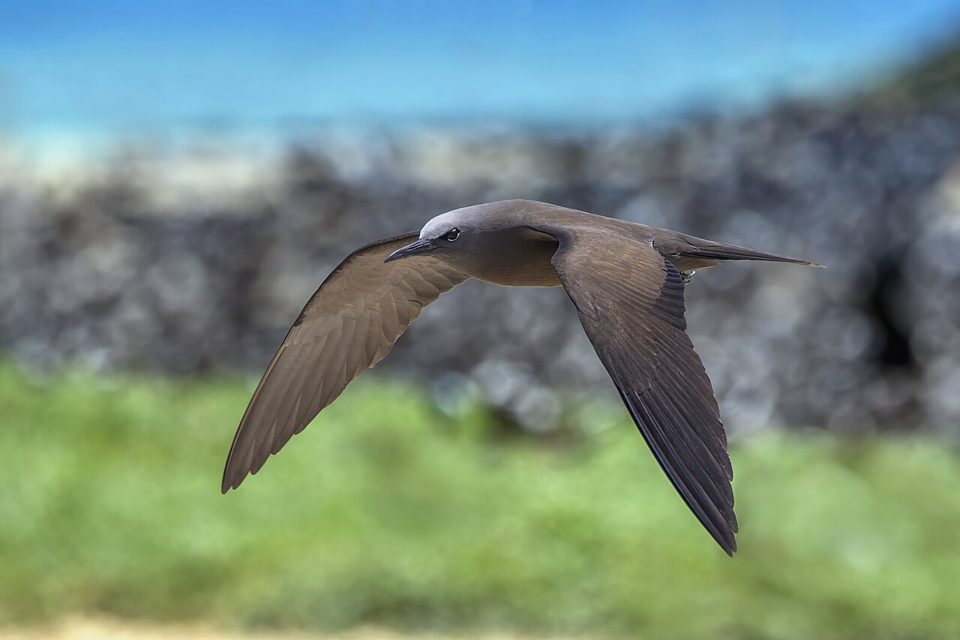
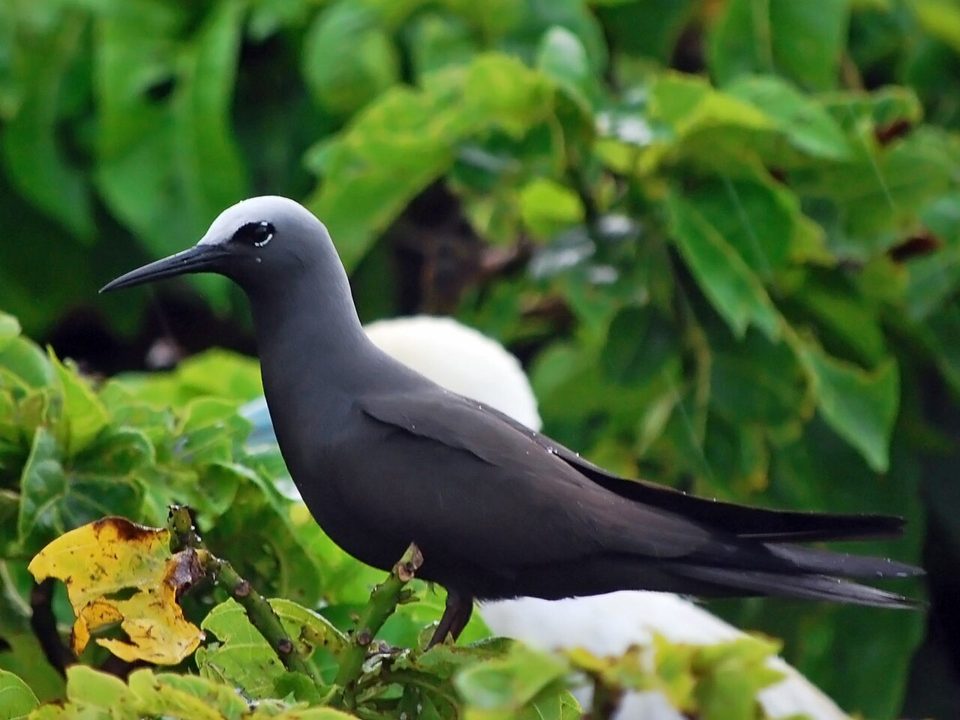
Black noddy Anous minutus diamesus
A small, sooty-black tern with a sharply marked white cap, a white crescent under each eye and a long, thin black bill. It is 35–37 cm long, has a wingspan of 66–72 cm and weighs 98–144 g. Next to the brown noddy, which also breeds here, it is smaller and much blacker, its cap is whiter and more sharply cut off, and its bill is longer and finer. The brown noddy is browner, bulkier and stouter-billed. The two nest together on the cliffs at Malpelo, so expect to compare them side by side.
The eastern Pacific birds are the subspecies diamesus, which breeds at only three places in the world: Malpelo, Cocos Island off Costa Rica and Clipperton. Malpelo matters for a second reason. Black noddies usually nest in trees, building leaf platforms in Pisonia and other vegetation, but Malpelo has almost no vegetation, and the birds here nest on bare sea-cliff ledges instead. That is one of the few places in the world where the species does so. Marin and colleagues, writing about a new Chilean colony, name Malpelo as the nearest known breeding population to the north, about 3,380 km away.
They feed close to home, usually within about 80 km of the colony, flying low and picking small fish and squid off the surface rather than plunge-diving the way the boobies do. They often work the same patches of water as other seabirds where tuna and jacks have driven baitfish up, so a bird-and-bait boil on the surface is worth watching on the boat ride. A pair lays one egg and tends to reuse the same nest site in later years. No source used here gives a breeding count or a season for Malpelo. The species is listed as Least Concern worldwide.
Wikipedia · Marin et al. 2021, Marine Ornithology · iNaturalist