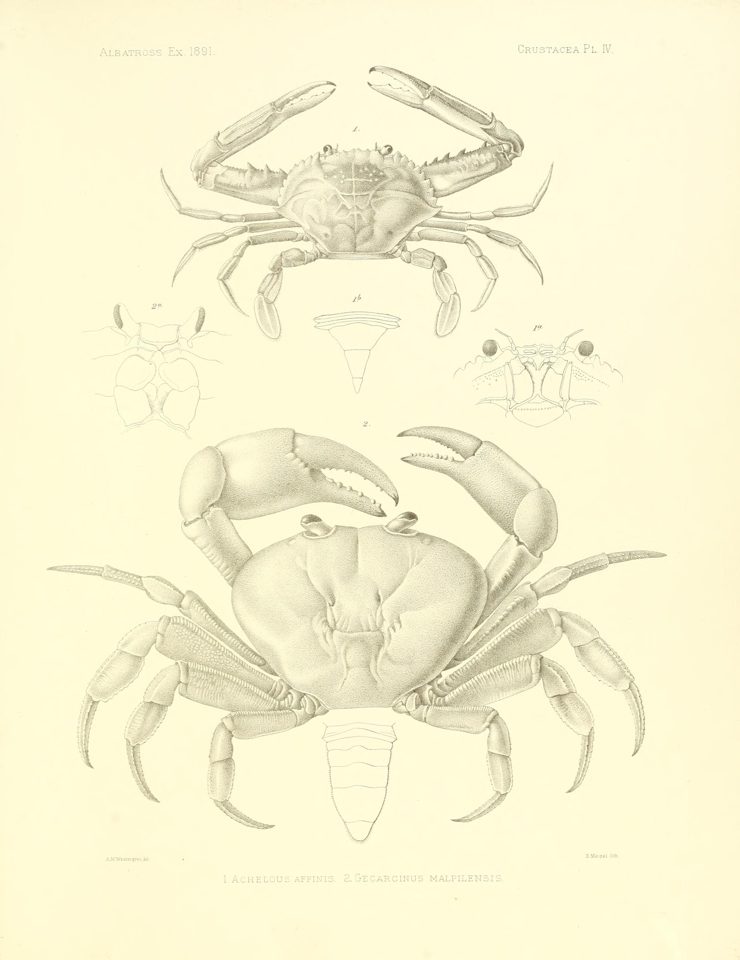
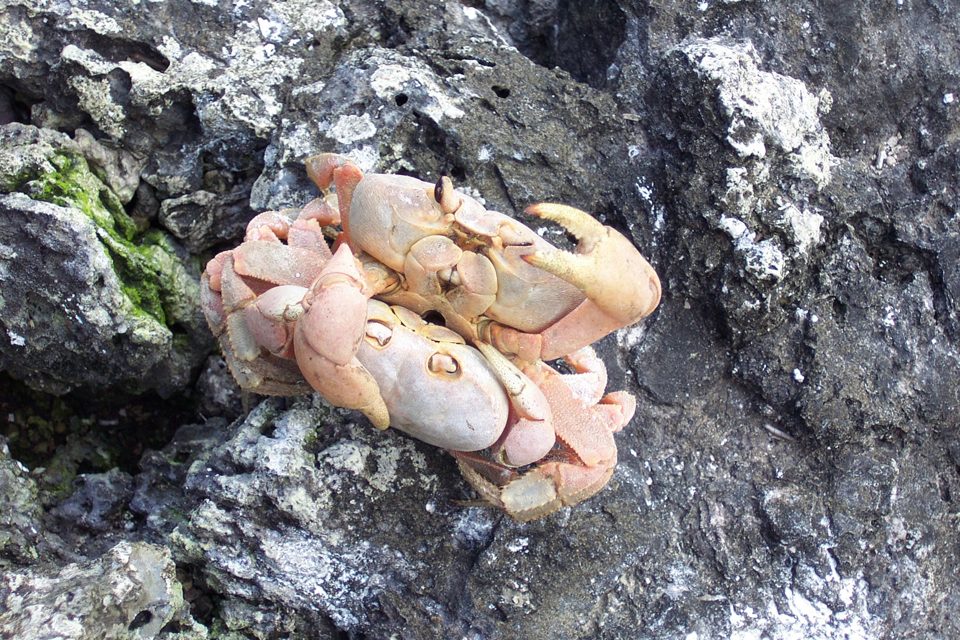
A true land crab that lives its adult life out of the water, sheltering in cracks and hollows between the rocks and coming out to feed. Carapace widths run from 5 to 82 mm. It is an opportunistic omnivore and eats more or less whatever is available: plants, guano, dropped fish, dead birds, and other crabs.
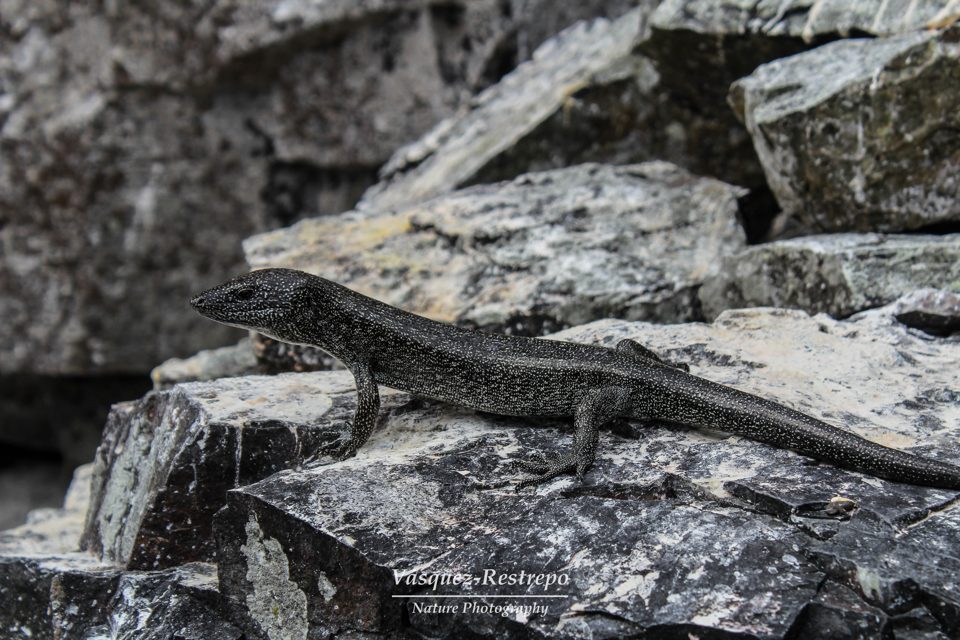
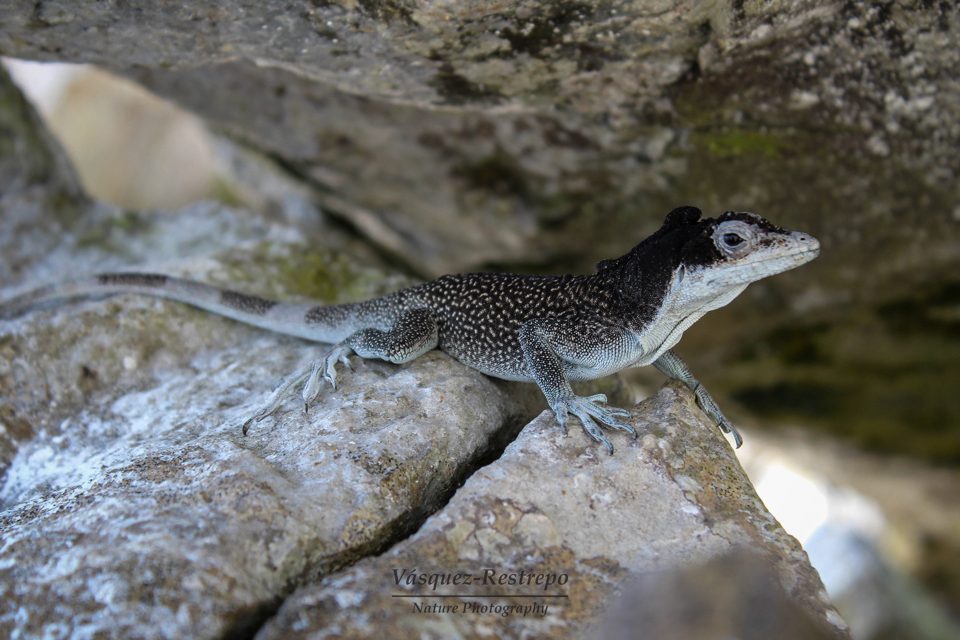
Numbers: A mark-and-recapture study that tagged 909 crabs put the island population at roughly 833,000, at densities of about 0.41 adults and 0.55 juveniles per square metre. They are spread across most of the main island and avoid only the steepest faces. That makes the crab the hinge of the land food web: it converts bird waste into crab, and the galliwasps eat the crab.
Breeding: Like other land crabs it has to return to the sea to breed. Females release their larvae on high tides around the new moon, at least during the rainy season.
A note on the name: It is malpilensis, not malpelensis — an odd spelling that goes back to Walter Faxon's original 1893 description and has stuck. You will also see it under its old genus, Gecarcinus malpilensis.