Field guide · Birds

Malpelo birds

The Nazca booby colony and the other seabirds named for Malpelo, with how many species have been recorded on the island.

Nazca booby
Nazca booby

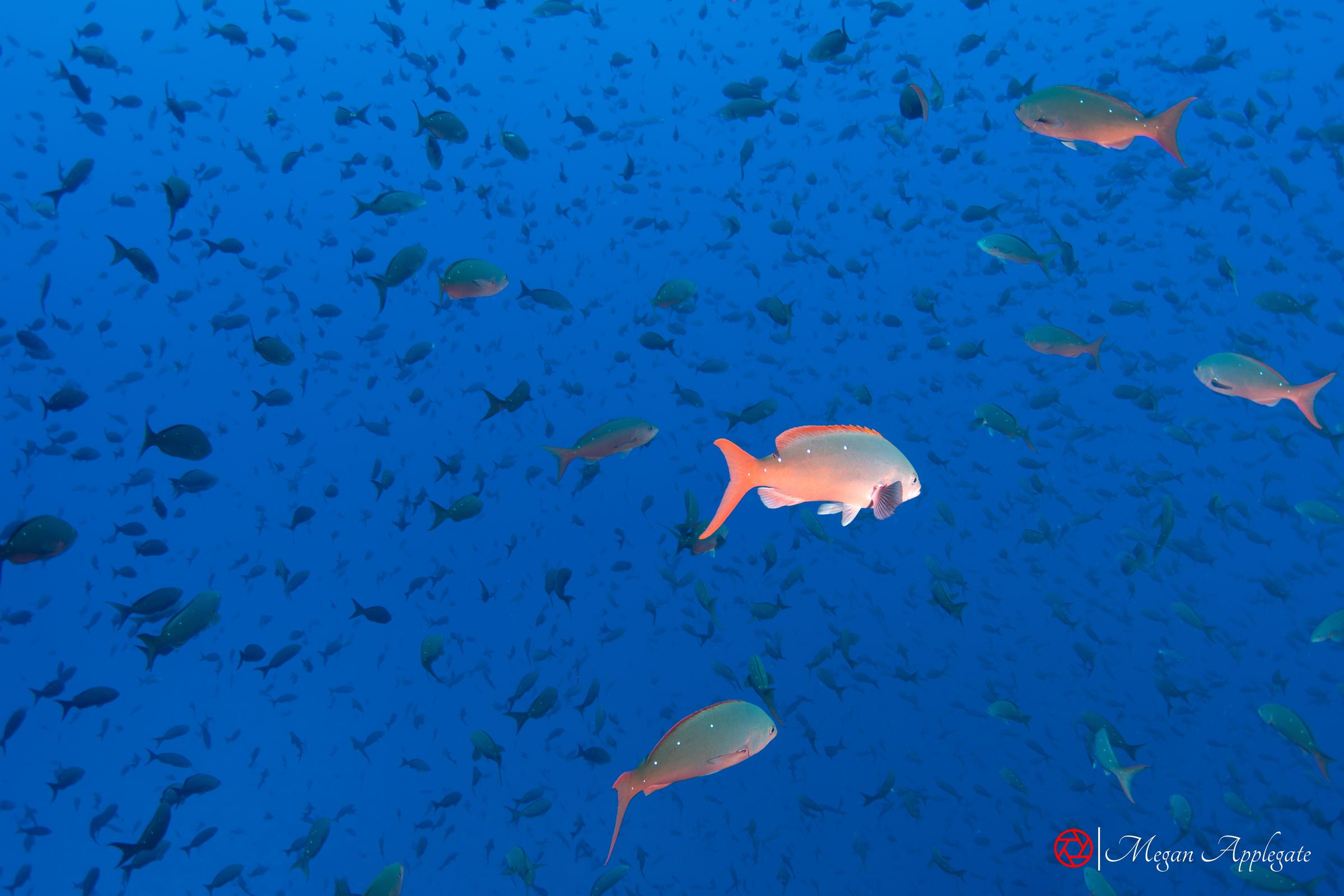
Background photo: Megan Applegate

Colony

Nazca booby

Sula granti · the bird you will see most

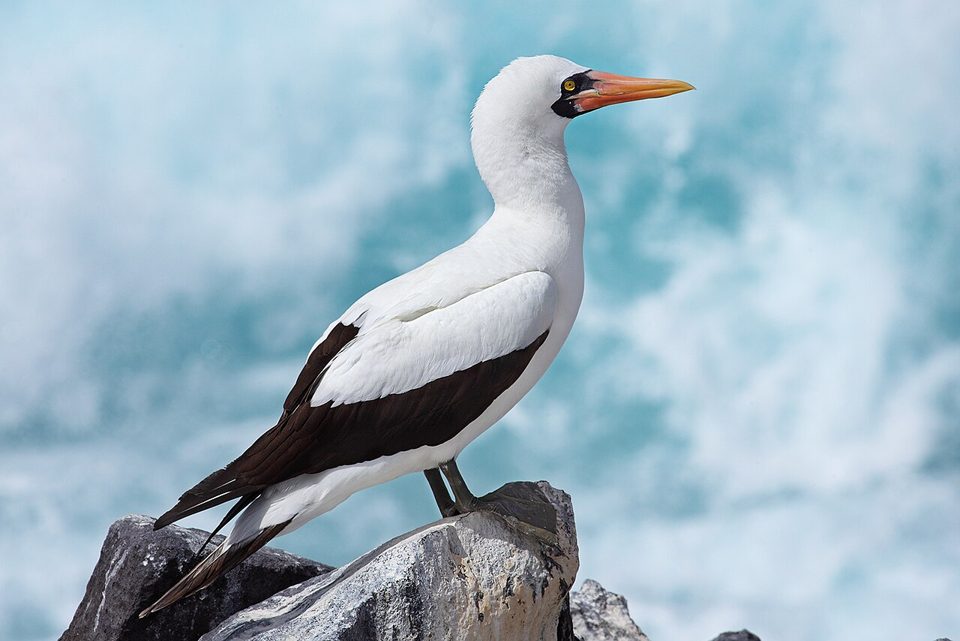
Nazca booby (Sula granti)
Nazca booby. Photo: Benjamint444, GFDL 1.2, Wikimedia Commons.

The Nazca booby is the island's most prominent bird, and Malpelo holds the largest breeding colony of the species. Adults are mostly white with black wingtips and tail, a black mask around the face, a yellow eye, an orange-pink bill and grey feet. Chicks are fluffy and nearly white. Older write-ups call it the orange-billed masked booby (Sula dactylatra granti).

It dives from flight for small fish, mainly South American pilchard, and also takes flying fish, anchovies and squid. It nests on bare ground near cliffs, usually laying one or two eggs, and whether it nests depends a lot on how much food the ocean is providing. No source used here gives a fixed breeding season. ProAves found eggs, incubating adults, chicks and nest building on 30 March 2010, and all stages from eggs to adults on 1 to 4 December 2011.

From the water: DAN describes a juvenile Nazca booby at the end of a dive at El Acuario. It floated at the surface and kept dipping under to look at the diver's camera dome.

Wikipedia · ProAves banding work

Table 1 — Estimates of the Malpelo Nazca booby colony. They differ in year and in what they count.
EstimateWhat it countsSource
About 26,000Individuals, estimate by Pitman and others, 1995ProAves
About 24,000Individuals, described as the second-largest colony of masked boobies in the worldWWF
60,000–110,000Breeding population, estimate from 2007, behind the island's BirdLife Important Bird Area statusWikipedia

Other birds

Noddies, gulls, terns, tropicbirds and frigatebirds

8 more species named by the sources

Only the swallow-tailed gull has a count for Malpelo. WWF says the other breeding seabirds most likely nest in small numbers and gives no figures. None of the sources used here ranks how often each bird is seen, so the table lists the species they name.

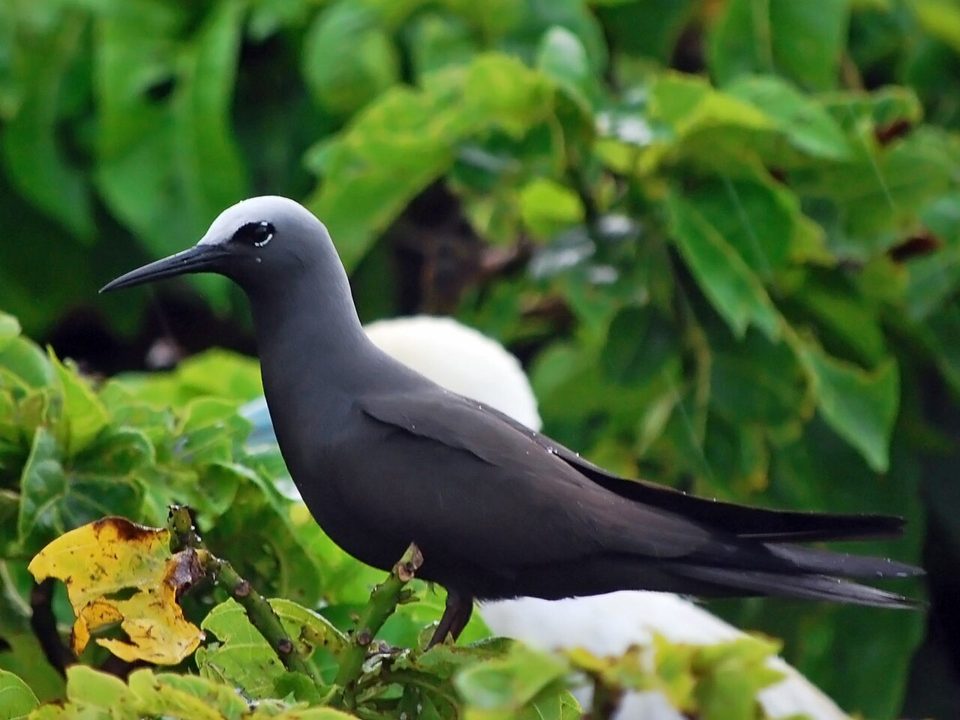
Black noddy (Anous minutus)
Black noddy. Photo: Gregg Yan, CC BY-SA 3.0, Wikimedia Commons.

Black noddy Anous minutus diamesus

A small, sooty-black tern with a sharply marked white cap, a white crescent under each eye and a long, thin black bill. It is 35–37 cm long, has a wingspan of 66–72 cm and weighs 98–144 g. Next to the brown noddy, which also breeds here, it is smaller and much blacker, its cap is whiter and more sharply cut off, and its bill is longer and finer. The brown noddy is browner, bulkier and stouter-billed. The two nest together on the cliffs at Malpelo, so expect to compare them side by side.

The eastern Pacific birds are the subspecies diamesus, which breeds at only three places in the world: Malpelo, Cocos Island off Costa Rica and Clipperton. Malpelo matters for a second reason. Black noddies usually nest in trees, building leaf platforms in Pisonia and other vegetation, but Malpelo has almost no vegetation, and the birds here nest on bare sea-cliff ledges instead. That is one of the few places in the world where the species does so. Marin and colleagues, writing about a new Chilean colony, name Malpelo as the nearest known breeding population to the north, about 3,380 km away.

They feed close to home, usually within about 80 km of the colony, flying low and picking small fish and squid off the surface rather than plunge-diving the way the boobies do. They often work the same patches of water as other seabirds where tuna and jacks have driven baitfish up, so a bird-and-bait boil on the surface is worth watching on the boat ride. A pair lays one egg and tends to reuse the same nest site in later years. No source used here gives a breeding count or a season for Malpelo. The species is listed as Least Concern worldwide.

Swallow-tailed gull (Creagrus furcatus)
Swallow-tailed gull. Photo: suecan1, CC BY 2.0, Wikimedia Commons.

Swallow-tailed gull Creagrus furcatus

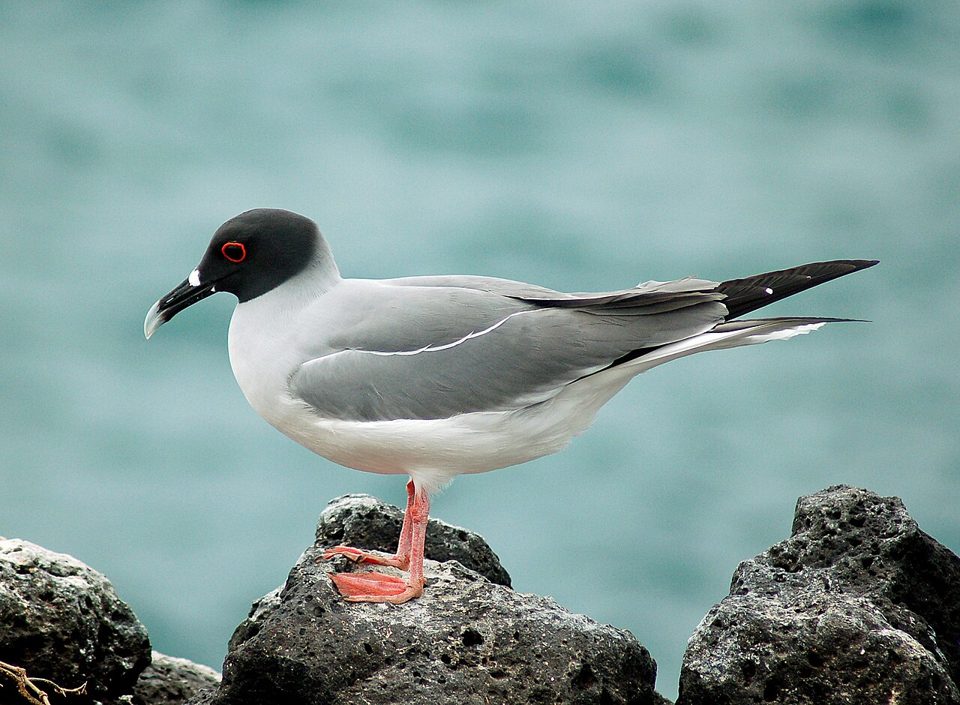
The only fully nocturnal gull. It leaves its colony in a noisy flock at dusk and hunts at night for squid and small fish that rise to feed on plankton, and its large eyes have a reflective layer that helps it see in the dark. In the breeding season the head is black with bright red rings around the eyes. Outside it, the head is white and the rings are black. It nests almost entirely in the Galápagos, with a few pairs at Malpelo, and is listed as Least Concern.

Table 2 — Birds named for Malpelo. Status is from the WWF Malpelo Island ecoregion page and the ProAves records.
PhotoBirdSpeciesStatus at MalpeloProfile
Nazca booby (Sula granti)Nazca boobySula grantiBreeds, in very large numbers. See the profile above.Wikipedia
Swallow-tailed gull (Creagrus furcatus)Swallow-tailed gullCreagrus furcatusBreeds, a few pairs. WWF gives about 50 pairs.Wikipedia
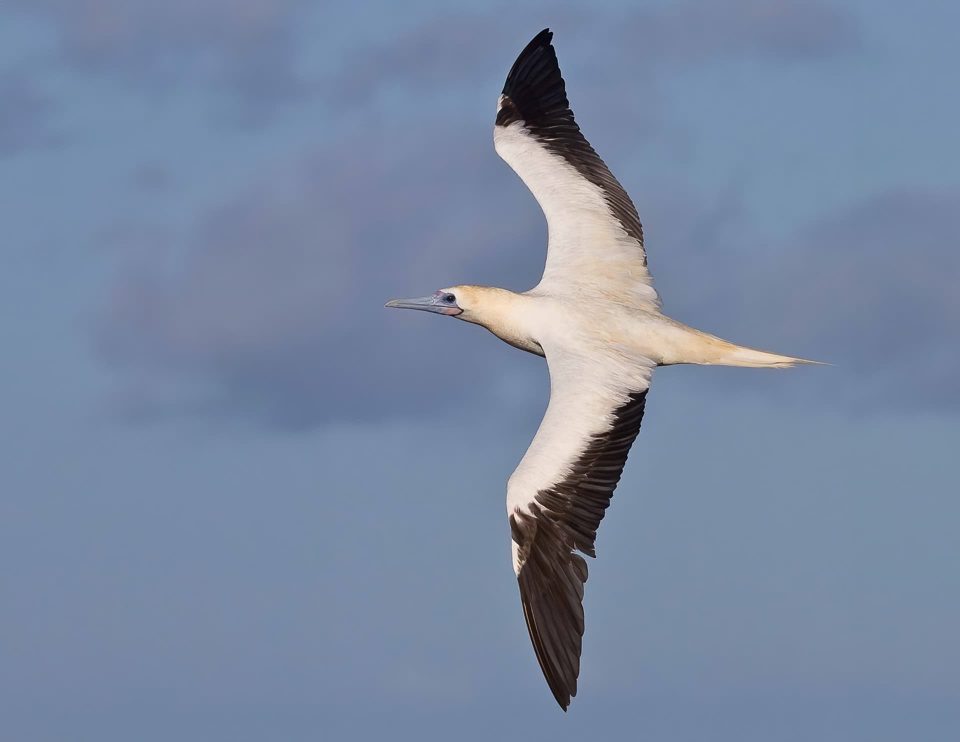
Red-footed booby (Sula sula)Red-footed boobySula sulaMost likely breeds in small numbers. No counts given.Wikipedia
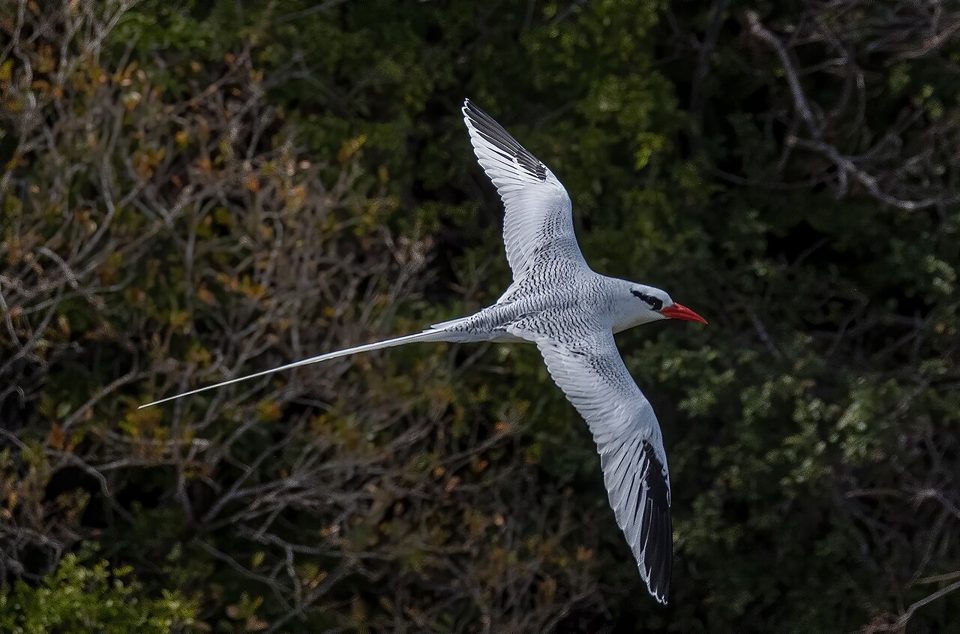
Red-billed tropicbird (Phaethon aethereus)Red-billed tropicbirdPhaethon aethereusMost likely breeds in small numbers. No counts given.Wikipedia
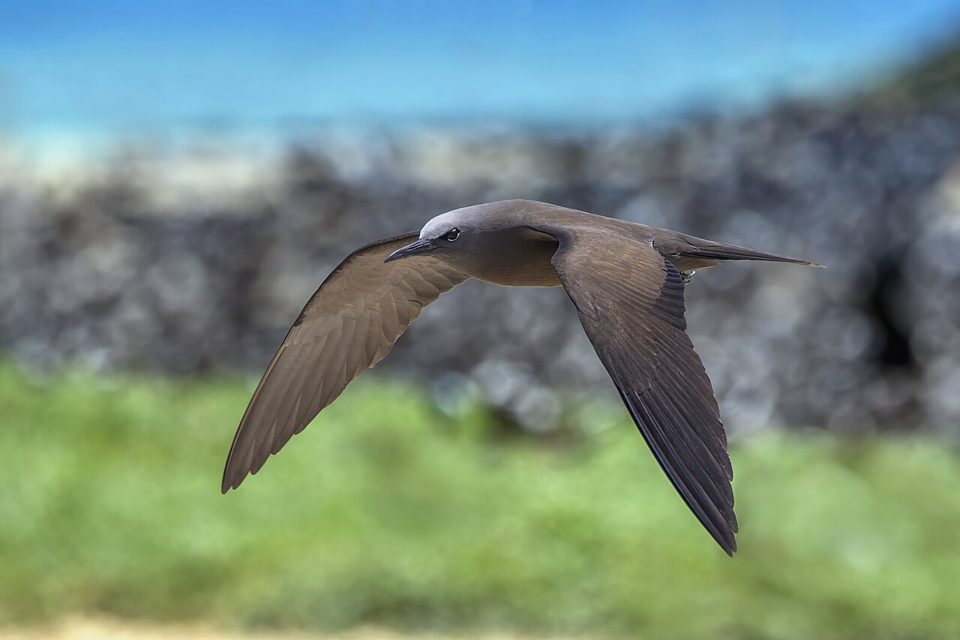
Brown noddy (Anous stolidus)Brown noddyAnous stolidusBreeds. Nests on the sea cliffs, mixed in with black noddies. No count given.Wikipedia
Black noddy (Anous minutus)Black noddyAnous minutusBreeds on bare cliff ledges, unusual for the species. See the profile above. No count given.Wikipedia
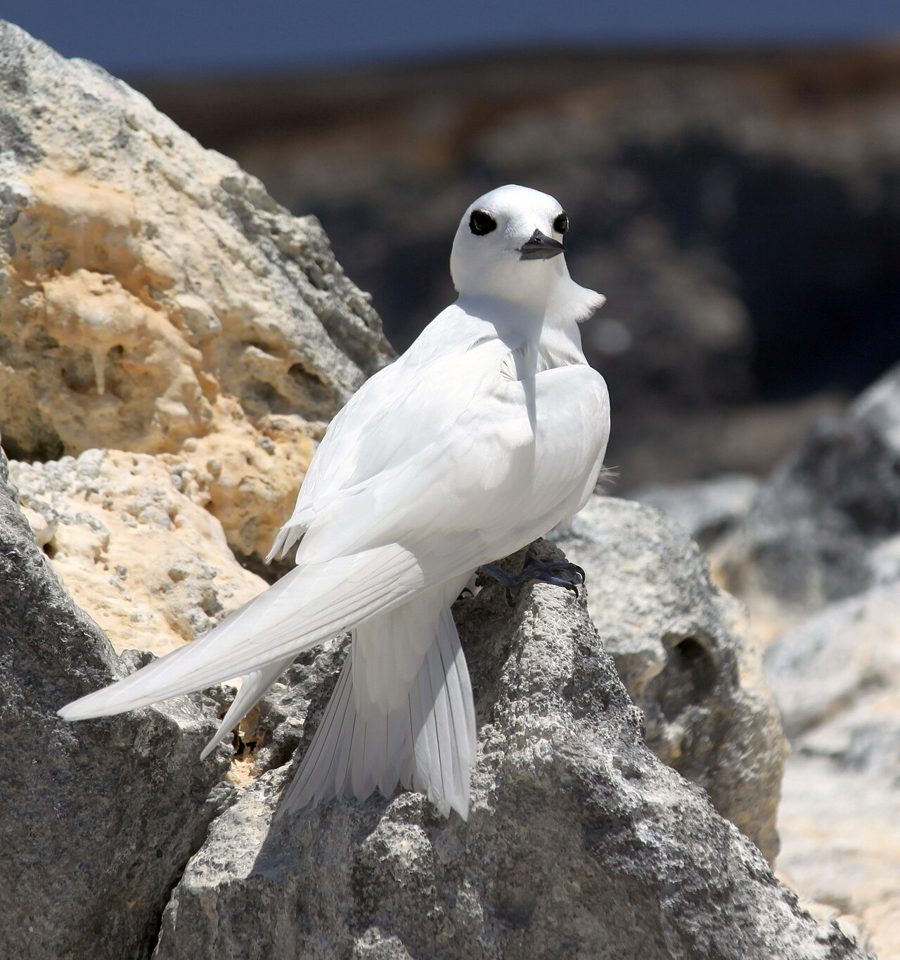
White tern (Gygis alba)White ternGygis albaMost likely breeds in small numbers. No counts given.Wikipedia
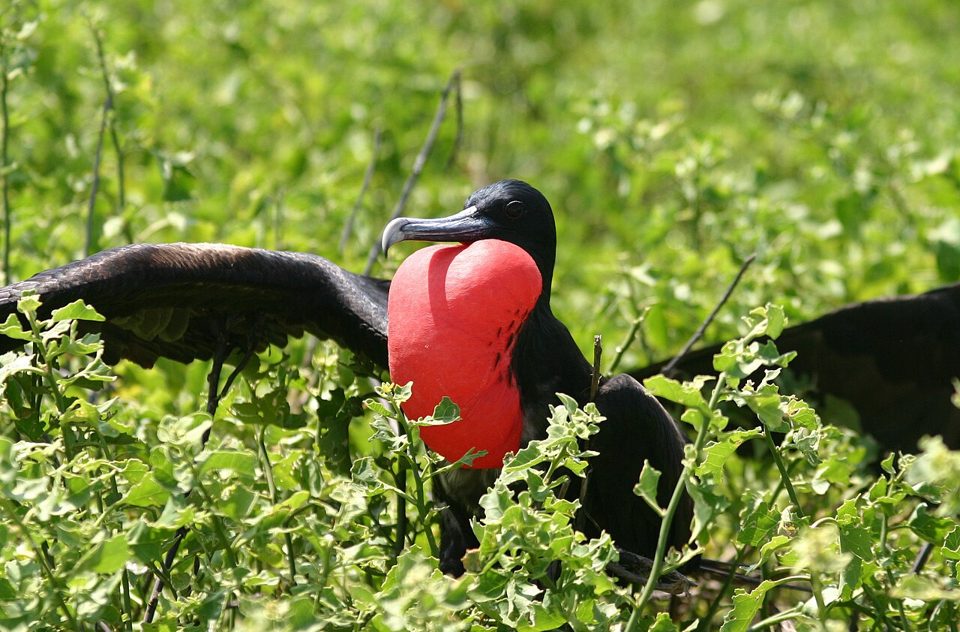
Great frigatebird (Fregata minor)Great frigatebirdFregata minorMost likely breeds in small numbers. No counts given.Wikipedia
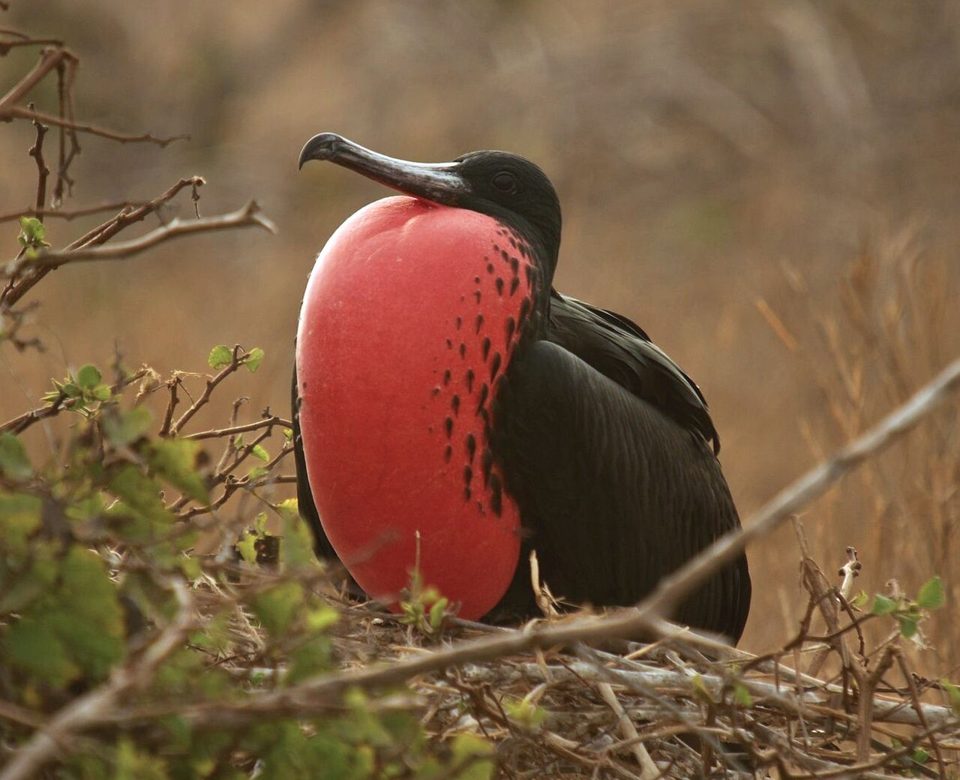
Magnificent frigatebird (Fregata magnificens)Magnificent frigatebirdFregata magnificensMost likely breeds in small numbers. No counts given.Wikipedia

Identification

Telling the birds apart

The pairs that get confused

Most of what flies past Malpelo is large, white and black, and seen against a bright sky from a moving boat. As with the sharks, shape and pattern hold up better than colour. Check three things in order: the size and shape of the bird, the pattern of black on the white, and then the bill and feet, which is usually what settles it.

Boobies Nazca and red-footed

Almost every booby you see here is a Nazca booby, so start from that and look for reasons to change your mind. The adult is clean white with black flight feathers along the trailing edge of the wing, a black tail, a black mask of bare skin around the face, and an orange-pink bill. It plunge-dives from height.

The red-footed booby is the smallest booby and the only one here with bright red feet, at any age and in any plumage. Its bill is pale blue-grey with pink at the base, not orange. It is the awkward one, because it comes in several colour forms: an all-brown form, a white form, and a white form with a black tail. That last one is the trap, because at a distance it reads as a Nazca booby. The feet settle it, and so does the lack of a black face mask and the much smaller size.

A brown bird the size of a Nazca booby is most likely a young Nazca, not a red-footed. Young Nazca boobies are brown above with a white collar, and take a few years to turn white.

Frigatebirds great and magnificent

Both are here and they are genuinely hard to separate, so do not force it. Either way you have a frigatebird: very long angular wings held in a kinked M, a long deeply forked tail, and no interest in landing on water. They chase other birds to make them drop their catch.

Adult males of both are all black with a red throat pouch, inflated only in display. If you get a good look at the upper wing, a great frigatebird male shows a pale brown bar across it; a magnificent male is plain. Females are easier: the great frigatebird female has a pale grey or reddish throat, while the magnificent frigatebird female has a clean black head with the white confined to her breast. Young birds of both have a white head and breast, often washed rusty, and are not worth naming to species.

Noddies brown and black

These two nest side by side on the cliffs, which makes the comparison easy when you have both. The brown noddy is the larger of the two, 38–45 cm, chocolate brown rather than black, with a pale grey cap that fades gradually into the brown of the face. The black noddy is smaller, 35–37 cm, properly sooty black, with a whiter cap that is sharply cut off, and a noticeably longer, finer bill. Both are dark terns with a wedge-shaped tail that feed by dipping to the surface instead of plunging.

The three you cannot mistake

The white tern is entirely white, small and buoyant, with a black ring around a dark eye and a black bill. In good light its wings look translucent. Nothing else here is all white.

The red-billed tropicbird is white with a heavy red bill, a black stripe through the eye, fine black barring across the back, black outer wing, and two long white tail streamers that roughly double its length. It flies with quick, stiff, pigeon-like wingbeats.

The swallow-tailed gull is the only gull here and the only fully nocturnal one in the world. Grey above and white below, with a forked tail and very large dark eyes. In breeding plumage the head is black with a bright red ring around the eye; outside it the head is white and the ring is black.

If you only remember one thing for each

Nazca booby: black face mask, orange bill. Red-footed booby: red feet. Great and magnificent frigatebird: forked tail and kinked wings, female’s head colour separates them. Brown noddy: brown with a soft grey cap. Black noddy: blacker, sharper white cap, thinner bill. White tern: all white. Red-billed tropicbird: red bill and two long streamers. Swallow-tailed gull: forked tail and a red eye-ring.

Numbers

How many species

Counts depend on the survey

2008 EXPEDITION
29 speciesRecorded on ProAves' eighth banding trip, two or more of them new for Malpelo.
2010 SURVEY
18 speciesFrom 11 families, 4 of them boreal migrants. The species are not named.
OVERALL
50+ speciesRecorded by scientists over the years, according to DAN.

Migrants and strays

Besides the breeding seabirds, Malpelo gets boreal migrants and the occasional stray, such as the three juvenile snail kites recorded on 30 March 2010, a first for the island. Strays like that are not in the table above, which covers the seabirds you can expect. The sources used here do not list the migrants by name.

Credits

Bird photo credits

Photos and their sources

Most of these photos are on Wikimedia Commons under open licences that require credit. Most were taken elsewhere in the Pacific or the world, not at Malpelo, so they show what the species looks like.

The red-footed booby photo comes from Pacific Rim Conservation, was taken at Lehua Islet, Hawaii, in May 2010, and has no open licence. The source page does not name the photographer.

Photo credits. Each link opens the page the photo came from. For Wikimedia Commons photos, it has the full licence terms.
SpeciesPhotographerLicenceSource
Nazca boobyBenjamint444GFDL 1.2Wikimedia Commons
Swallow-tailed gullsuecan1CC BY 2.0Wikimedia Commons
Red-billed tropicbirdUnknown authorCC0Wikimedia Commons
Brown noddyCharles J. SharpCC BY-SA 4.0Wikimedia Commons
Black noddyGregg YanCC BY-SA 3.0Wikimedia Commons
White ternDrew AveryCC BY 2.0Wikimedia Commons
Great frigatebirdCharles J. SharpCC BY-SA 3.0Wikimedia Commons
Magnificent frigatebirdAndrew Turner from Washington, DC, United StatesCC BY 2.0Wikimedia Commons
Red-footed boobyPacific Rim Conservation, photographer not named© Pacific Rim Conservation, no open licence statedpacificrimconservation.org

Sources

More information

Open each in a new tab

← Fish