Macro

San Carlos macro

Nudibranchs on the rocks, seahorses and giant jawfish, blennies peering out of old barnacle shells, and sea fans in the current.

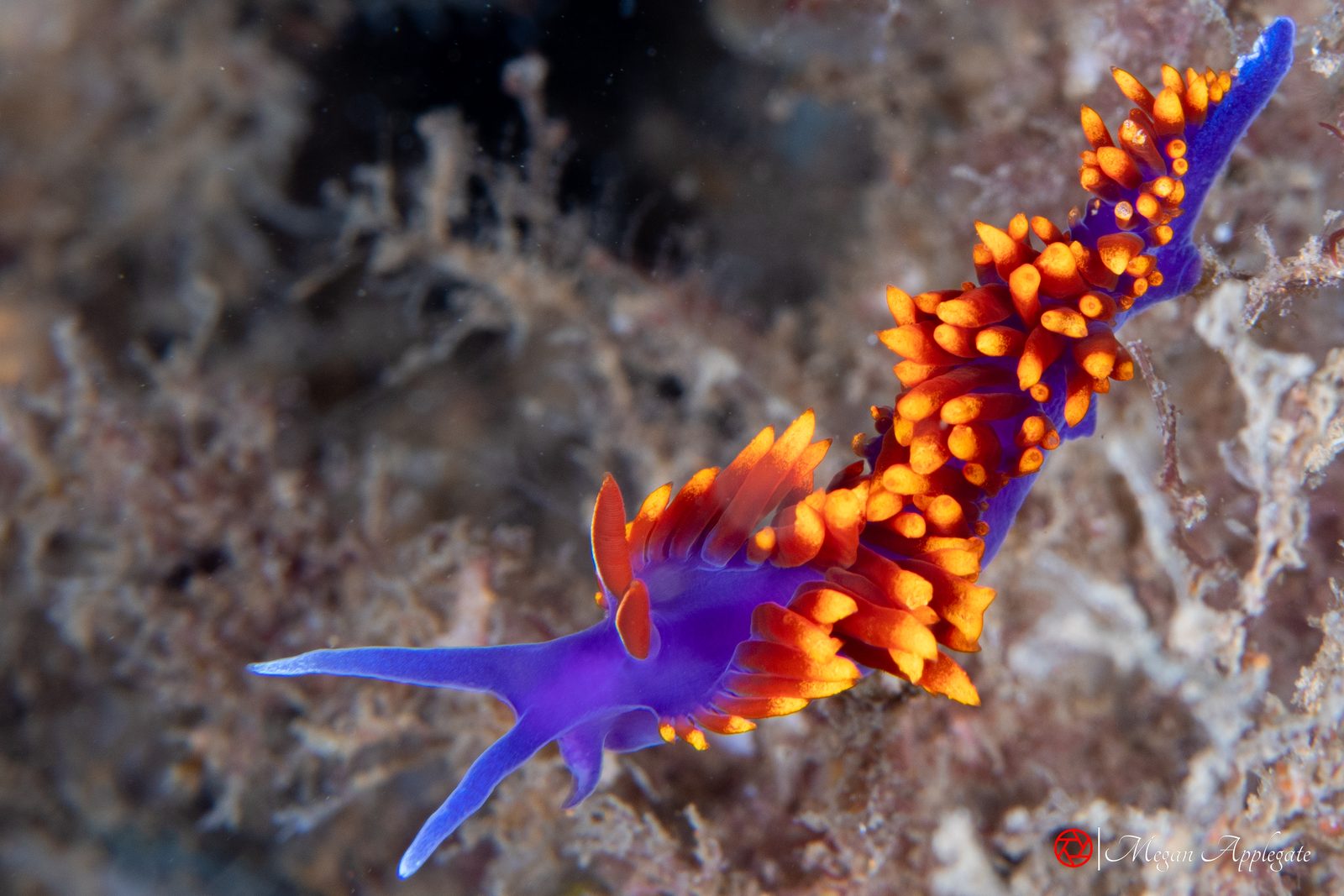
Spanish shawl (Flabellinopsis iodinea)
Spanish shawl. Photo © Megan Applegate, San Carlos, July 2024.

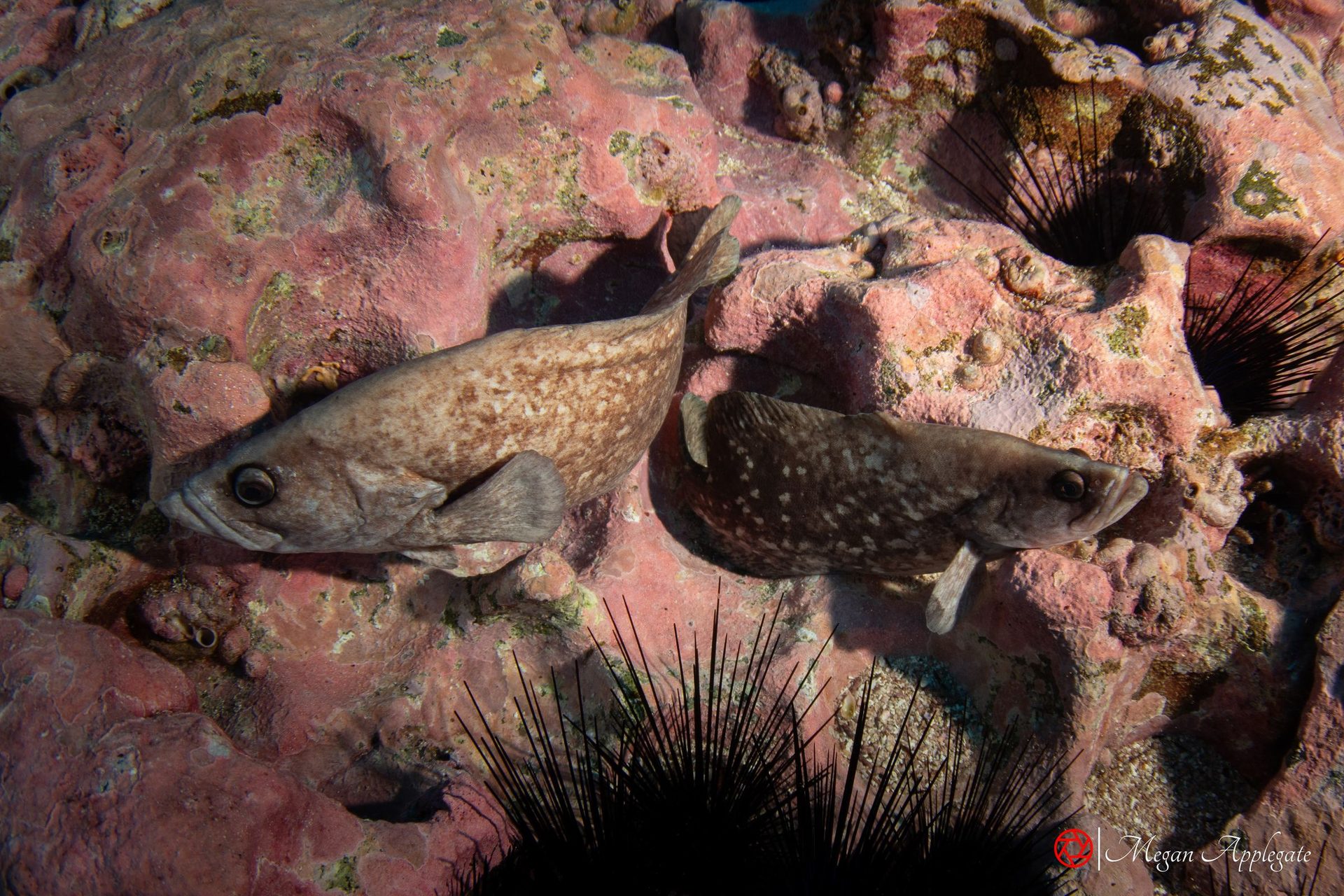
Background photo: Megan Applegate (Malpelo, Colombia)

Sea slugs

Nudibranchs

Bright colours on the rocks

Spanish shawl (Flabellinopsis iodinea)
Spanish shawl. Photo © Megan Applegate, San Carlos, July 2024.

Spanish shawl Flabellinopsis iodinea

Also listed as Flabellina iodinea.

Key marks: A purple body, orange cerata and scarlet rhinophores; its range includes the Gulf of California (Wikipedia).

At San Carlos: Photographed at San Carlos in July 2024 (photo on this page).

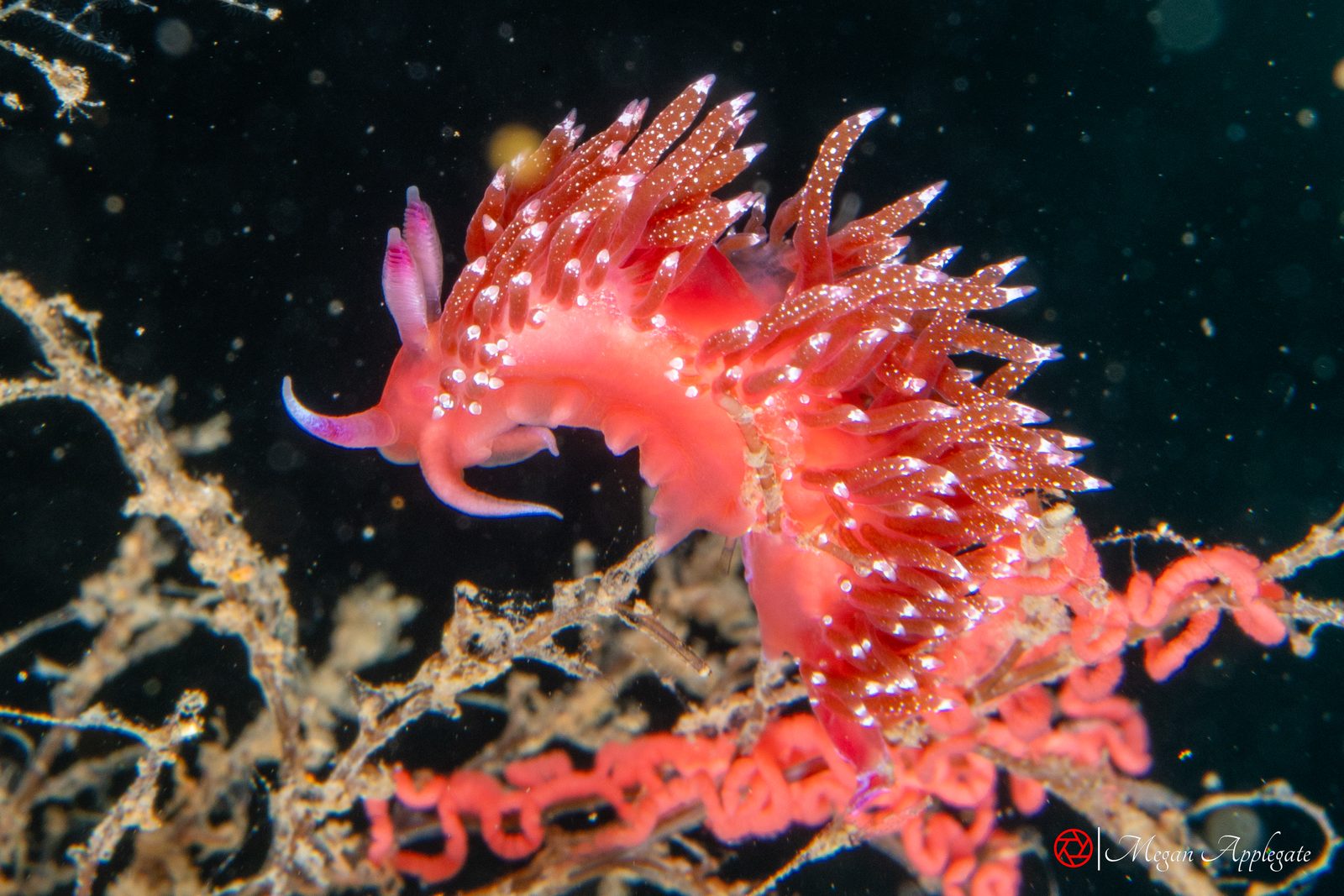
Bajaeolis bertschi (Bajaeolis bertschi)
Bajaeolis bertschi. Photo © Megan Applegate, San Carlos, July 2024.

Bajaeolis bertschi Bajaeolis bertschi

Key marks: A translucent reddish-pink aeolid with close-set opaque white spots on the head and back and cerata in groups on raised ridges; the rhinophores have white leaflets with a pink patch (Sea Slug Forum). Reported only on Eudendrium hydroids (Sea Slug Forum).

At San Carlos: Described from Bahía de los Ángeles, in the Gulf of California (Wikipedia); photographed at San Carlos in July 2024 (photo on this page).

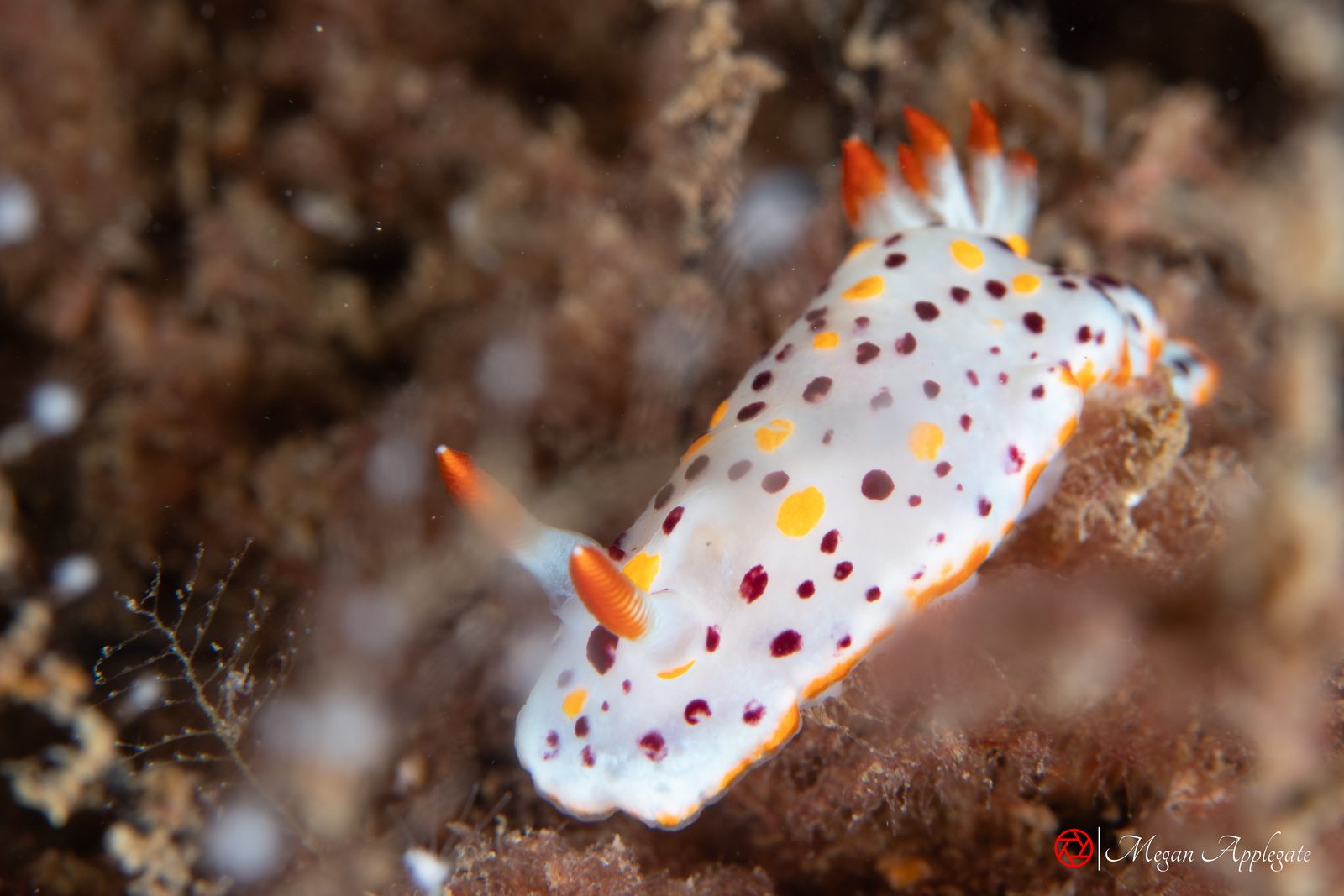
Felimida norrisi (Felimida norrisi)
Felimida norrisi. Photo © Megan Applegate, San Carlos, July 2024.

Felimida norrisi Felimida norrisi

Formerly Chromodoris norrisi and Glossodoris norrisi (Wikipedia).

Key marks: A small white dorid densely covered in purple or reddish spots mixed with yellow dots, with orange dashes around the mantle edge and orange-red tips on the rhinophores (NudiPixel); up to 60 mm (Wikipedia).

At San Carlos: Ranges from Baja California to Costa Rica (Wikipedia); photographed at San Carlos in July 2024 (photo on this page).

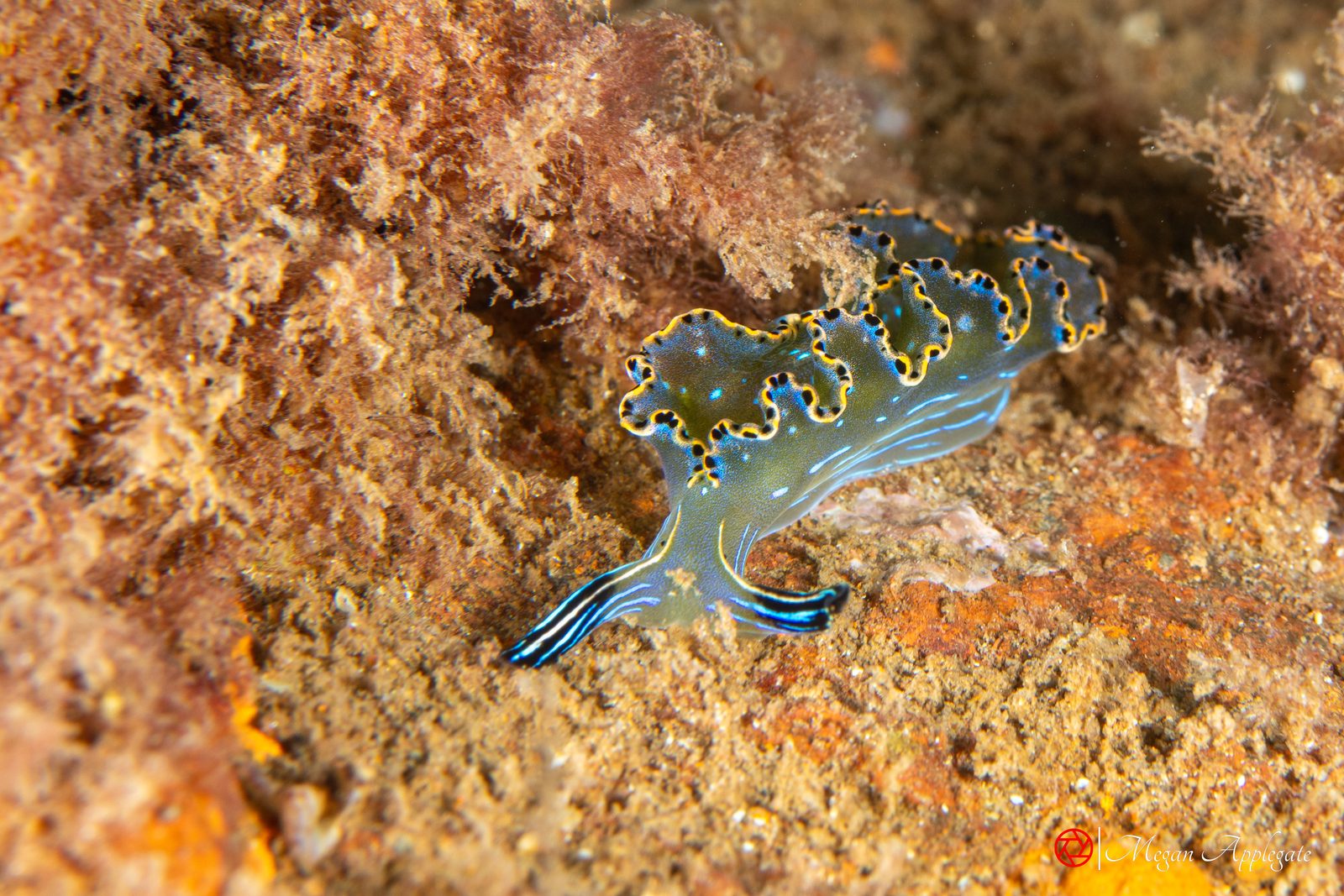
Elysia diomedea (Elysia diomedea)
Elysia diomedea. Photo © Megan Applegate, San Carlos, July 2024.

Elysia diomedea Elysia diomedea

A sap-sucking sea slug, not a nudibranch: it keeps chloroplasts from the algae it eats and uses them to photosynthesise (Wikipedia).

Key marks: Up to about 50 mm, pale green with white lengthwise streaks, densely folded side flaps edged in orange and black, and yellow-and-black striped rhinophores (Wikipedia).

At San Carlos: Common in the Gulf of California, down to about 20 m and often in sunlit shallows (Wikipedia); photographed at San Carlos in July 2024 (photo on this page).

Doriprismatica sedna Doriprismatica sedna

Also listed as Chromolaichma sedna or Glossodoris sedna.

Key marks: A white body with a red inner and yellow outer band around the mantle edge, and red tips on the rhinophores and gills; ranges from the Gulf of California to the Galápagos (Wikipedia).

At San Carlos: Listed among the sea slugs seen on trips to Mulegé and San Carlos (underwaterkwaj).

Small fish

Seahorses, jawfish and blennies

Look slowly, close to the bottom

Pacific seahorse Hippocampus ingens

Protected in Mexico (NOM-059, “subject to special protection”) (Wikipedia).

Key marks: The largest seahorse, up to about 30 cm; males have a prominent keel (Wikipedia).

At San Carlos: Divers on a 2015 trip were shown seahorses at the San Antonio and San Nicolás islets; the report doesn’t name the species (Undercurrent).

Giant jawfish Opistognathus rhomaleus

Key marks: Small dark spots on the head and back; juveniles have six dark bars (Smithsonian SFTEP). Grows to about 51 cm and lives on sand and rubble (FishBase).

At San Carlos: The Smithsonian’s SFTEP database has records near San Carlos (Smithsonian SFTEP). Look for a head poking out of a burrow in the sand.

Browncheek blenny Acanthemblemaria crockeri

Key marks: Up to 6 cm, with thick cirri over the eyes and a red-brown oval on the cheek outlined in black and ringed with white spots (Wikipedia).

At San Carlos: A Gulf of California fish (FishBase) that lives in old barnacle and clam holes, with only its head showing (Wikipedia).

Invertebrates

Sea fans and sea cucumbers

On rock and sand

Brown sea cucumber Isostichopus fuscus

Endangered on the IUCN Red List (Wikipedia).

Key marks: Dark brown with orange papillae, about 23 cm long (Wikipedia).

At San Carlos: Protected in Mexico (NOM-059) and fished only under permit, with quotas, a 20 cm minimum size and a season that normally runs from October to May, after a full ban from 1994 to 2002 (Reyes-Bonilla et al. 2016). Leave it where it lies.

Unconfirmed

Possible but unconfirmed

Found in the Gulf, not yet reported at San Carlos

These animals live in the Gulf of California, but no record at San Carlos itself was found.

Hands off

Don’t touch, move or hold marine life, including to set up a photo.

Credits

Macro photo credits

Photographed at San Carlos, July 2024

The sea slug photos are Megan Applegate’s own, taken at San Carlos in July 2024, © Megan Applegate, all rights reserved. Species without a photo link to photos online.

Photo credits.
SpeciesPhotographerLicenceSource
Spanish shawlMegan Applegate© Megan Applegate, all rights reservedPhotographer's own photo, taken at San Carlos, July 2024
Bajaeolis bertschiMegan Applegate© Megan Applegate, all rights reservedPhotographer's own photo, taken at San Carlos, July 2024
Felimida norrisiMegan Applegate© Megan Applegate, all rights reservedPhotographer's own photo, taken at San Carlos, July 2024
Elysia diomedeaMegan Applegate© Megan Applegate, all rights reservedPhotographer's own photo, taken at San Carlos, July 2024