Peak Dec–Apr
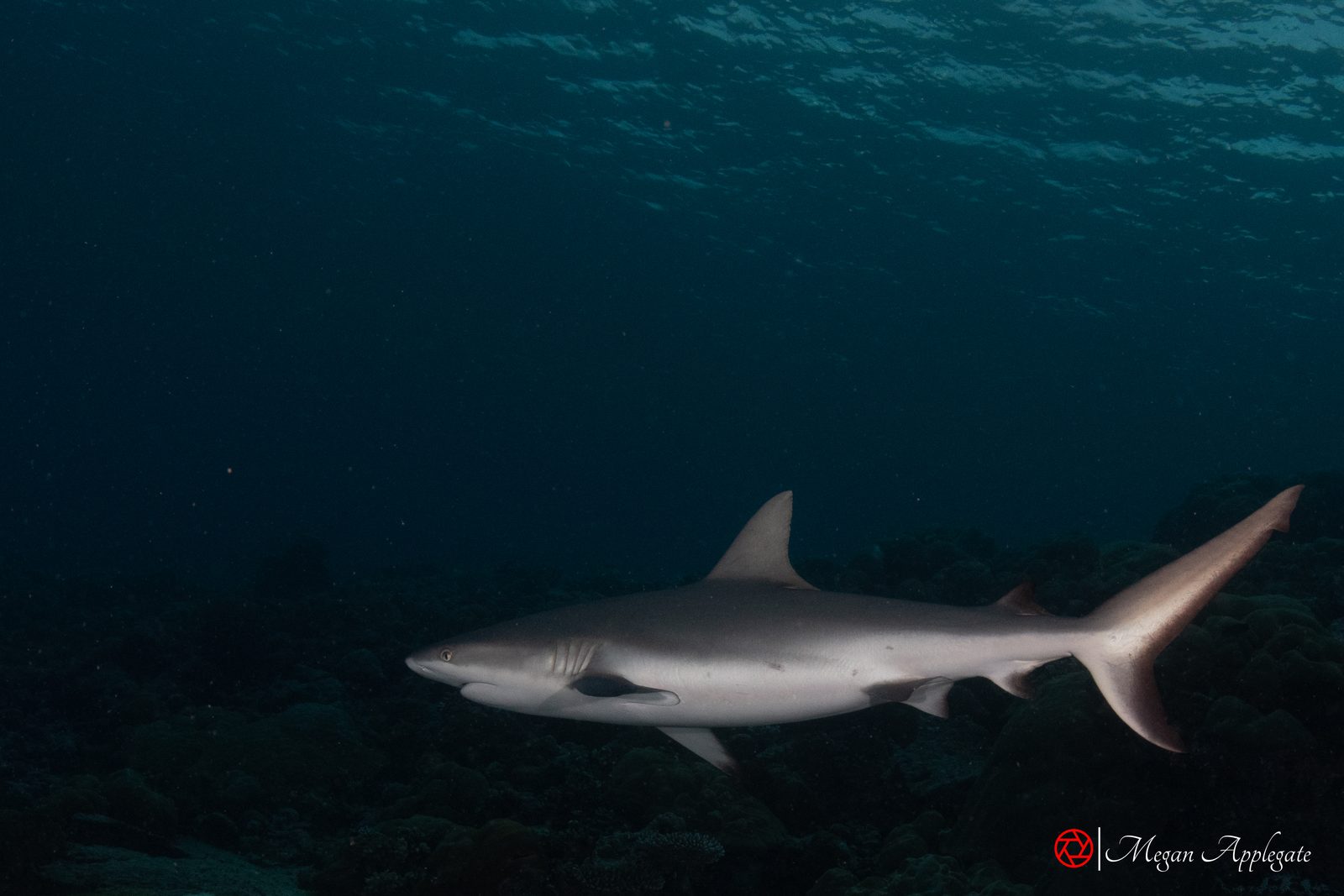
Grey reef sharks
Females with fresh mating scars gather at Blue Corner mainly from December to April, and feeding groups of 100–200 sharks have been recorded there from December to February (ISRA Ngemelis).
Rock Islands · Republic of Palau
A field guide to the sharks, rays, fish, small creatures, turtles and birds of Palau, and to Jellyfish Lake, with where and when to look for each and links to go deeper.
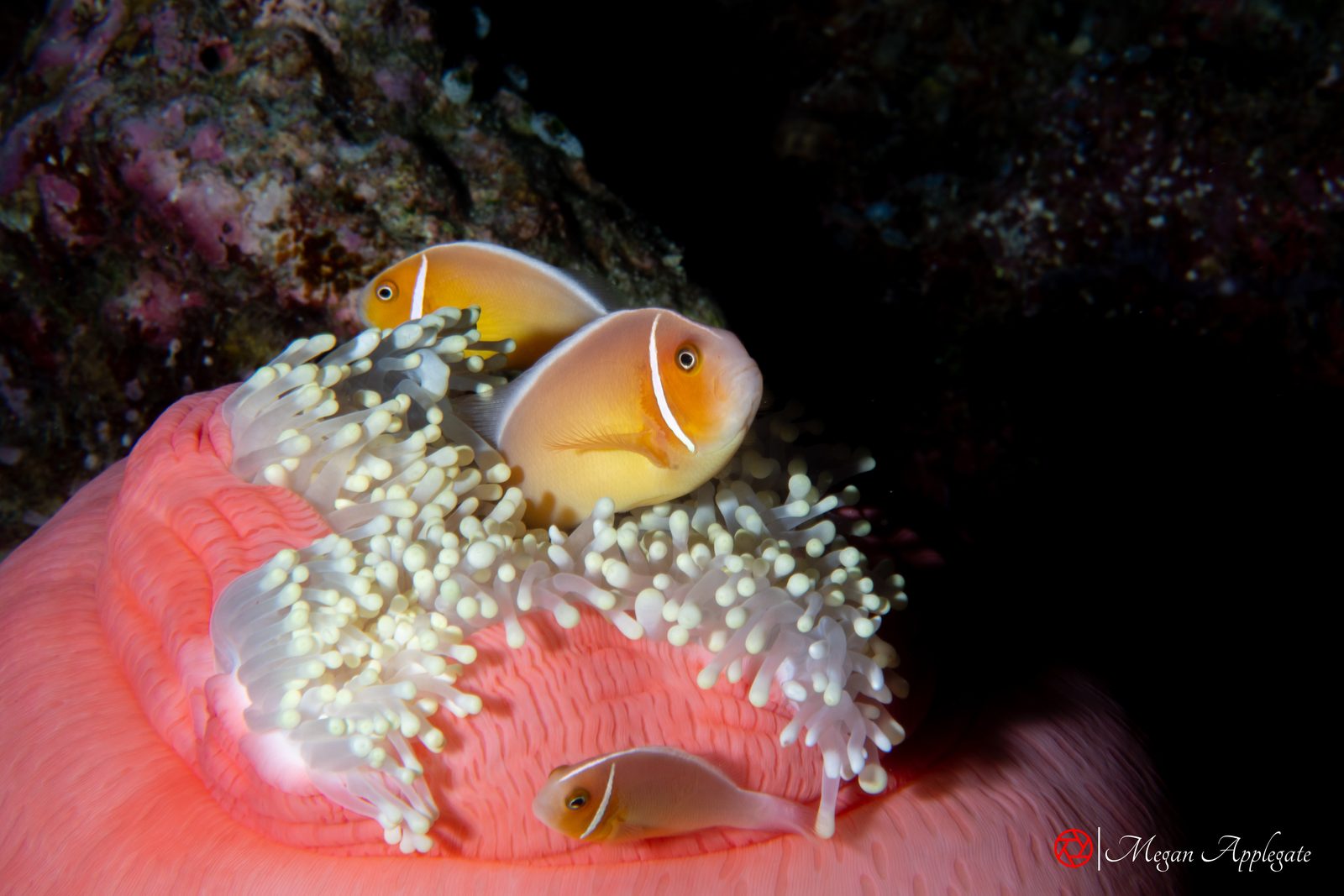
Photo Megan Applegate (Palau)
Palau is an island nation in the western Pacific of about 340 islands (Wikipedia). Its Rock Islands Southern Lagoon, 445 uninhabited limestone islands, became a UNESCO World Heritage Site in 2012 (UNESCO). In 2009 Palau created the world’s first shark sanctuary, and in 2015 it set aside about 80% of its waters, some 500,000 km², as a fully protected marine sanctuary (Pew 2015; DAN Alert Diver); a 2019 amendment kept the no-take area and moved the domestic fishing zone further out (SeafoodSource 2019).
Divers come for grey reef sharks on current-swept corners such as Blue Corner, reef mantas at German Channel, spawning fish timed by the moon, walls, caves, World War II wrecks and Jellyfish Lake (Dive The World; PADI). Since 2017 every visitor signs the Palau Pledge, stamped in their passport, promising to protect the islands (World Economic Forum). Currents can be strong, and reef hooks are standard at the corners (Dive The World).
Location
The sites named under “What divers report”, from Koror out to the reef edge and south to Peleliu. The lighter shapes are reefs.
Dive sites, from north to south
The site map works offline and prints. Satellite is interactive: zoom and drag, and tap or hover a pin for its name (it needs an internet connection). Positions are approximate. Site positions: OpenStreetMap, and Wikipedia for German Channel and Jellyfish Lake. Coastline © OpenStreetMap contributors.
Six field pages, with where and when to look for each species and links to go deeper.
Sharks & raysReef sharks and reef mantasWhere and when to see each, and the marks that tell them apart.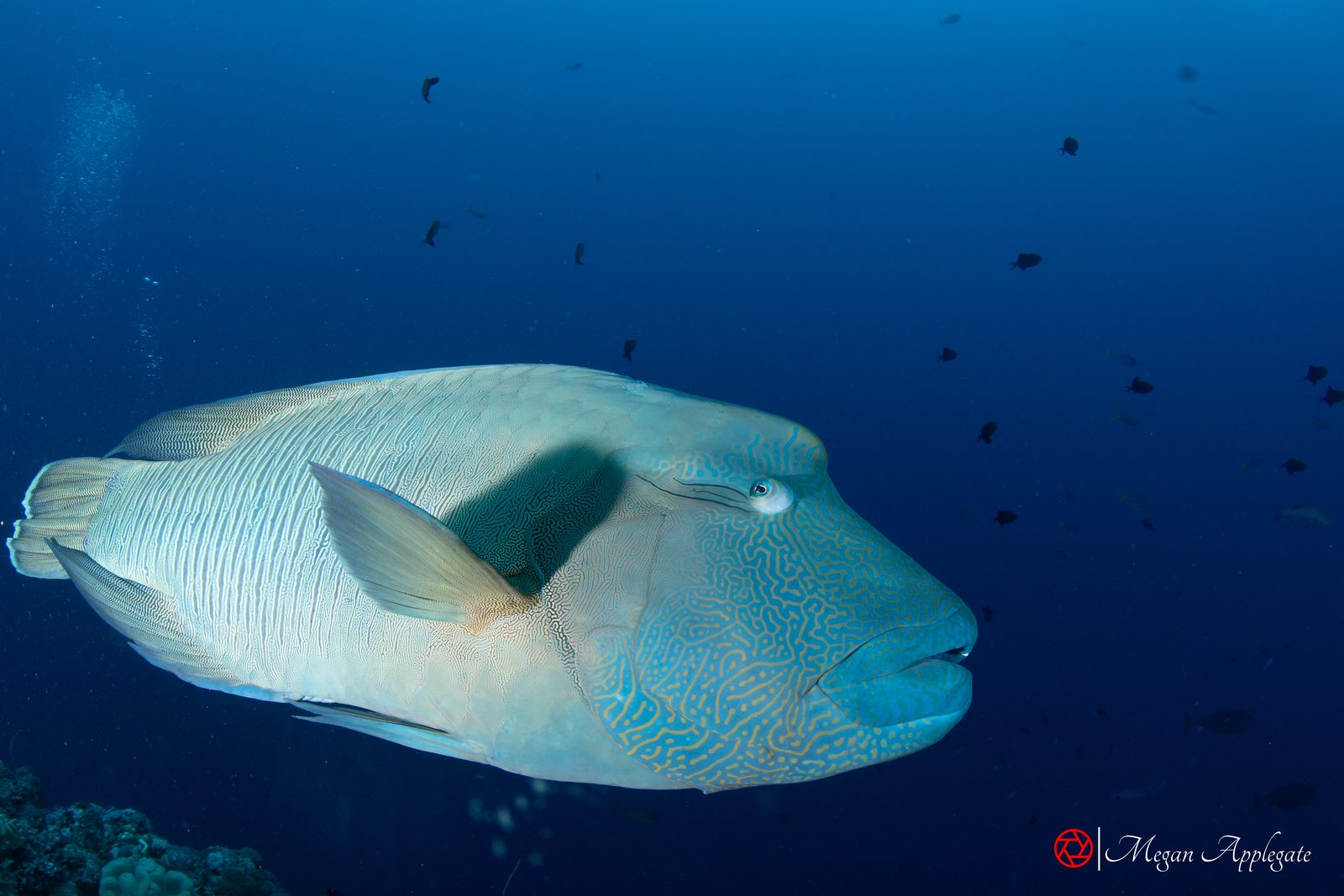 Fish25 reef fish and the spawning seasons
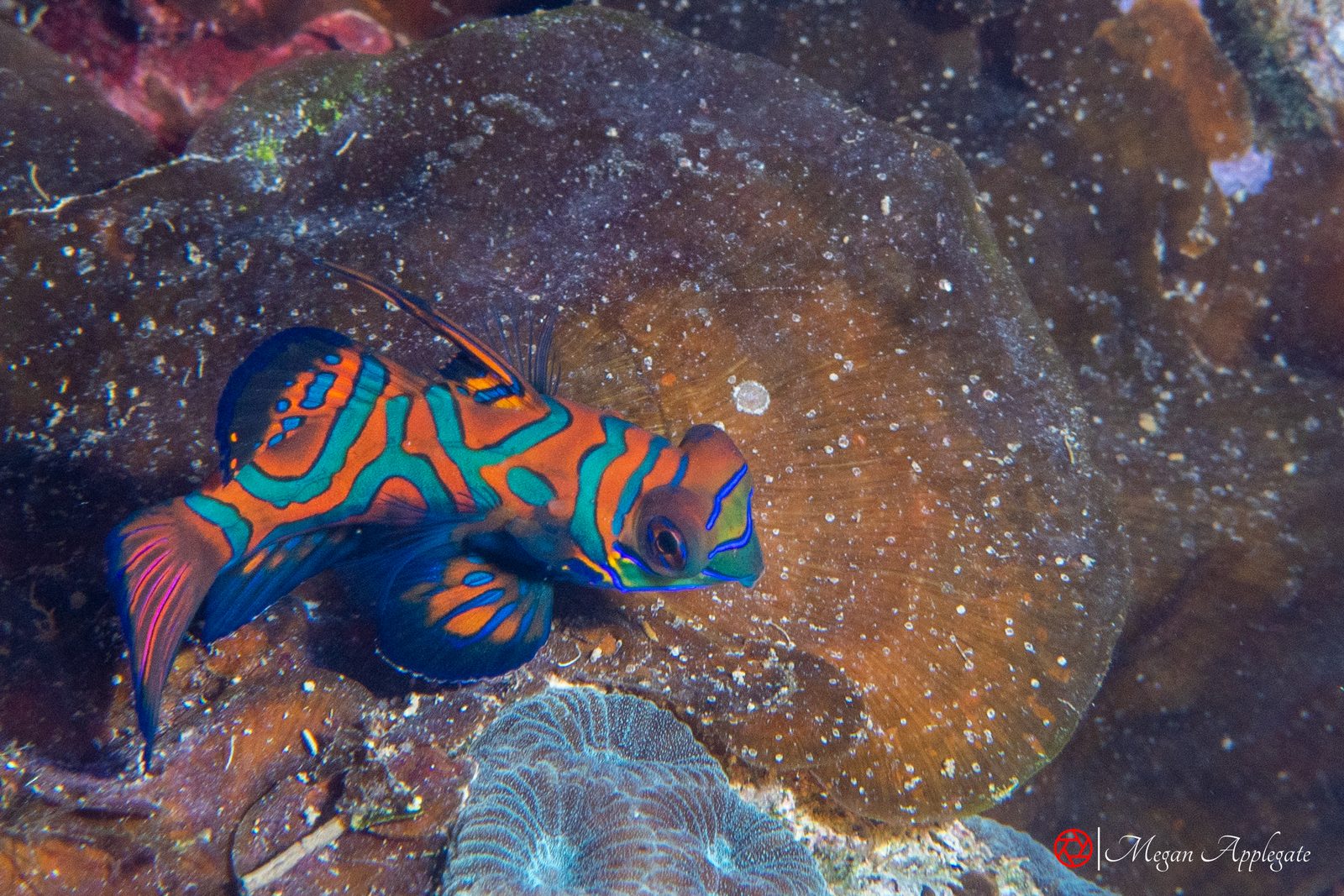 MacroNudibranchs, shrimp and mandarinfish
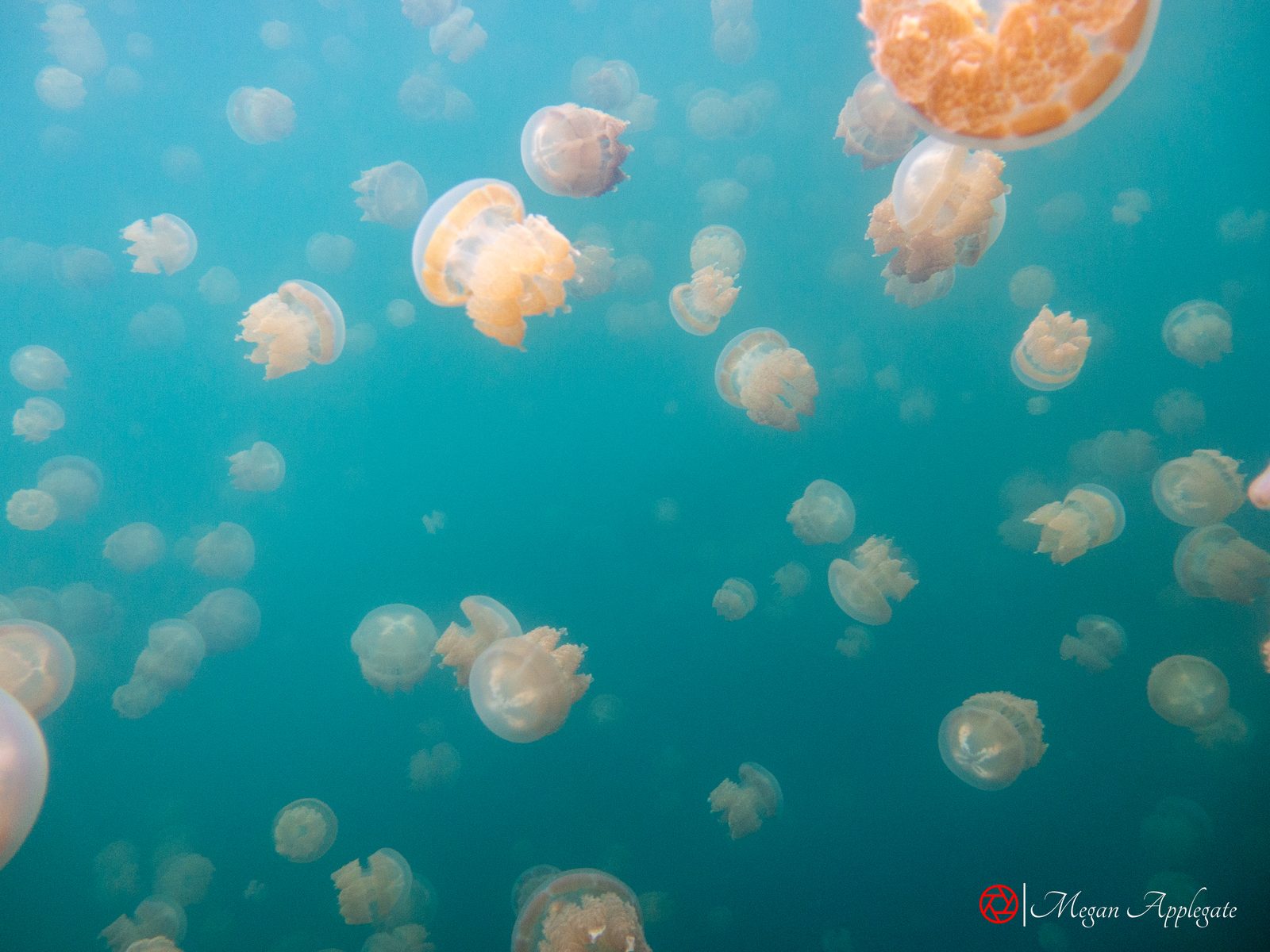 Jellyfish LakeGolden jellyfish found nowhere else
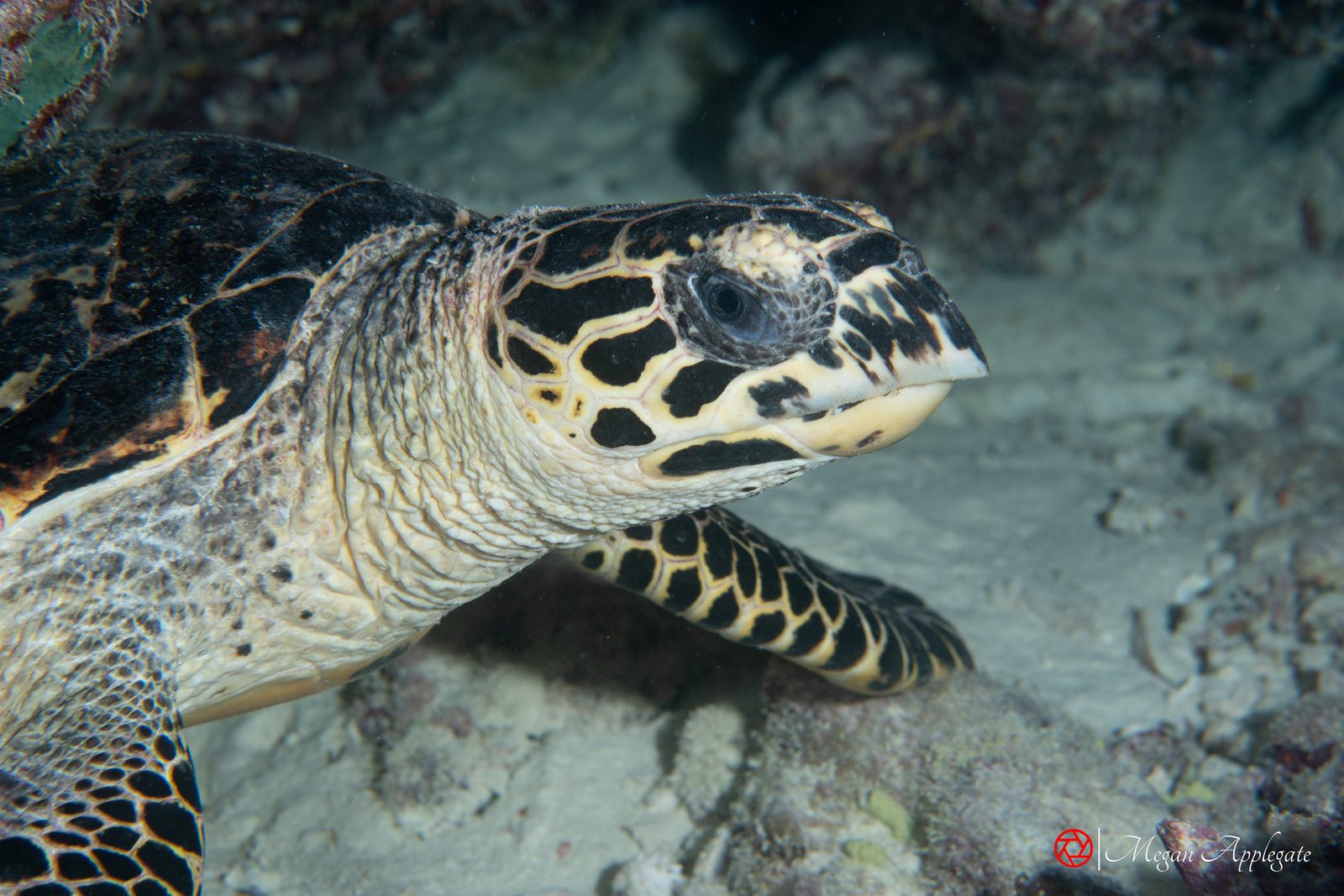 TurtlesHawksbill and green turtles
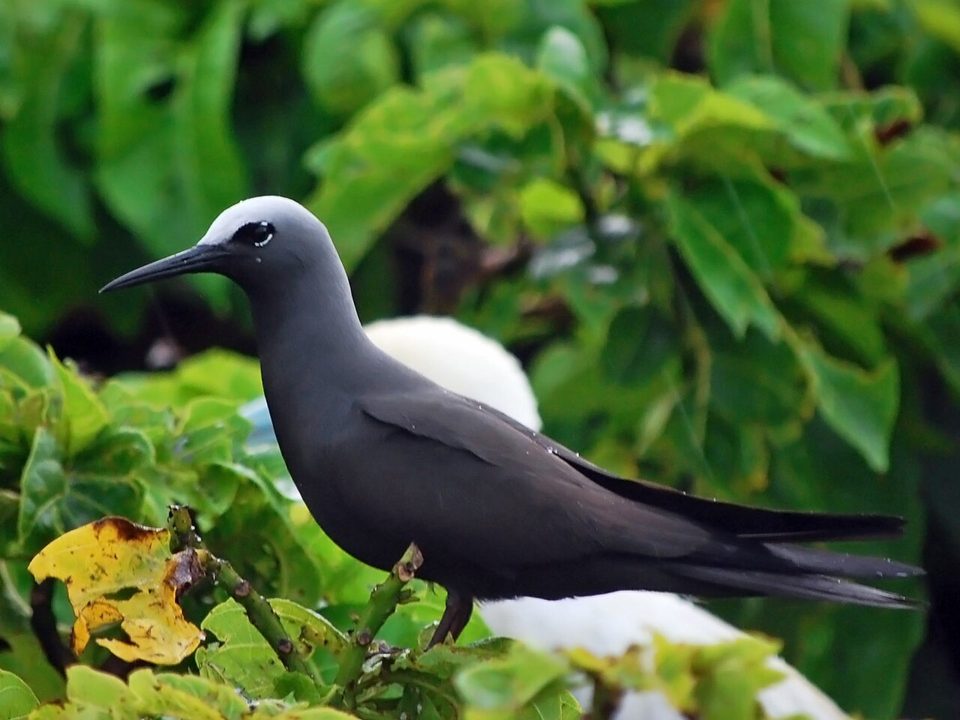 BirdsThirteen birds found only in Palau
Pick a month to see what is at its peak. Palau is dived all year; sources put the calmer, drier months between about November and April, with peak conditions from October to May (Palau Dive Adventures; PADI), and rain falls more often from June to October (Wikipedia). The water is about 27–30 °C all year (Liveaboard.com), though at depth around Blue Corner it can drop to about 24 °C from January to March (ISRA Ngemelis). Check conditions with your operator before booking.
Females with fresh mating scars gather at Blue Corner mainly from December to April, and feeding groups of 100–200 sharks have been recorded there from December to February (ISRA Ngemelis).
Groups of 15–25 feed around the full moon from November to January (ISRA Ngemelis Channel); one guide gives December to March as the peak at German Channel (PADI).
Reef mantas feed here from January to May, peaking at 40–50 in April and May, when a strong incoming current runs before new and full moons (ISRA Ngardmau Passage).
Sailfin snappers spawn from dawn to about 10 am for 4–5 days on the waxing moon, and grey reef sharks hunt the spawning fish (ISRA Peleliu Corner).
Camouflage groupers spawn once a year in June or July, in the days before the new moon, and sharks gather to feed (ISRA Ulong).
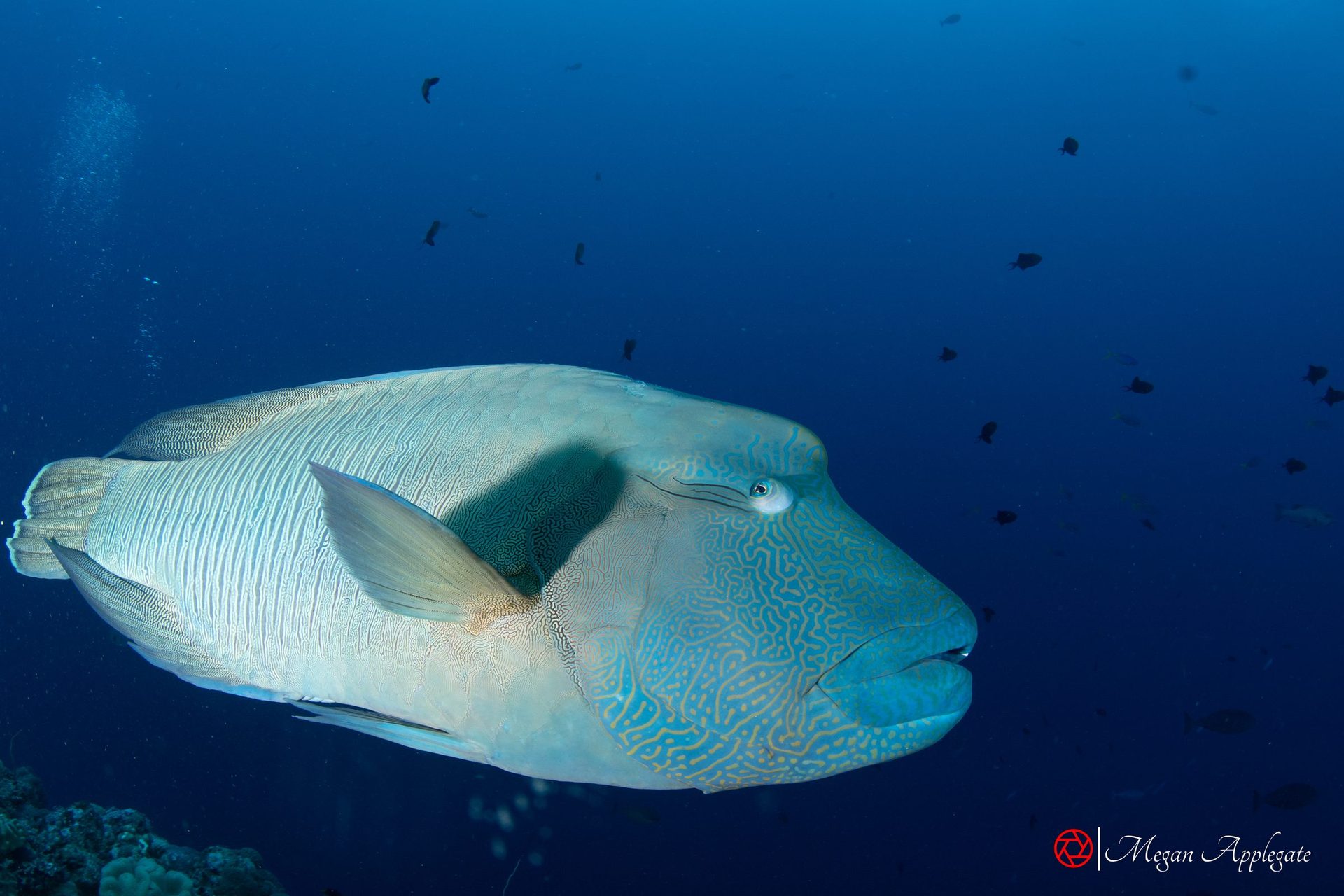
Photo Megan Applegate (Palau)
Six animals divers meet in Palau, with the mark that gives each away. The species pages have the full notes and sources.
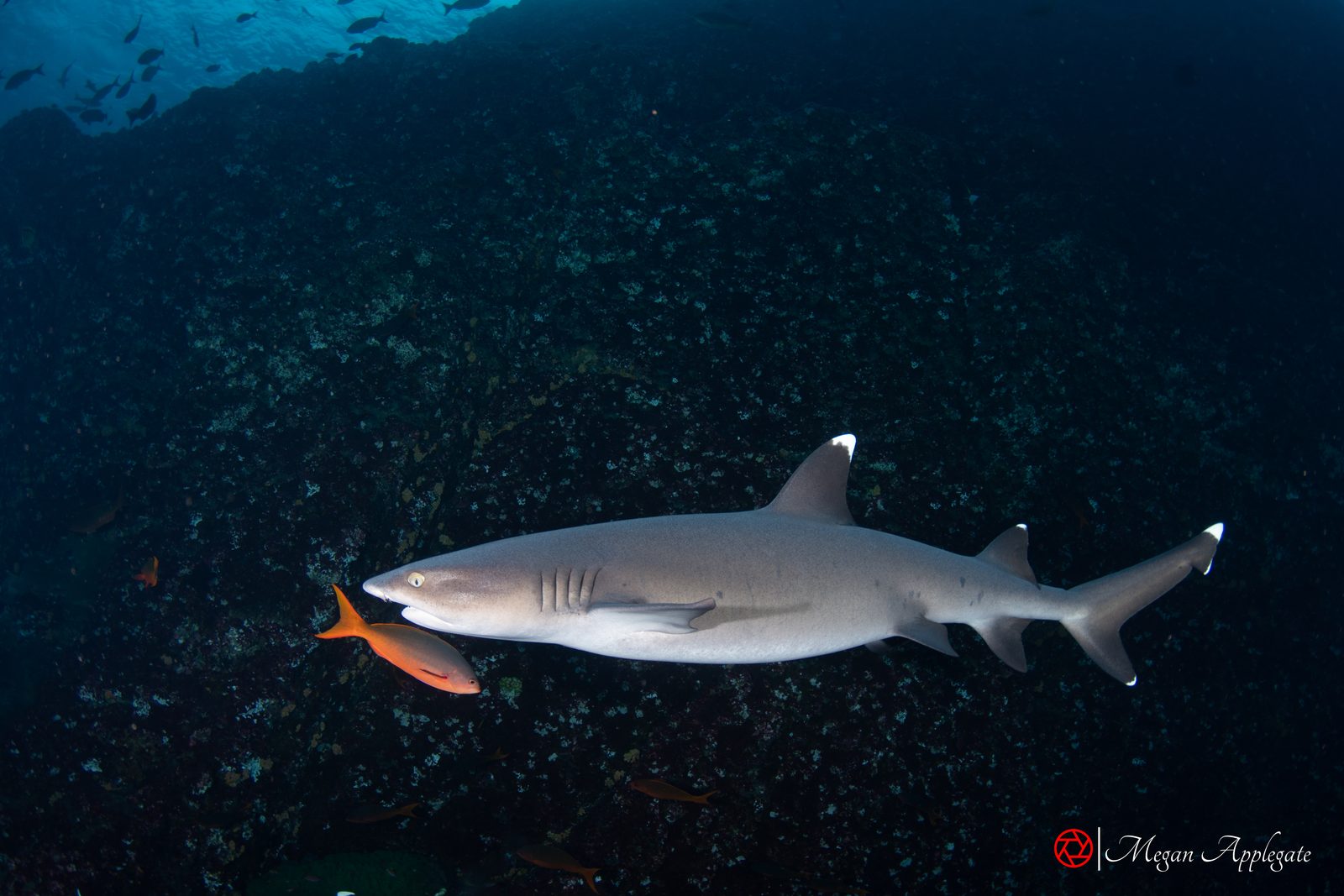
From the ISRA factsheets, PADI, Dive The World and Palau Dive Adventures. Individual dives vary.
A reef point in the current where divers hook in to watch grey reef and whitetip sharks, schools of snappers, jacks and barracuda, eagle rays and turtles; the Blue Holes nearby drop through four vertical holes in the reef.
Source: Dive The WorldA channel dredged through the reef, with a manta cleaning station at about 20 m; garden eels, shrimpgobies and nudibranchs on the sand.
Source: PADI; Dive The WorldA fast drift through a channel 3–13 m deep, with lettuce coral, grey reef sharks, and spawning groupers in June or July.
Source: ISRA Ulong; Dive The WorldA wall that drops to 40–53 m, with grey reef sharks on most dives; the tunnel opens onto the blue.
Source: ISRA Siaes Corner; Palau Dive AdventuresStrong currents at the southern tip, grey reef sharks on about 90% of dives, spawning snappers, and occasional bull sharks; the wall is gentler.
Source: ISRA Peleliu Corner; PADIWalls with hawksbill turtles, grey reef sharks, humphead wrasse, pyramid butterflyfish and fusiliers.
Source: Dive The WorldChambers of stalactites and stalagmites with an air pocket; an overhead environment for trained divers.
Source: PADI; Palau Dive AdventuresSnorkel only: a marine lake of golden jellyfish found nowhere else. See the Jellyfish Lake page.
Source: Oceanic SocietyPhotos
Photos marked “Megan Applegate” were taken in Palau in January 2023 (Jellyfish Lake in September 2021), except a few species she photographed at Socorro, Cocos Island or Malpelo, which are labelled. The seabird photos are reference photos credited on the Birds page.
Photo Megan Applegate (Palau)
Every link opens in a new tab. Each species page cites its own sources as well.