Sea lions & big animals

San Carlos sea lions & big animals

Playful young sea lions at Isla San Pedro Nolasco, hammerheads in late summer and autumn, devil rays and electric rays, and dolphins and whales in the Gulf of California.

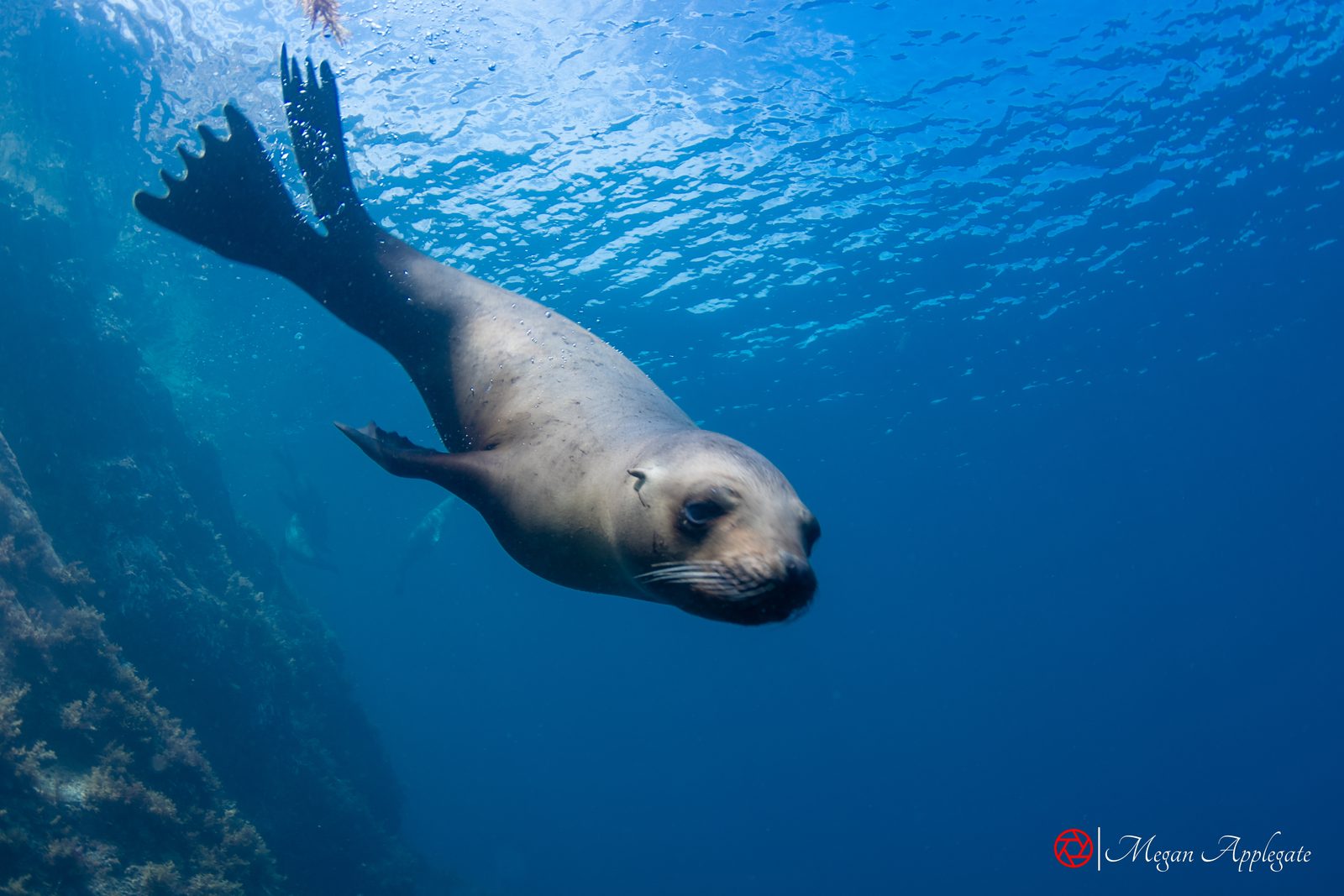
California sea lion (Zalophus californianus)
California sea lion. Photo © Megan Applegate, San Carlos, July 2024.

Background photo: Megan Applegate (Socorro, Mexico)

Sea lions

The sea lions of San Pedro Nolasco

“Seal Island”, about 28 km offshore

California sea lion (Zalophus californianus)
California sea lion. Photo © Megan Applegate, San Carlos, July 2024.

California sea lion Zalophus californianus

Least Concern on the IUCN Red List (SeaLifeBase).

Key marks: Brown, with external ear flaps and long front flippers it uses to “fly” underwater. Adult males reach about 2.4 m and 390 kg (SeaLifeBase) and have a high bony crest on the head (Wikipedia); females and young are smaller and paler.

At San Carlos: Isla San Pedro Nolasco holds a breeding colony (IUCN World Heritage Outlook); in summer large numbers of pups can be seen, guarded by a dominant male (Wikipedia). A 2016 drone count found 721 sea lions there (Adame (IPN)). Divers report young sea lions swimming up and turning inches from their masks while a large bull keeps divers away from the nursery (Undercurrent).
In the Gulf of California most pups are born in June; the breeding season runs from June to August, with mating from late July to mid-August, and the central and northern Gulf colonies breed about two weeks earlier than the southernmost one (Adame (IPN)).

The Gulf’s sea lions are in decline: one study found the population fell about 65% between 1991 and 2019, from about 43,800 to about 15,300 animals, and linked the fall to decades of warming seas (Adame et al. 2020). The Nolasco count of 2016 was 34% below a count made about a decade earlier (Adame (IPN)).

Let them come to you

Don’t chase or touch sea lions. Bulls defend their breeding rookeries aggressively and should never be approached (California Diver), especially in the summer breeding season (Adame (IPN)). Stay clear of the pup nursery near shore (Undercurrent).

Big fish

Hammerheads and rays

Seasonal visitors and residents of the sand

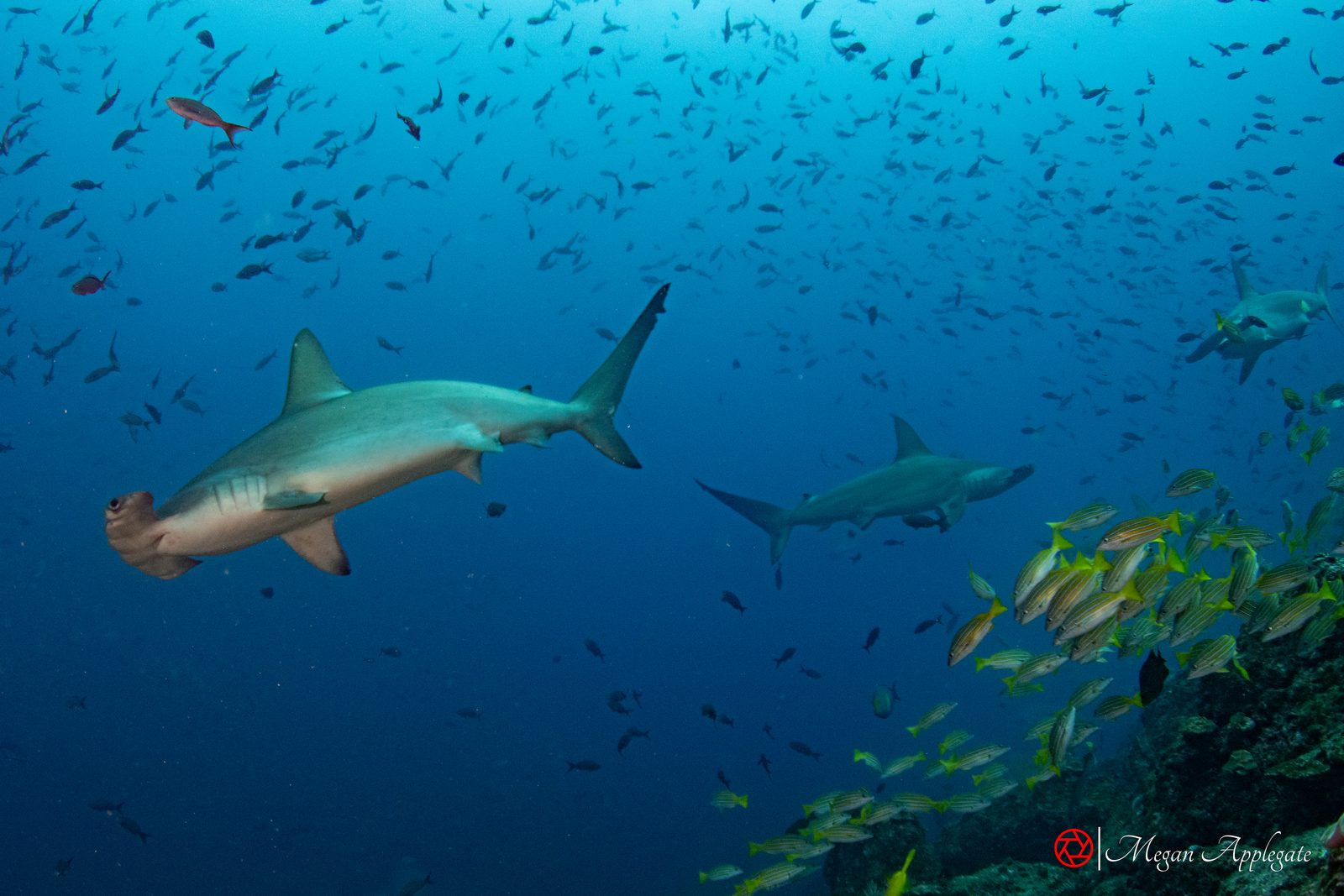
Scalloped hammerhead (Sphyrna lewini)
Scalloped hammerhead. Photo © Megan Applegate, Cocos Island, Costa Rica, August 2024 (not taken at San Carlos).

Scalloped hammerhead Sphyrna lewini

Critically Endangered on the IUCN Red List (Wikipedia).

Key marks: A wide, flattened hammer-shaped head with the eyes at its ends, and a scalloped front edge with a notch in the middle (Wikipedia).

At San Carlos: Best from August to November, when schools gather at San Pedro Nolasco for experienced divers (PADI). Reported at the island’s South Point, where a swim-through reaches about 23 m, and at about 34 m on the Sea Mount east of town (Scuba Diving).

Munk’s devil ray Mobula munkiana

Vulnerable on the IUCN Red List (Wikipedia).

Key marks: The smallest devil ray, about 1.1 m across, lavender-grey above with a dark collar-like band near the head and no tail spine; schools can number in the thousands and leap clear of the water (Wikipedia).

At San Carlos: PADI lists mobula rays at San Carlos in winter without naming the species (PADI). The best-studied breeding grounds of this species are in Baja California Sur, not Sonora (Manta Trust).

Bullseye electric ray Diplobatis ommata

Least Concern on the IUCN Red List (FishBase).

Key marks: A small round electric ray, up to about 25 cm, with a ringed “bullseye” spot in the middle of the disc; lives from 3 to 94 m, from the Gulf of California to Ecuador (FishBase).

At San Carlos: Seen occasionally in winter, along with banded guitarfish (PADI). Don’t touch: it can give an electric shock.

Cortez round stingray Urobatis maculatus

Key marks: A small, round-disced stingray. It is easily confused with the round stingray (U. halleri), which has a brown disc with pale spots or a net-like pattern and a serrated tail spine, and with the reef stingray (Wikipedia).

At San Carlos: Recorded on REEF surveys in the San Carlos area (REEF; REEF). Shuffle your feet when wading: round stingray stings are very painful, though not fatal (Wikipedia).

Whale sharks are rare at San Carlos (PADI). They are Endangered on the IUCN Red List (Wikipedia).

Mammals

Dolphins and whales

On the boat ride out

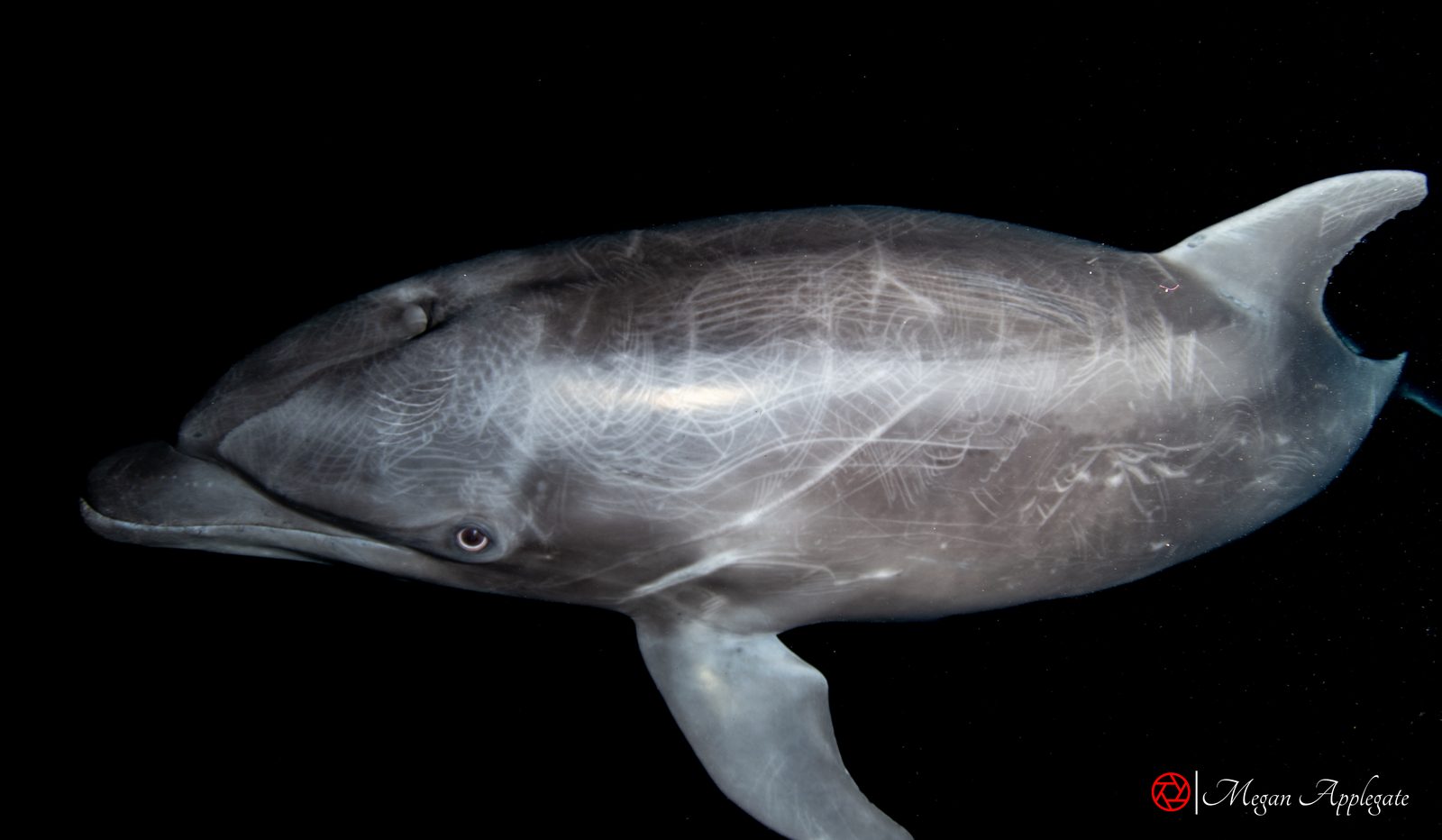
Common bottlenose dolphin (Tursiops truncatus)
Common bottlenose dolphin. Photo © Megan Applegate, Socorro, Mexico, December 2023 (not taken at San Carlos).

Common bottlenose dolphin Tursiops truncatus

At San Carlos: The Gulf of California has a resident population (IMMA), and boat tours from San Carlos report a local pod feeding along the shore (GetMyBoat).

Fin whale Balaenoptera physalus

Vulnerable on the IUCN Red List (IMMA).

At San Carlos: The Gulf’s fin whales are a population of their own, genetically and acoustically isolated and present all year; it was estimated at 656 animals in 2004, and Bahía Kino, north of San Carlos, is one of its feeding areas (IMMA). Numbers rise in winter and spring (Wikipedia).

Humpback, sperm and grey whales are seen mostly from December to March, and sperm whales pass San Carlos in winter (PADI).

Credits

Photo credits

Where the photos come from

The sea lion is Megan Applegate’s photo from San Carlos, July 2024. The hammerhead and the dolphin are her photos of the same species at Cocos Island and Socorro; the other animals link to photos online.

Photo credits.
SpeciesPhotographerLicenceSource
California sea lionMegan Applegate© Megan Applegate, all rights reservedPhotographer's own photo, taken at San Carlos, July 2024
Scalloped hammerheadMegan Applegate© Megan Applegate, all rights reservedPhotographer's own photo, taken at Cocos Island, Costa Rica, August 2024
Common bottlenose dolphinMegan Applegate© Megan Applegate, all rights reservedPhotographer's own photo, taken at Socorro, Mexico, December 2023