Mammals

Socorro whales & dolphins

Humpback whales that come to calve each winter, resident bottlenose dolphins that seek out divers, and the false killer whales and orcas that pass through.

Common bottlenose dolphin

Background photo: Megan Applegate (Socorro)

Whales and dolphins

Mammals of the Revillagigedo Islands

Four species · key marks on each

Humpback whales come to the islands in winter to calve, and a resident group of bottlenose dolphins approaches divers. False killer whales and orcas are rarer visitors. Only the dolphin has a photo so far; each card links to more photos online.

Humpback whale Megaptera novaeangliae

Key marks: Very long pectoral fins, about a third of the body length, a knobbly head and a small dorsal fin on a hump. The black-and-white pattern under the tail flukes is different on every whale.

At Socorro: Up to 2,000 humpbacks visit the archipelago (UNESCO). They come from January to early April to calve and train their young; a mother and calf stayed off Roca Partida for more than nine weeks in 2012 (DAN). Song is most likely heard underwater in February and March (Bluewater Dive Travel). Bubbles often make them skittish, so close encounters usually happen while snorkelling (DAN). In 2024 they surfaced around Roca Partida and one was heard singing during a dive (Bluewater 2024); in 2020 one passed a diver on a safety stop at the Canyon (Bluewater 2020).

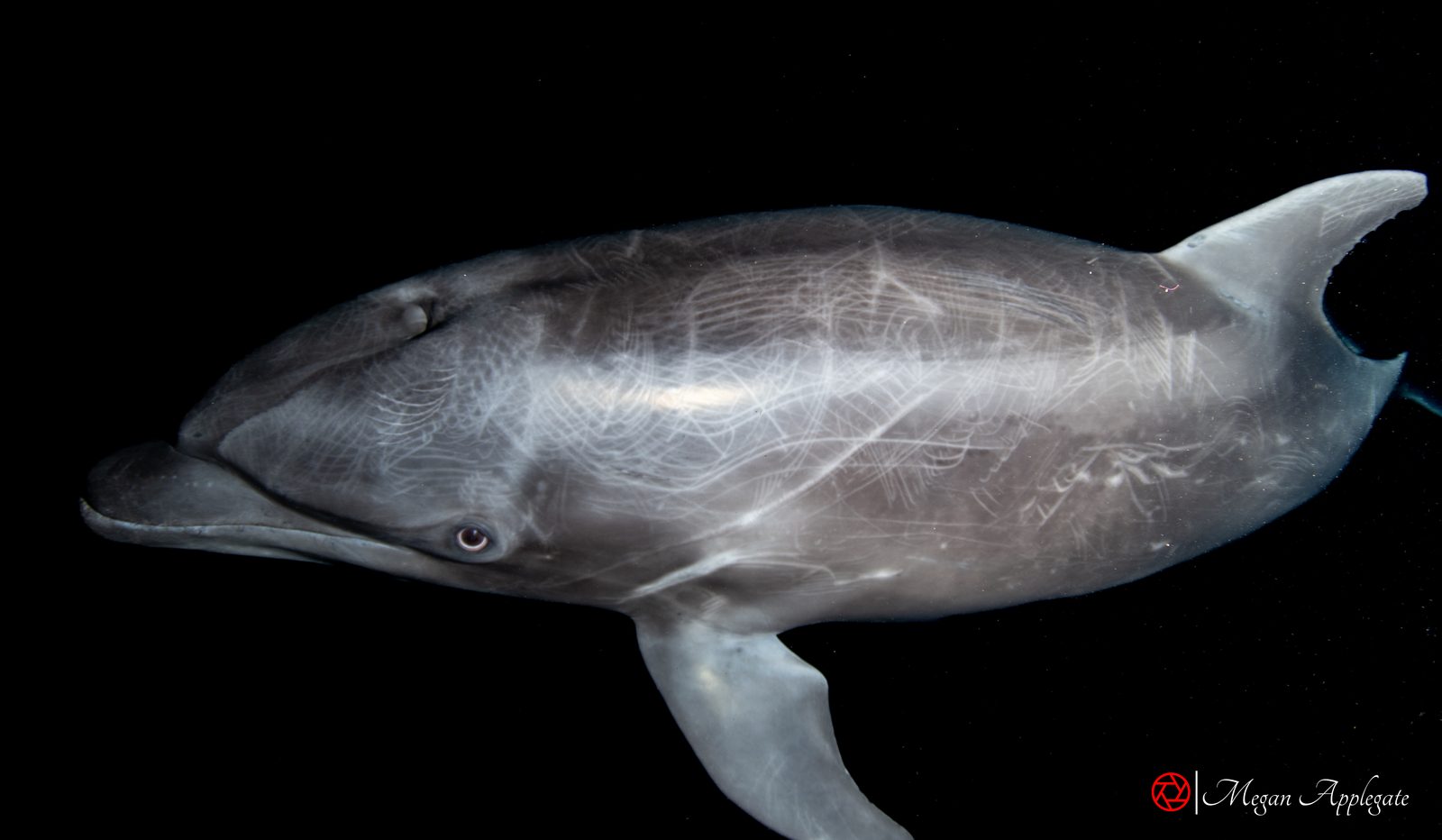
Common bottlenose dolphin (Tursiops truncatus)
Common bottlenose dolphin. Photo © Megan Applegate, Socorro, December 2023.

Common bottlenose dolphin Tursiops truncatus

Key marks: Grey, paler on the belly, with a short, thick beak and a tall, curved dorsal fin in the middle of the back.

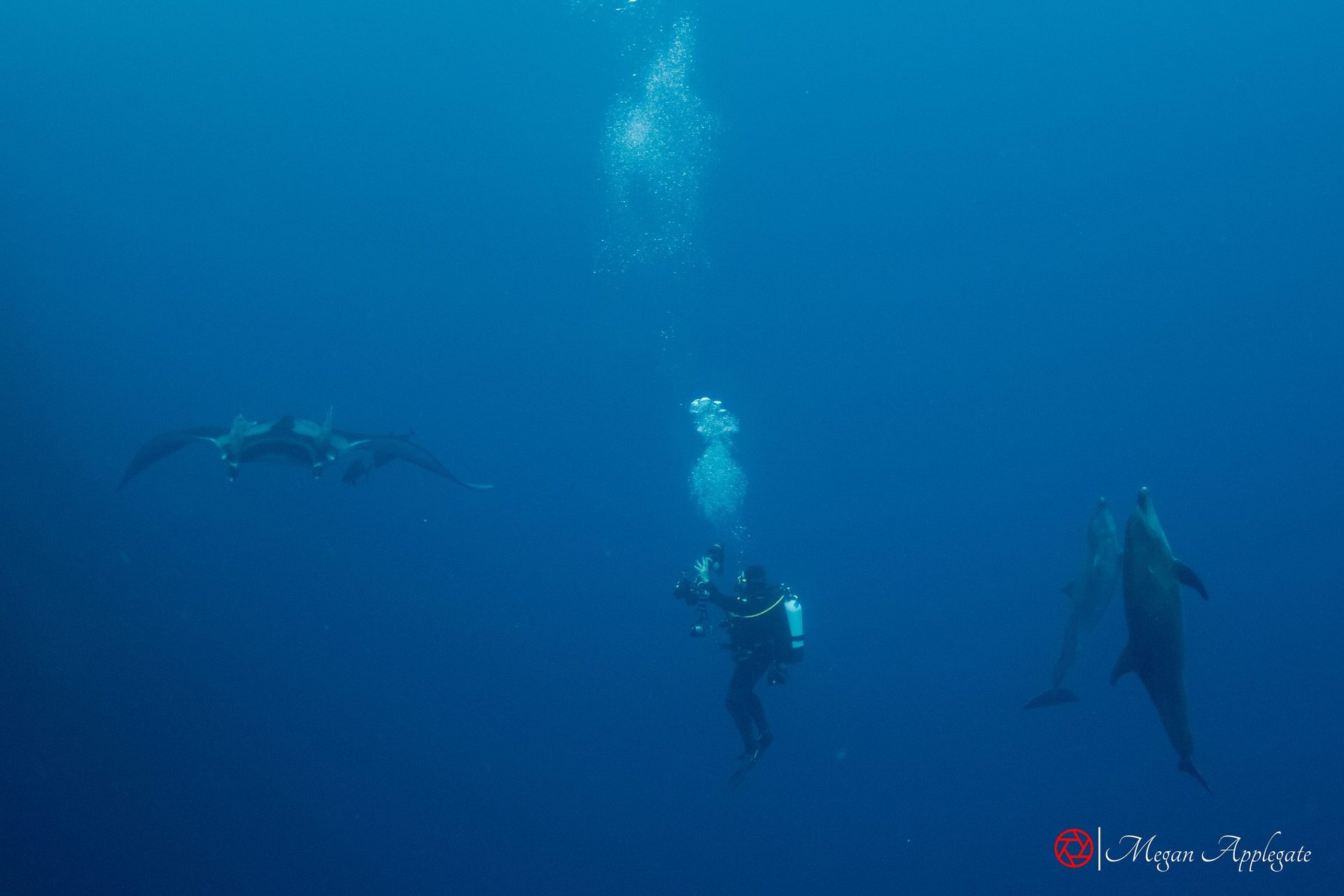
At Socorro: A resident population interacts closely with divers (Wetpixel). Groups of four to six swim close to divers at Cabo Pearce and around San Benedicto (DAN); at Cabo Pearce they are used to divers and approach them (Divernet). They also play among the lava at Punta Tosca and visit the Boiler, sometimes with the mantas (Scuba Diving). In February 2024 a pod at Cabo Pearce gave repeated encounters, and dozens were seen at Roca Partida (Bluewater 2024).

False killer whale Pseudorca crassidens

Key marks: All dark and slender, with a rounded head and no beak, a tall curved dorsal fin, and a distinct bend on the front edge of each flipper.

At Socorro: Encounters are reported at El Cañón and, occasionally, at Roca Partida (Wetpixel).

Orca (killer whale) Orcinus orca

Key marks: Black and white, with a white patch behind the eye and a grey saddle behind the dorsal fin. Adult males have a very tall, straight dorsal fin.

At Socorro: A pod of six to eight crossed the bow of a liveaboard on its return trip in February 2024 (Bluewater 2024).

In the water

Around whales and dolphins

What to expect

Diving here

The humpbacks are here January to early April (DAN). Listen on every dive in February and March for whale song (Bluewater Dive Travel). Dolphins often stay longer if divers stay calm and let them come to them.

Treat these as guides, not guarantees

The key marks on this page come from general references, not sources specific to Socorro.