Birds

Cocos Island birds

Three land birds found nowhere else, among them the only Darwin’s finch outside the Galápagos, and the boobies, frigatebirds, terns and noddies that nest on the island.

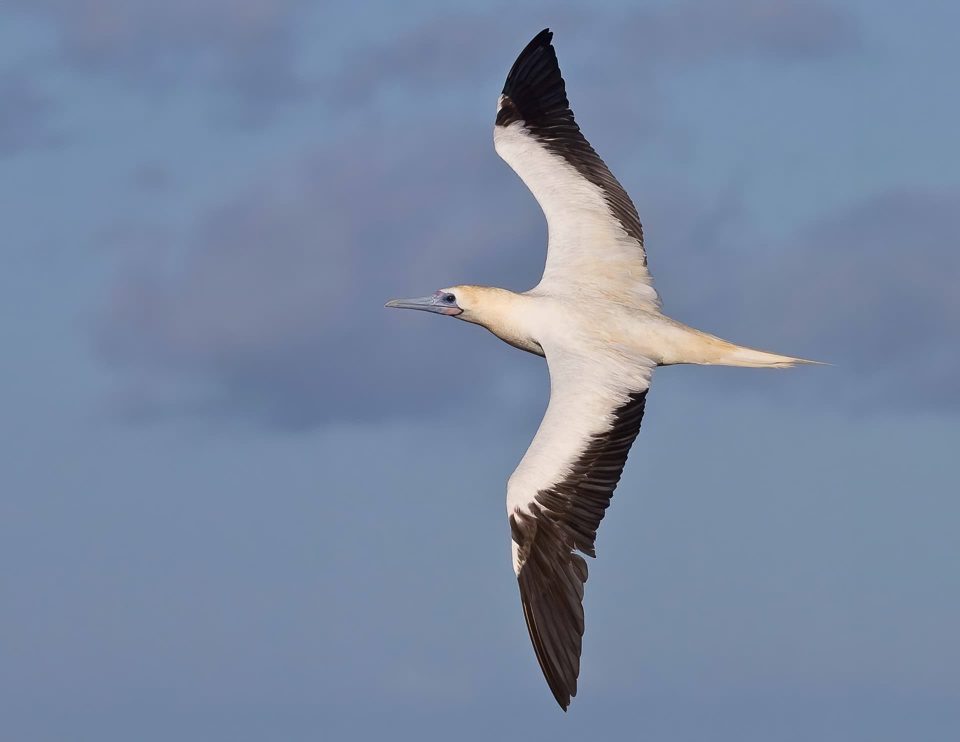
Red-footed booby
Red-footed booby

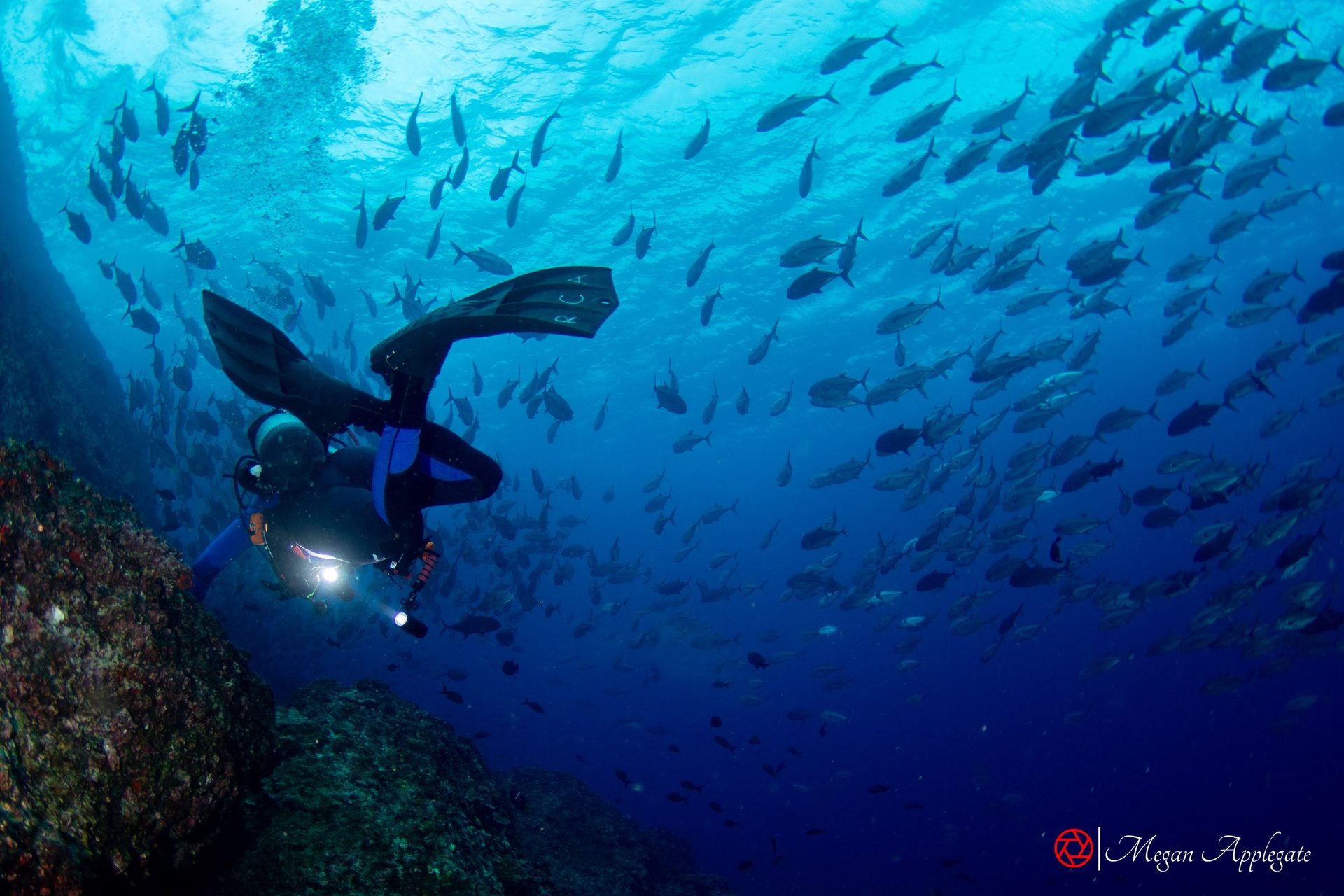
Background photo: Megan Applegate (Cocos Island)

Found nowhere else

The three endemic land birds

In the rainforest, not on the cliffs

About 90 bird species have been reported at Cocos, and three land birds live nowhere else (Oiseaux-Birds). All three live in the island’s rainforest, so they are seen on the trails from Wafer Bay and Chatham Bay rather than from the dive boat. No photos yet on this page; each card links to photos online.

Cocos finch Pinaroloxias inornata

Key marks: About 12 cm, with a black, slightly curved, pointed bill. Males are almost entirely black; females are brown with black speckling on the breast and flanks and a whitish belly. Young birds have yellow bills (Wikipedia).

Life: The only Darwin’s finch that does not live in the Galápagos. Individual birds specialise in particular ways of feeding, which is thought to be learned by watching other finches. The population is estimated at 6,000–15,000 birds, and it is listed as Least Concern (Wikipedia).
Cocos cuckoo Coccyzus ferrugineus

Key marks: Tawny underparts, brown upperparts and chestnut wings, with a black mask and yellow on the lower bill. Broad white tips on the tail feathers flash as it moves along branches (eBird).

Life: Lives in the rainforest and is scarce compared with the island’s other resident birds (eBird). It sometimes preys on the Cocos Island anole (Wikipedia).

Cocos flycatcher Nesotriccus ridgwayi

Key marks: About 11 cm. Olive to brownish-olive above, pale yellowish below with an olive wash on the breast, and two pale wing bars (Wikipedia).

Life: Forages fairly high in dense vegetation, mainly striking upward at leaves from a perch. Listed as Vulnerable because its range is so small; introduced pigs damage the forest understorey it depends on (Wikipedia).

Seabirds

Boobies, frigatebirds, terns and noddies

Seen from the boat and over the island

Red-footed booby (Sula sula)
Red-footed booby

Red-footed booby Sula sula

Key marks: The smallest booby, and the only one with bright red feet at any age. The bill is pale blue-grey with pink at the base. It comes in several colour forms: all brown, white, and white with a black tail.

At Cocos: Listed among the island’s seabirds (Wikipedia), and photographed at Cocos (Oceanlight).

Brewster’s booby (Cocos booby) Sula brewsteri

Key marks: A brown booby with a clean white belly and a sharp line between the brown breast and the white. Males of this eastern Pacific booby have a pale, frosted head.

At Cocos: Listed among the island’s seabirds as the Cocos booby (Wikipedia).

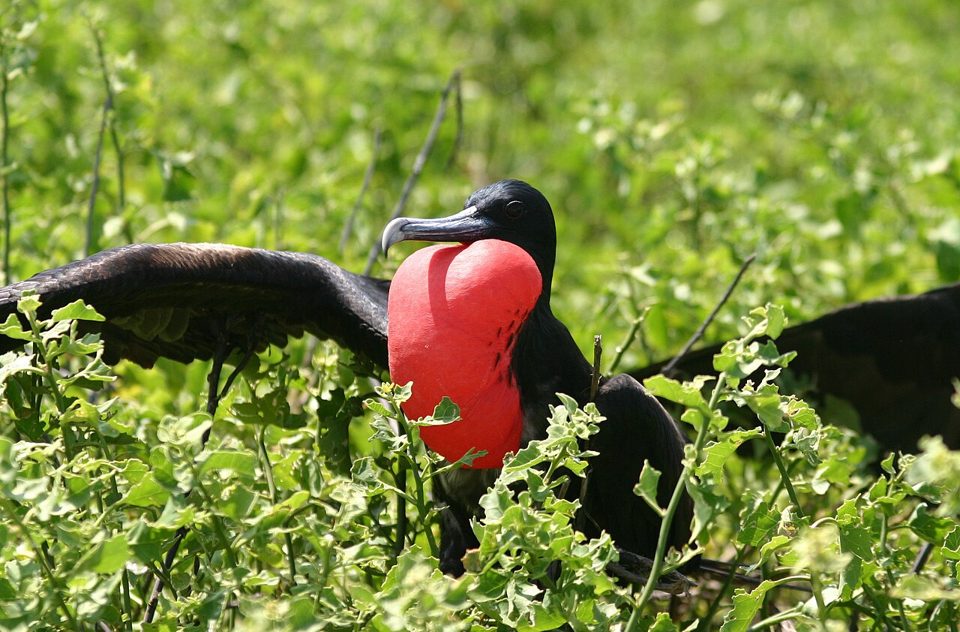
Great frigatebird (Fregata minor)
Great frigatebird

Great frigatebird Fregata minor

Key marks: Very long, angular wings held in a kinked M and a long, deeply forked tail. Adult males are all black with a red throat pouch and show a pale brown bar across the upper wing; females have a pale grey or reddish throat.

At Cocos: Circles over the island (SEE Turtles 2024).

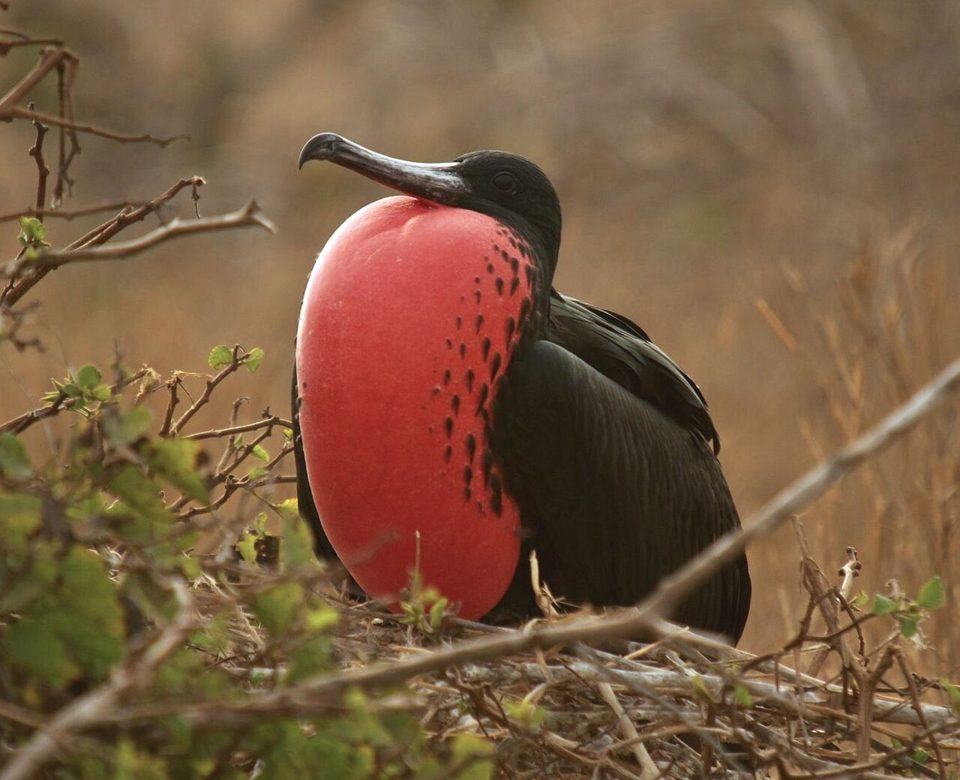
Magnificent frigatebird (Fregata magnificens)
Magnificent frigatebird

Magnificent frigatebird Fregata magnificens

Key marks: Shaped like the great frigatebird. The adult male has a plain upper wing with no pale bar; the female has a clean black head, with the white confined to her breast.

At Cocos: Circles over the island with the great frigatebird (SEE Turtles 2024).

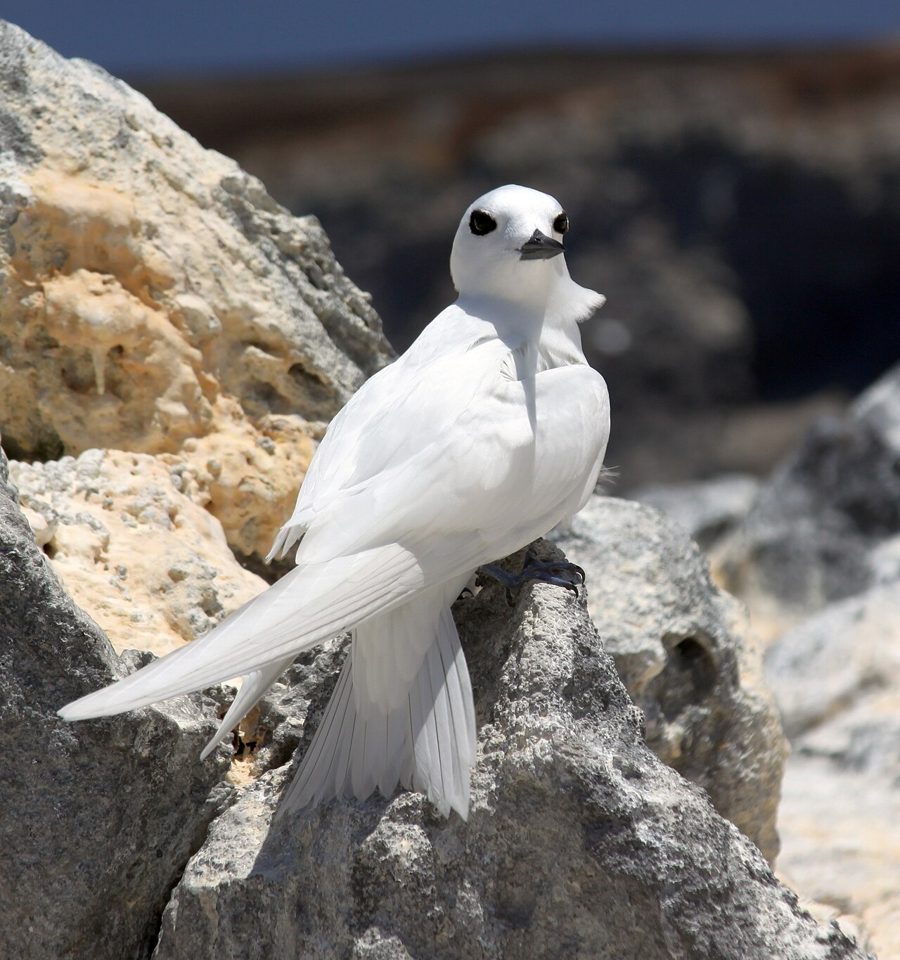
White tern (Gygis alba)
White tern

White tern Gygis alba

Key marks: Entirely white, small and buoyant, with a black ring around a dark eye and a black bill.

At Cocos: Listed among the island’s seabirds (Wikipedia).

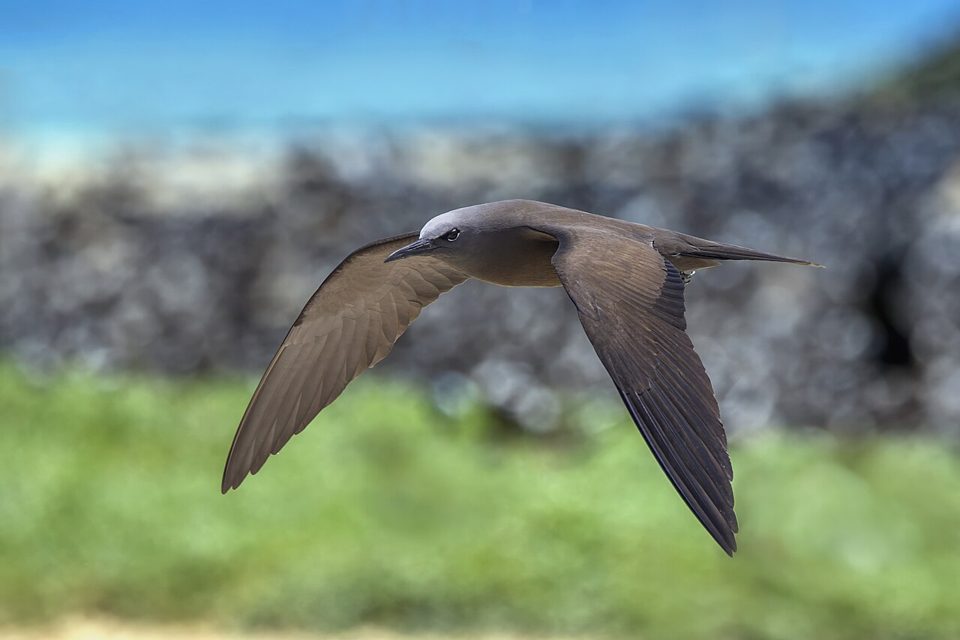
Brown noddy (Anous stolidus)
Brown noddy

Brown noddy Anous stolidus

Key marks: A dark brown tern with a pale greyish-white cap that fades into the brown, and a stout bill. Browner and bulkier than the black noddy.

At Cocos: Listed among the island’s seabirds (Wikipedia).

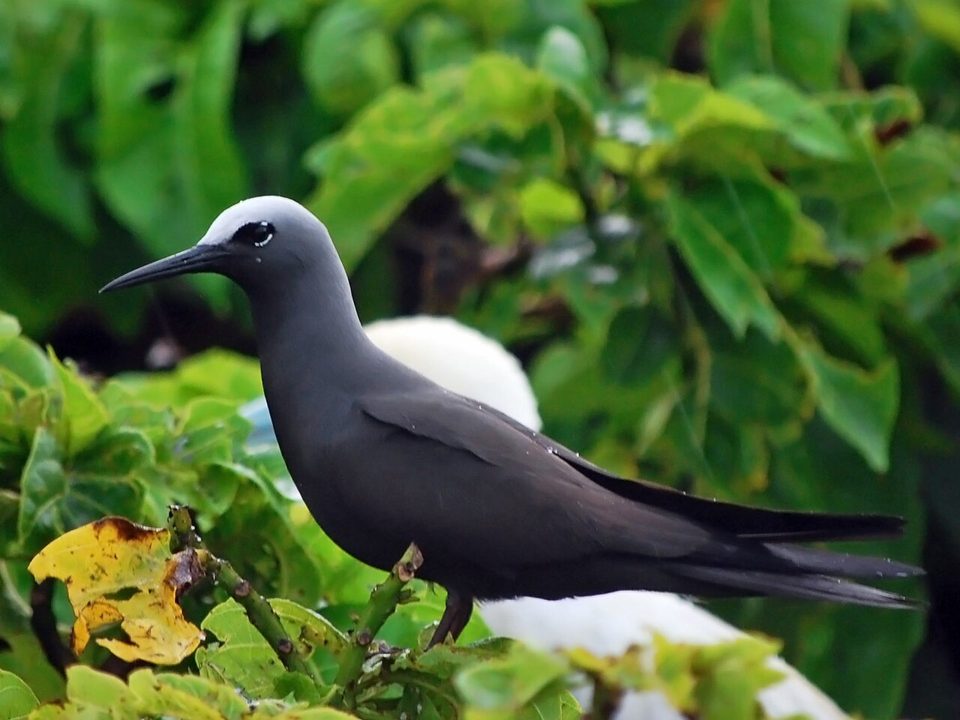
Black noddy (Anous minutus)
Black noddy

Black noddy Anous minutus

Key marks: A small, sooty-black tern with a sharply marked white cap, a white crescent under each eye and a long, thin black bill.

At Cocos: Cocos is one of only three places where the eastern Pacific subspecies diamesus breeds, with Malpelo and Clipperton (Marin et al. 2021).

Credits

Bird photo credits

Photos and their sources

These photos were taken elsewhere and show what each species looks like.

Photo credits. Each link opens the page the photo came from.
SpeciesPhotographerLicenceSource
Red-footed boobyPacific Rim Conservation, photographer not named© Pacific Rim Conservation, no open licence statedpacificrimconservation.org
Great frigatebirdCharles J. SharpCC BY-SA 3.0Wikimedia Commons
Magnificent frigatebirdAndrew Turner from Washington, DC, United StatesCC BY 2.0Wikimedia Commons
White ternDrew AveryCC BY 2.0Wikimedia Commons
Brown noddyCharles J. SharpCC BY-SA 4.0Wikimedia Commons
Black noddyGregg YanCC BY-SA 3.0Wikimedia Commons