Peak Jun–Nov
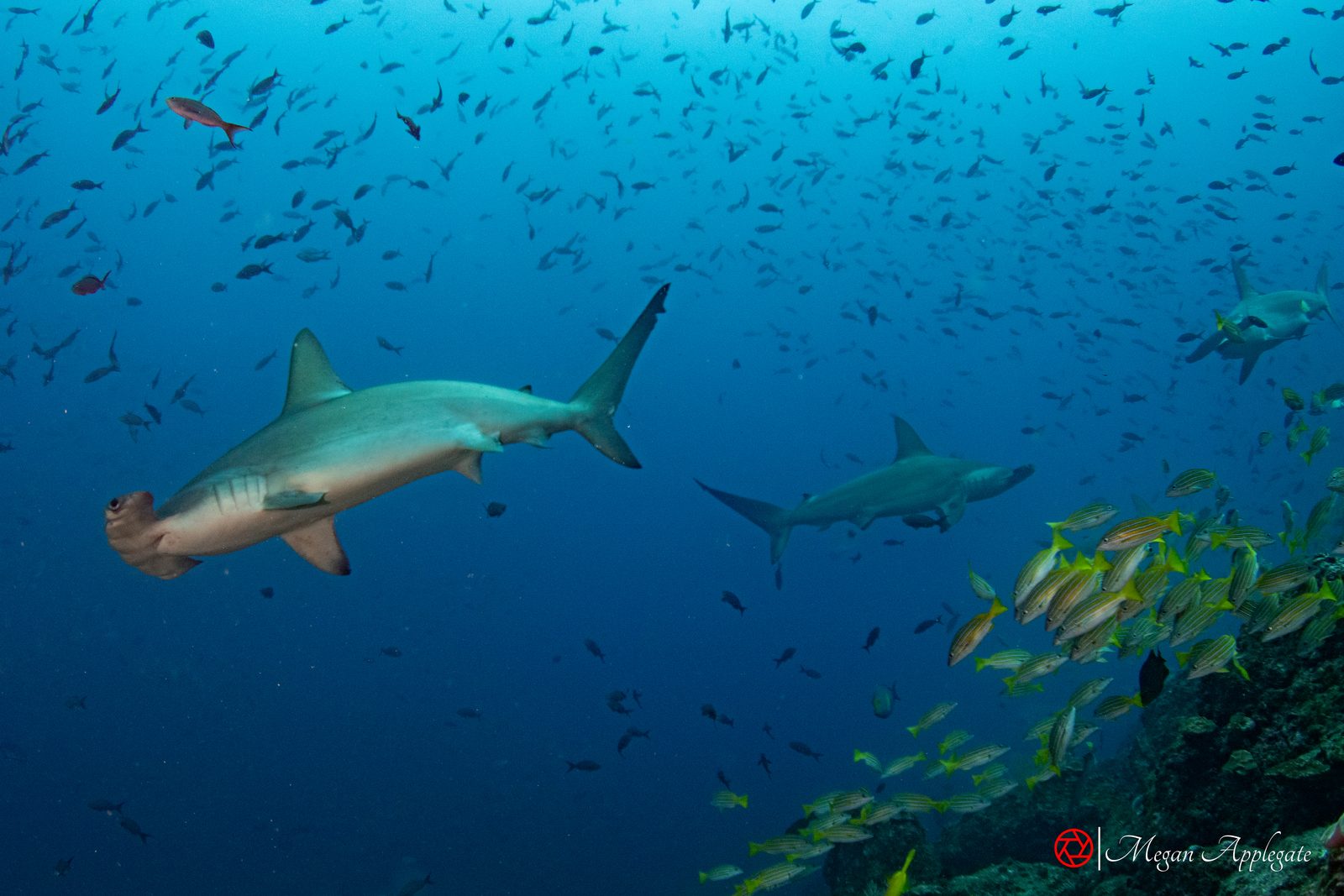
Scalloped hammerhead
Present all year and densest in the wet season, June to November (Liveaboard.com), in schools over Bajo Alcyone and at the cleaning stations (DAN).
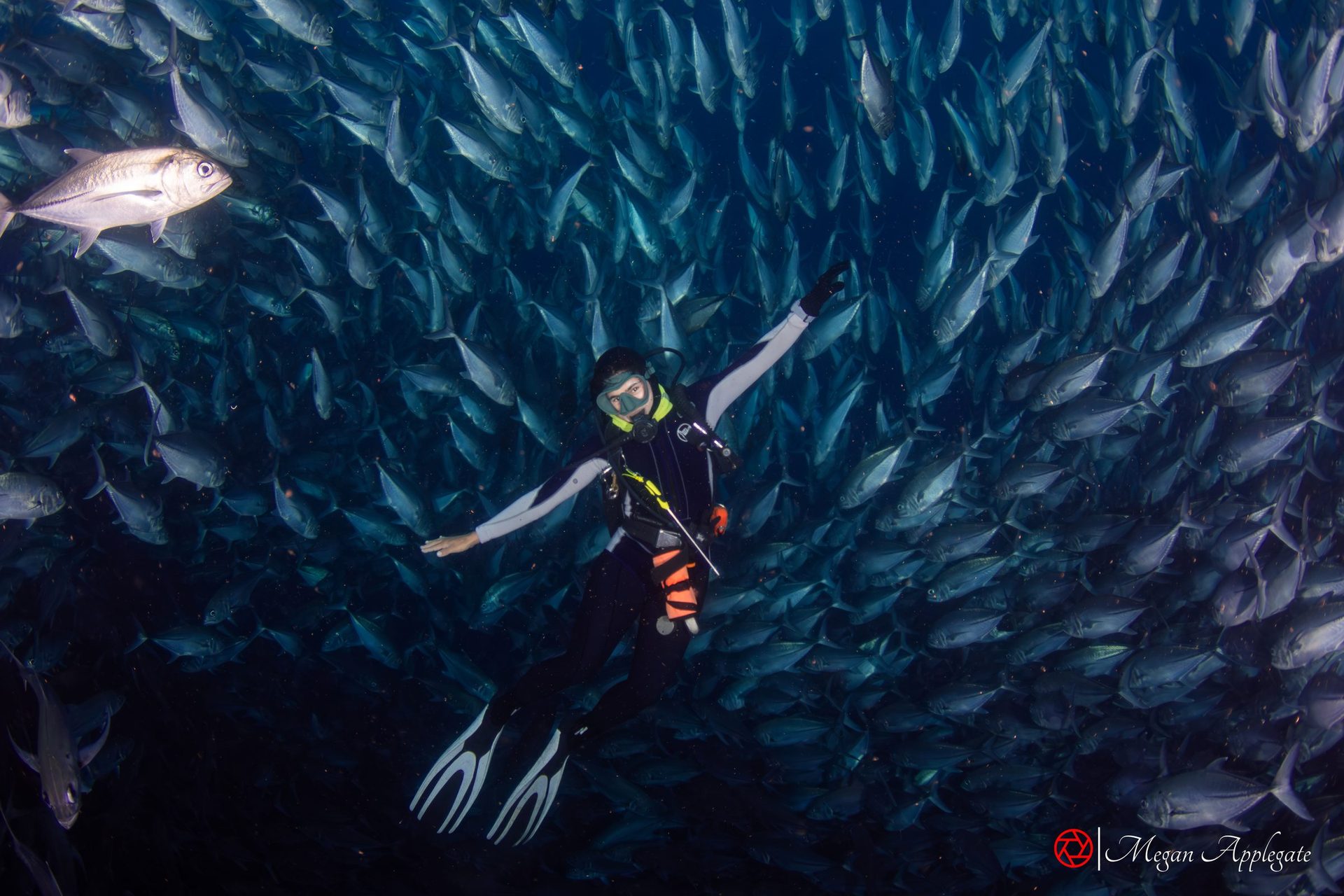
Isla del Coco National Park · Costa Rica
A field guide to the sharks, rays, fish and birds most often reported at Cocos Island, with where and when to look for each and links to go deeper.
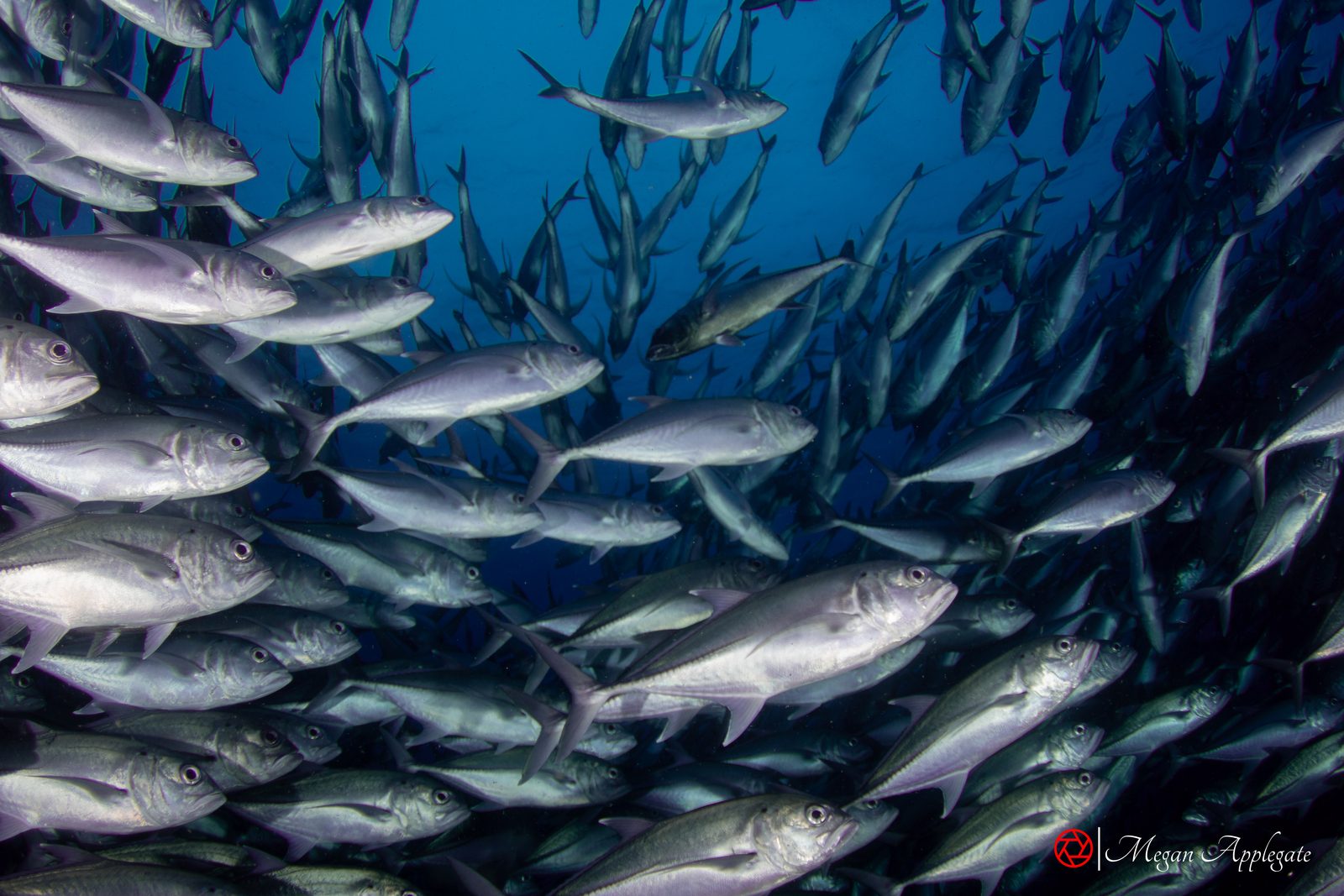
Photo Megan Applegate (Cocos Island)
Cocos is a small, steep volcanic island of about 24 km², roughly 550 km southwest of mainland Costa Rica (Wikipedia). It has been a national park since 1978 and a UNESCO World Heritage Site since 1997, extended to the surrounding sea in 2002 (UNESCO; Wikipedia). In 2021 Costa Rica added about 53,000 km² of fully protected water, bringing the park to about 55,000 km² (Mission Blue).
The island sits on a migration corridor that links it with the Galápagos, and its seamounts gather hammerheads, other sharks, rays and big schools of jacks (Mission Blue; DAN). It is reached only by liveaboard, a crossing of 30 hours or more that can be rough. Diving is intermediate to advanced, with strong currents, surge and sharp thermoclines; it is not a destination for new divers (DAN).
Location
The sites named under “What divers report”, around the island and its islets.
Dive sites, clockwise from Manuelita
The site map works offline and prints. Satellite is interactive: zoom and drag, and tap or hover a pin for its name (it needs an internet connection). Positions are approximate. Alcyone and Silverado are not on published charts, so they have no pin. Site positions: NGA GeoNames. Coastline © OpenStreetMap contributors.
Five field pages, with where and when to look for each species and links to go deeper.
Pick a month to see which big animals are at their peak. The dry season runs January to June; July to December is the rainy season, with rougher seas and cooler water (DAN). Check season and conditions with your operator before booking.
Present all year and densest in the wet season, June to November (Liveaboard.com), in schools over Bajo Alcyone and at the cleaning stations (DAN).
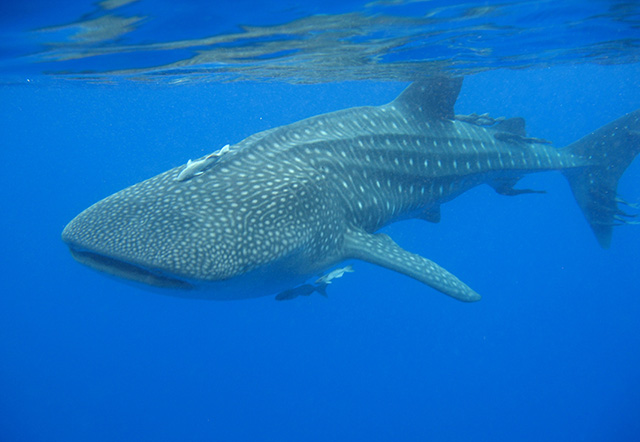
Most likely from August to October (Liveaboard.com), and reported at Alcyone more than at any other site (DAN).
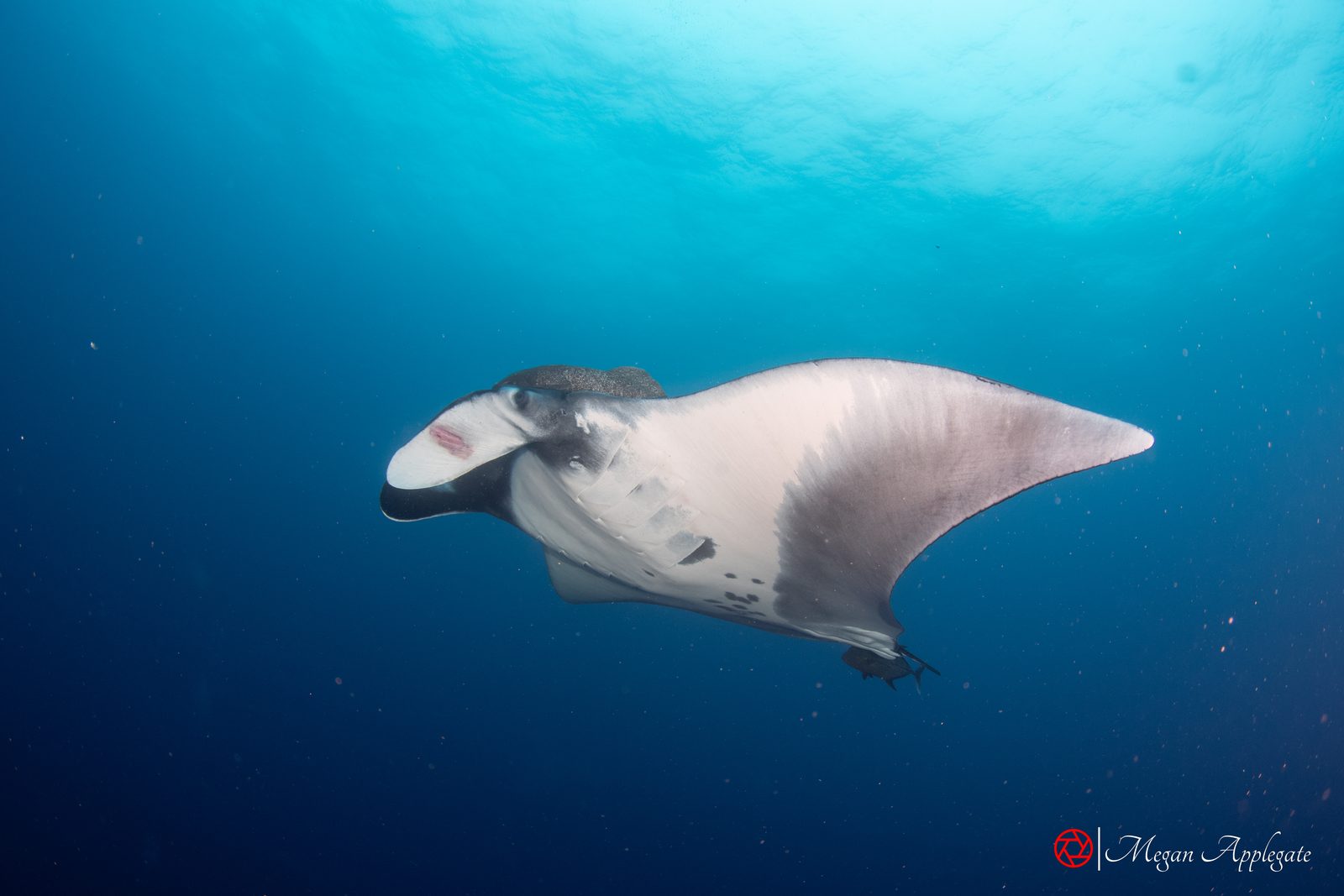
Mobula rays are more likely in the dry season, December to May (Liveaboard.com). Mantas make occasional fly-bys at Manuelita (DAN).
Photo Megan Applegate (Cocos Island)
The sharks and rays most often reported here, with the mark that gives each away. The Sharks & rays page has the full notes and sources.
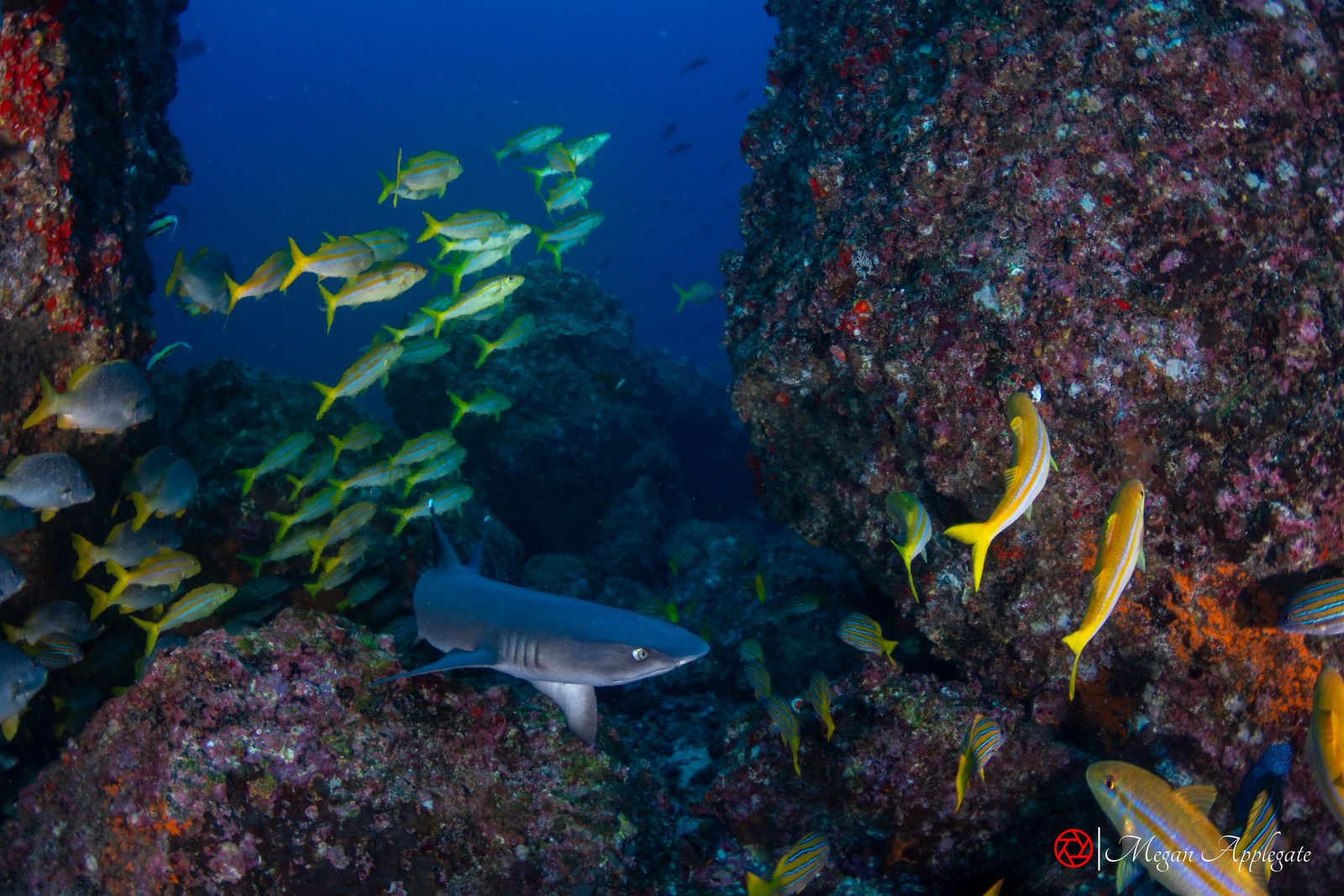
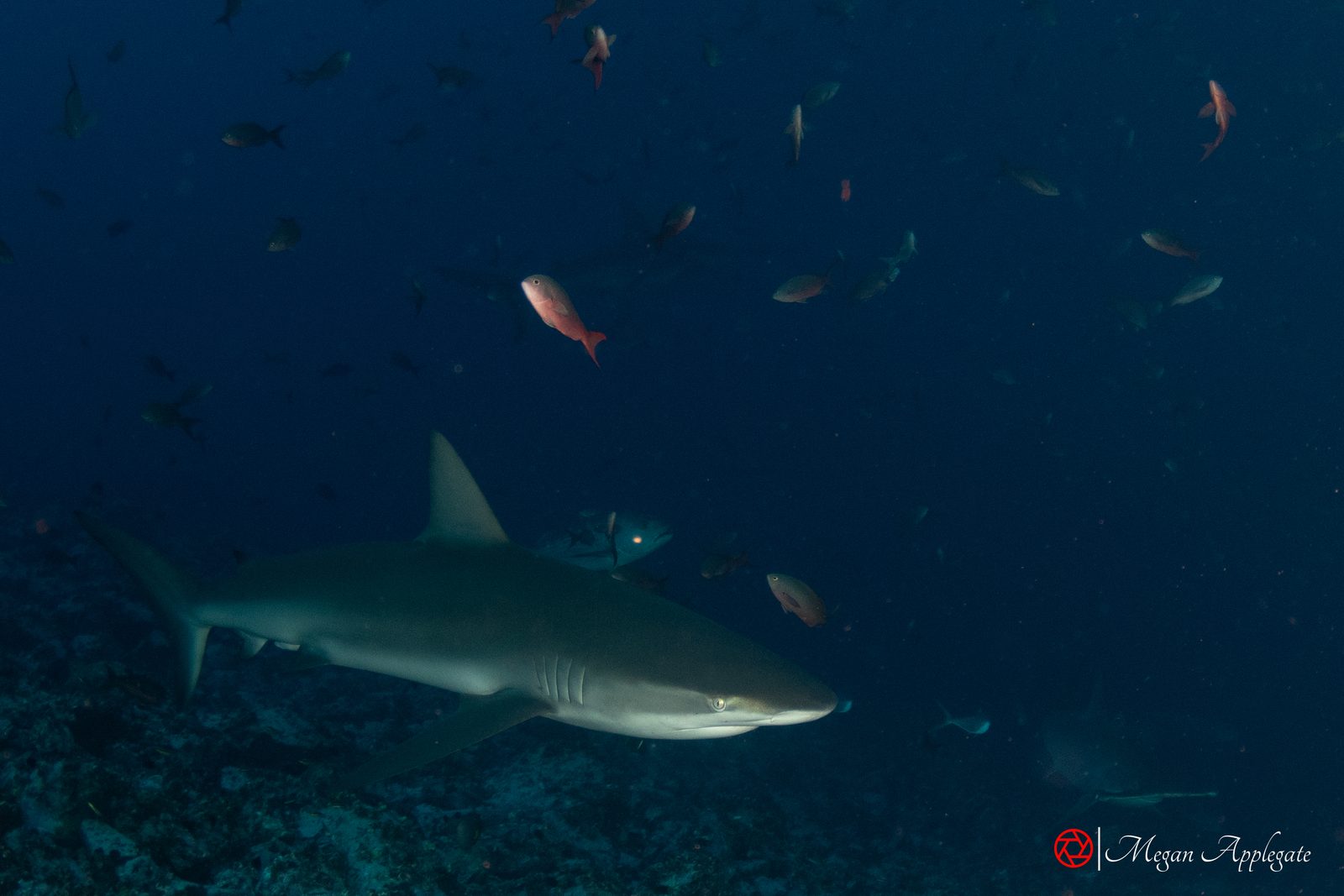
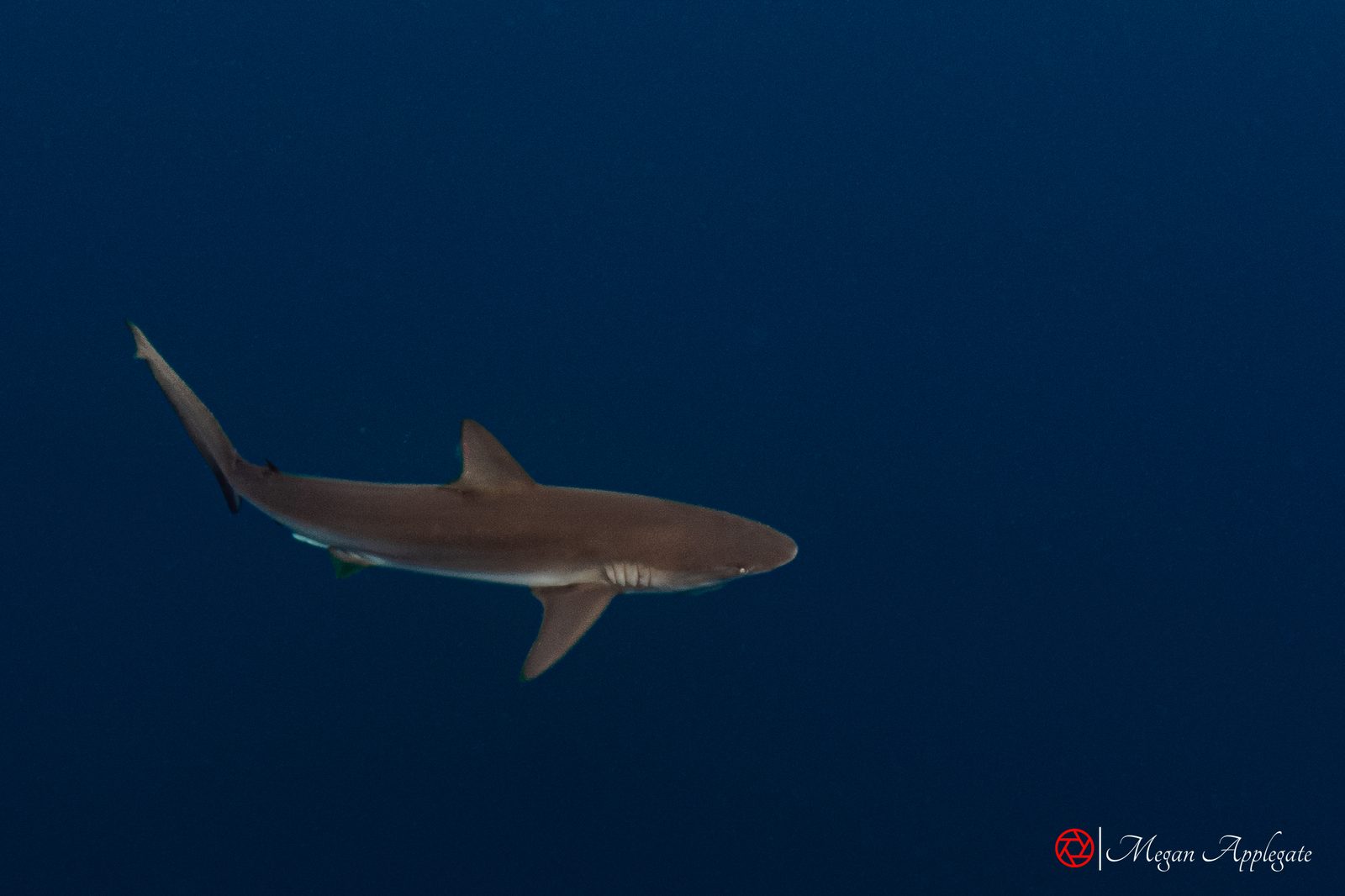
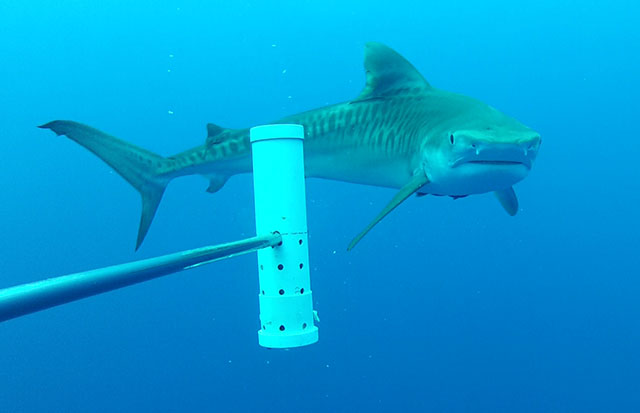
From DAN, Blue Water Dive Travel and SEE Turtles. Individual dives vary.
Shallow and calm, with dozens of whitetips, frogfish, turtles and marbled rays; cleaning stations on the steep back side.
Source: DANDozens to hundreds of whitetips hunting together over the reef.
Source: DAN; Blue Water Dive TravelCleaning stations visited by hammerheads, silkies and Galápagos sharks; tuna and dolphins on bait balls.
Source: DANAn offshore seamount at about 27 m with strong current: hammerhead schools, silkies, horse-eye jacks, and the best chance of a whale shark.
Source: DANA seamount rising to about 23 m, with close passes by Galápagos sharks and hammerheads, trevally and snapper.
Source: DANA truck-sized swim-through at about 21 m, often full of sleeping whitetips.
Source: DANHammerhead cleaning stations at about 30 m; an arch at Big Dos Amigos often holds large marbled rays.
Source: DANA rock rising to about 5 m above a sandy slope: silvertip sharks, the Cocos batfish, jawfish and snake eels.
Source: DANEagle rays ride the current between Cocos and Manuelita.
Source: SEE Turtles 2024Photos
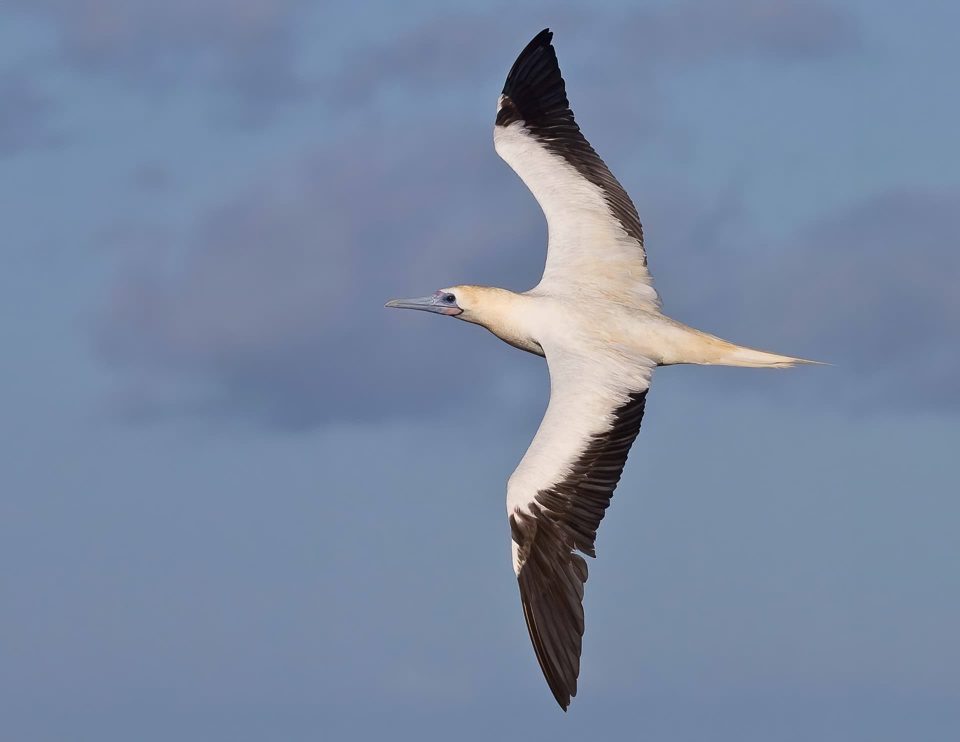
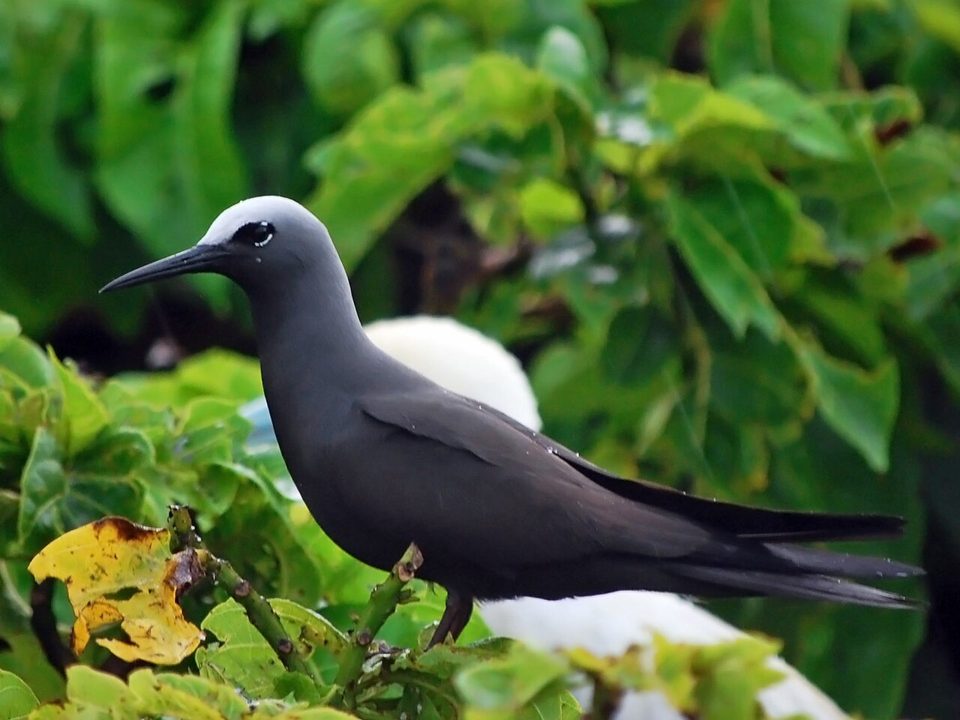
Photos marked “Megan Applegate” were taken at Cocos Island in August 2024, except a few fish and bird photos from Malpelo, which are labelled on their pages. The rest come from the sources credited on each page.
Photo Megan Applegate (Cocos Island)
Every link opens in a new tab.