Sharks and rays

Cocos Island sharks & rays

The sharks and rays most often reported at Cocos Island, with where and when to look for each, the marks that tell them apart, and links to go deeper.

Scalloped hammerhead

Background photo: Megan Applegate (Cocos Island)

Sharks

The shark residents

8 species · key marks on each

Scalloped hammerhead (Sphyrna lewini)
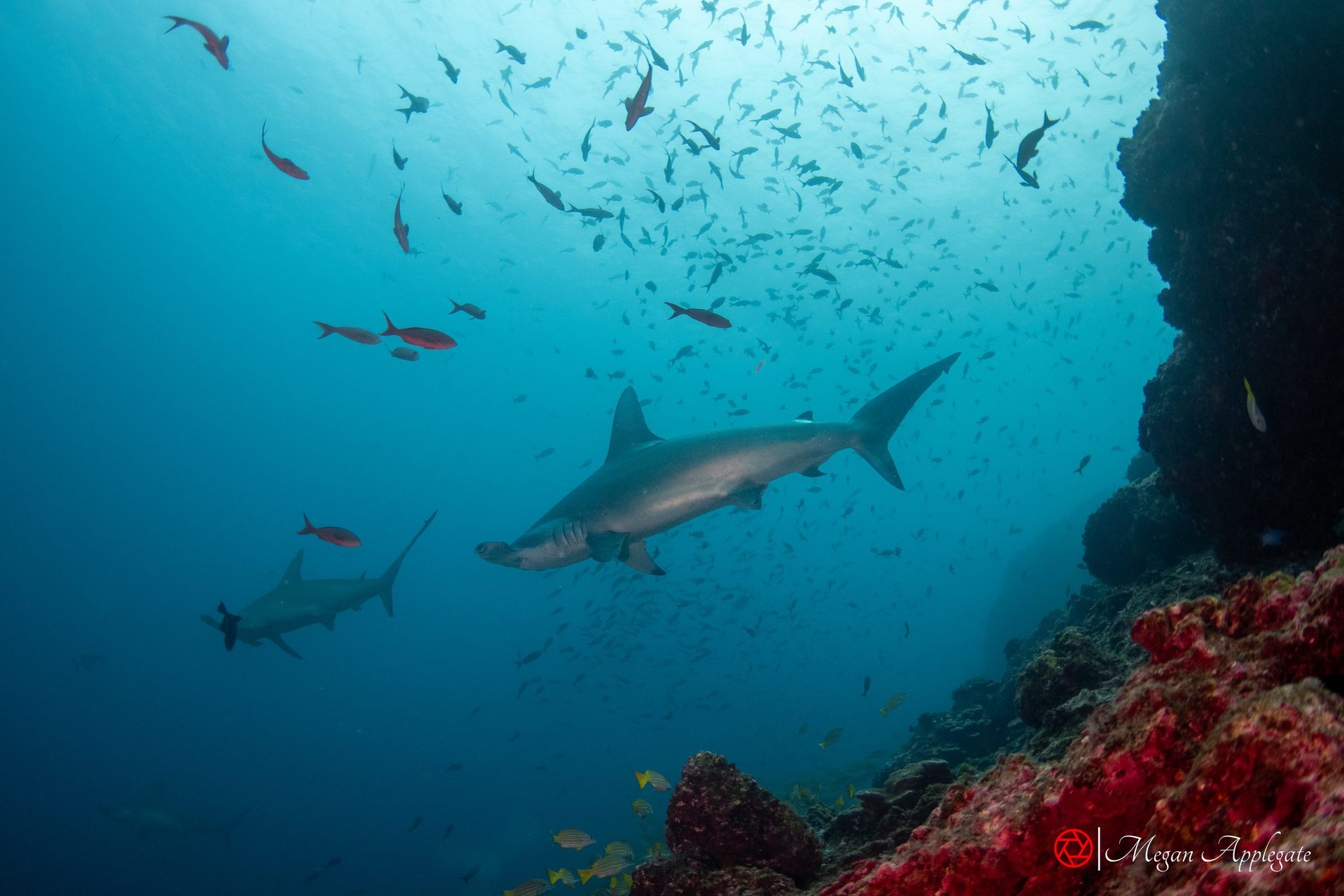
Scalloped hammerhead. Photo © Megan Applegate, Cocos Island, August 2024.

Scalloped hammerhead Sphyrna lewini

Critically Endangered on the IUCN Red List, and the shark most divers come to Cocos to see. The waters between Cocos and the Galápagos are a migration corridor for it (Mission Blue).

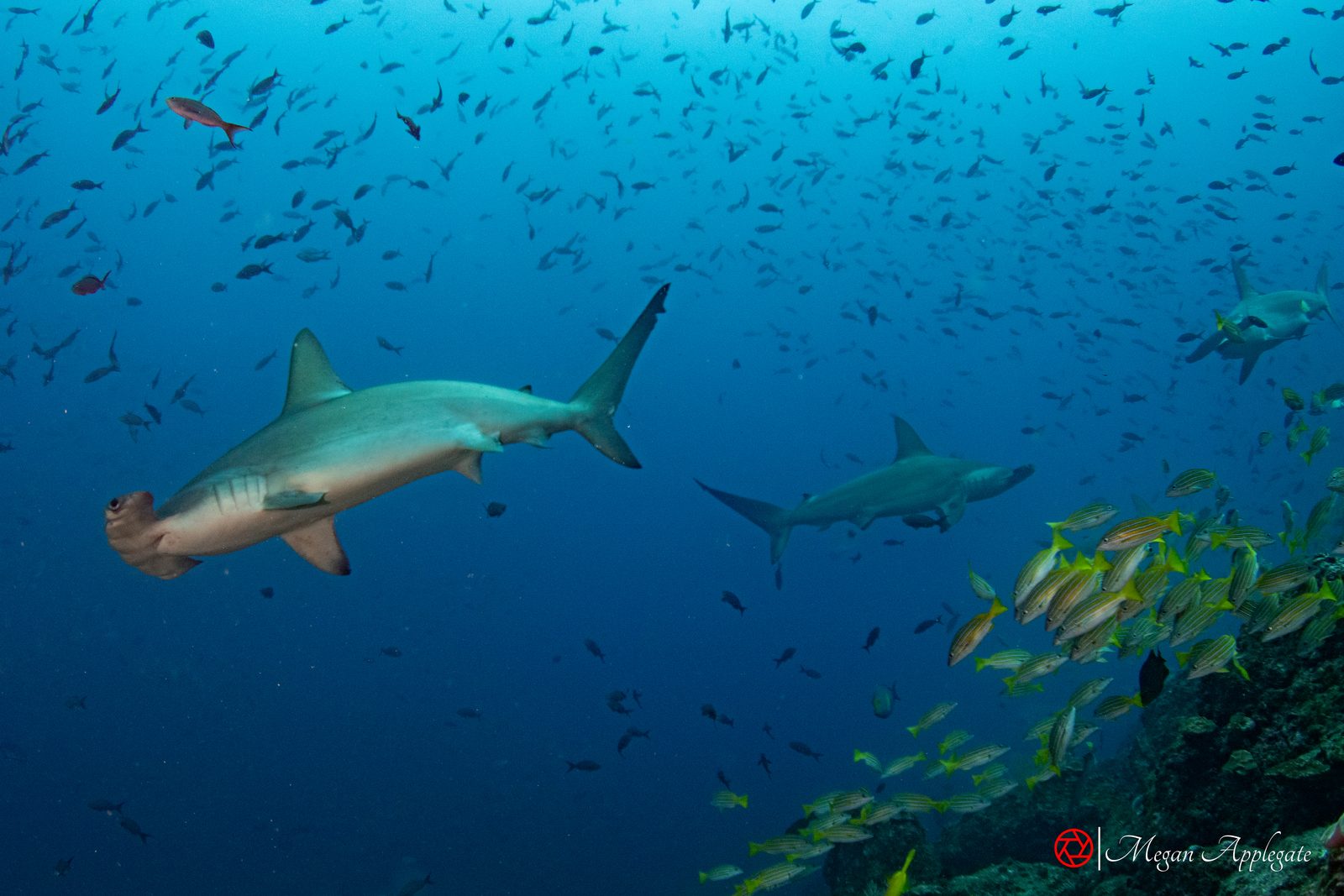
Key marks: The head is flattened into a hammer with a scalloped front edge: a notch in the middle and a shallow scallop either side of it. Eyes at the very tips. Tall, strongly curved first dorsal fin and a small second dorsal. Bronze-grey above, pale below. In open water you usually get the silhouette from below before any colour, so go by the shape of the head.

At Cocos: Schools of 200 or more have been reported, mostly females averaging about 2.4 m (SEE Turtles 2024), and DAN describes schools of hundreds over Bajo Alcyone. Cleaning stations at Manuelita, Dirty Rock, Punta María and both Dos Amigos, the Dos Amigos stations at about 30 m (DAN). Densest in the wet season, June to November (Liveaboard.com).

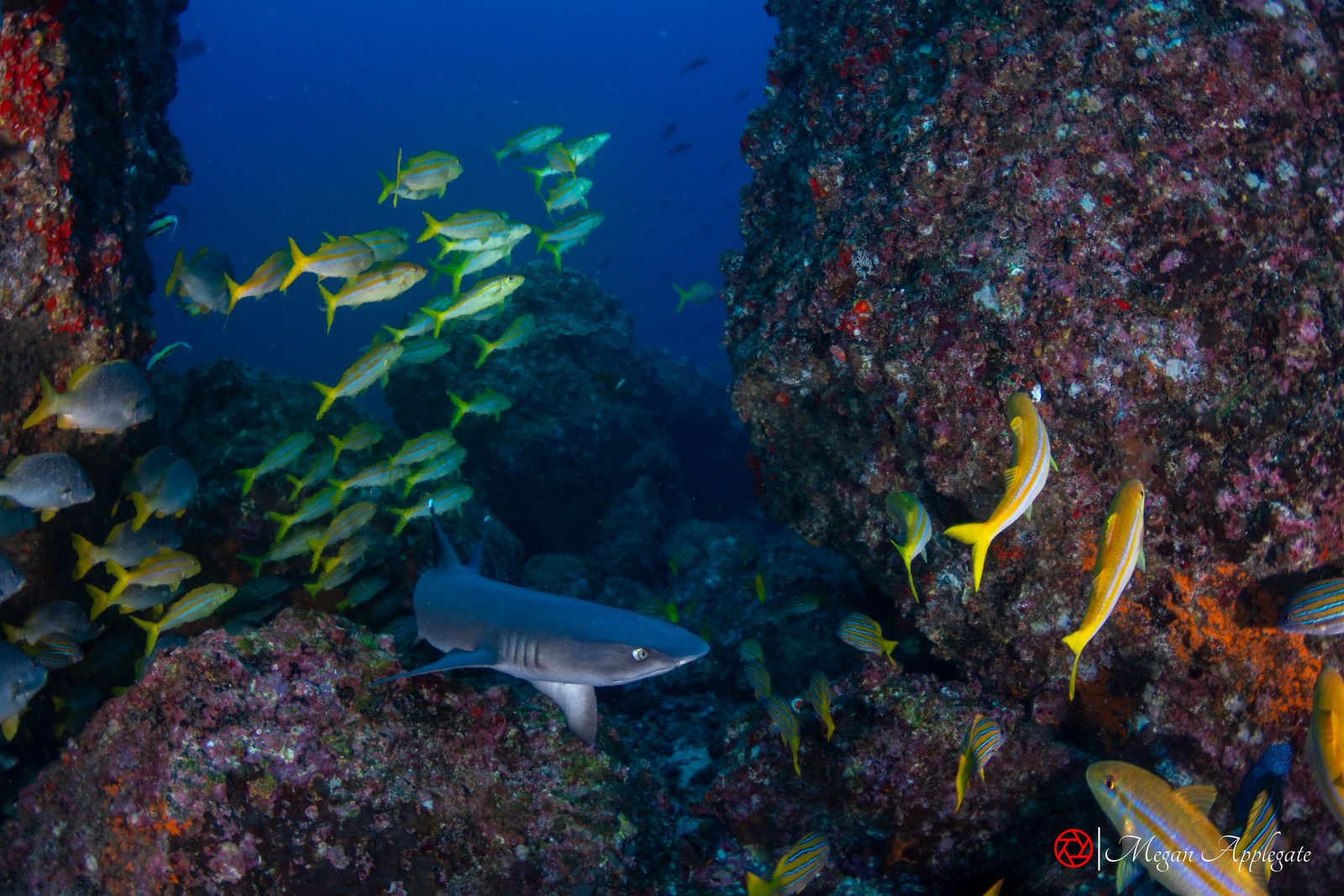
Whitetip reef shark (Triaenodon obesus)
Whitetip reef shark. Photo © Megan Applegate, Cocos Island, August 2024.

Whitetip reef shark Triaenodon obesus

A slim reef shark with white tips on the first dorsal fin and the upper tail lobe. It spends much of the day resting on the bottom, in caves and under ledges.

Key marks: Small and slim, with a short, blunt snout. A white tip on the first dorsal and on the upper lobe of the tail, often on the lower lobe too. The pectoral fins are plain. Usually lying still on sand or under a ledge during the day. Do not confuse it with the silvertip, which is much bigger, has white edging on all its fins, and does not rest.

At Cocos: The most common shark at Cocos (SEE Turtles 2024). By day it rests on sand and in crevices, for example in the swim-through at Submerged Rock (DAN). At night dozens to hundreds hunt together over the reef at Manuelita and in Chatham Bay (DAN; Blue Water Dive Travel).

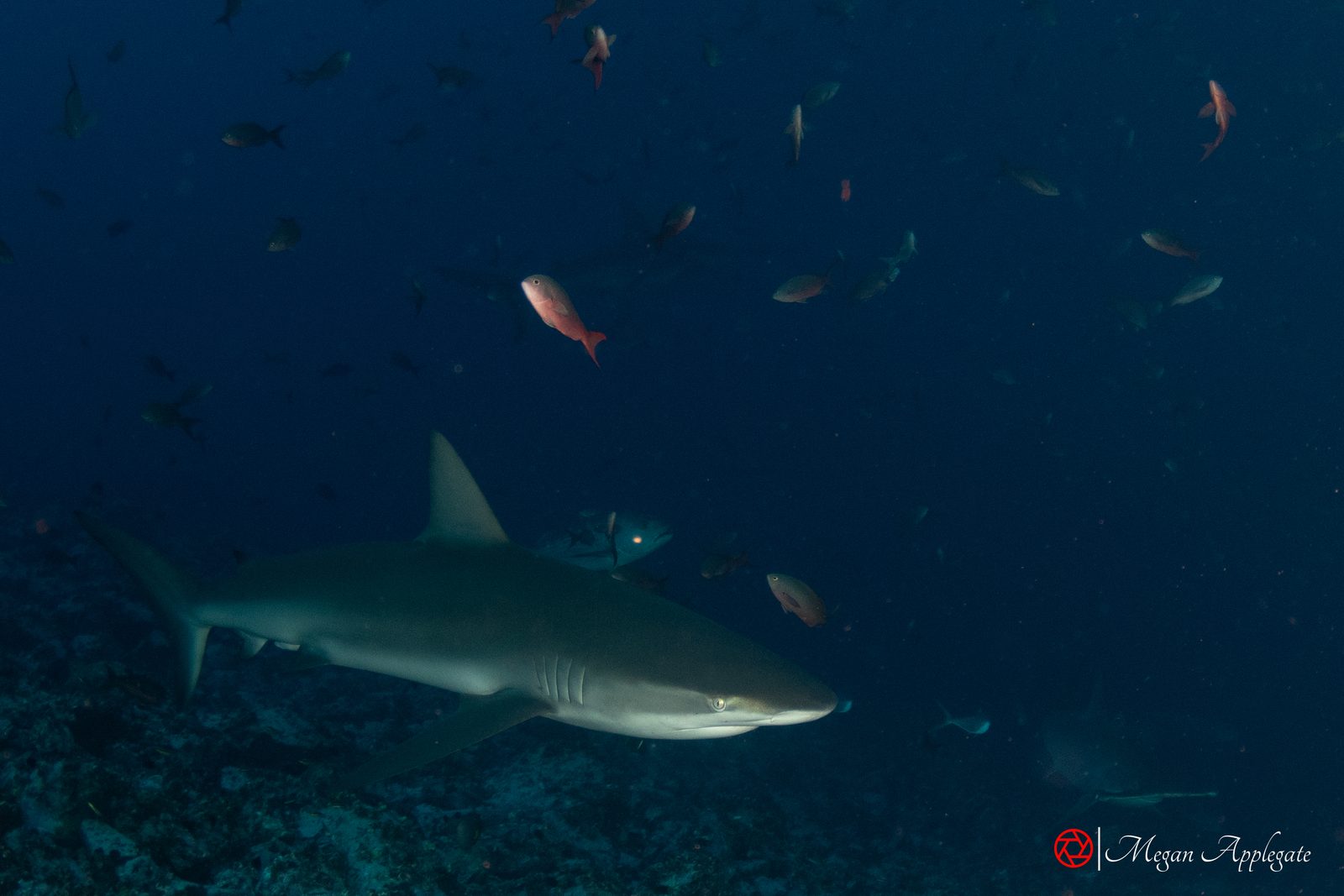
Galápagos shark (Carcharhinus galapagensis)
Galápagos shark. Photo © Megan Applegate, Cocos Island, August 2024.

Galápagos shark Carcharhinus galapagensis

A reef shark of clear water around oceanic islands, commonly about 3 m, with a tall first dorsal fin. Easily confused with the silky shark; see the Shark ID page.

Key marks: Stocky and plain grey-bronze, with a broad, rounded snout and a heavy look to the head and shoulders. The first dorsal is tall and upright and starts roughly above the pectoral tips. A low ridge of skin runs along the back between the two dorsal fins. No strong dark or white fin markings. Works the reef and the walls, and will come in close.

At Cocos: Visits the cleaning stations at Dirty Rock and Punta María, where close passes are common (DAN; SEE Turtles 2024). One stayed with a group for a whole night dive at Manuelita Shallows (Blue Water Dive Travel).

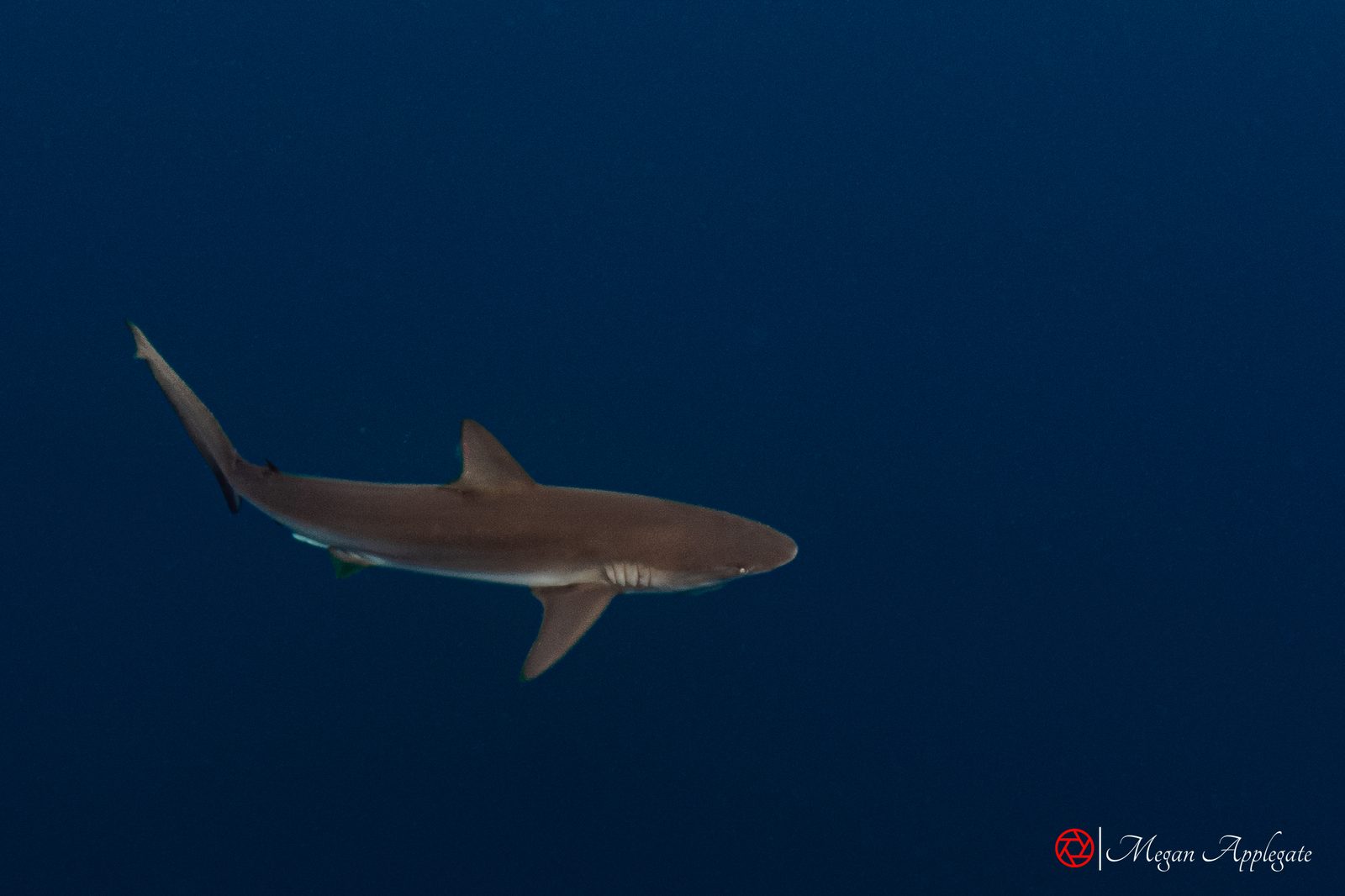
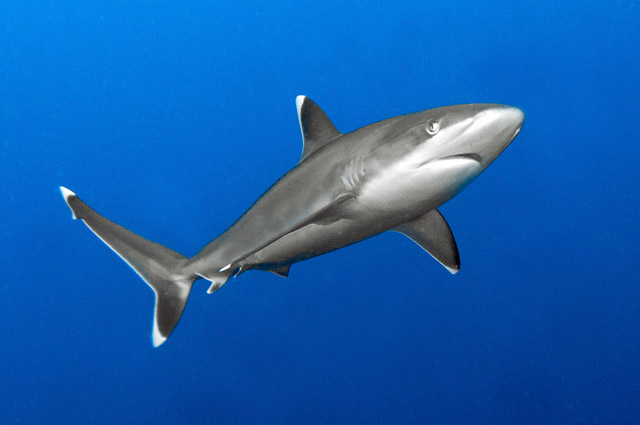
Silky shark (Carcharhinus falciformis)
Silky shark. Photo © Megan Applegate, Cocos Island, August 2024.

Silky shark Carcharhinus falciformis

A slender open-water shark, typically about 2.5 m, named for its fine, smooth skin. Listed as Vulnerable.

Key marks: A very small second dorsal fin with a long, thin trailing tip is the best single mark. The first dorsal is low and rounded and starts behind the pectoral fins. Long, narrow, sickle-shaped pectorals, dusky on the underside of the tips. Slim and smooth, bronze above and white below, usually out in the blue and in numbers.

At Cocos: Reported at Manuelita, Dirty Rock and Bajo Alcyone (DAN). Described as an occasional sighting on a 2024 expedition (SEE Turtles 2024).

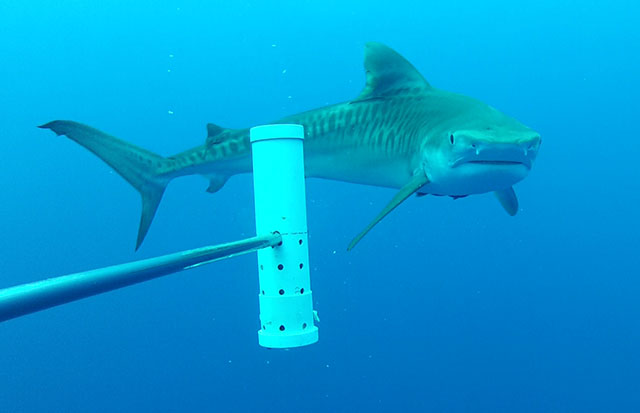
Tiger shark (Galeocerdo cuvier)
Tiger shark. Photo from FishBase, where the photographer is credited.

Tiger shark Galeocerdo cuvier

A large shark with a blunt, square snout. Young animals have dark vertical stripes that fade with age.

Key marks: A very blunt, square snout on a broad head. Dark vertical bars and blotches down the flanks, strong on young animals and faded on big adults. Heavy-bodied, with a long upper tail lobe.

At Cocos: Reported more often in recent years. Two were seen at Manuelita in November 2016, the larger about 4.5 m long (Blue Water Dive Travel). In 2024 they were seen cruising the sandy edge of the reefs, including a juvenile in the Coral Garden (SEE Turtles 2024).

Silvertip shark (Carcharhinus albimarginatus)
Silvertip shark. Photo from FishBase, where the photographer is credited.

Silvertip shark Carcharhinus albimarginatus

A large grey shark with bright white edges on the tips of its fins, which makes it easy to pick out from the grey sharks around it.

Key marks: White edging on almost every fin: the tip of the first dorsal, the tips and trailing edges of the pectorals, and the tail. Larger and bulkier than the whitetip reef shark, with a longer snout, and it keeps cruising off the reef instead of resting on the bottom.

At Cocos: Sometimes seen at Silverado, the site named after it (DAN), and at Small Dos Amigos (Blue Water Dive Travel). An occasional sighting (SEE Turtles 2024).

Blacktip shark Carcharhinus limbatus

A fast, slim requiem shark listed for the park by UNESCO (UNESCO).

Key marks: Black tips on the first dorsal, the pectorals and the lower lobe of the tail, on a slim body with a long pointed snout. The anal fin tip stays pale, which is what separates it from the blacktip reef shark.

At Cocos: Visits the cleaning stations, but it is the shyest shark here and usually leaves soon after divers arrive (SEE Turtles 2024).

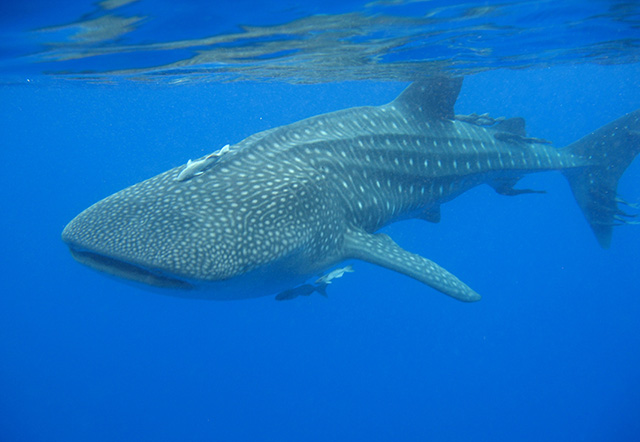
Whale shark (Rhincodon typus)
Whale shark. Photo from FishBase, where the photographer is credited.

Whale shark Rhincodon typus

The largest fish in the world, a filter feeder that is harmless to divers. Listed as Endangered.

Key marks: Unmistakable. Very large, with a broad flat head and a wide mouth right at the front of the snout rather than slung underneath. Dark grey-blue with a chequerboard of pale spots and bars, and three ridges running the length of each flank. The spot pattern is unique to each animal, which is how researchers tell them apart.

At Cocos: Visits the offshore seamounts and is reported more often at Bajo Alcyone than at any other site (DAN). Most likely from August to October, late in the wet season (Liveaboard.com). An occasional sighting (SEE Turtles 2024).

Rays

Mantas, marbled, eagle and devil rays

4 species

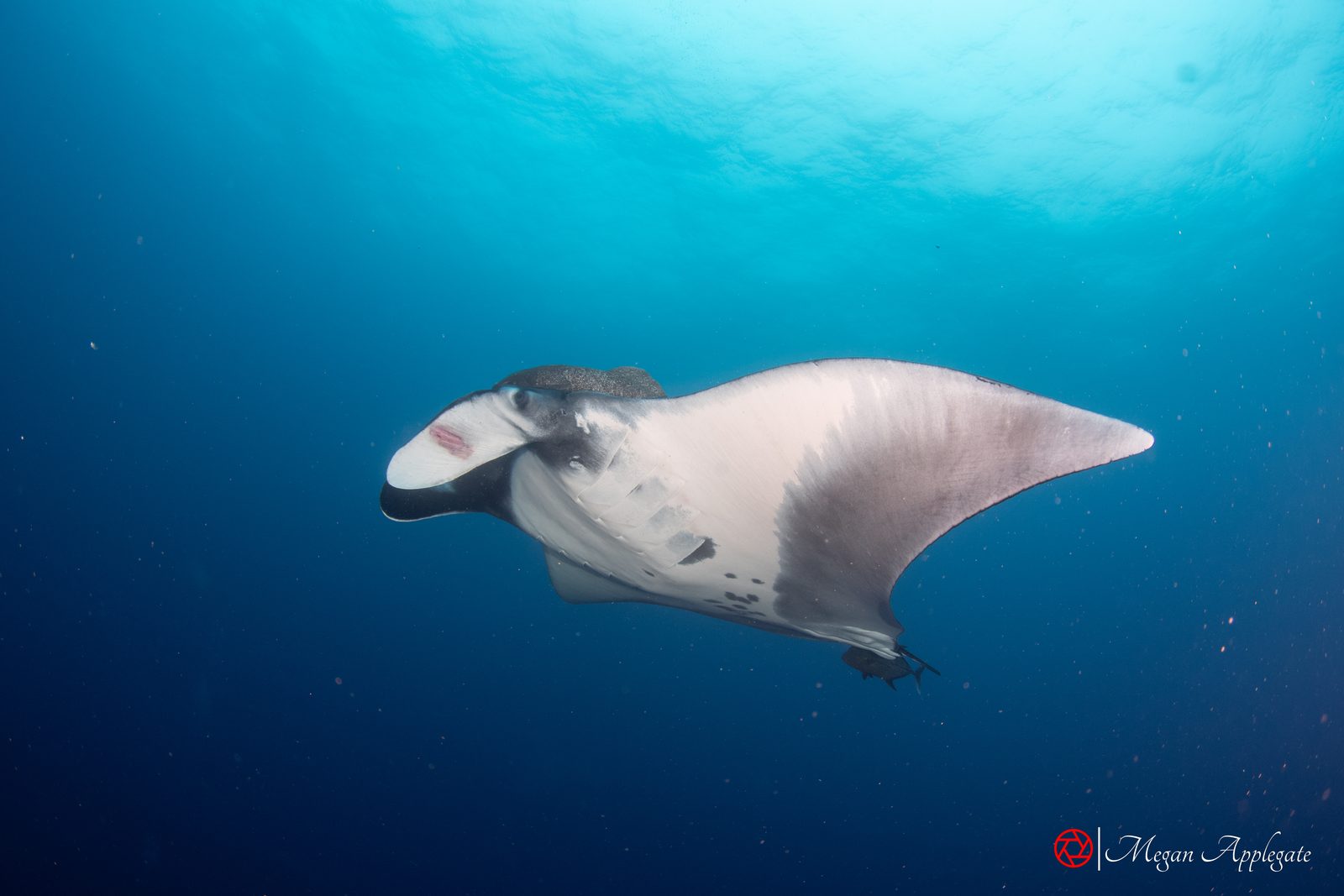
Giant oceanic manta (Mobula birostris)
Giant oceanic manta. Photo © Megan Applegate, Cocos Island, August 2024.

Giant oceanic manta Mobula birostris

The largest ray, with a wingspan up to about 7 m. It comes to cleaning stations to have parasites removed.

At Cocos: Occasional fly-bys at Manuelita (DAN); one was seen there with dolphins hunting jacks in November 2016 (Blue Water Dive Travel), and several were seen in August–September 2024 (SEE Turtles 2024).

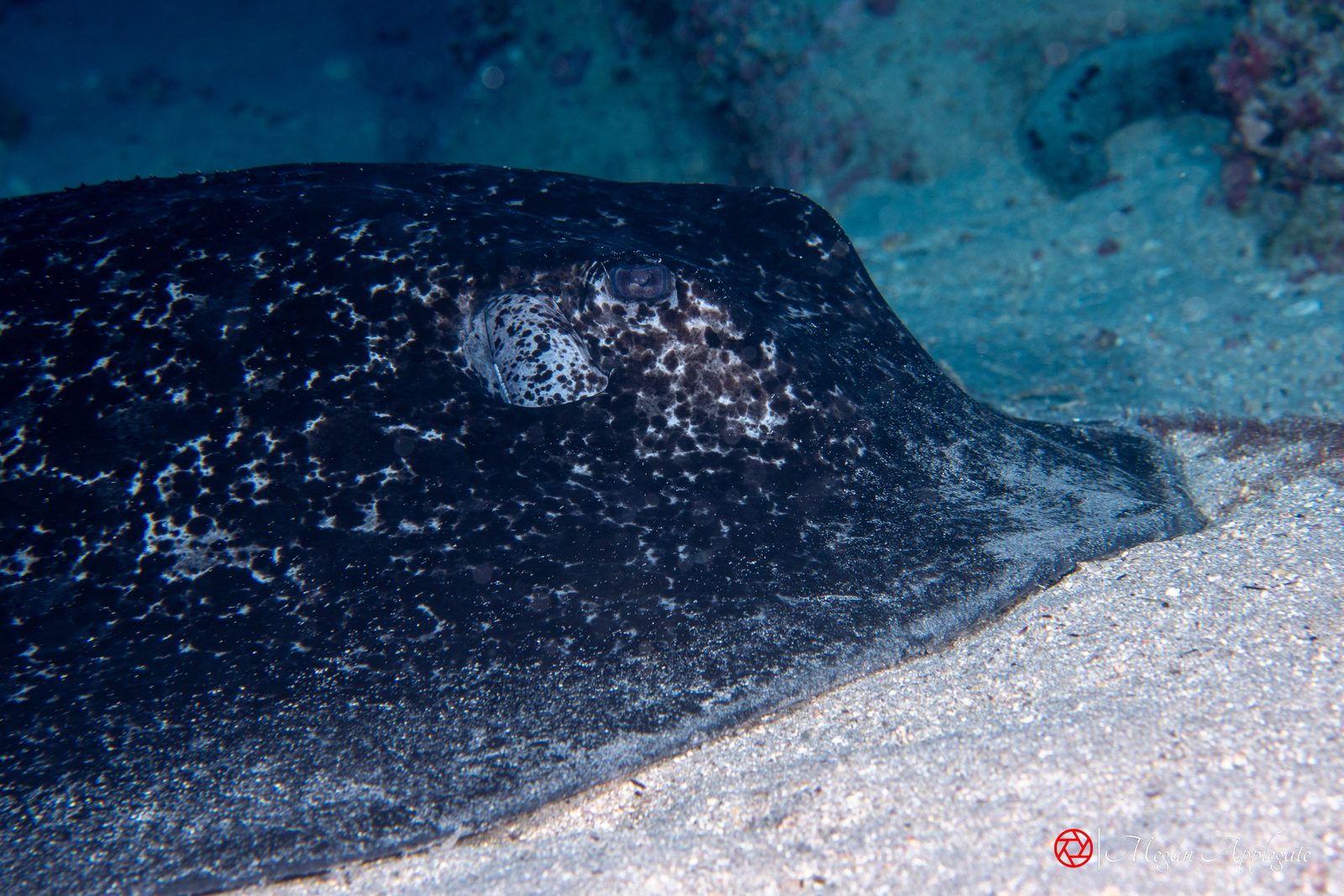
Marbled ray (Taeniurops meyeni)
Marbled ray. Photo © Megan Applegate, Cocos Island, August 2024.

Marbled ray Taeniurops meyeni

A very large stingray that is common at Cocos, though it is not a species of every Eastern Pacific island.

Key marks: A broad, rounded, thick disc, grey with dense dark mottling, and a tail shorter than the disc with a deep fin fold underneath. Usually resting on sand or under ledges.

At Cocos: Common; females can be more than 2.7 m long (SEE Turtles 2024). Reported at Manuelita, under the arch at Big Dos Amigos at about 21 m, and on top of Bajo Alcyone (DAN); three large ones were seen at Submerged Rock in 2016 (Blue Water Dive Travel).

Sickle-fin devil ray Mobula tarapacana

A devil ray, smaller than a giant manta. Spanish common names vary, so the English name is used here.

Key marks: Sharply curved, sickle-shaped wings and a mouth on the underside of the head, not at the front as in a manta.

At Cocos: One was seen on a 2024 expedition (SEE Turtles 2024). Mobula rays are more likely in the dry season, December to May (Liveaboard.com).

Also listed

Listed for the park, rarely reported by divers

From the UNESCO listing

Possible but unconfirmed on dives

UNESCO also lists the lemon shark, the bigeye thresher and the pelagic stingray for Cocos Island National Park (UNESCO). None of the dive reports used for this page mention them, so treat them as rare possibilities.

At a glance

Sharks and rays at Cocos

Where and when, in one table

Table — Sharks and rays at Cocos Island, from DAN, Blue Water Dive Travel, SEE Turtles and Liveaboard.com. Individual trips vary.
SpeciesWhere reportedWhen
Scalloped hammerheadBajo Alcyone, Dirty Rock, Manuelita, Punta María, Dos AmigosYear-round, densest June–November
Whitetip reef sharkEvery site; night hunts at Manuelita and Chatham BayYear-round
Galápagos sharkDirty Rock, Punta María, ManuelitaYear-round
Silky sharkManuelita, Dirty Rock, Bajo AlcyoneOccasional
Tiger sharkManuelita, sandy reef edgesOccasional, more often in recent years
Silvertip sharkSilverado, Small Dos AmigosOccasional
Blacktip sharkCleaning stationsOccasional, shy
Whale sharkBajo Alcyone and other seamountsMost likely August–October
Giant oceanic mantaManuelitaOccasional
Marbled rayManuelita, Big Dos Amigos, Bajo Alcyone, Submerged RockCommon
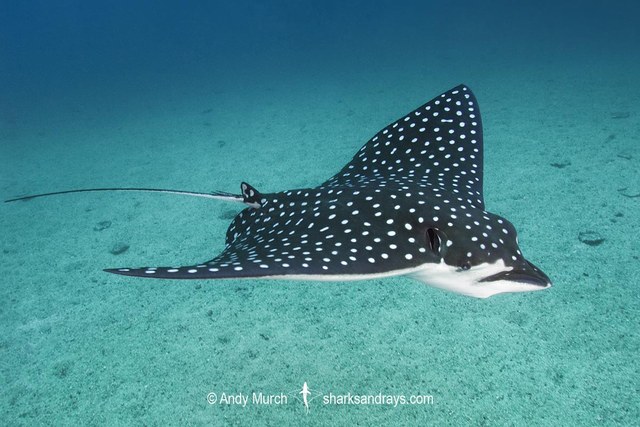
Spotted eagle rayThe Channel, Dos Amigos, Dirty RockCommon
Sickle-fin devil rayOpen waterMobulas most likely December–May

Diving here

Cocos is reached only by liveaboard and is not a destination for new divers: expect strong currents, surge and thermoclines, especially in the wet season (DAN). The Shark ID page shows how to tell the grey sharks apart.