Jellyfish Lake

Palau Jellyfish Lake

A marine lake on Eil Malk where golden jellyfish found nowhere else follow the sun across the water: how the lake works, why the jellyfish come and go, and what to know before you visit.

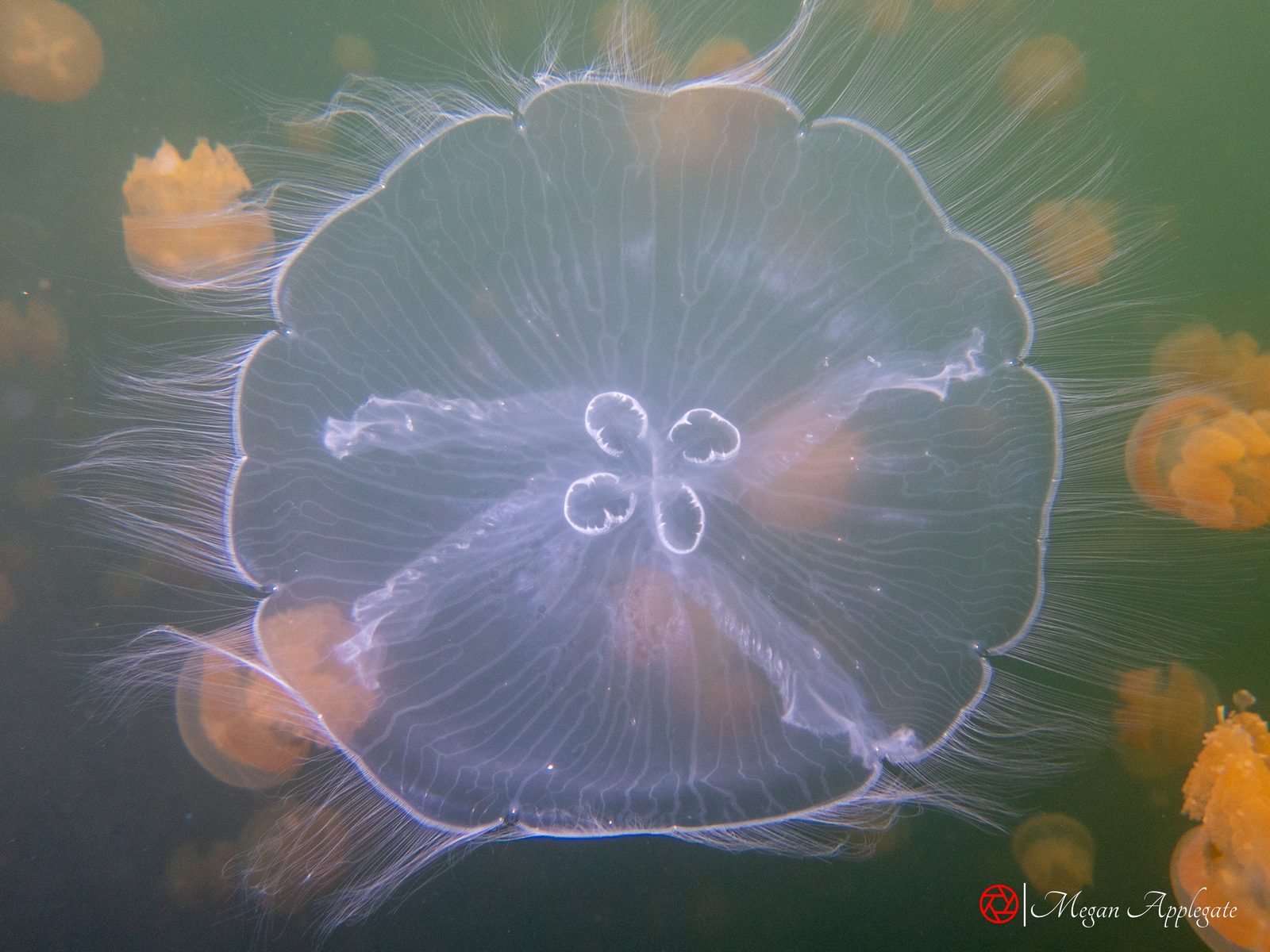
Moon jellyfish among golden jellyfish
Moon jellyfish among golden jellyfish. Photo © Megan Applegate, Jellyfish Lake, Palau, September 2021.

Background photo: Megan Applegate (Palau)

The lake

Ongeim’l Tketau

A sealed-off piece of sea, about 12,000 years old

Jellyfish Lake, Ongeim’l Tketau (“Fifth Lake”), lies on Eil Malk in the Rock Islands. It formed about 12,000 years ago as the sea rose after the last ice age, and it is still joined to the lagoon by three tunnels near the surface (Wikipedia). It is up to 460 m long and 160 m wide, and averages 30 m deep (Wikipedia).

The lake is layered. Oxygen reaches only about 15 m; below that the water has no oxygen and hydrogen sulfide builds up to dangerous levels (Wikipedia; Oceanic Society), under a pink layer of bacteria at 13–15 m (Coral Reef Research Foundation). The Rock Islands hold 52 marine lakes, more than anywhere else in the world (UNESCO); of Palau’s seventy marine lakes, five have jellyfish, and this is the only one open to visitors (Oceanic Society).

No scuba

Scuba diving is banned in the lake, to keep the layers from mixing and because of the hydrogen sulfide below (Oceanic Society). Visitors snorkel.

The jellyfish

Golden and moon jellyfish, and their predator

A subspecies found nowhere else

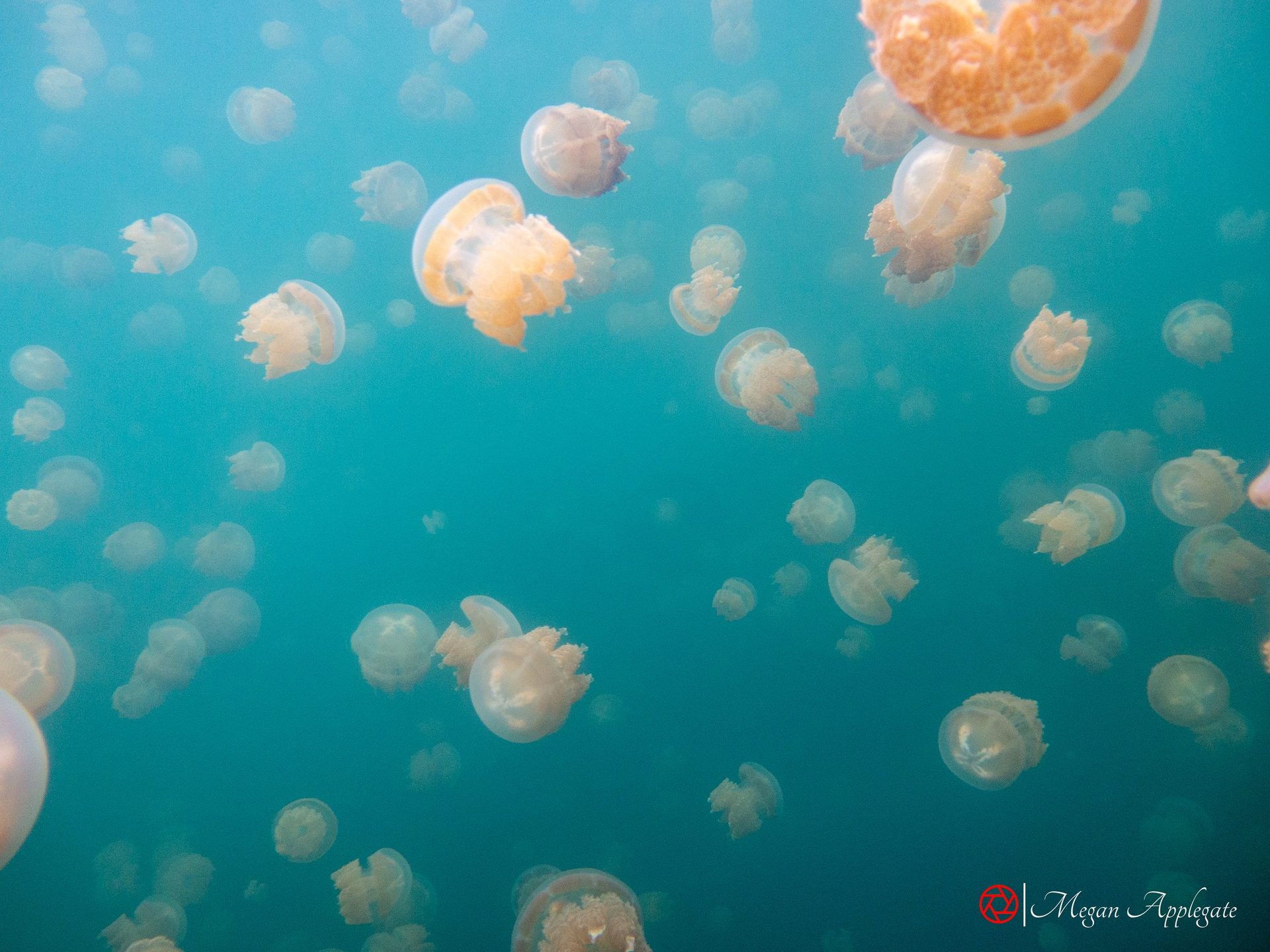
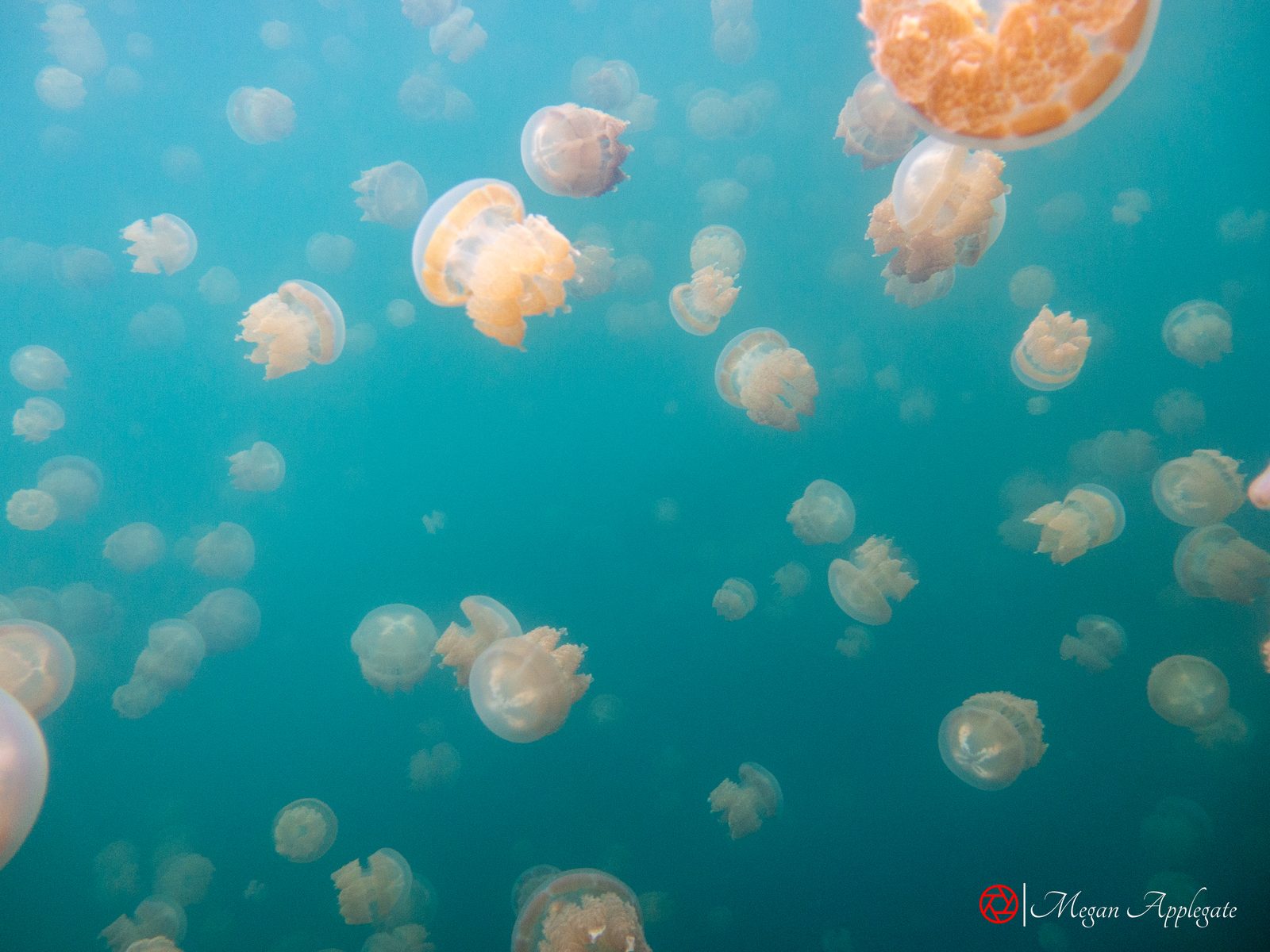
Golden jellyfish (Mastigias papua etpisoni)
Golden jellyfish. Photo © Megan Applegate, Jellyfish Lake, Palau, September 2021.

Golden jellyfish Mastigias papua etpisoni

A subspecies found only in this lake, named after former President Ngiratkel Etpison (Coral Reef Research Foundation). It was described together with four other new subspecies from nearby marine lakes (Wikipedia).

Key marks: A golden-brown bell that has almost completely lost the spots of the lagoon form (Wikipedia). Algae living in its tissues (zooxanthellae) feed it in return for sunlight, so it spends the day following the sun (Coral Reef Research Foundation; Oceanic Society). It has stinging cells, but the sting is very mild and essentially harmless to people (Coral Reef Research Foundation).

In the lake: At night the jellyfish move up and down between the surface and the chemocline. In the morning they swim from the western basin to the eastern basin, and in the early afternoon back west; this daily route may have evolved to avoid the jellyfish-eating anemone Entacmaea medusivora, which lives in the eastern part of the lake (Wikipedia).

Moon jellyfish (Aurelia sp.)
Moon jellyfish. Photo © Megan Applegate, Jellyfish Lake, Palau, September 2021.

Moon jellyfish Aurelia sp.

The lake’s second jellyfish (Wikipedia).

In the lake: Present in healthy numbers in 2025, when golden jellyfish were scarce (Palau Dive Adventures).

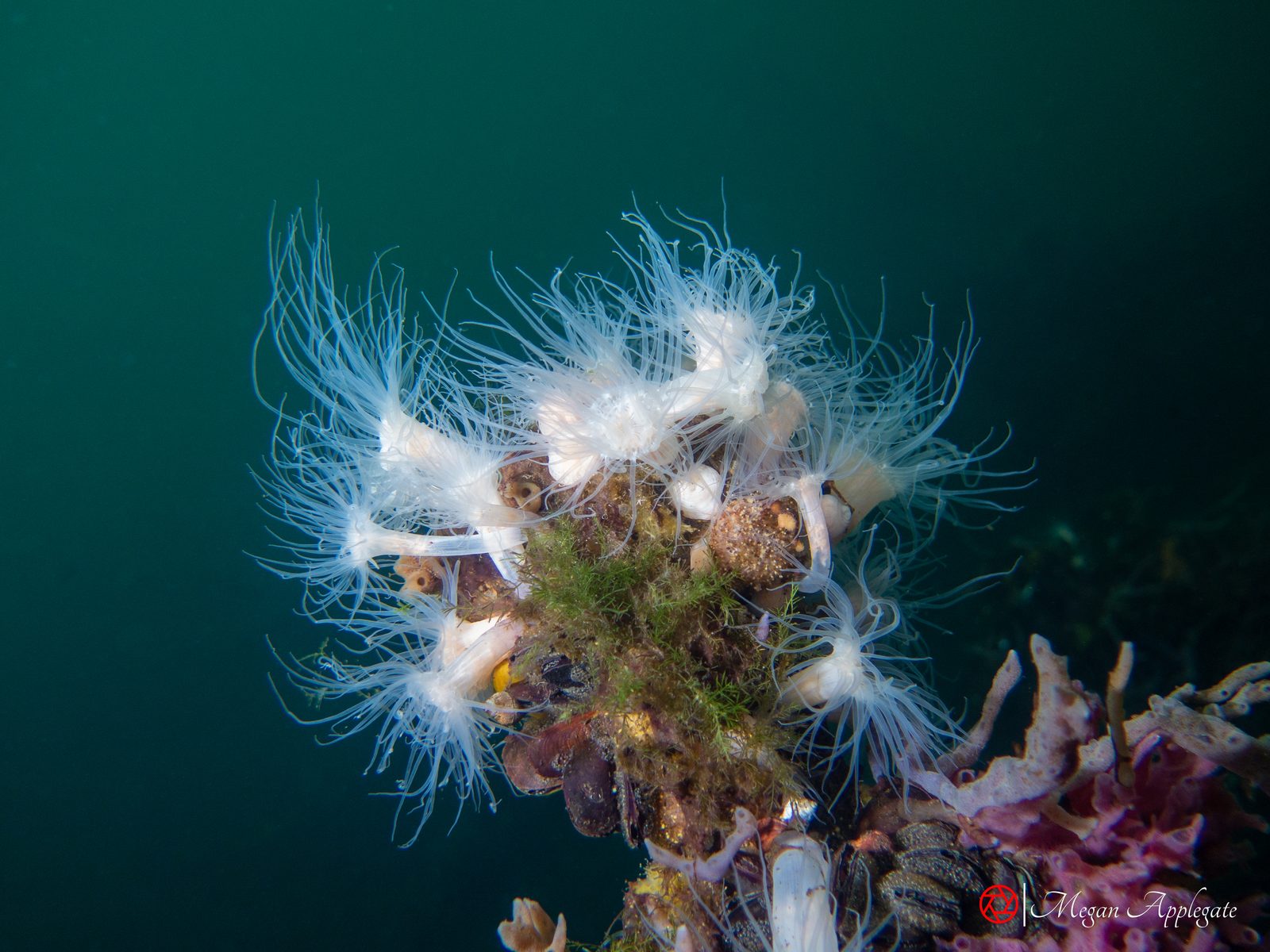
Jellyfish-eating anemone (Entacmaea medusivora)
Jellyfish-eating anemone. Photo © Megan Applegate, Jellyfish Lake, Palau, September 2021.

Jellyfish-eating anemone Entacmaea medusivora

Not a jellyfish but one of the lake’s predators: a sea anemone found only in Palau that catches and eats the golden jellyfish (Coral Reef Research Foundation).

In the lake: It lives in the eastern part of the lake, and the golden jellyfish’s daily route may have evolved to keep them away from it (Wikipedia).

Boom and bust

How many jellyfish?

Millions in good years, almost none in hot ones

In typical conditions the lake holds about 5 million golden jellyfish (Coral Reef Research Foundation). When the lake water heats up the population can crash, as in the 1998 El Niño, when the algae in the jellyfish died off (Wikipedia), and it has recovered within a few years each time so far (Palau Dive Adventures). CRRF has found the upper layer coolest during El Niño and warmest during La Niña (Coral Reef Research Foundation).

Table — Golden jellyfish in Jellyfish Lake over the years.
YearWhat happened
1998After a strong El Niño, the golden jellyfish fell to zero by December (Wikipedia).
2000Medusae seen again in January, for the first time since April 1999 (Wikipedia).
2005A peak of more than 30 million (Oceanic Society).
2012Back to pre-decline levels by May (Wikipedia).
2016During the 2015–16 El Niño drought the population dwindled; the last medusa was seen in May 2016 (Coral Reef Research Foundation). The lake closed to visitors for about two years (Oceanic Society).
2018–19The lake cooled in late 2018 and numbers rose; by 2019 they were estimated in the millions (Coral Reef Research Foundation).
2022About 56,000 by July, roughly a tenth of the April estimate, with the water above the 31.5 °C limit for successful reproduction; the lake stayed open (Pristine Paradise Palau).
2025Fewer than 5,600 golden jellyfish were reported, so the famous “wall of jellies” was unlikely; moon jellyfish were present in healthy numbers (Palau Dive Adventures).
2026At the September 16 check, CRRF reported jellyfish present, numbers unchanged over three months and the lake water cooling, with conditions favouring jellyfish for the next three months (CRRF lake conditions).

Check before you go

The Coral Reef Research Foundation monitors the lake and posts its current conditions and a three-month forecast.

Visiting

Visiting the lake

Permit, rules and the walk in