Birds

Bonaire birds

Caribbean flamingos at the salt pans, the yellow-shouldered lora and the island’s own parakeet, and the pelicans, frigatebirds and terns of the coast.

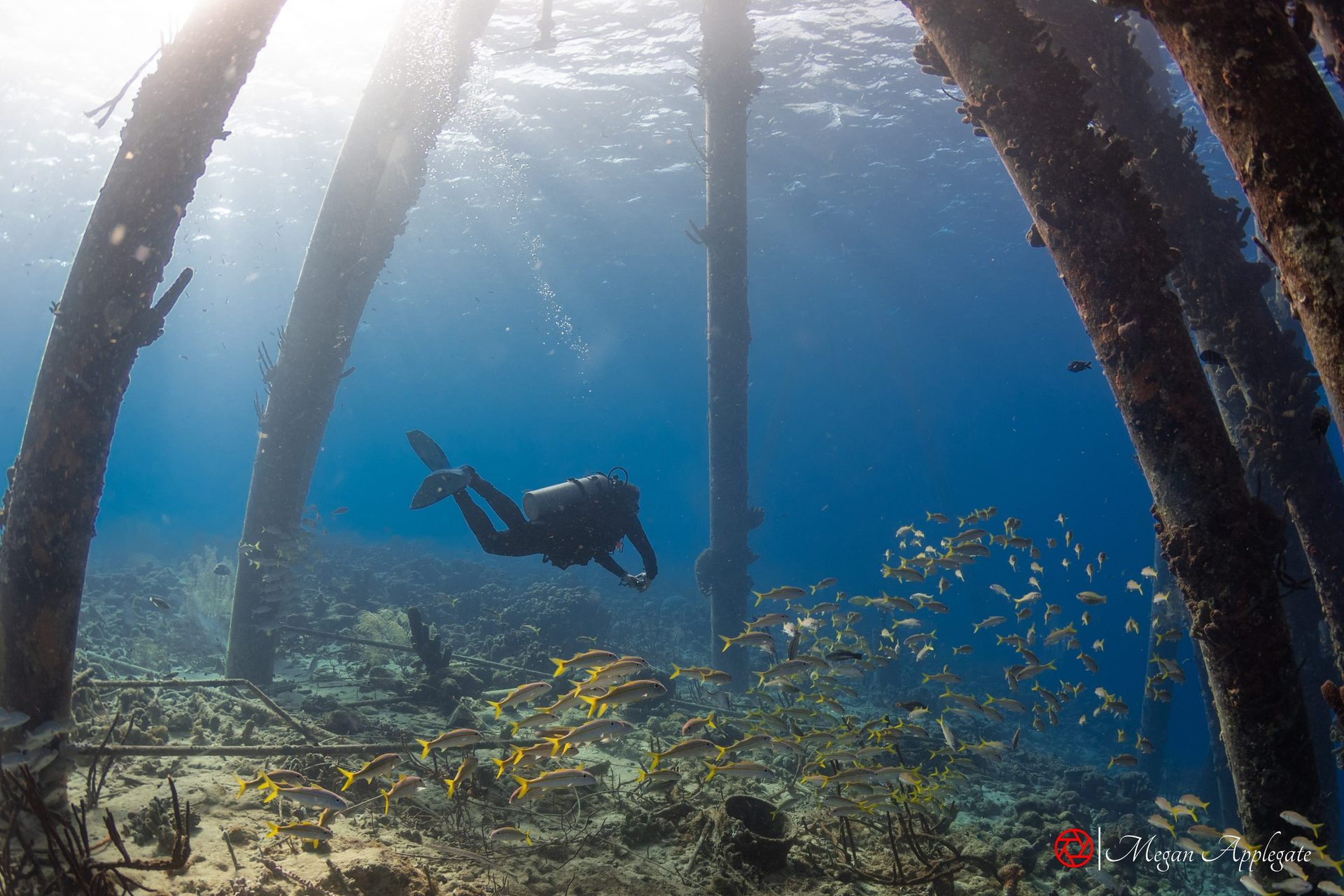
Background photo: Megan Applegate (Bonaire)

Flamingos

Caribbean flamingos

One of the Caribbean’s key nesting colonies

More than 210 bird species have been recorded on Bonaire, and the island has six Important Bird Areas, from Washington Slagbaai in the north to the Pekelmeer salt works in the south (BirdLife IBA). Four of its wetlands are Ramsar sites, first designated in 1980 and extended in 2021 to almost 8,700 ha (Ramsar 2021).

Lora, prikichi and chuchubi are the birds’ names in Papiamentu (InfoBonaire).

Caribbean flamingo Phoenicopterus ruber

Key marks: 1.2–1.4 m tall, pale pink to crimson depending on how many carotenoid-rich crustaceans it eats, with a bill bent downward for filtering food (Wikipedia (ES)).

At Bonaire: Breeds at Pekelmeer in the south, in a 55 ha Flamingo Breeding Reserve set up in 1969 inside the salt works; about 3,000 breeding birds were counted between 1980 and 2017, and the site is closed to the public (Ramsar (Pekelmeer)). Washington Slagbaai holds about 500 more, and several hundred use Gotomeer (BirdLife IBA; Ardea 2009 checklist).
Watching flamingos

The breeding season runs mainly from March to mid-July (bonaire.com). Pekelmeer is closed to visitors (Ramsar (Pekelmeer)); flamingos can be watched with binoculars from the road near Pink Beach (Sunwise Bonaire). Don’t approach the birds.

Parrots

The lora and the prikichi

Bonaire’s two parrots

Yellow-shouldered amazon (lora) Amazona barbadensis

Key marks: About 33 cm and mostly green, with a whitish forehead, yellow crown and eye area, yellow “shoulders” and thighs, and a red patch in the wing (Wikipedia).

At Bonaire: Roost counts rose from an average of about 514 birds in 2005–09 to about 1,152 in 2020–23. Threats include chicks poached for the pet trade, grazing goats and donkeys that stop trees regrowing, and shooting as a crop pest. Near Threatened on the IUCN Red List since 2021 (Frontiers 2024). Most often seen in north Kralendijk, Hato and further north (InfoBonaire).

Brown-throated parakeet (prikichi) Eupsittula pertinax

Key marks: 23–28 cm, with a yellow face, olive-brown breast and green back; the Bonaire subspecies xanthogenia has an orange-yellow crown and nape (Wikipedia).

At Bonaire: The subspecies is found only on Bonaire, almost everywhere except the southern salt works (InfoBonaire). Smaller than the lora.

Coast

Seabirds and the shore

Seen from the shore between dives

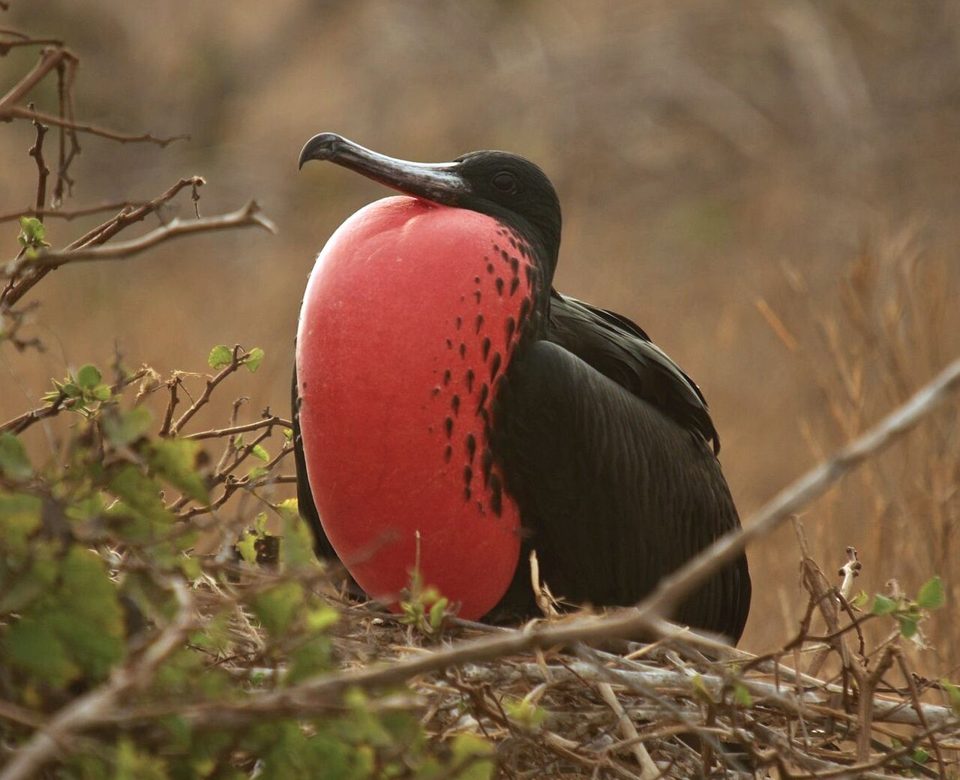
Magnificent frigatebird (Fregata magnificens)
Magnificent frigatebird. Reference photo, not taken in Bonaire; see the credits below.

Magnificent frigatebird Fregata magnificens

Key marks: Long, angled wings spanning 2.2–2.4 m and a forked tail. Males are all black with a red throat pouch; females have a white breast; young birds have a white head (Wikipedia).

At Bonaire: Roosts at night in the Lac Bay mangroves, historically more than 100 birds; breeding there has not been confirmed (KBA Lac Bay).

Land

Gardens and dry forest

Around the dive shops and in the national park

Tropical mockingbird (chuchubi) Mimus gilvus

Key marks: 23–25 cm, grey above and off-white below, with a dark line through the eye, two white wing bars and a long dark tail with pale tips (Wikipedia).

At Bonaire: Probably the bird you will meet most often, in almost any garden (InfoBonaire).

Credits

Bird photo credits

Reference photos and their sources

There are no photos of Bonaire’s birds in this guide yet. The frigatebird is a reference photo taken elsewhere, credited below; the other birds link to photos online.

Photo credits. Each link opens the page the photo came from.
SpeciesPhotographerLicenceSource
Magnificent frigatebirdAndrew Turner from Washington, DC, United StatesCC BY 2.0Wikimedia Commons