Macro

Bonaire macro

Frogfish dressed as sponges, seahorses among the gorgonians, jawfish brooding eggs in their mouths, and cleaner shrimp on every reef.

Squat anemone shrimp (Thor amboinensis)
Squat anemone shrimp. Photo © Megan Applegate, Bonaire, December 2024.

Background photo: Megan Applegate (Bonaire)

Small fish

Frogfish, seahorses and jawfish

Look slowly, close to the reef

Longlure frogfish Antennarius multiocellatus

Key marks: A round body with a huge upturned mouth, hand-like pectoral fins and a lure on the snout; dark spots, some ringed in white, usually three on the tail. Up to about 20 cm, and often looks like a sponge (Naturalis Caribbean Diving).

At Bonaire: Found at many Bonaire sites, including Something Special (Scuba Diving; bonaire.com); at Bari Reef frogfish often hide among the corals (Sunwise Bonaire).
Longsnout seahorse Hippocampus reidi

Key marks: A snout about a third of the body length, a gripping tail and bony plates; yellow, orange, brown or black, up to about 17 cm (bonaire.com).

At Bonaire: Oil Slick Leap among gorgonians and sponges, Front Porch and Andrea I and II (bonaire.com). One source calls it the only seahorse around the island (bonaire.com); another lists dwarf and lined seahorses too, at the Cliff, Salt Pier and Bari Reef (PADI).

Yellowhead jawfish Opistognathus aurifrons

Key marks: A pale bluish-grey body with pale blue dots and a yellow head, up to about 10 cm, hovering over a pebble-lined burrow. The male broods the eggs in his mouth (Naturalis Caribbean Diving).

At Bonaire: At Front Porch, at about 5–6 m, a male was seen churning eggs in his mouth; he released the larvae after dark, and jawfish pull rocks over their burrows before dusk (DAN Alert Diver). Also at Bari Reef (Sunwise Bonaire).

Secretary blenny Acanthemblemaria maria

Key marks: Tiny, 2–4 cm, living in a wormhole with only its head showing: cirri above the eyes, a white to greenish head and a brown-speckled body (anemoon.org).

At Bonaire: Pictured in a Bonaire photo gallery (Scuba Diving); look in holes in hard coral.

Sharptail eel Myrichthys breviceps

Key marks: A snake-like eel, grey to olive or purplish-brown, with small yellow spots on the head and large pale spots on the body, up to 75 cm (Naturalis Caribbean Diving).

At Bonaire: Seen hunting on late-afternoon dives, followed by jacks, goatfish and a soapfish that wait for prey it flushes out (Undercurrent).

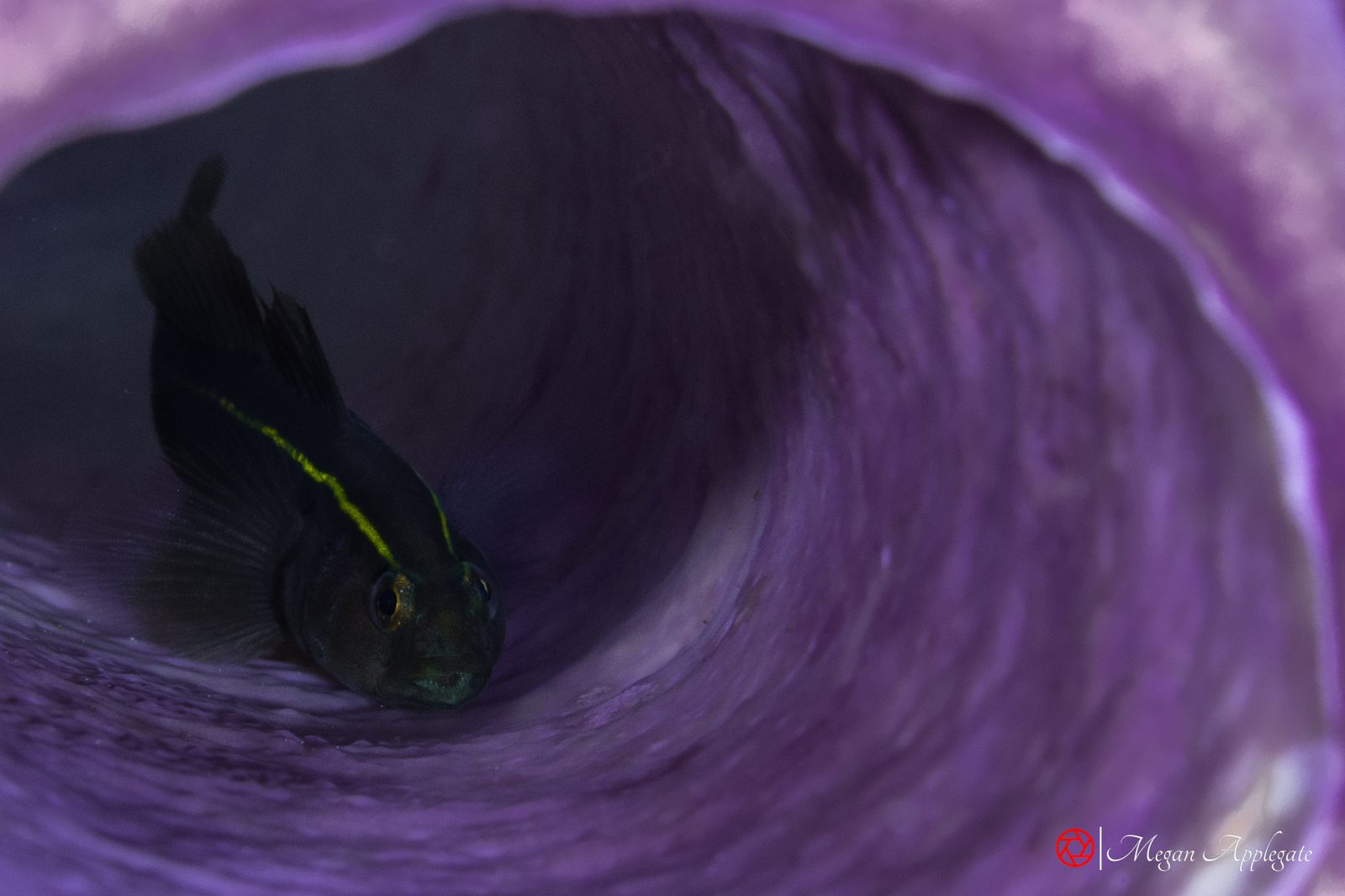
Yellowline goby (Elacatinus horsti)
Yellowline goby. Photo © Megan Applegate, Bonaire, December 2024.

Yellowline goby Elacatinus horsti

Key marks: Black, shading to whitish below, with a narrow pale yellow or white line from the eye to the tail base; up to 5 cm (FishBase).

At Bonaire: Always lives in or on tube and massive sponges (FishBase), where it feeds on parasitic worms that live on the sponge (Wikipedia). Its range runs from the Bahamas to Curaçao (FishBase); this one was photographed in a purple vase sponge on Bonaire.

Spotted drum (juvenile) Equetus punctatus

Key marks: The juvenile has a far longer dorsal fin than the adult and a single dark stripe along the body; adults are white with dark bars and hide in crevices by day (Undercurrent).

At Bonaire: One visitor saw the whole life cycle, from tiny juvenile to adult, on Bonaire’s reefs (Undercurrent).

Invertebrates

Slugs, snails, shrimp, crabs and cephalopods

On gorgonians, anemones and sand

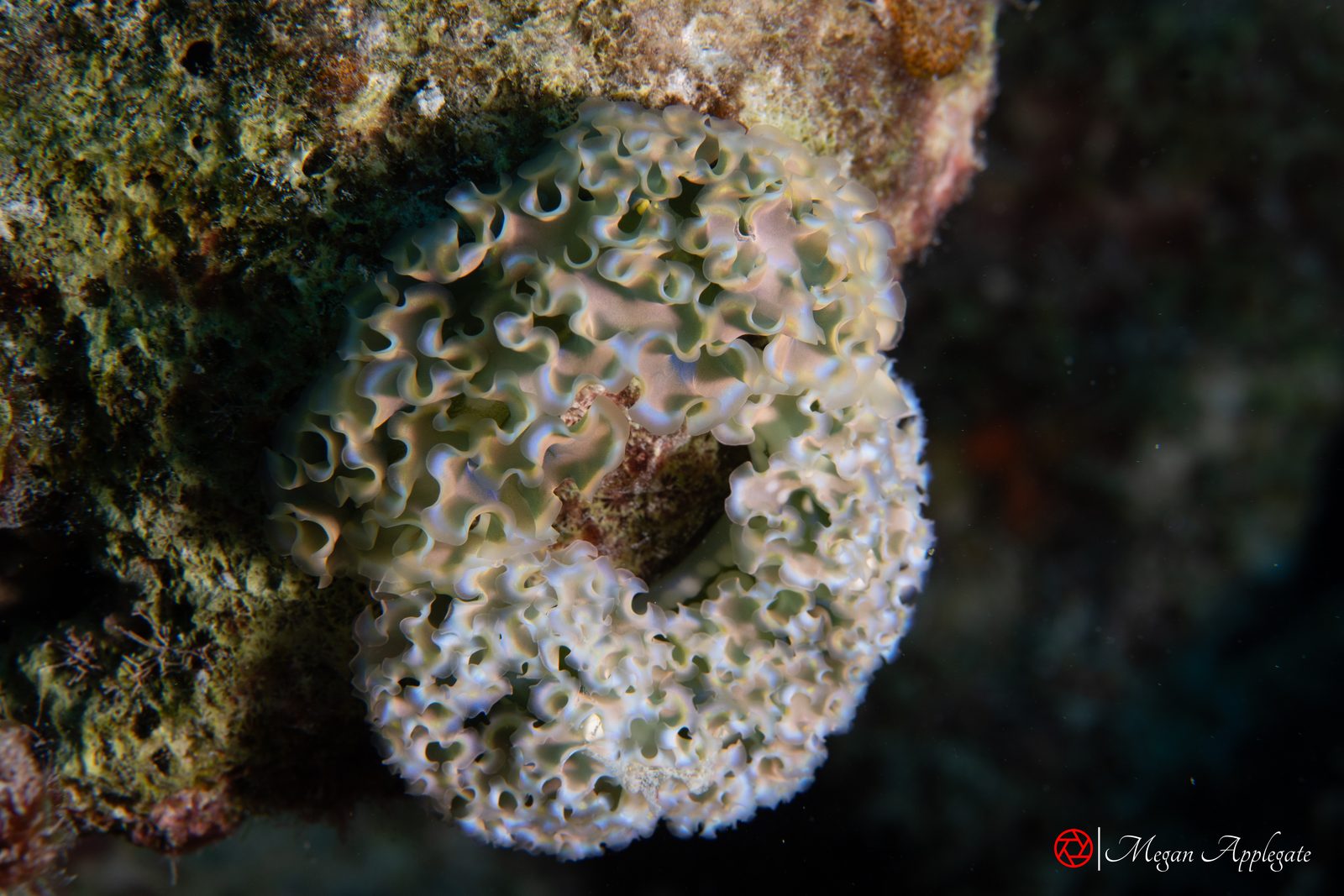
Lettuce sea slug (Elysia crispata)
Lettuce sea slug. Photo © Megan Applegate, Bonaire, December 2024.

Lettuce sea slug Elysia crispata

Key marks: Ruffled, folded flaps along the back, blue to green with purple or red edges, 2–5 cm (Smithsonian Ocean; PADI). It keeps chloroplasts from the algae it eats working for up to four months (Smithsonian Ocean).

At Bonaire: About half a dozen were seen on the northern reefs on one trip (Undercurrent); photographed on Bonaire (photo here).

Flamingo tongue Cyphoma gibbosum

Key marks: A small snail, 2–4 cm, whose cream mantle has orange, roughly square spots outlined in black; the shell underneath is plain cream. Feeds on sea fans and other gorgonians (anemoon.org).

At Bonaire: Bonaire is within its range (anemoon.org); look on gorgonians.

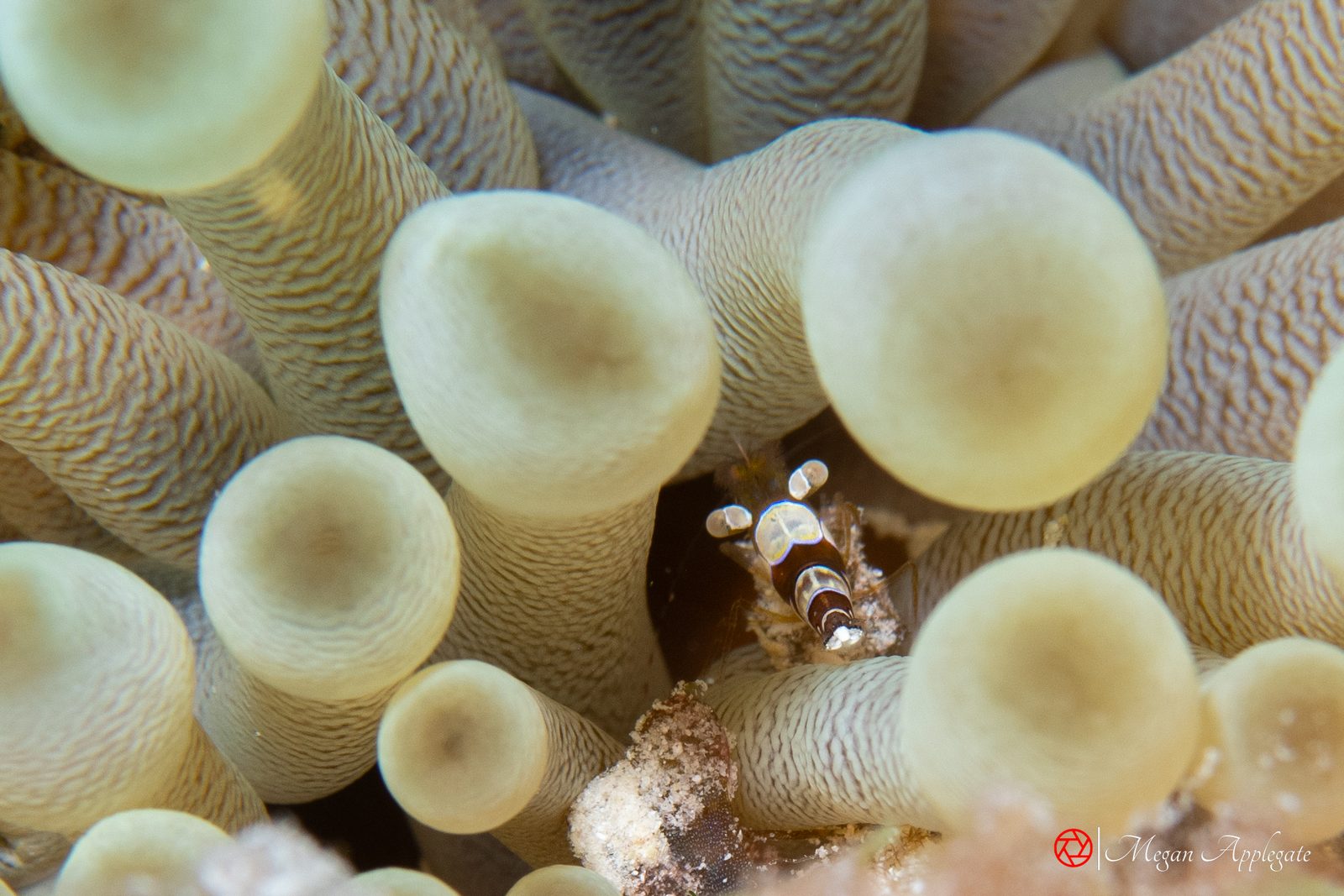
Squat anemone shrimp (Thor amboinensis)
Squat anemone shrimp. Photo © Megan Applegate, Bonaire, December 2024.

Squat anemone shrimp Thor amboinensis

Key marks: About 13 mm, olive brown with symmetrical white patches edged in thin blue lines; it holds its abdomen curled up with the tail fan over its head (Wikipedia).

At Bonaire: Lives on sea anemones (Wikipedia); in a Caribbean study it was found most often on the giant anemone (Marine Ecology Progress Series). Photographed on Bonaire on a giant anemone.

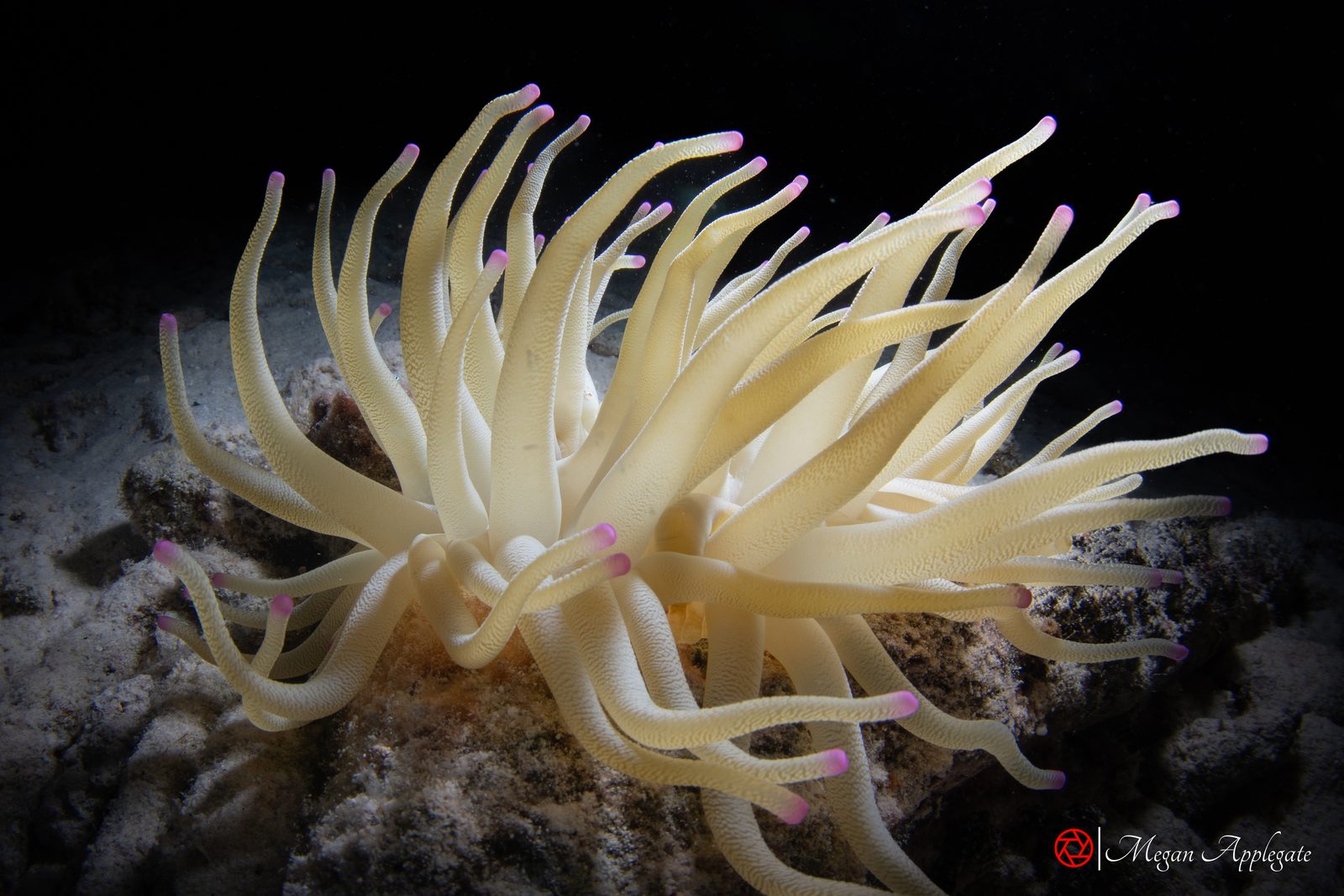
Giant Caribbean sea anemone (Condylactis gigantea)
Giant Caribbean sea anemone. Photo © Megan Applegate, Bonaire, December 2024.

Giant Caribbean sea anemone Condylactis gigantea

Key marks: About 15 cm high and 30 cm across, with long tentacles whose tips may be purple or rose (Wikipedia).

At Bonaire: A base for cleaner shrimp and small fish (Wikipedia): spotted cleaner shrimp, squat anemone shrimp and arrow crabs all use it (Wikipedia (ES); Marine Ecology Progress Series). Photographed on a Bonaire night dive.

Pederson cleaner shrimp Ancylomenes pedersoni

Key marks: Transparent with blue and violet markings and long white antennae, about 2–2.5 cm. Lives in corkscrew or giant anemones and waves its antennae to call fish in to be cleaned (anemoon.org).

At Bonaire: Small cleaner shrimp are found on all of Bonaire’s reefs (Undercurrent).

Yellowline arrow crab Stenorhynchus seticornis

Key marks: A triangular body drawn out into a long spiny snout, very long thin legs, fine dark lines on the shell and violet claw tips; 2.5–5 cm, at 3–40 m (anemoon.org).

At Bonaire: “Dozens” seen on one trip (Undercurrent).

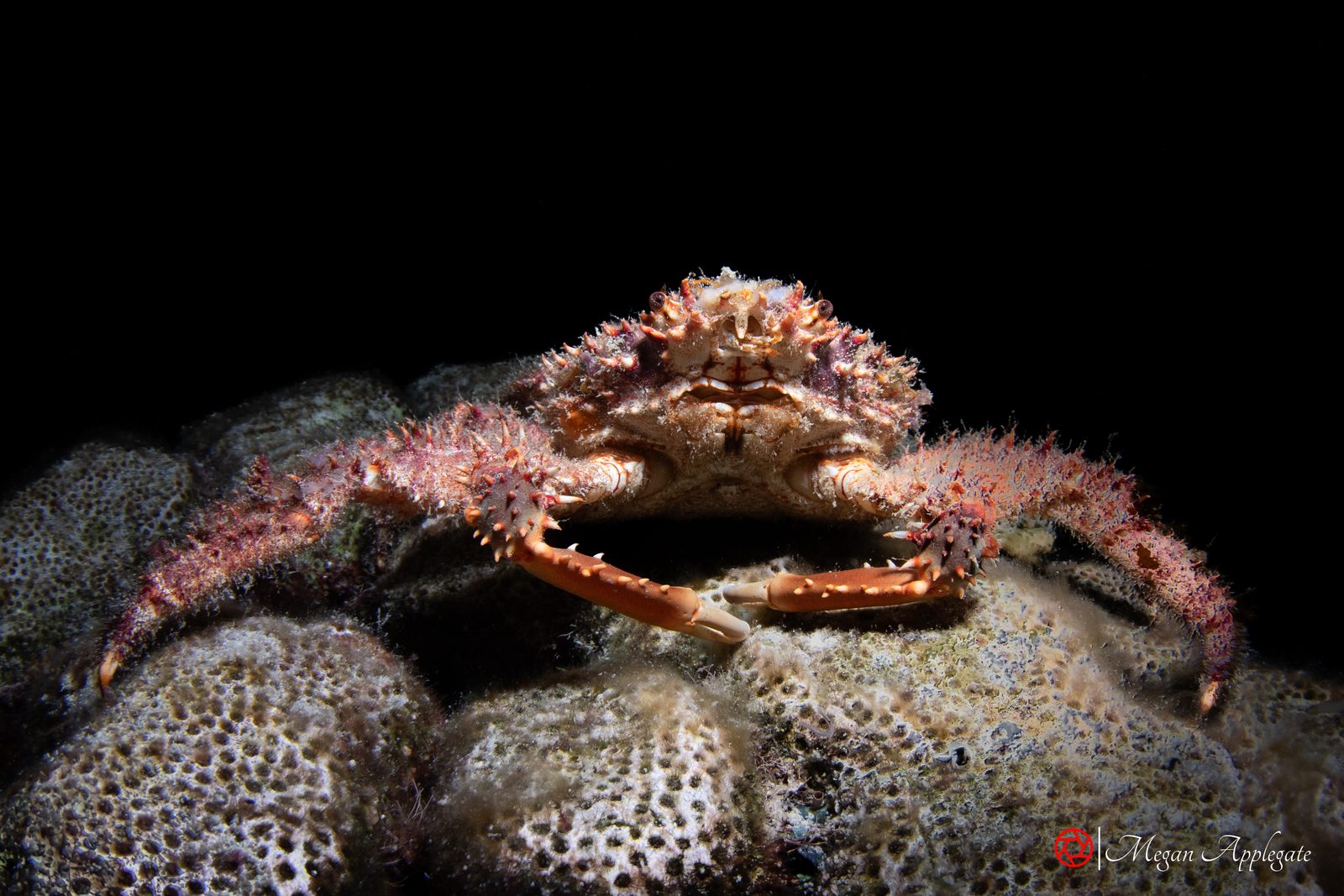
Channel clinging crab (Maguimithrax spinosissimus)
Channel clinging crab. Photo © Megan Applegate, Bonaire, December 2024.

Channel clinging crab Maguimithrax spinosissimus

Key marks: A big crab, up to 18 cm across the shell, reddish-brown, with legs covered in short spines and smooth purplish-grey claws (Wikipedia).

At Bonaire: Hides in caves and under reef overhangs and eats algae and carrion (Wikipedia); it comes out at night, when this one was photographed on Bonaire.

Night

After dark

Shore night dives

Because almost every site is a shore dive, night dives are easy to plan. Octopus hunt at Angel City and Buddy’s Reef, and at The Cliff, Oil Slick Leap and La Dania’s Leap tiny bioluminescent ostracods light up the water (bonaire.com).

Hands off

Marine park rules ban gloves and touching, moving or holding any marine life, including to set up a photo (STINAPA).

Credits

Macro photo credits

Photographed on Bonaire, December 2024

All photos on this page are Megan Applegate’s own, taken on Bonaire in December 2024, © Megan Applegate, all rights reserved. Species without a photo link to photos online.

Photo credits.
SpeciesPhotographerLicenceSource
Yellowline gobyMegan Applegate© Megan Applegate, all rights reservedPhotographer's own photo, taken at Bonaire, December 2024
Lettuce sea slugMegan Applegate© Megan Applegate, all rights reservedPhotographer's own photo, taken at Bonaire, December 2024
Squat anemone shrimpMegan Applegate© Megan Applegate, all rights reservedPhotographer's own photo, taken at Bonaire, December 2024
Giant Caribbean sea anemoneMegan Applegate© Megan Applegate, all rights reservedPhotographer's own photo, taken at Bonaire, December 2024
Channel clinging crabMegan Applegate© Megan Applegate, all rights reservedPhotographer's own photo, taken at Bonaire, December 2024