Rays & big fish

Bonaire rays & big fish

Tarpon that hunt by dive light, eagle rays off the southern tip, stingrays on the sand, barracuda, nurse sharks, and dolphins and whales offshore.

Background photo: Megan Applegate (Bonaire)

Big fish

Tarpon, rays, barracuda and sharks

The large animals of Bonaire’s shore dives

Bonaire is not a big-shark destination: the nurse shark is the shark divers see most (bonaire.com). The big animals of its shore dives are tarpon, eagle rays and stingrays, barracuda and turtles (see the Turtles page).

Atlantic tarpon Megalops atlanticus

Grows to 2.5 m. Vulnerable on the IUCN Red List (FishBase).

Key marks: Large, coin-like silver scales, a jutting lower jaw, big eyes and a long thread on the last ray of the dorsal fin (FishBase).

At Bonaire: Hunts mainly at night and follows divers, striking fish lit up by dive lights; Salt Pier, Bari Reef and Karpata, all year, most often April to October (bonaire.com). Light the reef, not the tarpon (bonaire.com).
Spotted eagle ray Aetobatus narinari

Endangered on the IUCN Red List (FishBase).

Key marks: A duck-bill snout, white spots on a black or bluish back, and a long whip-like tail with spines near its base (FishBase).

At Bonaire: Red Slave, at the southern tip, is the top site; also Atlantis and the Salt Pier area, with juveniles in Lac Bay; most often February to June (bonaire.com). Seen at 1000 Steps and Windsock too (bonaire.com; bonaire.com).

Southern stingray Hypanus americanus

Near Threatened on the IUCN Red List (FishBase).

Key marks: A diamond-shaped disc with sharp corners, plain dark brown, grey or olive on top and white below; no fin fold on the tail (FishBase).

At Bonaire: Salt Pier, Andrea II and Red Slave, all year, best early and late in the day; the small yellow stingray is seen at Andrea I (bonaire.com).

Nurse shark Ginglymostoma cirratum

Vulnerable on the IUCN Red List (FishBase).

Key marks: Barbels between the nostrils, two broadly rounded dorsal fins set far back, yellow-brown to grey-brown (FishBase).

At Bonaire: Bonaire’s most often seen shark, resting by day and more active at night: Salt Pier, the Andrea sites and the seagrass off Klein Bonaire (bonaire.com); also Windsock (bonaire.com). Caribbean reef sharks are reported off Klein Bonaire, and hammerheads are rare (bonaire.com).

Night

Tarpon at night

Hunting by dive light

Tarpon hunt mainly at night and follow divers, striking fish lit up by dive lights; the Salt Pier attracts big tarpon at night (bonaire.com; bonaire.com). Light the reef, not the tarpon (bonaire.com).

Permission needed at the Salt Pier

Diving the Salt Pier needs the harbour master’s permission and a guide, arranged through a dive shop (Scuba Diving).

Mammals

Dolphins and whales

Off the west coast

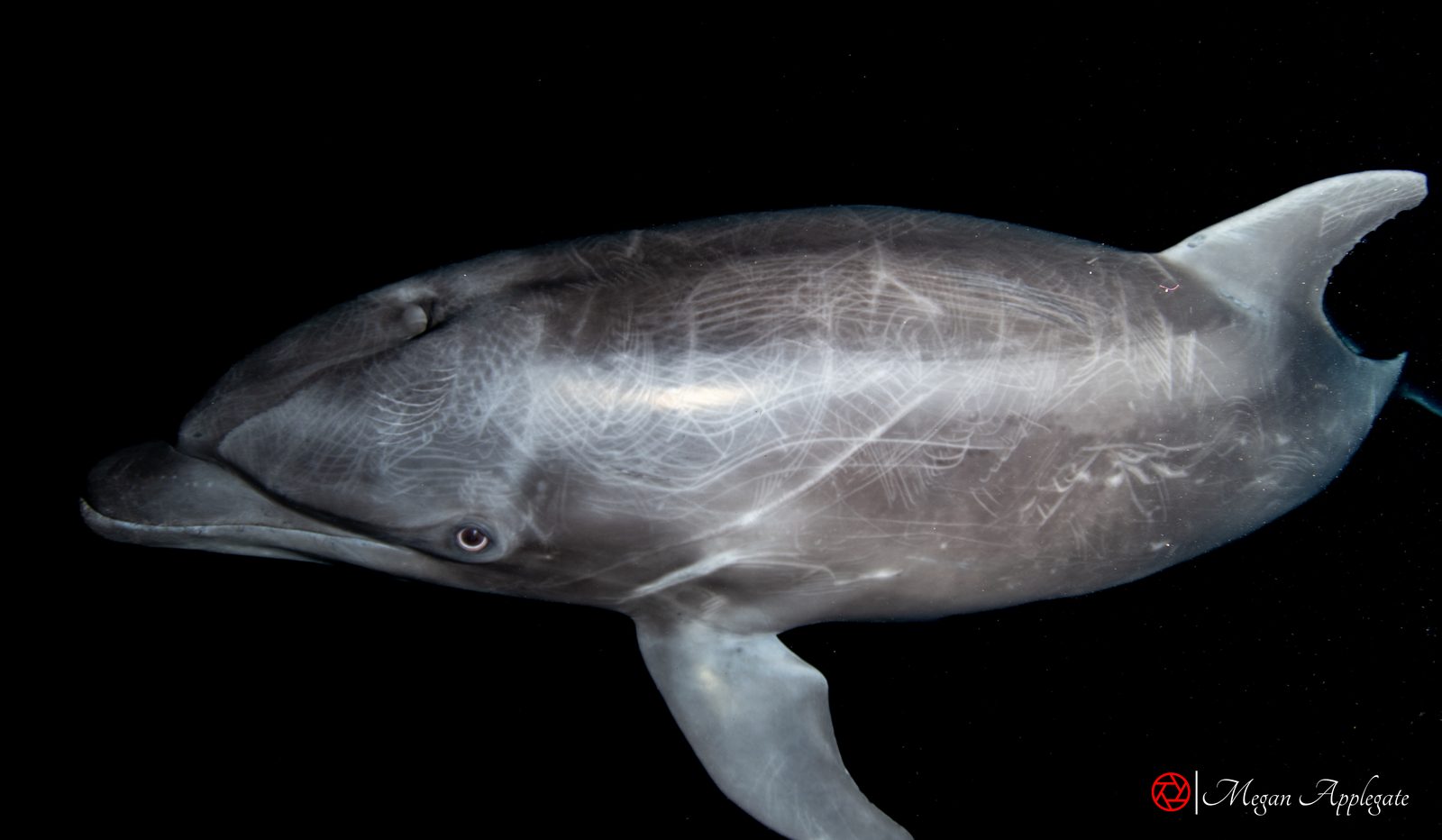
Common bottlenose dolphin (Tursiops truncatus)
Common bottlenose dolphin. Photo © Megan Applegate, Socorro, Mexico, December 2023.

Common bottlenose dolphin Tursiops truncatus

At Bonaire: Seen along the west-coast drop-off and in the channel to Klein Bonaire. Spinner dolphins are the most common dolphins off Bonaire, and Atlantic spotted dolphins are seen less often (bonaire.com).

Humpback whales pass mainly from December to March, with a smaller window in April and May; 22 whale species have been recorded, and the Yarari sanctuary for marine mammals and sharks was created in 2015 (bonaire.com). Whale sharks are rare but have been seen several times at Bise Morto (bonaire.com).

Credits

Photo credits

Where the photos come from

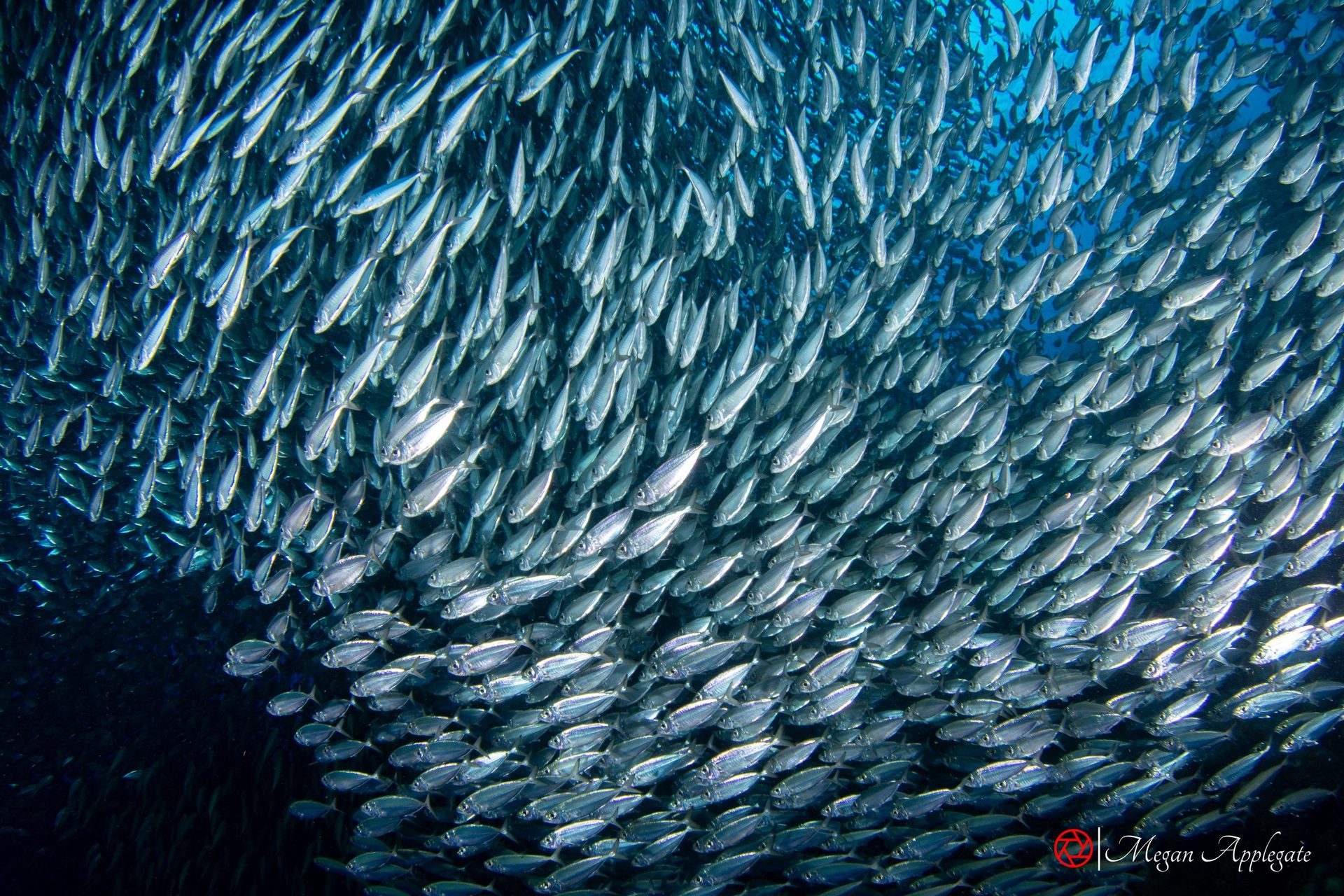
The dolphin is Megan Applegate’s photo of the same species at Socorro, Mexico; the other animals link to photos online. The background is a school of bigeye scad photographed on Bonaire in December 2024.

Photo credits.
SpeciesPhotographerLicenceSource
Common bottlenose dolphinMegan Applegate© Megan Applegate, all rights reservedPhotographer's own photo, taken at Socorro, Mexico, December 2023