Reef fish
Reef fish
49 species · grouped by family
A study of Tobago’s reefs between November 2011 and May 2013 counted 15,576 fish of 96 species in 23 families. Bicolor damselfish, brown chromis and creole wrasse made up about 45% of them, and parrotfish 15.4%. The north-east, around Speyside and Charlotteville, had the most species and the highest fish biomass; large predators were scarce everywhere (Alemu 2014). The Buccoo Reef wetland site in the south-west lists at least 119 fish species (Ramsar).
The table lists common reef fish of the Caribbean that divers meet at Tobago, grouped by family in the style of REEF fish survey sheets, then sorted by common name. The “Look for” notes come from each fish’s FishBase or Wikipedia page, with Tobago notes where a source gives them.
| Photo | Common name | Species | Look for | Profile |
|---|---|---|---|---|
| Angelfish Pomacanthidae · 4 species | ||||
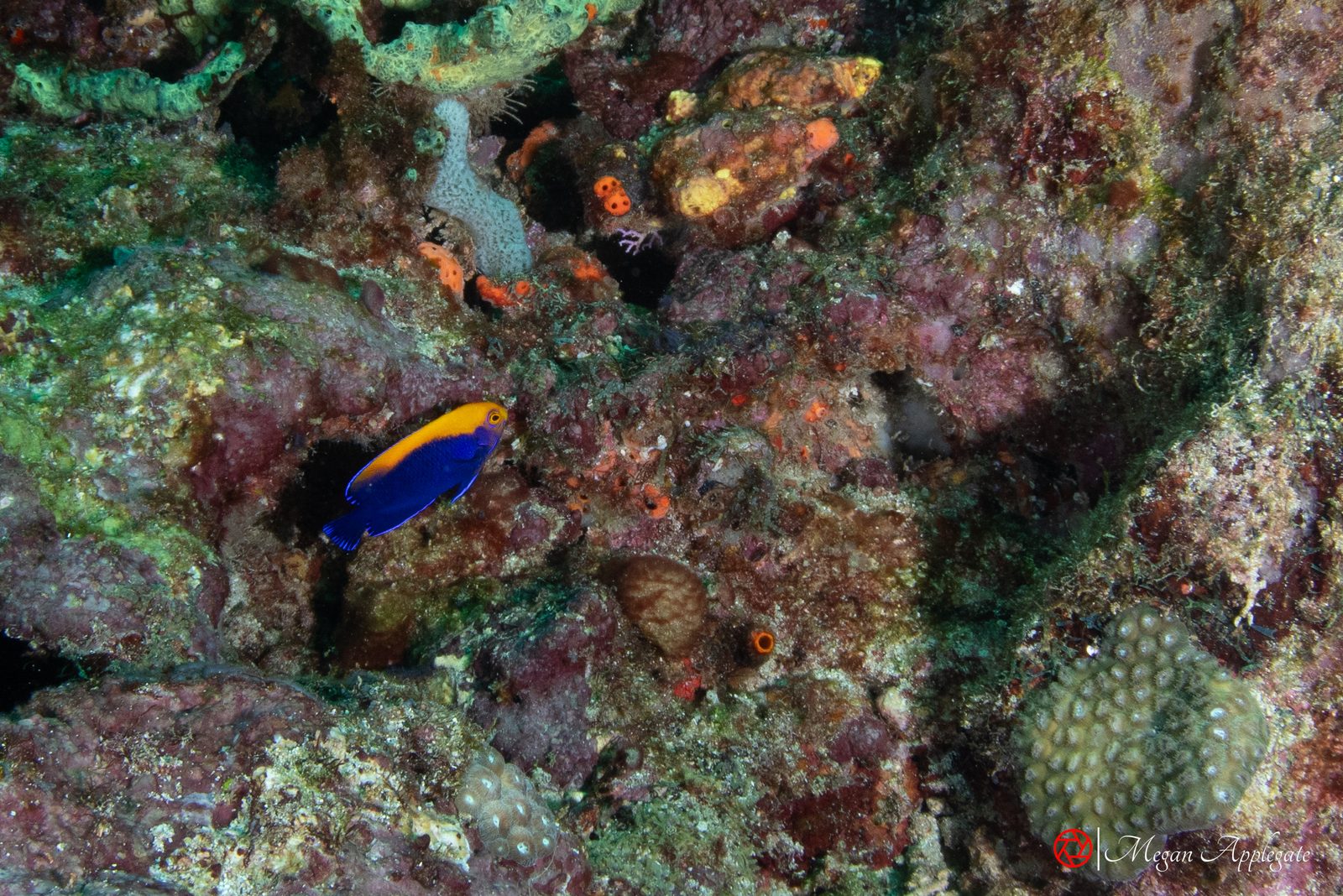 | Flameback angelfish | Centropyge aurantonotusPomacanthidae | Tiny, up to 7.5 cm: a mainly blue body with a bright golden-yellow head and back, a blue ring round the eye, and dark blue tail and anal fins with black spots; found at 15–300 m (Wikipedia). Called rare by a diver at Tobago (Scuba Diving); photographed at Tobago in November 2024 (photo on this page). | FishBase |
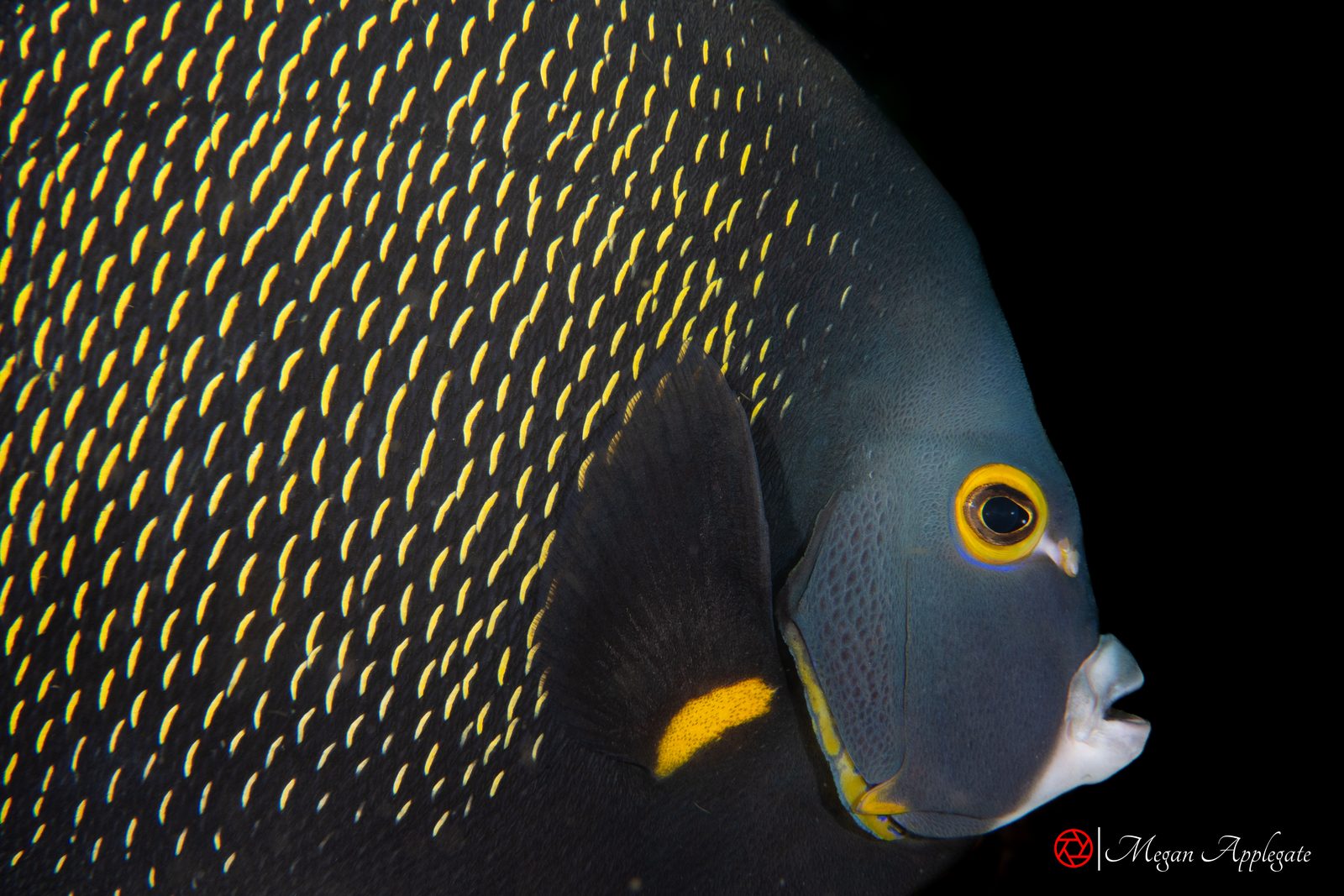 | French angelfish | Pomacanthus paruPomacanthidae | Black, with most scales rimmed golden yellow, a yellow ring round the eye, a whitish chin and a yellow filament on the dorsal fin. Recorded in reef-fish surveys around Tobago in 2011–2013 (Alemu 2014). Photographed at Tobago in November 2024 (photo on this page). | FishBase |
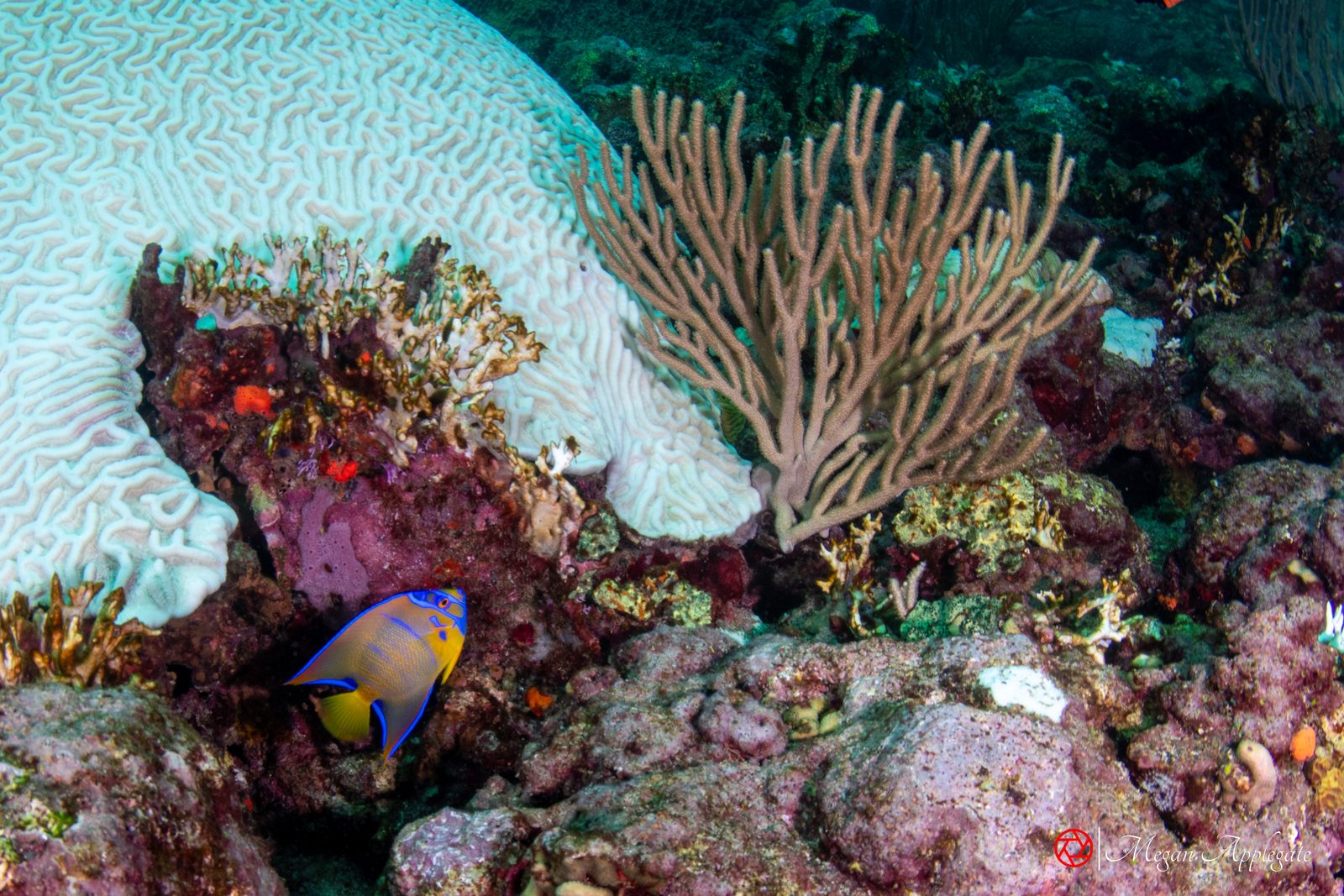 | Queen angelfish | Holacanthus ciliarisPomacanthidae | Tail and pectoral fins all yellow, and a black spot ringed in electric blue on the forehead, the “crown”. Recorded in reef-fish surveys around Tobago in 2011–2013 (Alemu 2014). Photographed at Tobago in November 2024 (photo on this page). | FishBase |
| No photo yet | Rock beauty | Holacanthus tricolorPomacanthidae | Yellow front and yellow tail, the rest black. Juveniles are yellow with a blue-ringed black spot. Recorded in reef-fish surveys around Tobago in 2011–2013 (Alemu 2014). | FishBase · Photos (Commons) |
| Butterflyfish Chaetodontidae · 3 species | ||||
| No photo yet | Banded butterflyfish | Chaetodon striatusChaetodontidae | Two broad black bars on the side, a third from the soft dorsal fin onto the tail base, and black bands near the fin edges. | FishBase · Photos (Commons) |
| No photo yet | Foureye butterflyfish | Chaetodon capistratusChaetodontidae | A large white-ringed black eyespot near the tail, dark diagonal lines forming forward-pointing chevrons, and a black bar through the eye. | FishBase · Photos (Commons) |
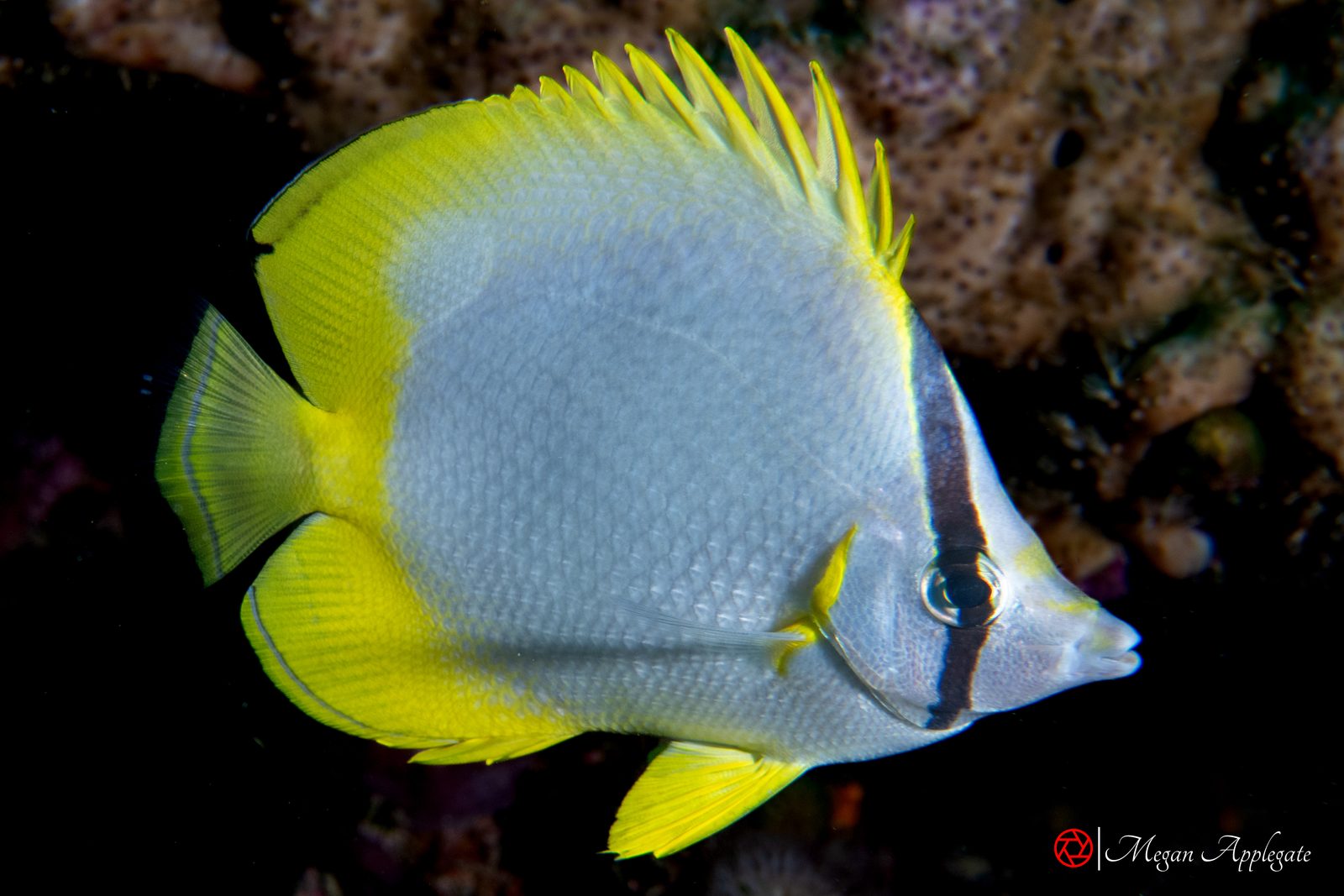 | Spotfin butterflyfish | Chaetodon ocellatusChaetodontidae | A black bar through the eye and a dark spot on the dorsal fin that give the species its name; adults reach about 15–20 cm (Wikipedia). Photographed at Tobago in November 2024 (photo on this page). | FishBase |
| Damselfish Pomacentridae · 4 species | ||||
| No photo yet | Bicolor damselfish | Stegastes partitusPomacentridae | Head and front half of the body dark grey or black, the rear half pale, usually with some yellow; up to about 10 cm (Wikipedia). With the brown chromis and the creole wrasse, one of the three most numerous fish in Tobago reef surveys in 2011–2013 (Alemu 2014). | FishBase · Photos (Commons) |
| No photo yet | Brown chromis | Chromis multilineataPomacentridae | Greyish brown above, silvery grey on the sides, a black spot at the pectoral-fin base, a white spot just behind the dorsal fin, and yellow edges on the dorsal fin and tail lobes; up to 20 cm (FishBase). One of the three most numerous fish in Tobago reef surveys (Alemu 2014). | FishBase · Photos (Commons) |
| No photo yet | Sergeant major | Abudefduf saxatilisPomacentridae | Greenish-yellow above, white below, with five black bars; nesting males turn dark blue. | FishBase · Photos (Commons) |
| No photo yet | Yellowtail damselfish | Microspathodon chrysurusPomacentridae | Adults dark brown with a bright yellow tail. Juveniles dark blue with electric-blue spots and a clear tail. | FishBase · Photos (Commons) |
| Eels Muraenidae · 2 species | ||||
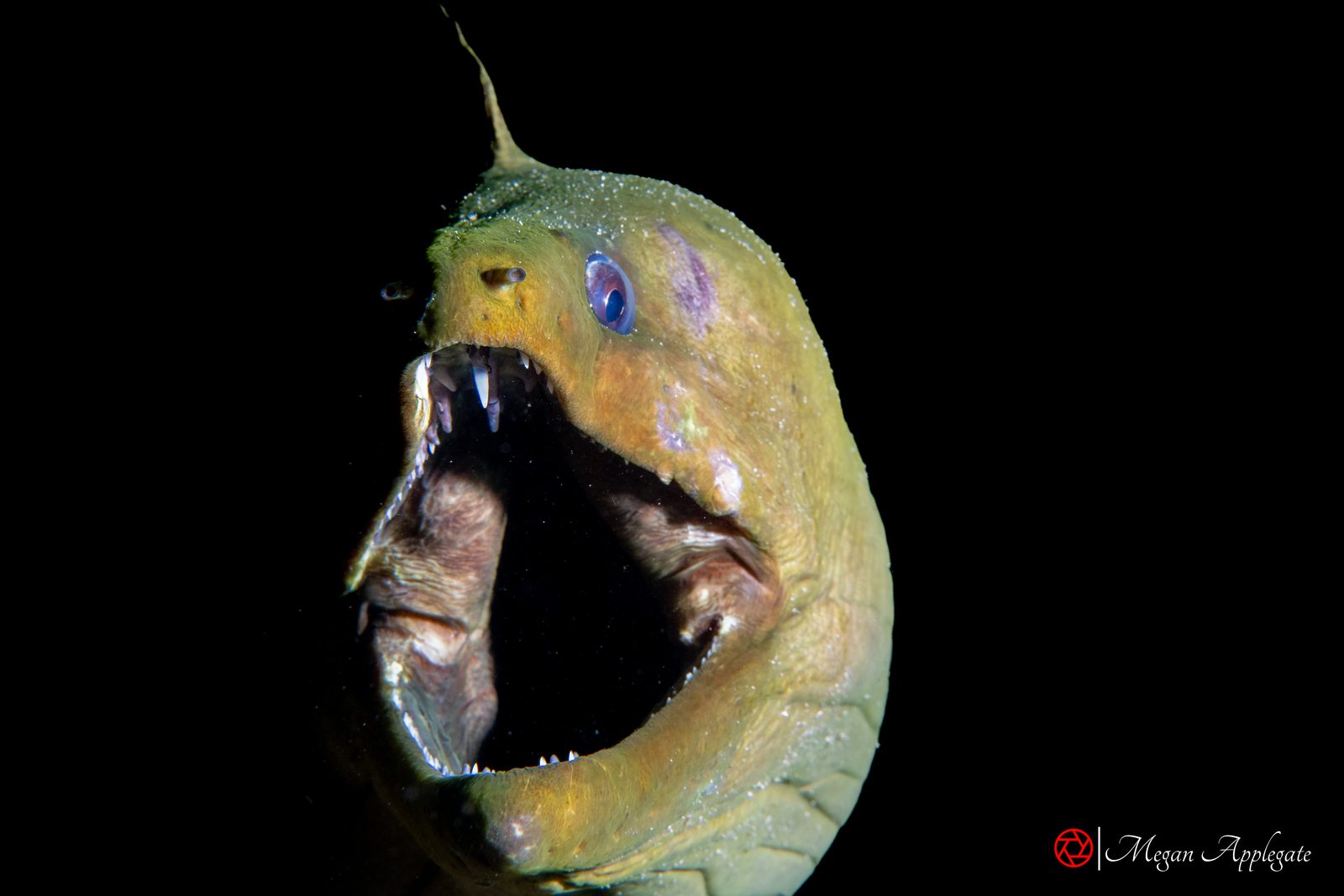 | Green moray | Gymnothorax funebrisMuraenidae | Very large, up to 2.5 m, and uniformly dark green to brown. Photographed at Tobago in November 2024 (photo on this page). | FishBase |
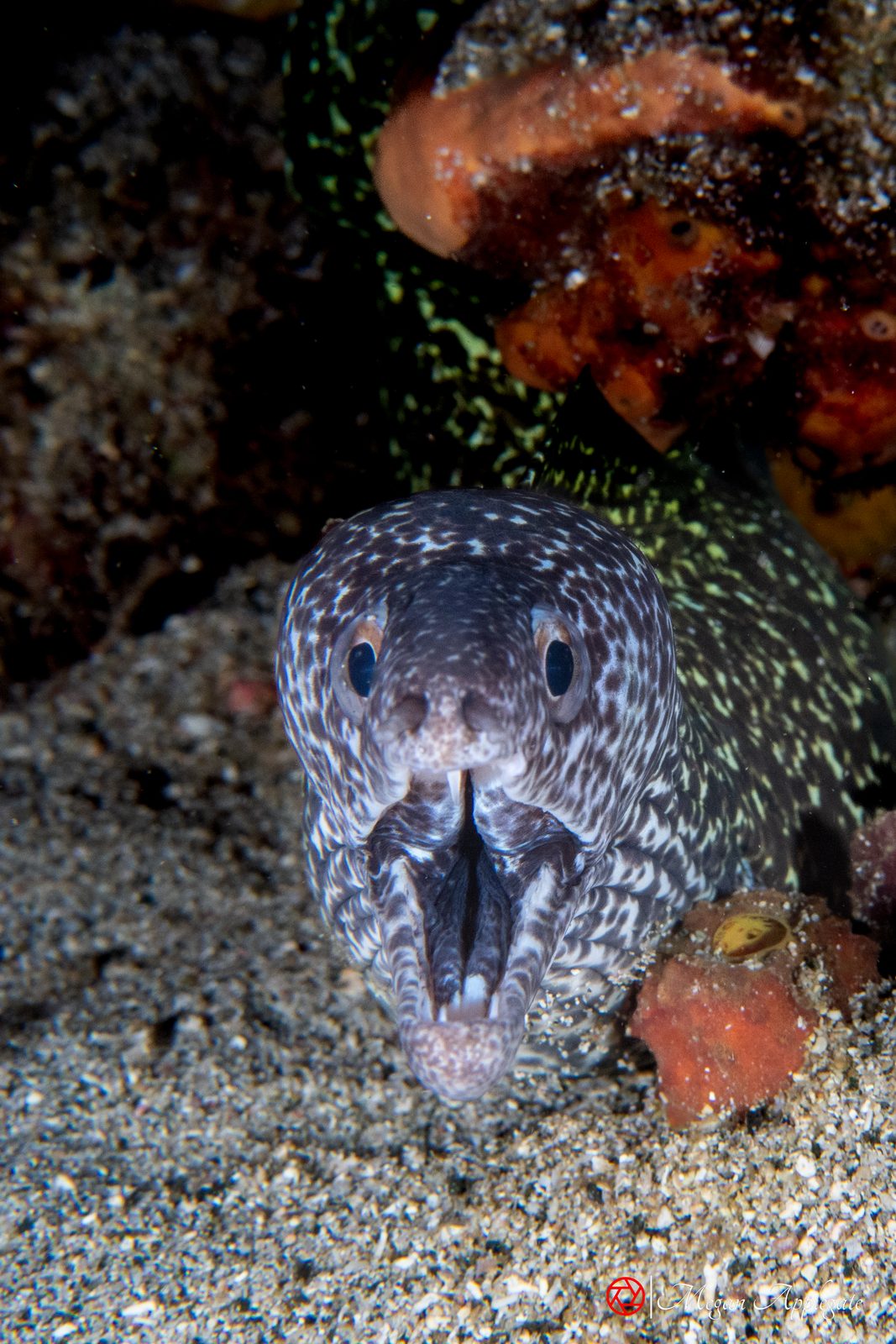 | Spotted moray | Gymnothorax moringaMuraenidae | Pale white or yellowish, covered in small, overlapping brownish to purplish-black spots. Photographed at Tobago in November 2024 (photo on this page). | FishBase |
| Groupers, seabasses and hamlets Epinephelidae, Serranidae · 6 species | ||||
| No photo yet | Barred hamlet | Hypoplectrus puellaSerranidae | Cream to pale yellow with six brown bars, the first through the eye, and blue lines on the head. | FishBase · Photos (Commons) |
| No photo yet | Coney | Cephalopholis fulvaEpinephelidae | Red, brown or yellow phases, all with many small black-edged blue spots and two black spots on top of the tail base. Recorded in reef-fish surveys around Tobago in 2011–2013 (Alemu 2014). | FishBase · Photos (Commons) |
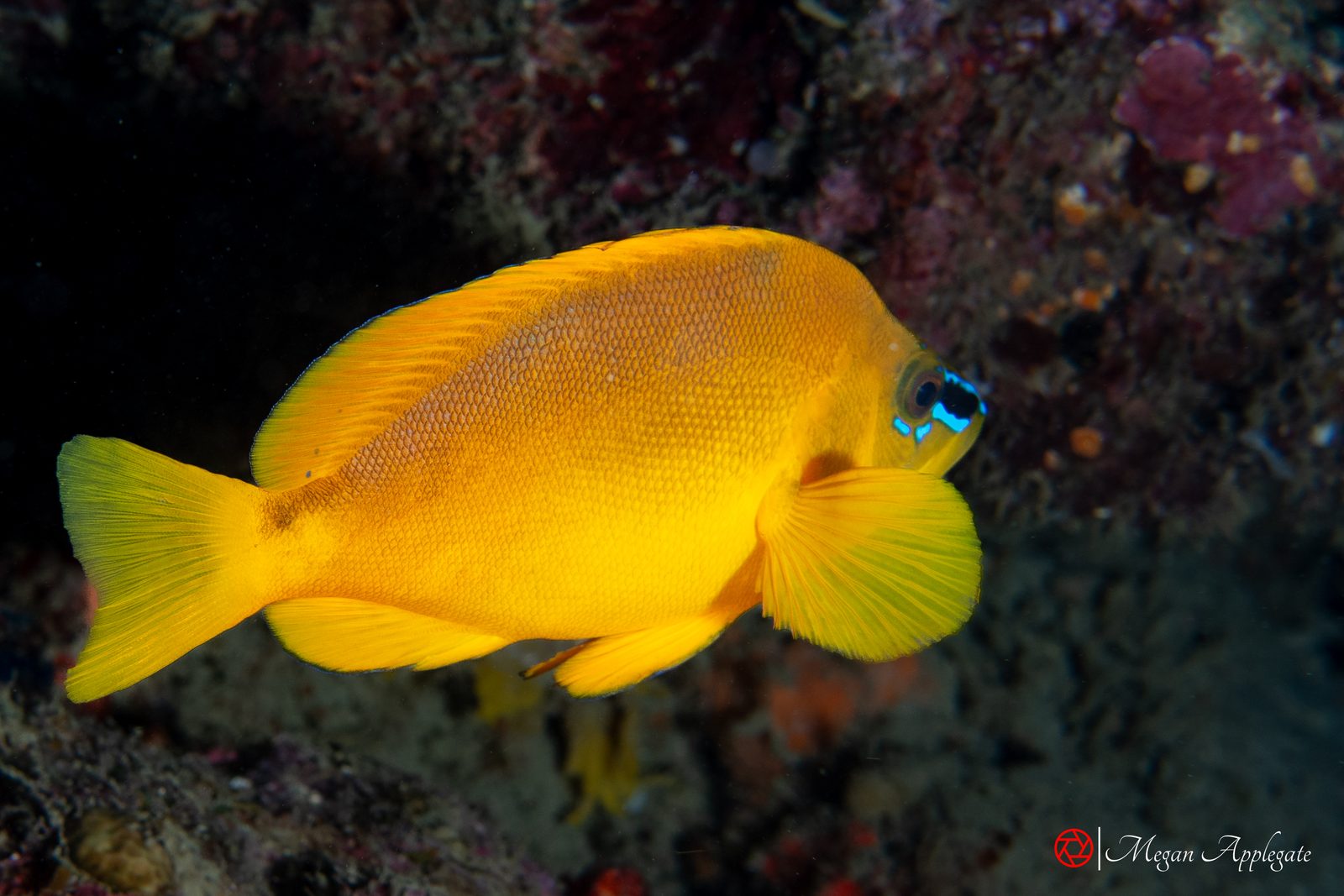 | Golden hamlet | Hypoplectrus gummiguttaSerranidae | Head, body and fins golden-yellow; the head may carry dark spots edged in iridescent blue; up to 13 cm (Wikipedia). Photographed at Tobago in November 2024 (photo on this page). | FishBase |
| No photo yet | Graysby | Cephalopholis cruentataEpinephelidae | Pale with reddish spots and four white or black spots along the base of the dorsal fin. Recorded in reef-fish surveys around Tobago in 2011–2013 (Alemu 2014). | FishBase · Photos (Commons) |
| No photo yet | Nassau grouper | Epinephelus striatusEpinephelidae | The third and fourth dark bars join above the lateral line in a “W”, with a forked dark stripe on top of the head. Critically Endangered on the IUCN Red List. | FishBase · Photos (Commons) |
| No photo yet | Tiger grouper | Mycteroperca tigrisEpinephelidae | About eleven narrow pale lines slanting down and forward across the back, unique among Caribbean groupers. Recorded in reef-fish surveys around Tobago in 2011–2013 (Alemu 2014). | FishBase · Photos (Commons) |
| Grunts Haemulidae · 2 species | ||||
| No photo yet | French grunt | Haemulon flavolineatumHaemulidae | Yellow, with enlarged scales in slanting rows below the lateral line, which no other grunt has. | FishBase · Photos (Commons) |
| No photo yet | Smallmouth grunt | Haemulon chrysargyreumHaemulidae | Six straight, evenly spaced bronze-yellow stripes and mostly yellow fins. | FishBase · Photos (Commons) |
| Jacks Carangidae · 4 species | ||||
| No photo yet | Bar jack | Caranx ruberCarangidae | Silver, with a dark stripe along the back that turns down across the tail base onto the lower tail lobe. | FishBase · Photos (Commons) |
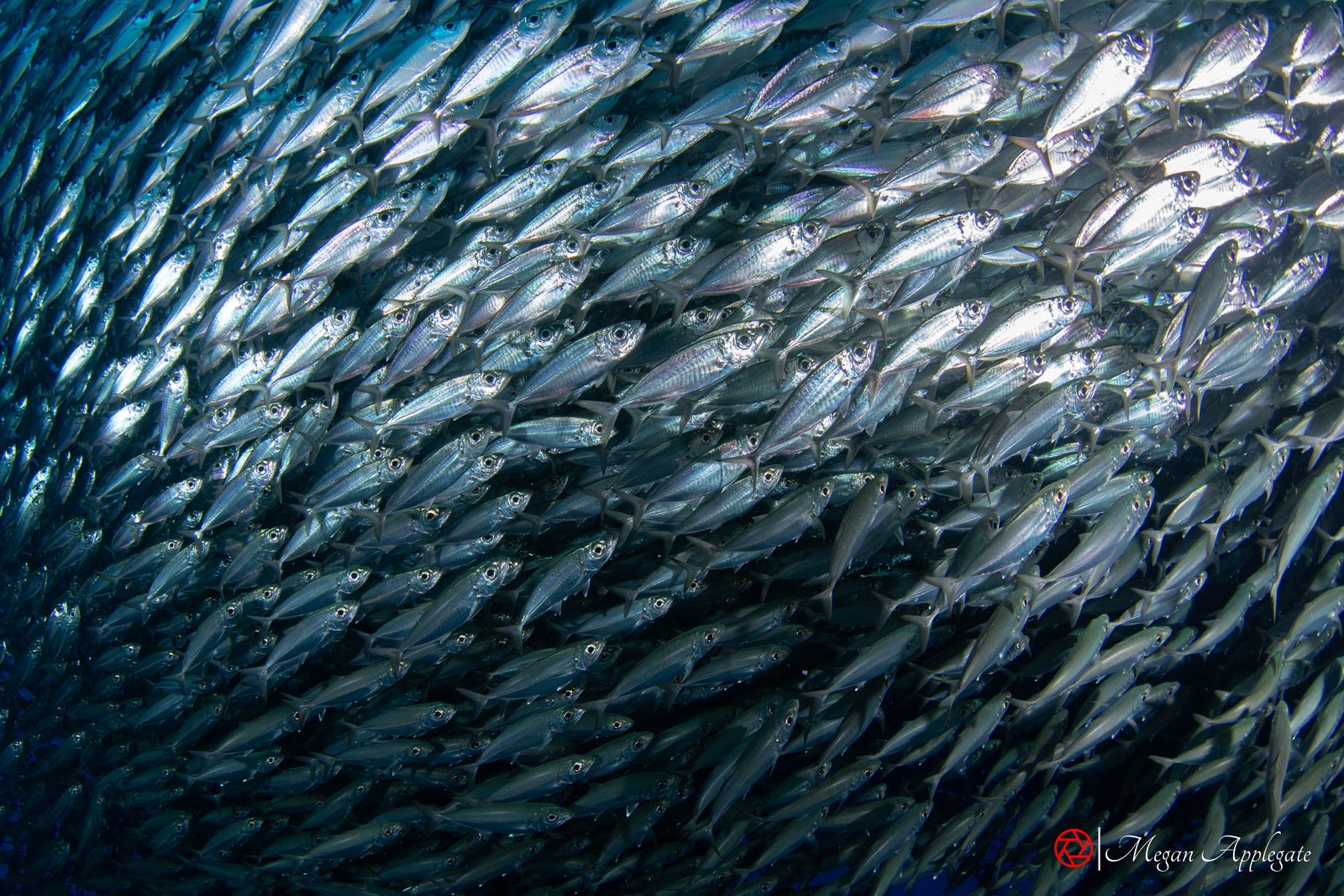 | Bigeye scad | Selar crumenophthalmusCarangidae | Slim, metallic blue-green above and white below, with a very large eye, a deeply forked tail and a black spot on the gill cover (Naturalis Caribbean Diving). Travels in compact schools of thousands (Naturalis Caribbean Diving); photographed in a huge school on Bonaire (photo on this page). | FishBase |
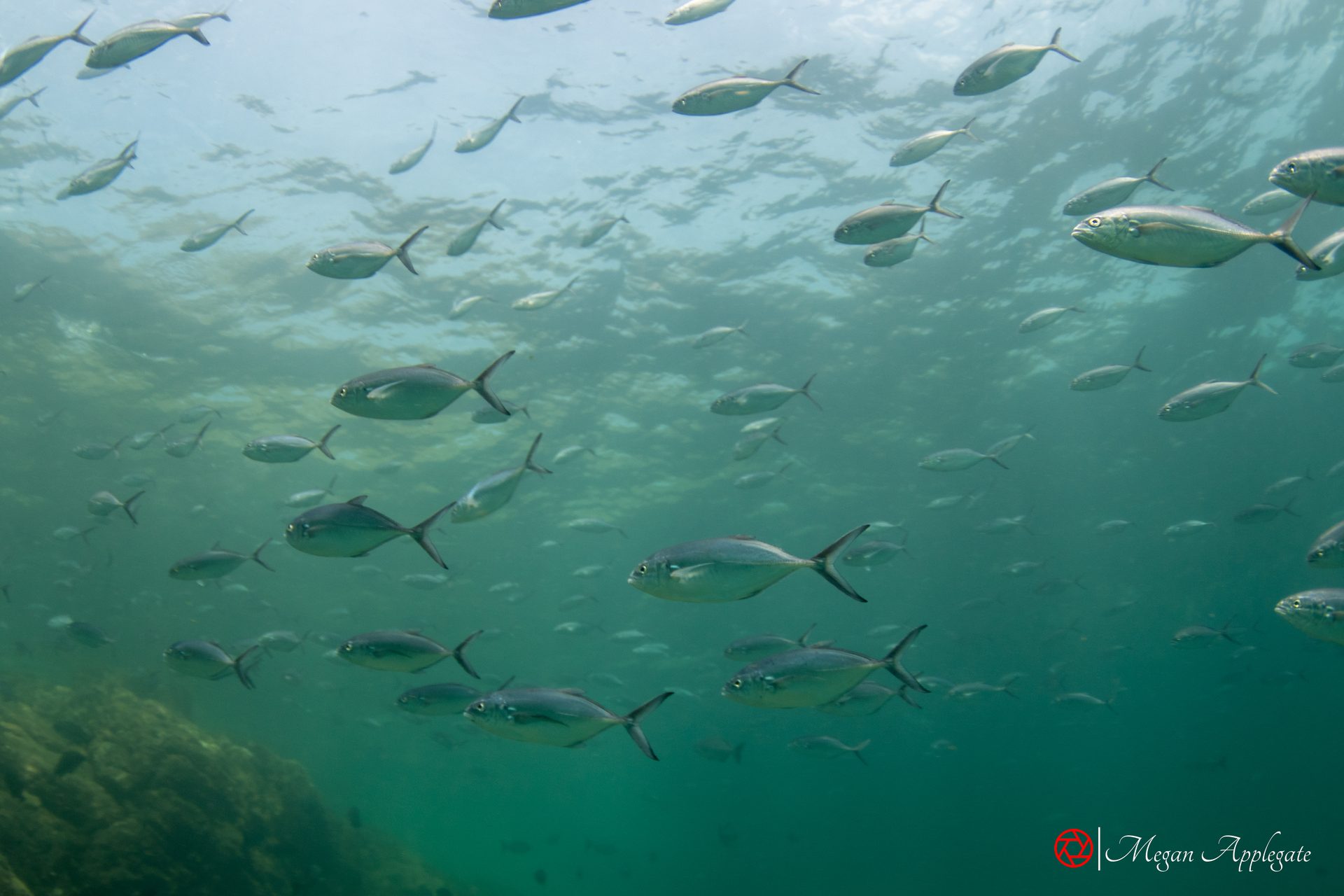
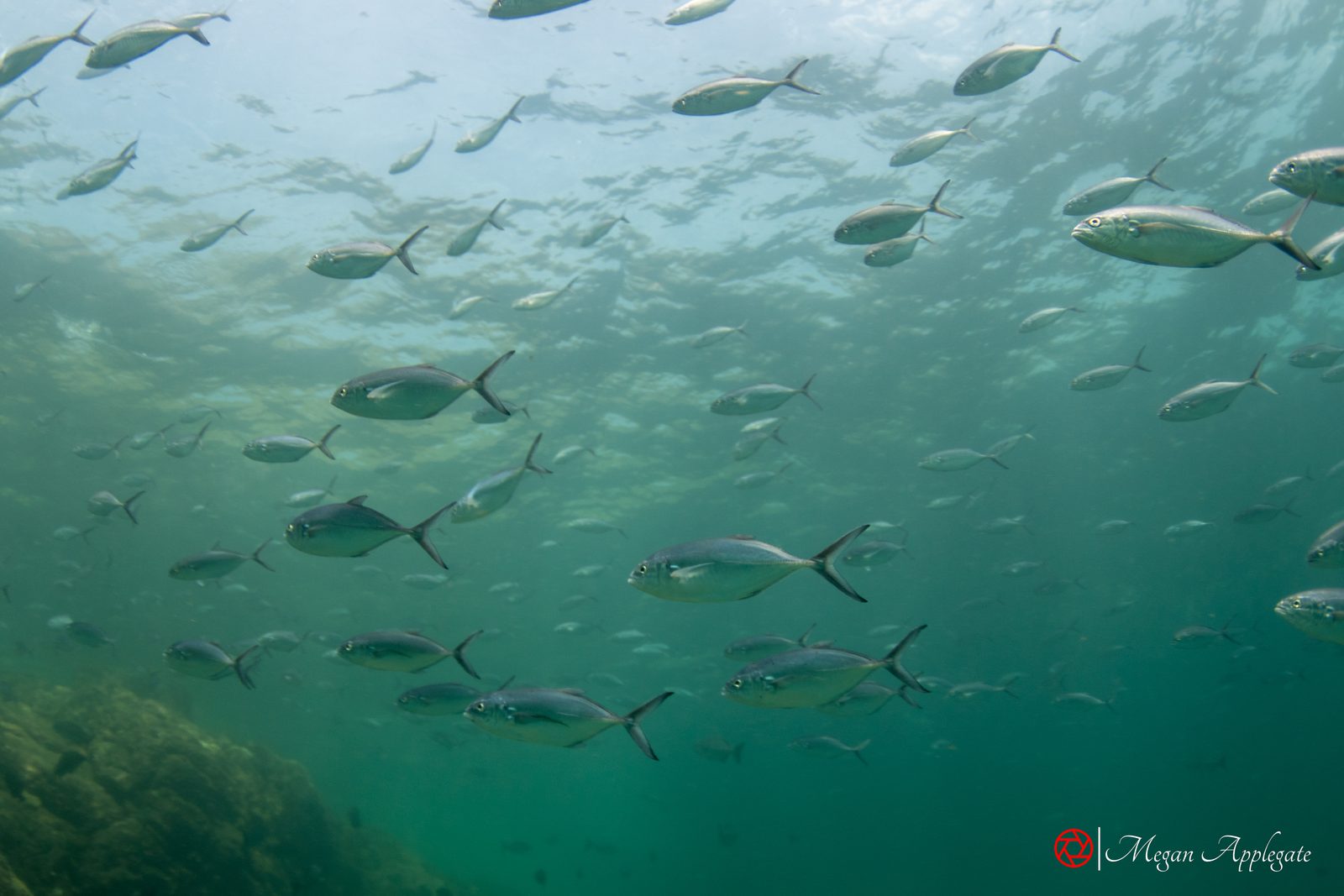 | Blue runner | Caranx crysosCarangidae | Bluish green to olive green above, silvery grey to brassy below, with a dusky spot on the gill cover; most are under 35 cm. Moves in small schools or alone (Wikipedia). Photographed schooling at Tobago in November 2024 (photo on this page). | FishBase |
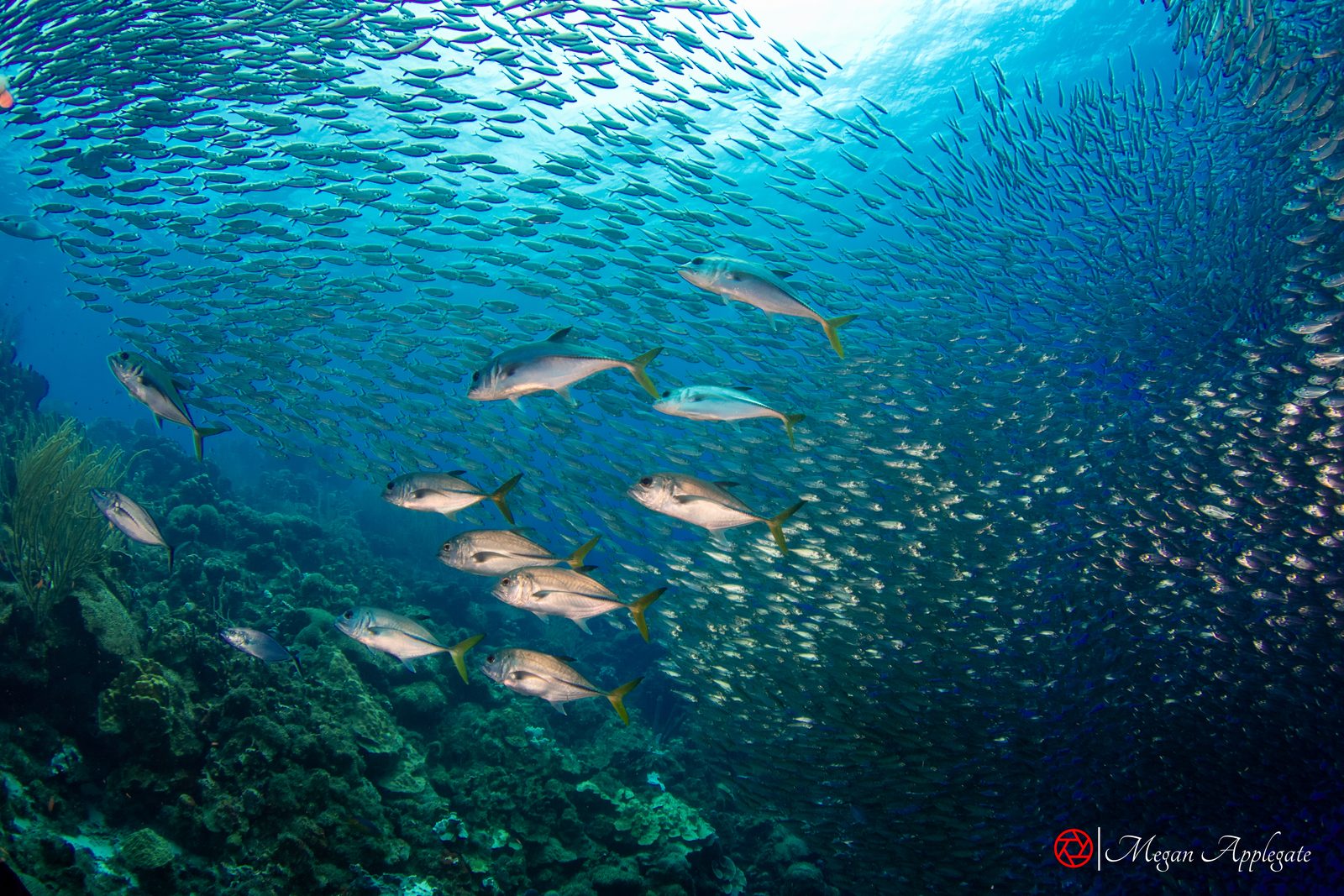 | Horse-eye jack | Caranx latusCarangidae | Dusky to blackish scutes near the tail, a yellow tail, and little or no spot on the gill cover. Photographed on Bonaire (photo on this page). | FishBase |
| Parrotfish Labridae (Scarinae) · 3 species | ||||
| No photo yet | Queen parrotfish | Scarus vetulaLabridae (Scarinae) | Initial phase dark grey with a broad white stripe below mid-side; terminal phase has a brownish-orange band near the tail edge. | FishBase · Photos (Commons) |
| No photo yet | Rainbow parrotfish | Scarus guacamaiaLabridae (Scarinae) | Dull orange fins with green, blue fin margins and blue-green tooth plates. Near Threatened on the IUCN Red List. | FishBase · Photos (Commons) |
| No photo yet | Stoplight parrotfish | Sparisoma virideLabridae (Scarinae) | Terminal males green with three orange bands on the head and a yellow spot at the top of the gill cover; initial phase brown above with a bright red lower third. Named in a 2014 Tobago trip report (Undercurrent 2014). | FishBase · Photos (Commons) |
| Puffers, porcupinefish and boxfish Diodontidae, Ostraciidae · 3 species | ||||
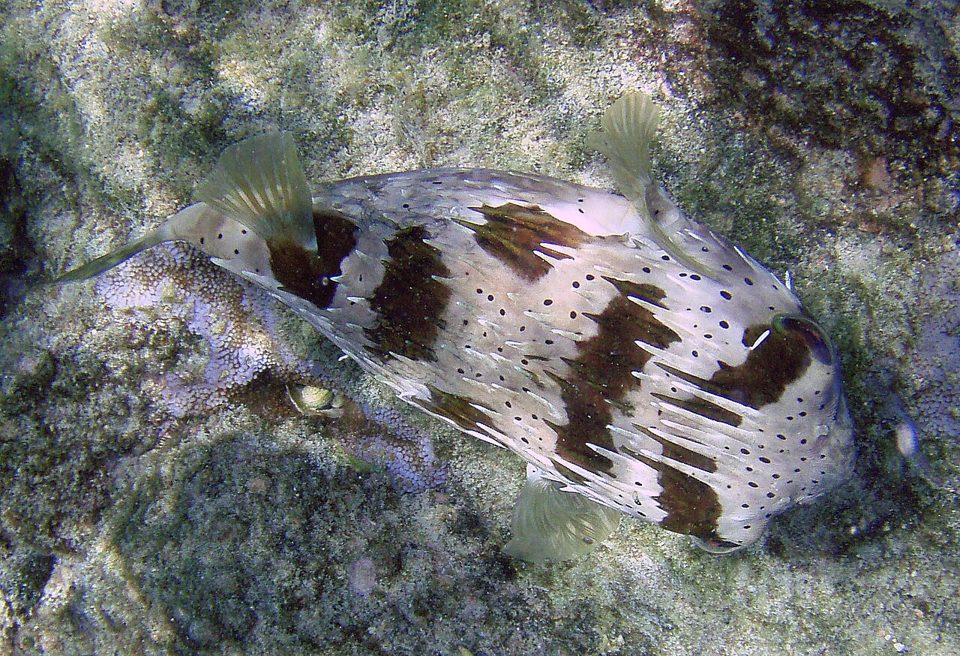 | Balloonfish | Diodon holocanthusDiodontidae | Dark blotches on the back with spots between them, unspotted fins, and brown bars above and below the eye. | FishBase |
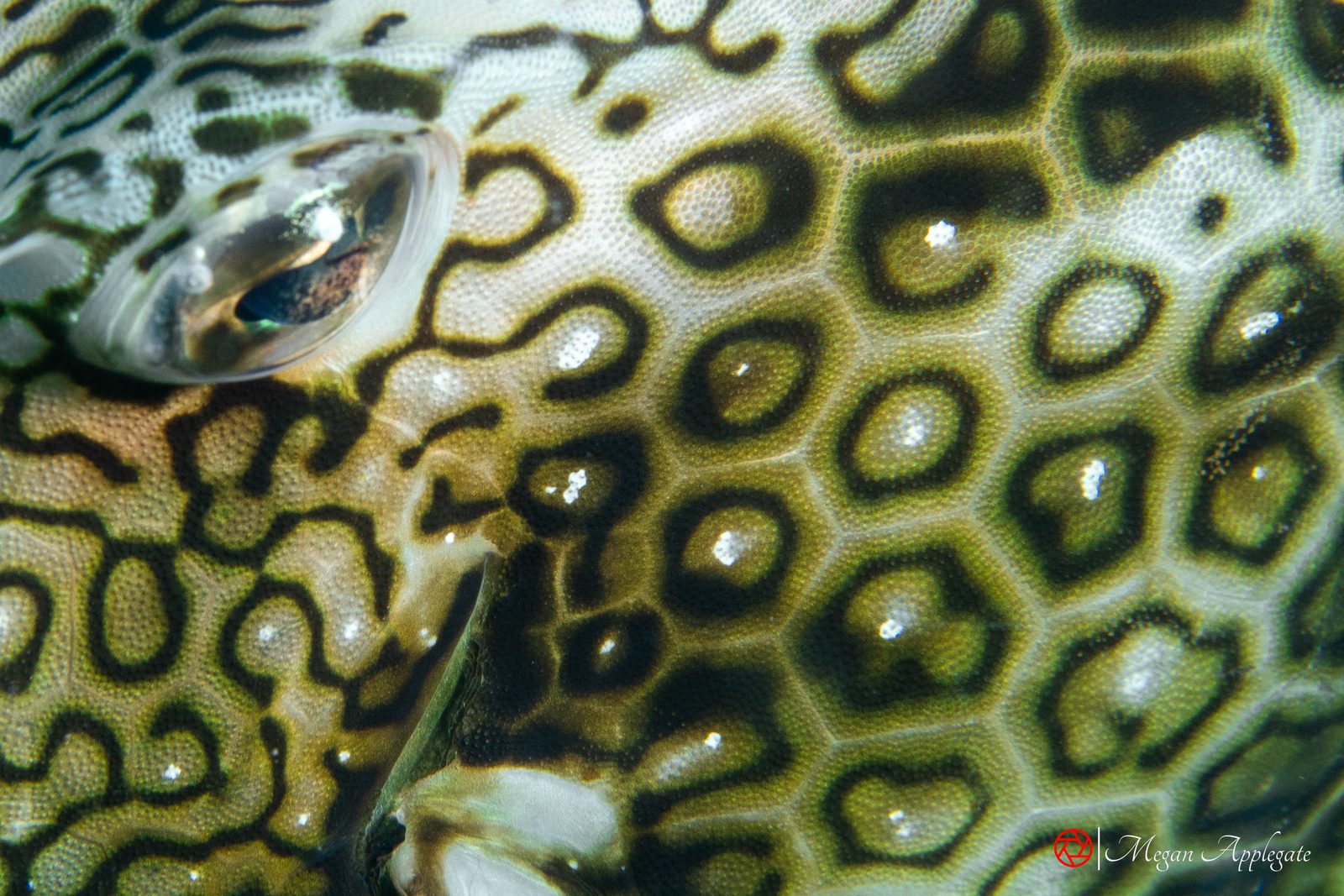 | Honeycomb cowfish | Acanthostracion polygoniusOstraciidae | A boxfish covered in a bold pattern of hexagons outlined by narrow dark lines, with two spines above the eyes (Wikipedia); it can change colour (Wikipedia). | FishBase |
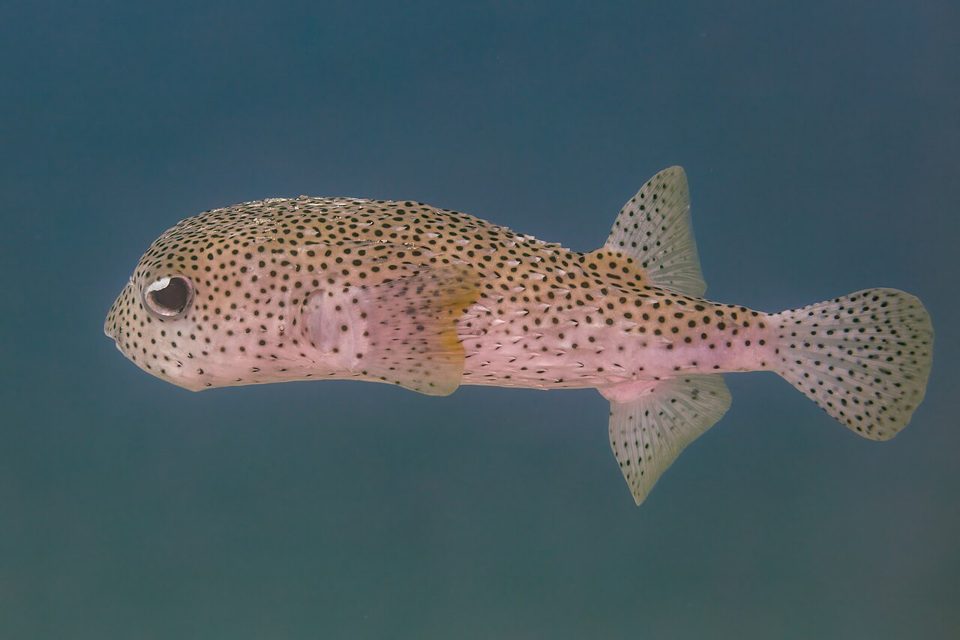 | Porcupinefish | Diodon hystrixDiodontidae | Tan to light brown with many small dark spots and no large blotches; white belly. | FishBase |
| Snappers Lutjanidae · 2 species | ||||
| No photo yet | Schoolmaster | Lutjanus apodusLutjanidae | Olive-grey with about eight narrow pale bars and a blue line under the eye. | FishBase · Photos (Commons) |
| No photo yet | Yellowtail snapper | Ocyurus chrysurusLutjanidae | A bright yellow stripe from snout to tail, a blue-violet back with yellow spots, and a yellow tail. | FishBase · Photos (Commons) |
| Surgeonfish Acanthuridae · 1 species | ||||
| No photo yet | Blue tang | Acanthurus coeruleusAcanthuridae | Adults bluish-grey with faint wavy lines and a yellowish tail spine; juveniles bright yellow. | FishBase · Photos (Commons) |
| Triggerfish and filefish Balistidae, Monacanthidae · 4 species | ||||
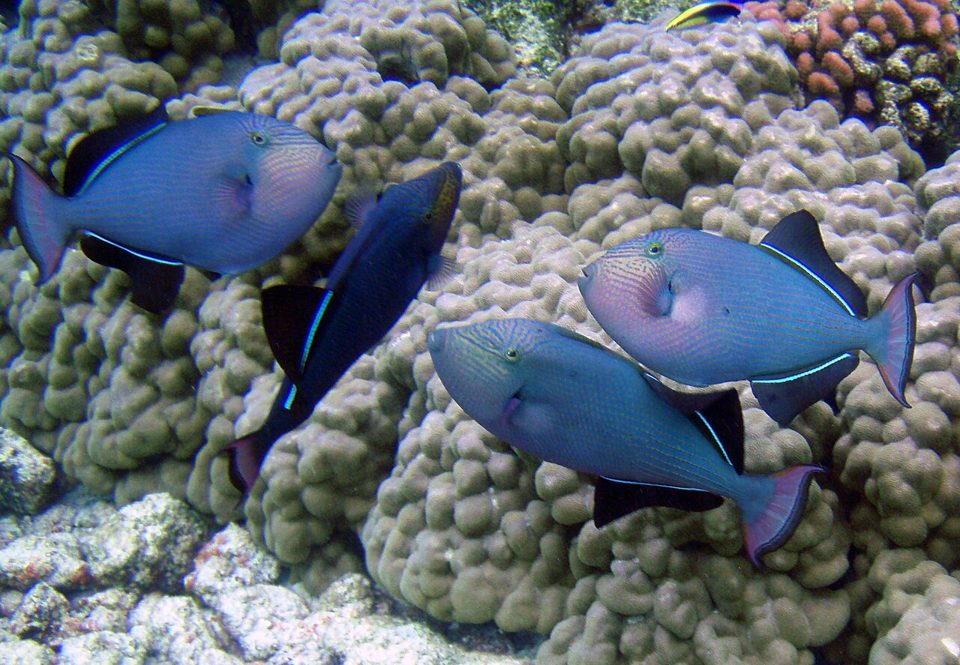 | Black durgon | Melichthys nigerBalistidae | Dark brown to black, with a thin white line along the bases of the dorsal and anal fins. Named by divers at Tobago (Scuba Diving). | FishBase |
| No photo yet | Queen triggerfish | Balistes vetulaBalistidae | Two curved bright-blue bands from the snout to the pectoral fin and a blue bar across the tail base. Near Threatened on the IUCN Red List. | FishBase · Photos (Commons) |
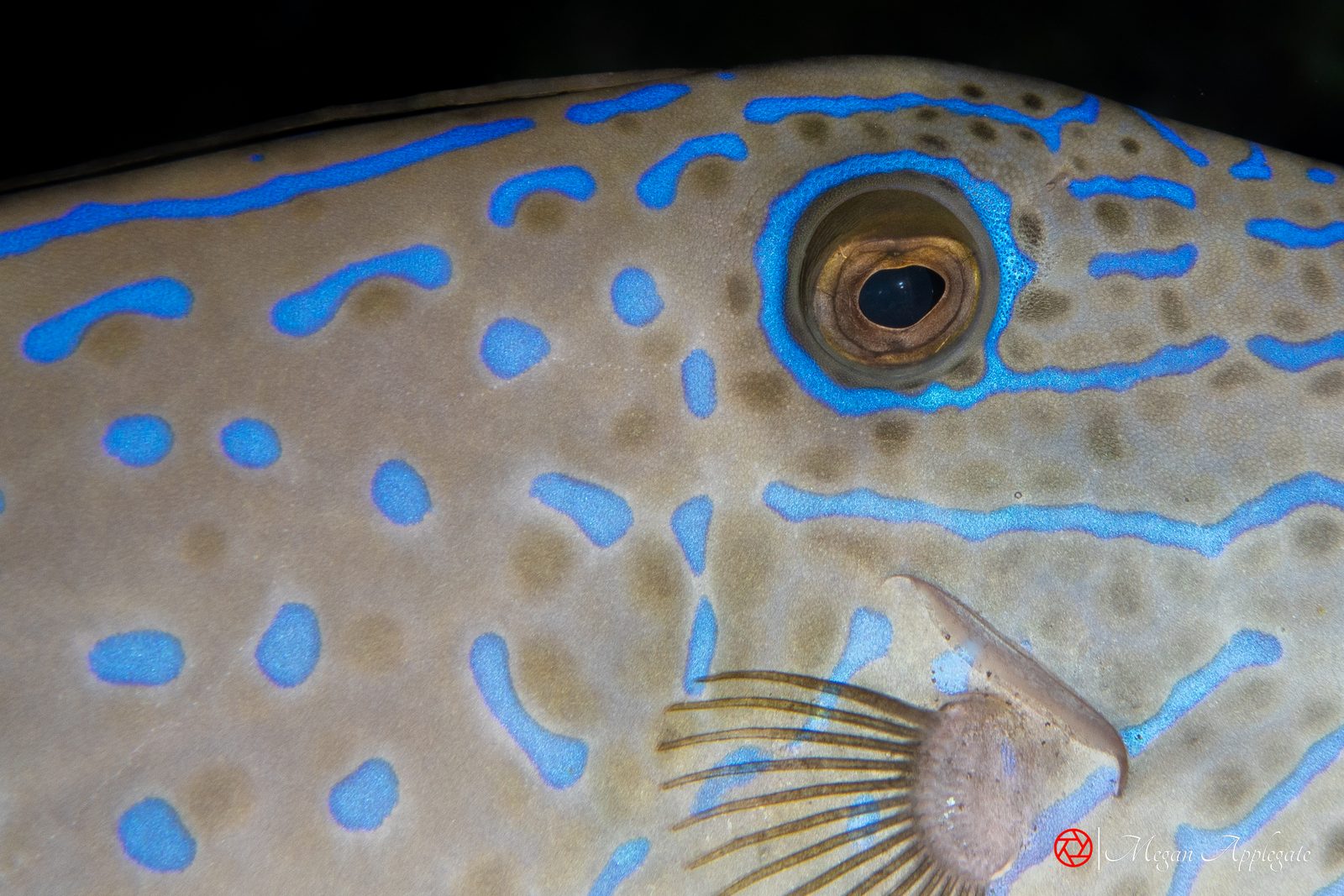 | Scrawled filefish | Aluterus scriptusMonacanthidae | Long and flat, olive-brown to grey with small black spots and blue lines and spots. | FishBase |
| No photo yet | Whitespotted filefish | Cantherhines macrocerusMonacanthidae | Brown, with or without many white spots; males have an orange patch of bristles in front of the tail-base spines. | FishBase · Photos (Commons) |
| Wrasse and hogfish Labridae · 4 species | ||||
| No photo yet | Bluehead wrasse | Thalassoma bifasciatumLabridae | Terminal males with a blue head, green body and two black bars around a light-blue band; initial phase yellow above a black mid-side stripe. | FishBase · Photos (Commons) |
| No photo yet | Creole wrasse | Clepticus parraeLabridae | Juveniles almost all violet-purple; adults develop a yellow patch on the rear of the body; males reach about 30 cm. Feeds on plankton in groups along reef slopes (Wikipedia). One of the three most numerous fish in Tobago reef surveys (Alemu 2014); schools at Japanese Gardens (Undercurrent 2014). | FishBase · Photos (Commons) |
| No photo yet | Hogfish | Lachnolaimus maximusLabridae | The first three dorsal spines long and filament-like, an arched profile, and a black spot at the rear base of the dorsal fin. Vulnerable on the IUCN Red List. | FishBase · Photos (Commons) |
| No photo yet | Spanish hogfish | Bodianus rufusLabridae | Head and upper front of the body blue (red in deep water); the rest of the body and the tail yellow. | FishBase · Photos (Commons) |
| Other Aulostomidae, Bothidae, Ephippidae, Mullidae, Priacanthidae, Sciaenidae, Scorpaenidae · 7 species | ||||
| No photo yet | Atlantic spadefish | Chaetodipterus faberEphippidae | A very deep, flat silver body with four to six black bars that fade with age, and long trailing lobes on the dorsal and anal fins (Wikipedia). Named by divers at Tobago (Scuba Diving). | FishBase · Photos (Commons) |
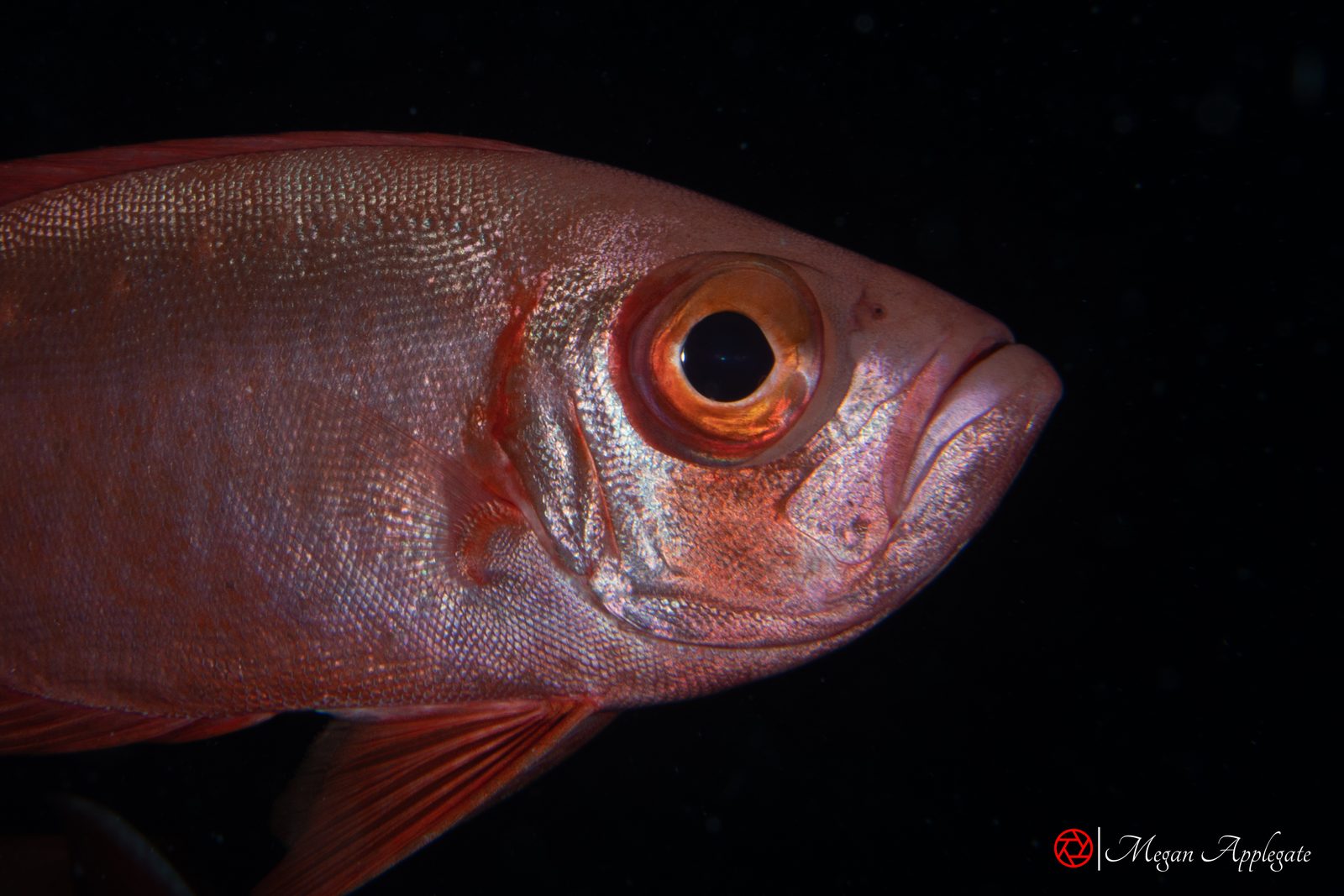 | Glasseye | Heteropriacanthus cruentatusPriacanthidae | Large eyes; silvery-pink, mottled or solid red, with faint dark dots on the fins. | FishBase |
| No photo yet | Peacock flounder | Bothus lunatusBothidae | A flatfish, grey-brown with many light-blue rings and dots and two or three diffuse black spots along the lateral line. | FishBase · Photos (Commons) |
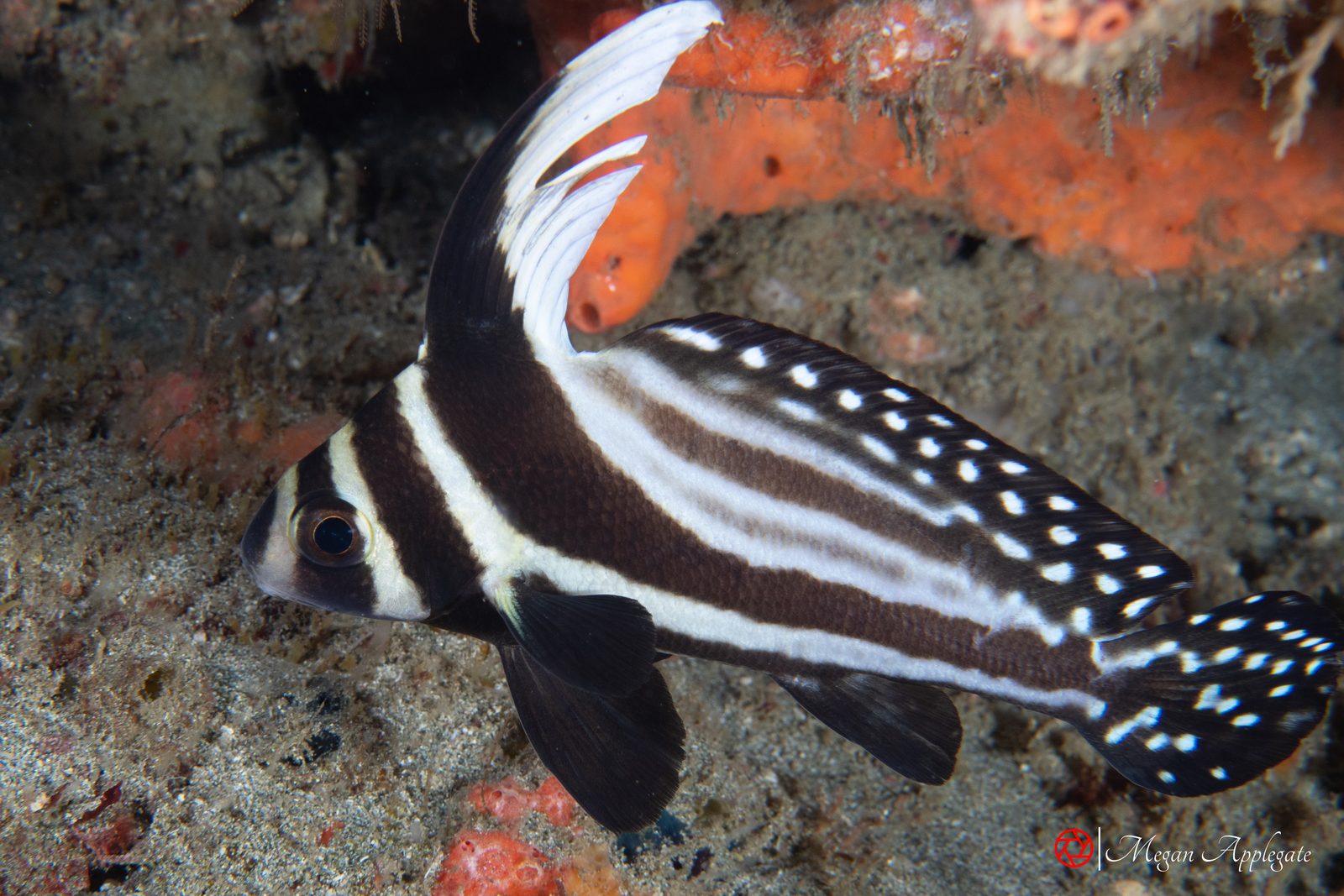 | Spotted drum | Equetus punctatusSciaenidae | White with dark bars and a very tall first dorsal fin; the second dorsal fin and tail are dark with white spots. Named in a 2014 Tobago trip report (Undercurrent 2014), and photographed at Tobago in November 2024 (photo on this page). | FishBase |
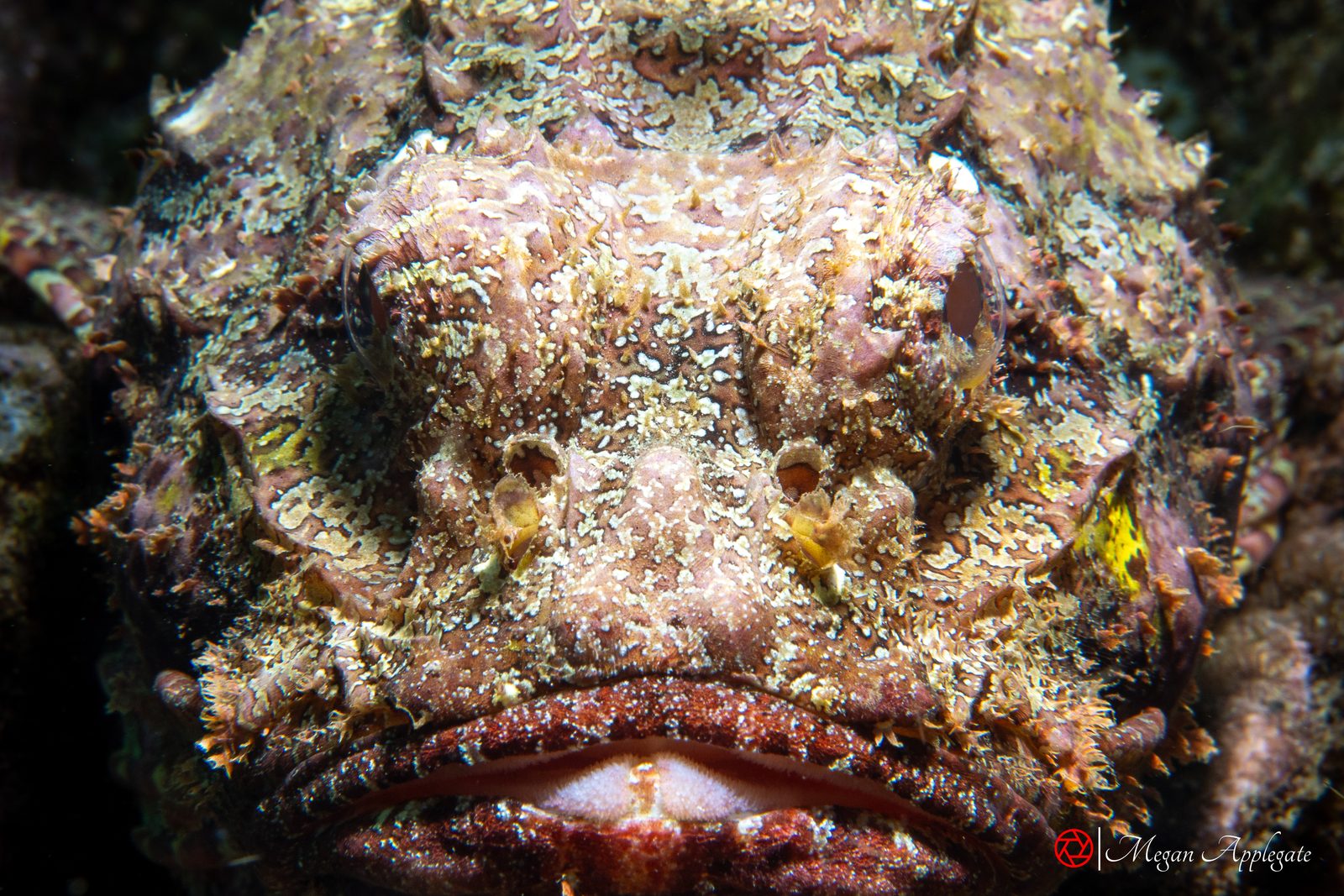 | Spotted scorpionfish | Scorpaena plumieriScorpaenidae | Reddish brown with many brown and black spots, especially on the fins; up to 43–47 cm. It lives on the bottom and has venom in its spines (Wikipedia). Photographed at Tobago in November 2024 (photo on this page). | FishBase |
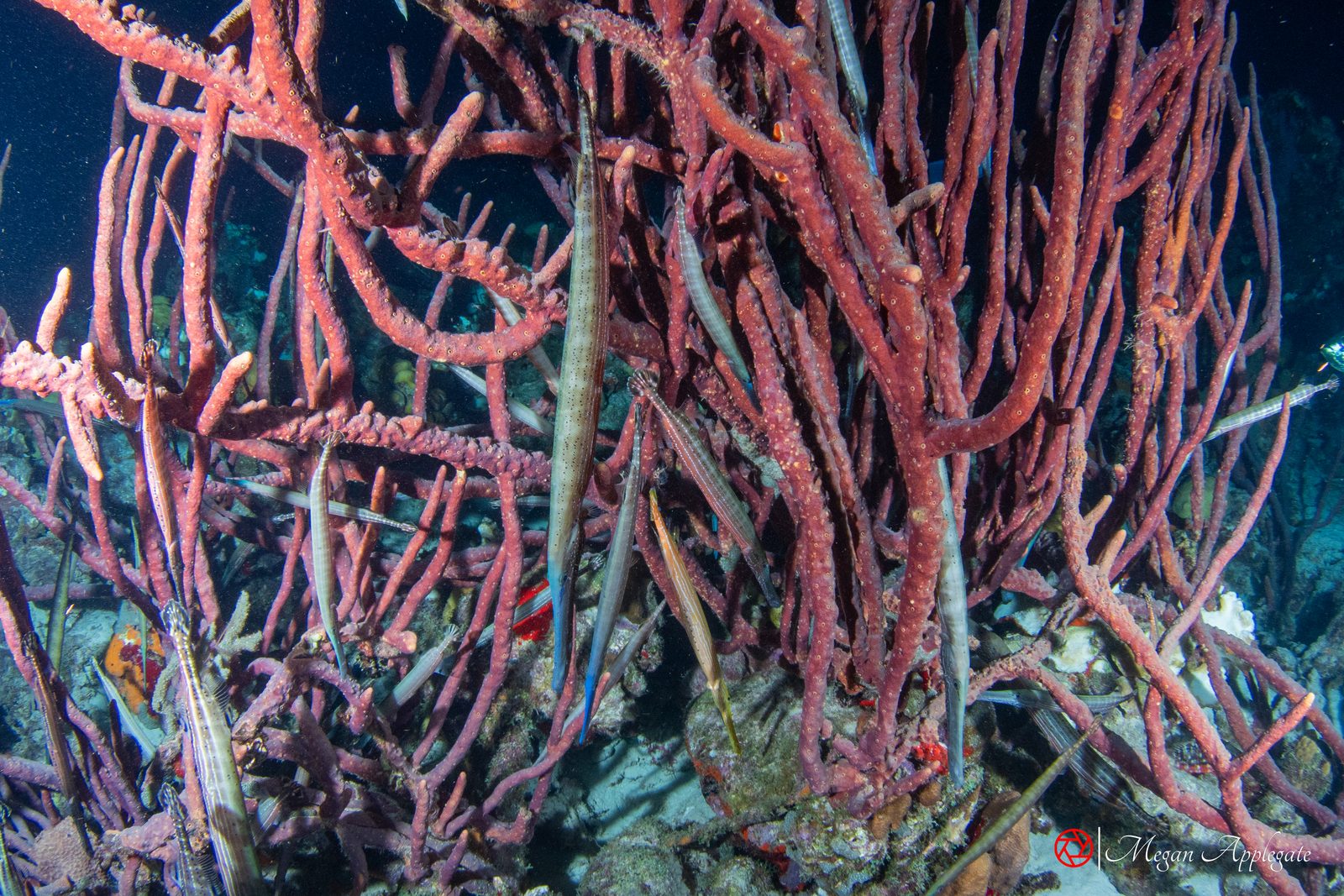 | Trumpetfish | Aulostomus maculatusAulostomidae | Very long and thin, with a chin barbel and a row of separate spines in front of the dorsal fin. Seen at Kariwak Reef (DeeperBlue). | FishBase |
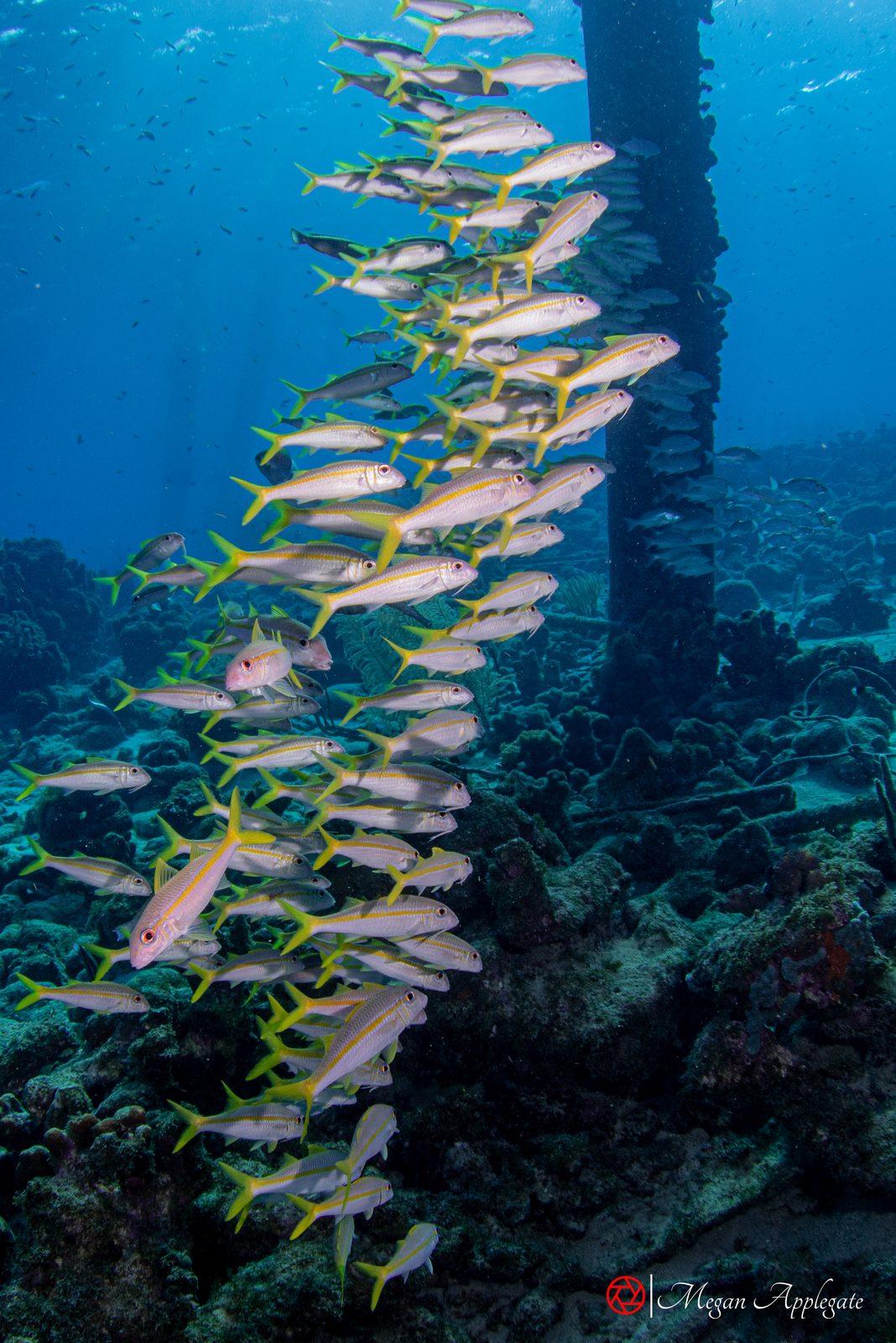 | Yellow goatfish | Mulloidichthys martinicusMullidae | Pale tan with a single yellow stripe from the eye to the yellow tail, the only Caribbean goatfish with one yellow stripe. Photographed schooling on Bonaire (photo on this page). | FishBase |
Count fish for science
The Environmental Research Institute Charlotteville (ERIC), open since 2014, monitors 12 Reef Check sites around the north-east of the island (Reef Check / ERIC). Ask there or at your dive shop about joining a survey.
Invasive
Lionfish
An Indo-Pacific fish that should not be here
Lionfish reached Trinidad and Tobago in 2012, the last Caribbean island they invaded, and surveys in 2013–15 counted 326 lionfish per hectare in north-east Tobago against 10.5 per hectare in the south-west (FAO AGRIS). In February 2012 a diver reported one at Flying Reef, off the south-west tip, to the Institute of Marine Affairs (Reef Relief 2012).
Venomous spines
Lionfish have 13 venomous dorsal spines (FishBase). Look, don’t touch, and report a lionfish to your dive shop rather than chasing it.
Credits
Fish photo credits
Photos and where they were taken
Photos credited to Megan Applegate are © Megan Applegate, all rights reserved. Those marked Tobago were taken there in November 2024; the others show the same species elsewhere (Bonaire in December 2024, or Palau) and are labelled with the place. The rest are reference photos from Wikimedia Commons, credited below.
| Species | Photographer | Licence | Source |
|---|---|---|---|
| Flameback angelfish | Megan Applegate | © Megan Applegate, all rights reserved | Photographer's own photo, taken at Tobago, November 2024 |
| French angelfish | Megan Applegate | © Megan Applegate, all rights reserved | Photographer's own photo, taken at Tobago, November 2024 |
| Queen angelfish | Megan Applegate | © Megan Applegate, all rights reserved | Photographer's own photo, taken at Tobago, November 2024 |
| Spotfin butterflyfish | Megan Applegate | © Megan Applegate, all rights reserved | Photographer's own photo, taken at Tobago, November 2024 |
| Green moray | Megan Applegate | © Megan Applegate, all rights reserved | Photographer's own photo, taken at Tobago, November 2024 |
| Spotted moray | Megan Applegate | © Megan Applegate, all rights reserved | Photographer's own photo, taken at Tobago, November 2024 |
| Golden hamlet | Megan Applegate | © Megan Applegate, all rights reserved | Photographer's own photo, taken at Tobago, November 2024 |
| Bigeye scad | Megan Applegate | © Megan Applegate, all rights reserved | Photographer's own photo, taken at Bonaire, December 2024 |
| Blue runner | Megan Applegate | © Megan Applegate, all rights reserved | Photographer's own photo, taken at Tobago, November 2024 |
| Horse-eye jack | Megan Applegate | © Megan Applegate, all rights reserved | Photographer's own photo, taken at Bonaire, December 2024 |
| Balloonfish | Brocken Inaglory | CC BY-SA 3.0 | Wikimedia Commons |
| Honeycomb cowfish | Megan Applegate | © Megan Applegate, all rights reserved | Photographer's own photo, taken at Bonaire, December 2024 |
| Porcupinefish | Diego Delso | CC BY-SA 4.0 | Wikimedia Commons |
| Black durgon | Brocken Inaglory Original uploader was Brocken Inaglory | CC BY-SA 3.0 | Wikimedia Commons |
| Scrawled filefish | Megan Applegate | © Megan Applegate, all rights reserved | Photographer's own photo, taken at Palau, January 2023 |
| Glasseye | Megan Applegate | © Megan Applegate, all rights reserved | Photographer's own photo, taken at Palau, January 2023 |
| Spotted drum | Megan Applegate | © Megan Applegate, all rights reserved | Photographer's own photo, taken at Tobago, November 2024 |
| Spotted scorpionfish | Megan Applegate | © Megan Applegate, all rights reserved | Photographer's own photo, taken at Tobago, November 2024 |
| Trumpetfish | Megan Applegate | © Megan Applegate, all rights reserved | Photographer's own photo, taken at Bonaire, December 2024 |
| Yellow goatfish | Megan Applegate | © Megan Applegate, all rights reserved | Photographer's own photo, taken at Bonaire, December 2024 |