Peak Jan–May
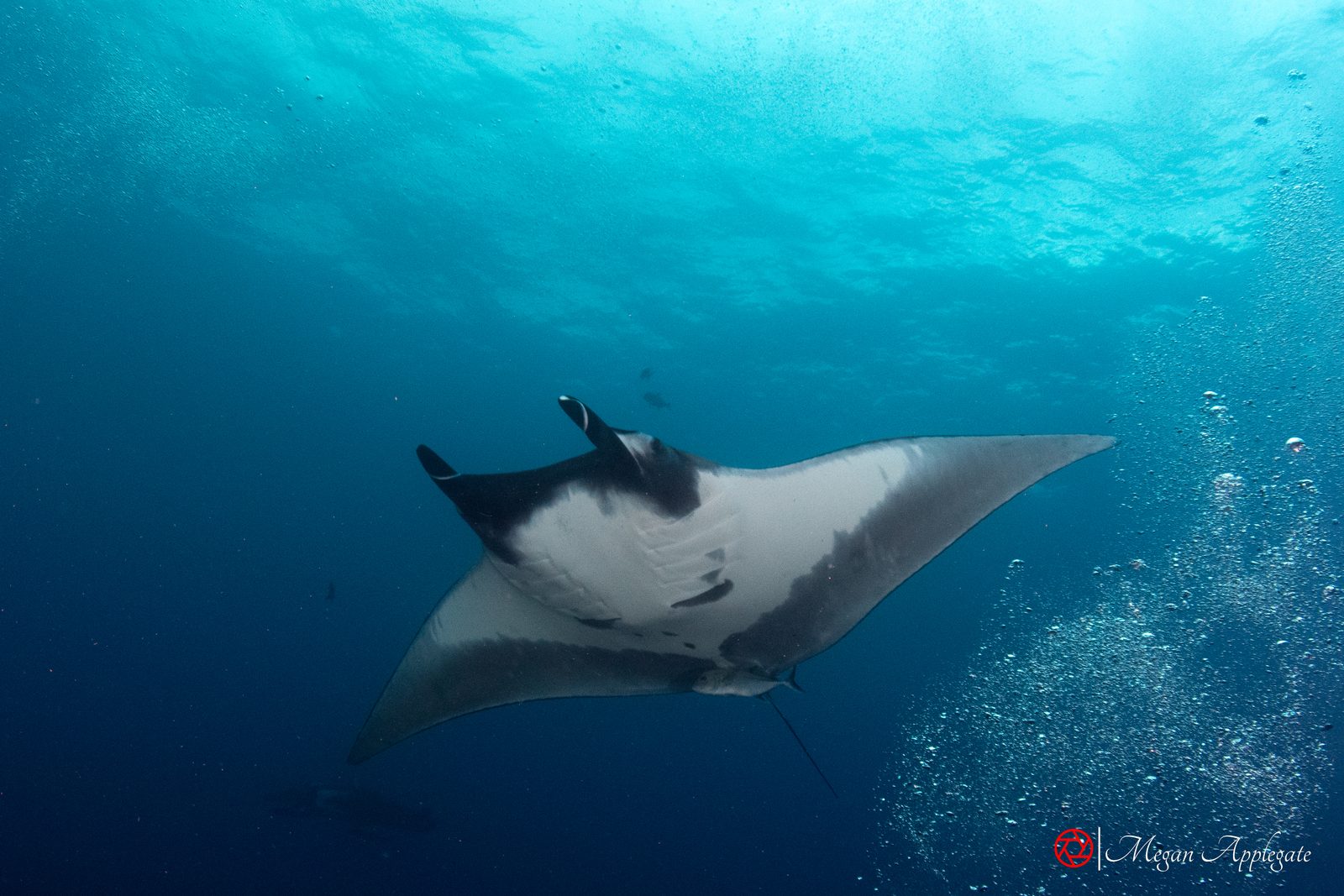
Manta rays
One source gives January to May as the best odds (DAN Alert Diver), another March to May (Undercurrent 2014), and a Speyside guide says mantas pass through all year (Divernet).
Trinidad and Tobago · Southern Caribbean
A field guide to the reef fish, mantas and other big animals, small creatures, turtles, corals and birds of Tobago, with where and when to look for each and links to go deeper.
Photo Megan Applegate (Tobago, November 2024)
Tobago is a 300 km² island 35 km north-east of Trinidad and about 160 km off Venezuela; Scarborough is its capital, English is spoken and the currency is the Trinidad and Tobago dollar (Wikipedia). It lies near the mouth of the Orinoco, where the river’s outflow meets the nutrient-rich Guiana Current (DAN Alert Diver): the Atlantic-side sites are drift dives, while the Caribbean side has almost no current (DAN Alert Diver). Buccoo Reef in the south-west has been a marine park since 1973 (Wikipedia (Buccoo Reef)), and in 2020 UNESCO named the North-East Tobago biosphere reserve: 83,488 ha, most of it sea, from Belle Garden to Moriah, with the Main Ridge forest at its heart (Global Voices 2020). A Tobago Marine Parks Bill passed the Tobago House of Assembly in April 2026 (Trinidad Express 2026) and in May 2026 was awaiting tabling in Parliament (TTT 2026).
Most diving is centred on Speyside, at the opposite end of the island from the airport (Wikipedia), about a two-hour drive (Scuba Diving); more than 40 sites lie within ten minutes’ boat ride of the Speyside dock (Scuba Diving). Other dive shops work from Crown Point in the south-west (Undercurrent 2014). A.N.R. Robinson International Airport has flights to London, New York and Frankfurt (seasonal) (Wikipedia); the air bridge from Trinidad takes about 20 minutes and the ferry from Port of Spain 2.5 to 5 hours (Discover T&T). Tobago’s recompression chamber is at Roxborough Hospital (THA), about 20 minutes from Speyside (Undercurrent 2014).
Location
Tobago is about 30 miles (48 km) long. The calm Caribbean side runs from Crown Point up the north-west coast; the Atlantic side, swept by the Guiana Current, has the drift dives off Speyside, Little Tobago and Charlotteville in the north-east.
Dive sites, from the north-east round to the south-west
The site map works offline and prints. Satellite is interactive: zoom and drag, and tap or hover a pin for its name (it needs an internet connection). Positions are approximate. Kelleston Drain, Japanese Gardens, Bookends, Black Jack Hole, Flying Reef, Diver’s Thirst and the Maverick and Trinity wrecks have no published position of their own, so they are shown at the charted island, bay or point they lie by; Kariwak Reef and Cove Ledge have no pin. Positions: NGA GeoNames. Coastline © OpenStreetMap contributors.
Six field pages, with where and when to look for each species and links to go deeper.
Pick a month to see what is at its peak. Tobago is dived all year. Sources give the water as about 26 °C (79 °F) from January to April and 28–29 °C (82–84 °F) from July to November (DAN Alert Diver), or as low as 24 °C in January and February (Discover T&T). The dry season, roughly December or January to May or June, brings the best visibility, up to 30 m; from about June to November the Orinoco’s outflow clouds the water (DAN Alert Diver; Scuba Diving; Wikipedia). Hurricane Flora wrecked the island in 1963, and the eye of Hurricane Beryl passed just north of it in 2024 (Climate Tracker Caribbean).
One source gives January to May as the best odds (DAN Alert Diver), another March to May (Undercurrent 2014), and a Speyside guide says mantas pass through all year (Divernet).
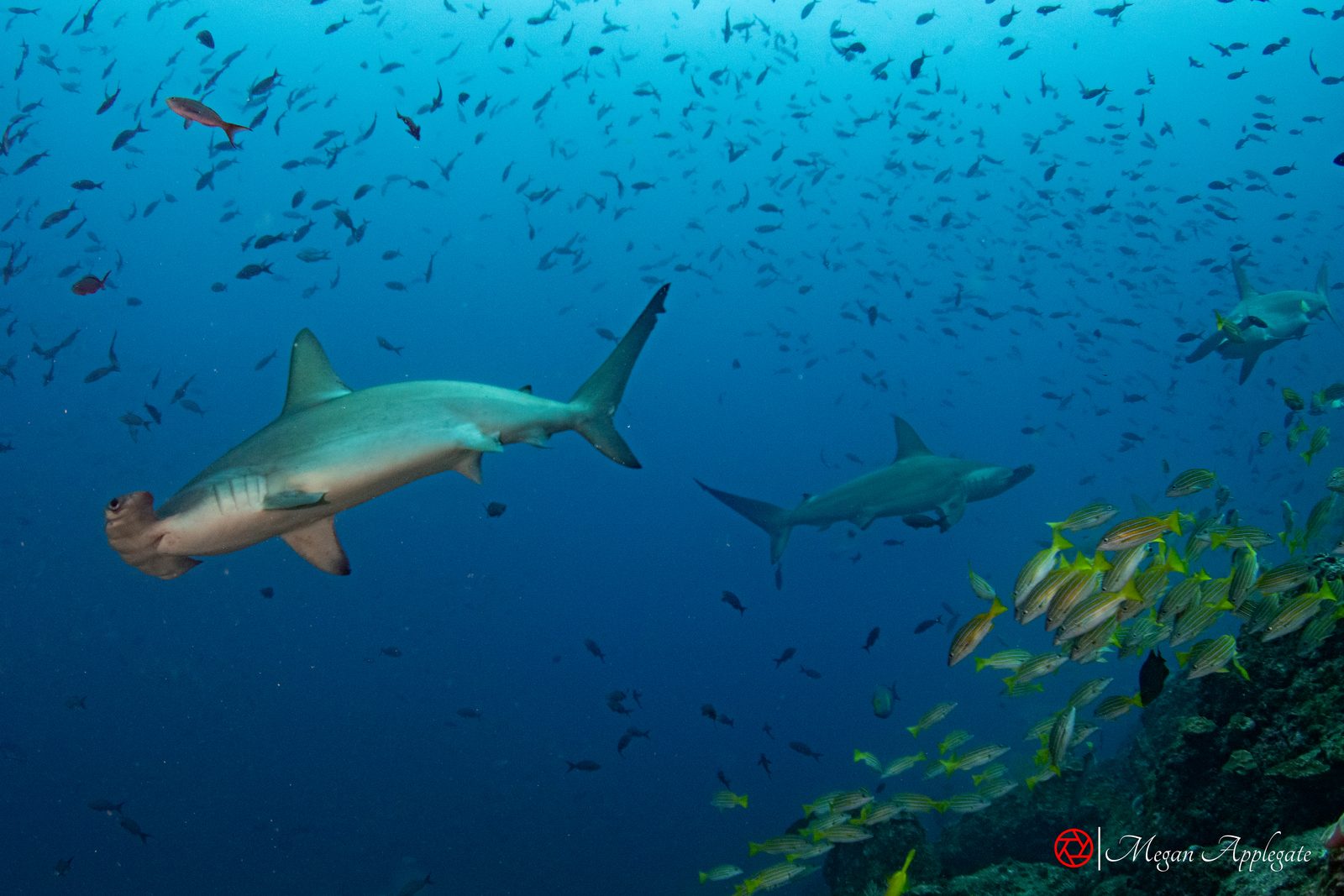
December to March gives the best chance at the Sisters (Scuba Diving); another source says October to May (Tropical Sky).
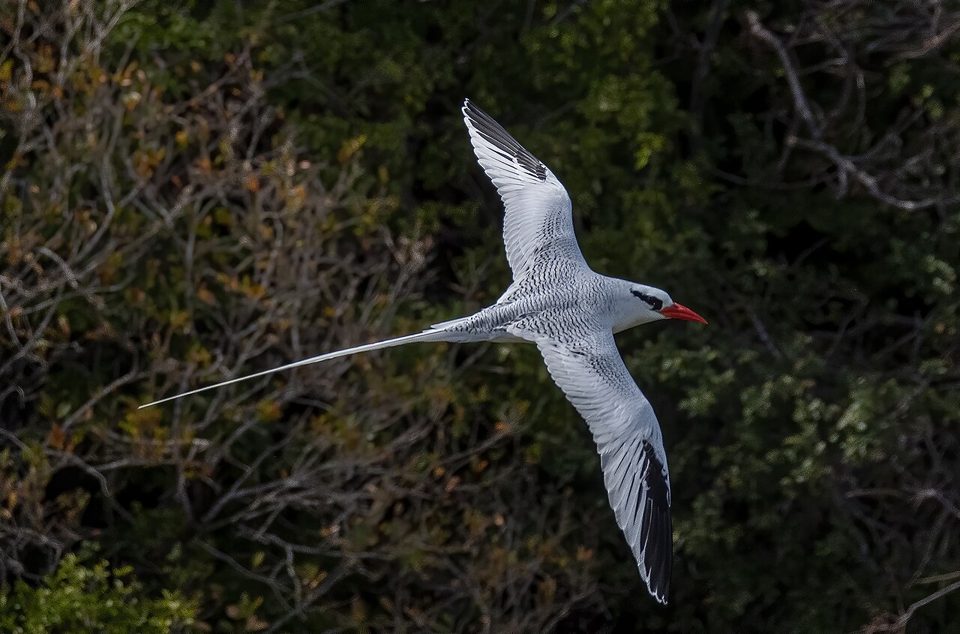
On Little Tobago from December to July, in the hundreds (BBC Wildlife).
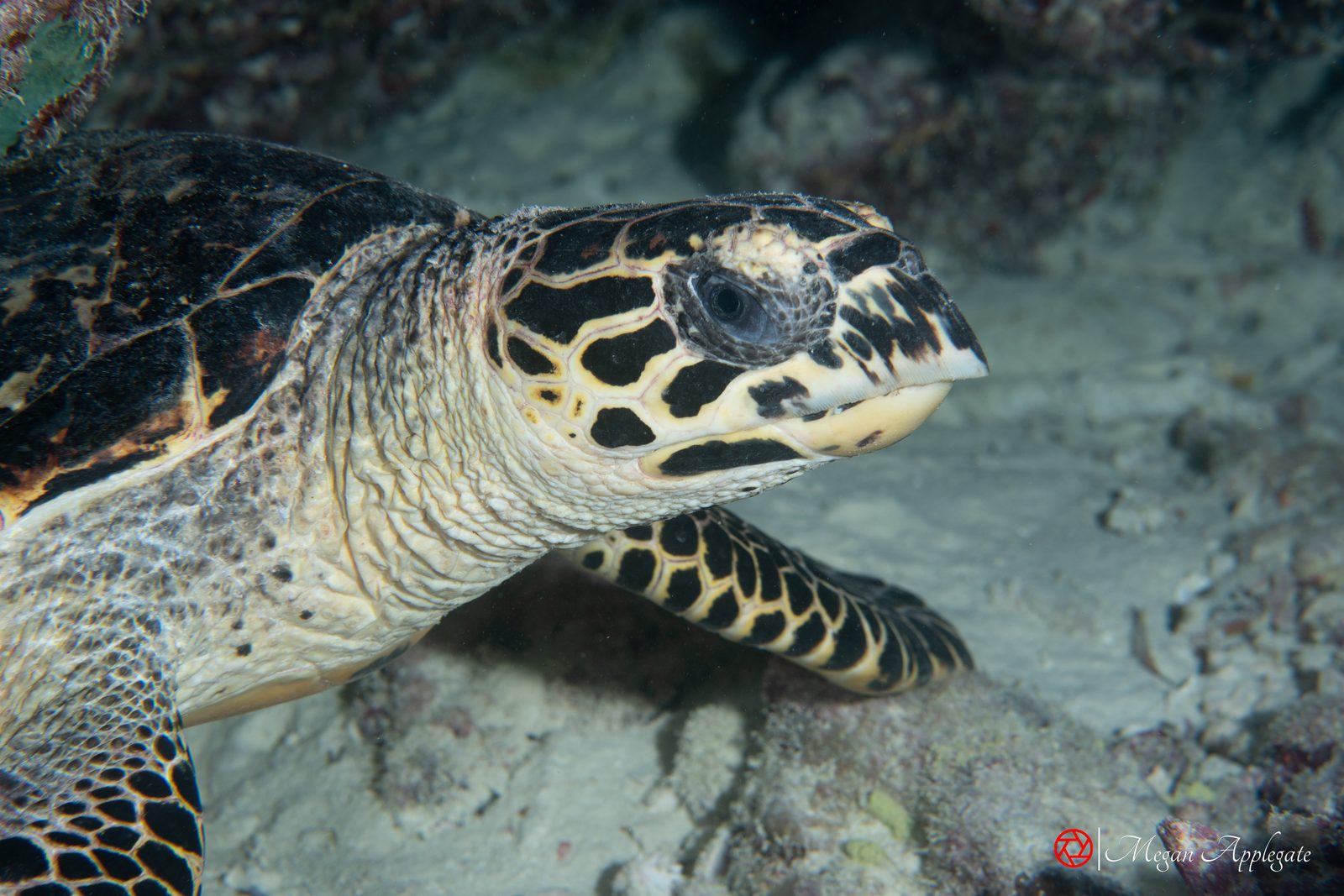
The official season ran from 1 March to 31 August in 2025 (Ministry of Agriculture, T&T 2025); another source gives March to September, peaking in late May and early June (Discover T&T). Hatchlings emerge from May, peaking in August (Discover T&T 2013).
Black jacks gather at Black Jack Hole, off Little Tobago, from May to July (Scuba Diving).
Background photo: Megan Applegate (a school of fish, Tobago)
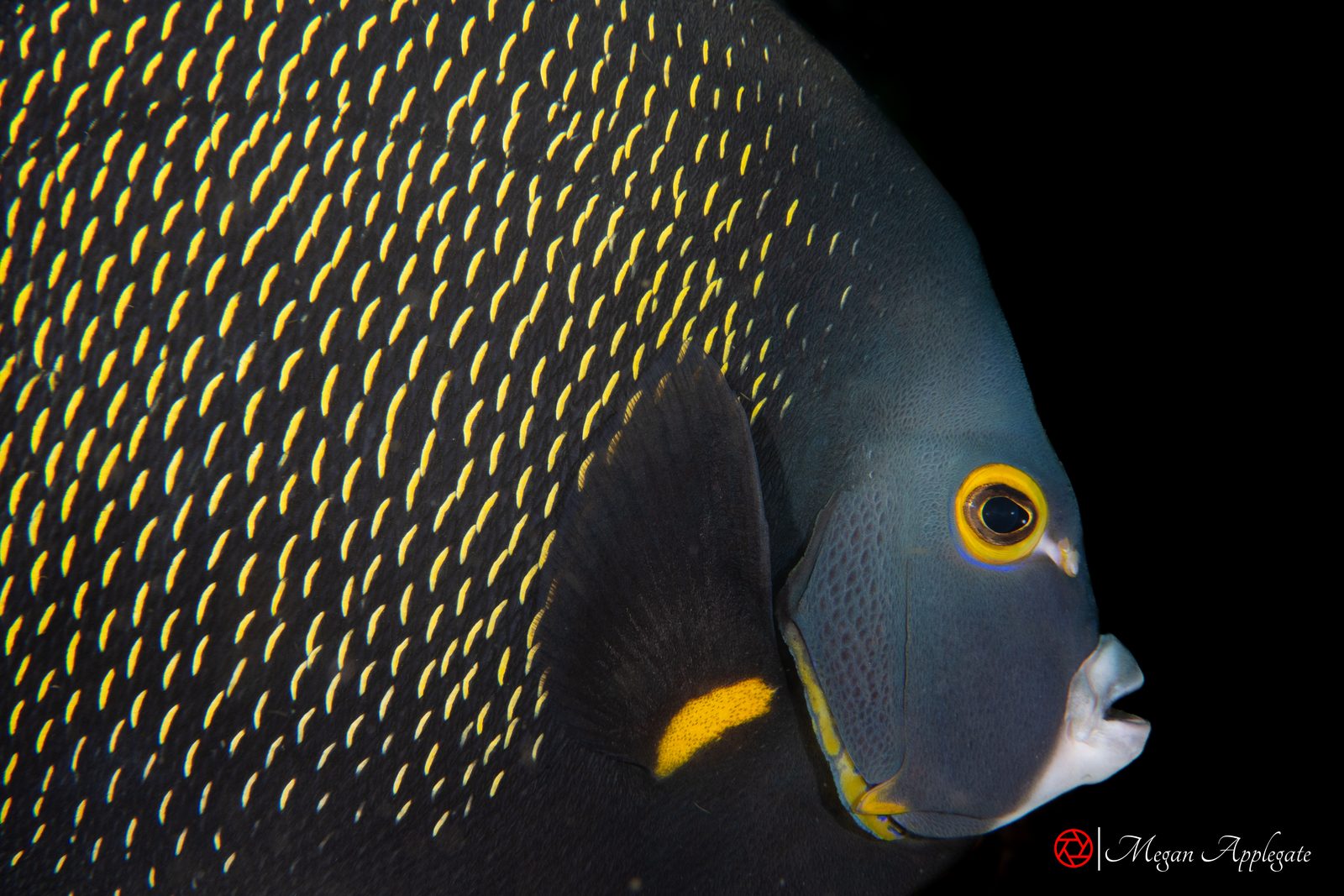
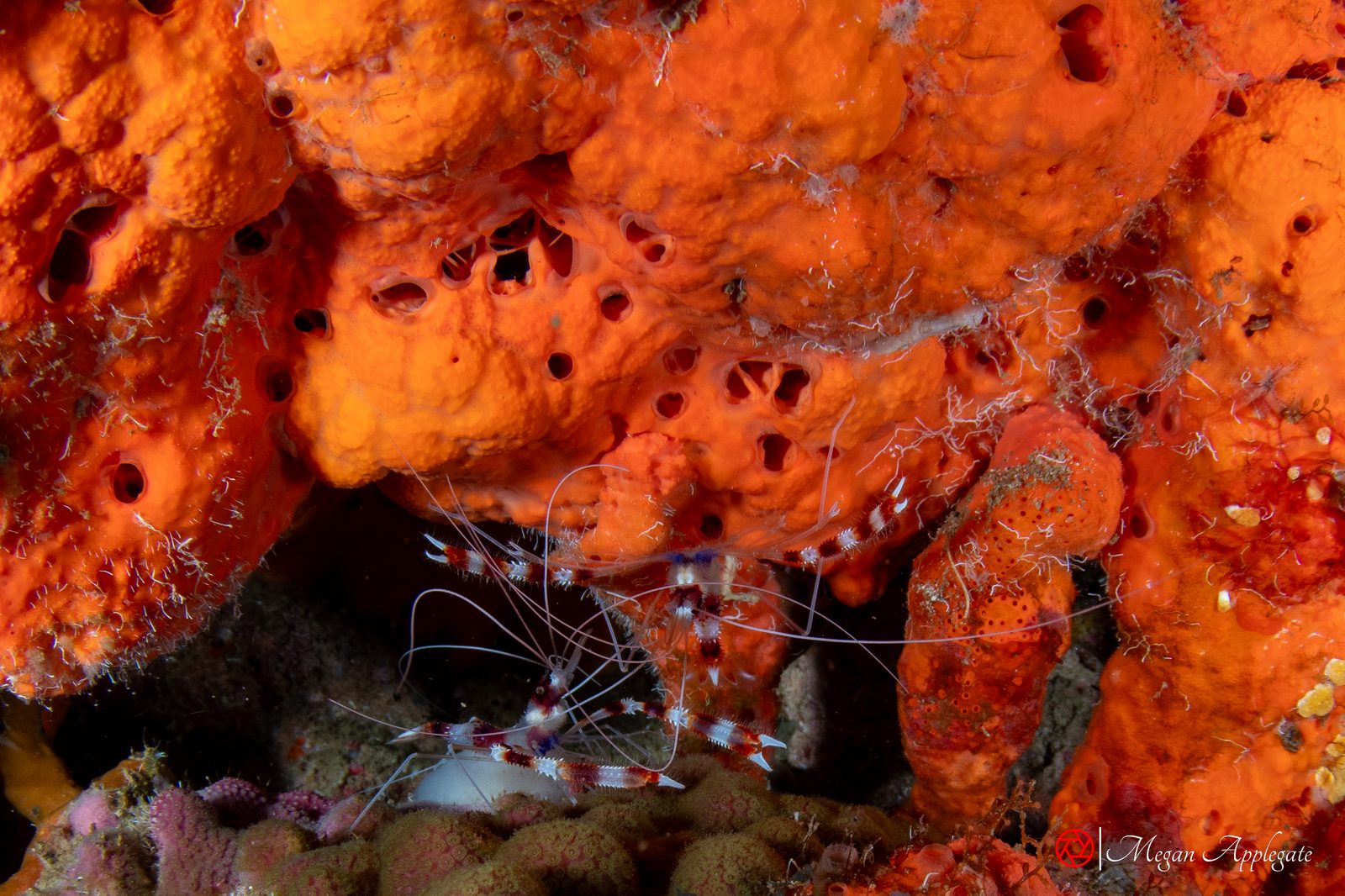
Six animals divers and visitors meet at Tobago, with the mark that gives each away. The species pages have the full notes and sources. Photos are labelled with where they were taken.
From DAN, Scuba Diving, Discover Trinidad & Tobago and other accounts. Depths and details differ between sources, and individual dives vary.
Just south of Little Tobago: home of the brain coral Guinness lists as the largest colony, about 3 m high and 5 m across, with large barracuda and green morays.
Source: Guinness World Records; DeeperBlueA slow drift at about 10–20 m off Goat Island, through a rock passage (Kamikaze Cut) where nurse sharks sleep; black coral below 30 m.
Source: DAN Alert Diver; Scuba Diving; DivernetOff Little Tobago: two rocks with a cut between them, sometimes with strong current and tarpon in the surge; black jacks gather at Black Jack Hole from May to July.
Source: Scuba Diving; Scuba DivingFive pinnacles about two miles off the north coast, breaking the surface and dropping to about 40 m; hammerheads and mantas.
Source: Scuba Diving; Scuba Diving; DAN Alert DiverAn advanced dive through a rock arch off the St Giles Islands; the passage starts at about 15 m, with boulders at 15–24 m and nurse sharks on the sand.
Source: DAN Alert Diver; Discover T&TA shallow wall on the calm Caribbean side, at about 5–18 m, with seahorses, frogfish and batfish; the Extension slopes to about 24 m, with eagle rays and the odd manta.
Source: DAN Alert Diver; Scuba Diving; DAN Alert DiverA former Trinidad–Tobago ferry sunk as a dive site off Mount Irvine, in about 30 m. Sources differ: sunk in April 1997 and 51 m (168 ft) long, or sunk in 1996 and 56 m (185 ft) long, once the Scarlet Ibis.
Source: Discover T&T; Scuba Diving; PADIAbout a mile off Crown Point: Flying Reef is an Atlantic drift with its top at about 15 m, a 17th-century anchor and mantas; Diver’s Thirst is best dived at low tide.
Source: DAN Alert Diver; Scuba Diving; Scuba DivingEasy dives: Kariwak has sand at about 5.5 m sloping to 12 m, with stingrays, flying gurnards and trumpetfish; Arnos Vale goes to about 13–20 m.
Source: Scuba Diving; DeeperBlue; DIVE magazine; DAN Alert Diver; Discover T&TA 30 m (100 ft) former supply vessel sunk in 2016 at Batteaux Bay, Speyside.
Source: Afar 2026Currents
On the Atlantic side a 2-knot current is “unremarkable” at Speyside (DAN Alert Diver), and Bookends and London Bridge are for experienced divers (Scuba Diving; DAN Alert Diver). Dive with a local operator who knows the tides.
Photos
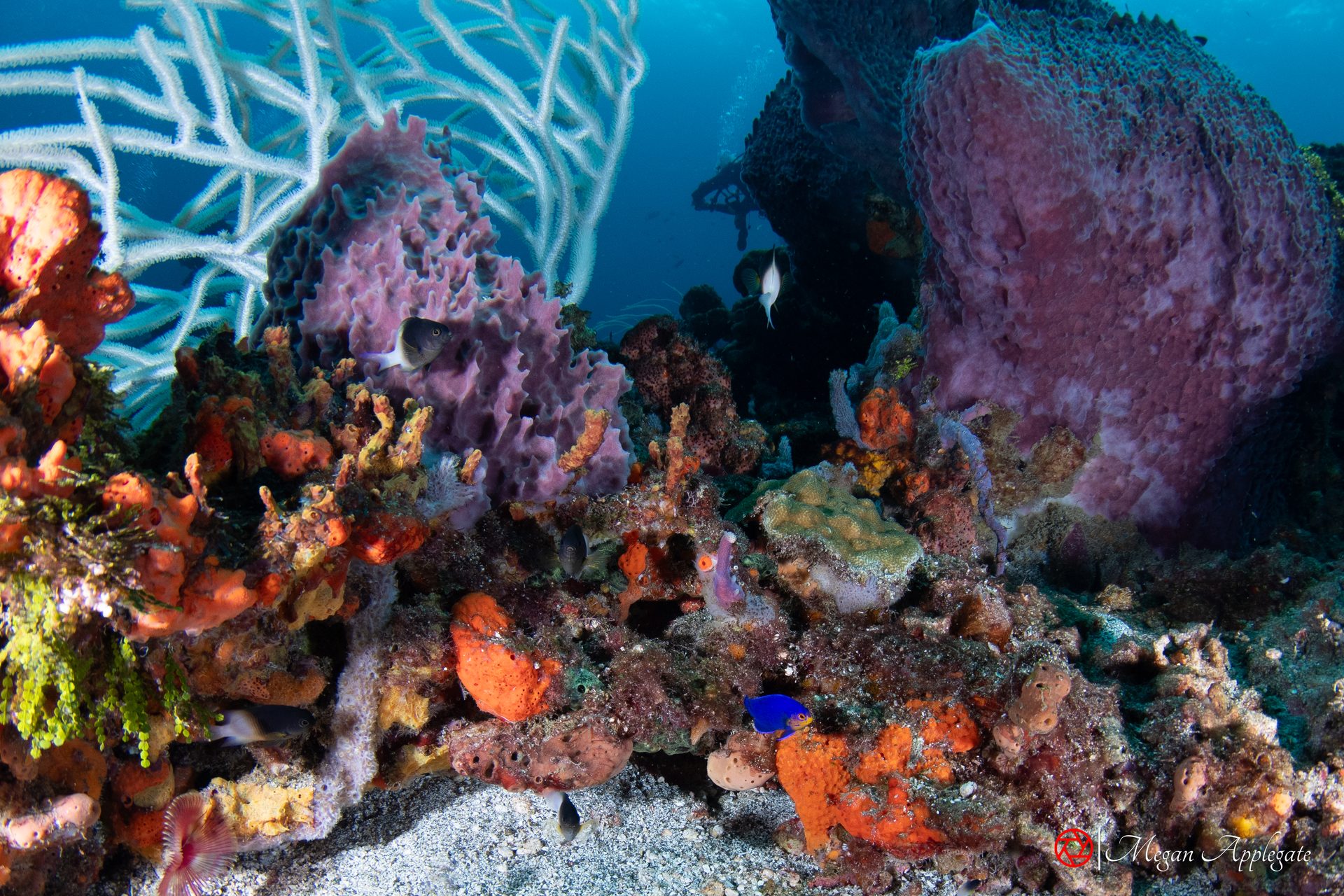
Photos marked “Megan Applegate” were taken at Tobago in November 2024, except some species she photographed elsewhere (Bonaire, Palau, Socorro or Cocos Island), which are labelled with the place. The others are credited reference photos, and species without a photo show “Photo to come” or link to photos online.
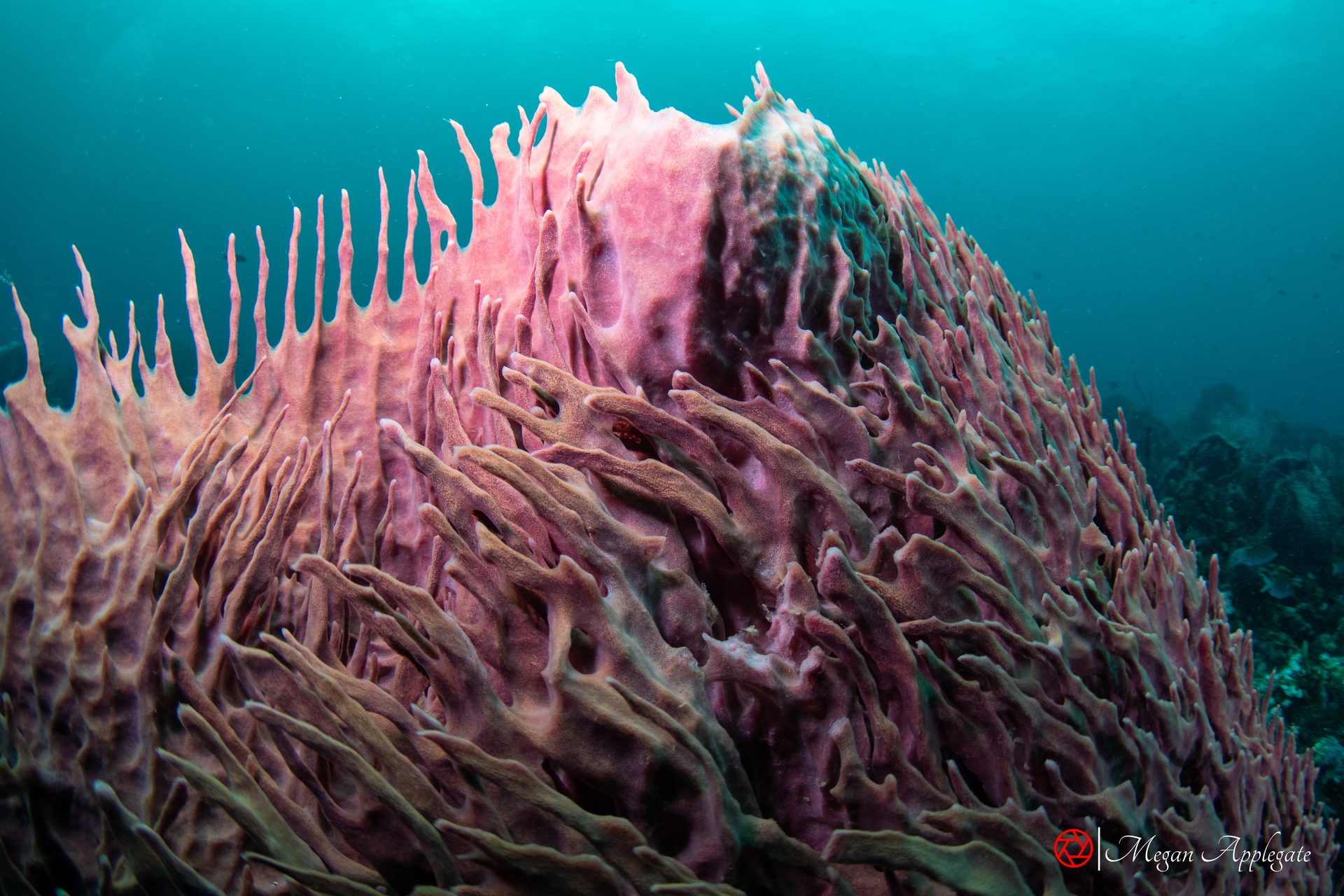
Background photo: Megan Applegate (barrel sponge, Tobago)
Every link opens in a new tab. Each species page cites its own sources as well.