Macro

Tobago macro

Seahorses and frogfish on Mount Irvine Wall, flamingo tongues on every sea fan, banded shrimp in the sponges, and octopus and squid after dark.

Banded coral shrimp (Stenopus hispidus)
Banded coral shrimp. Photo © Megan Applegate, Tobago, November 2024.

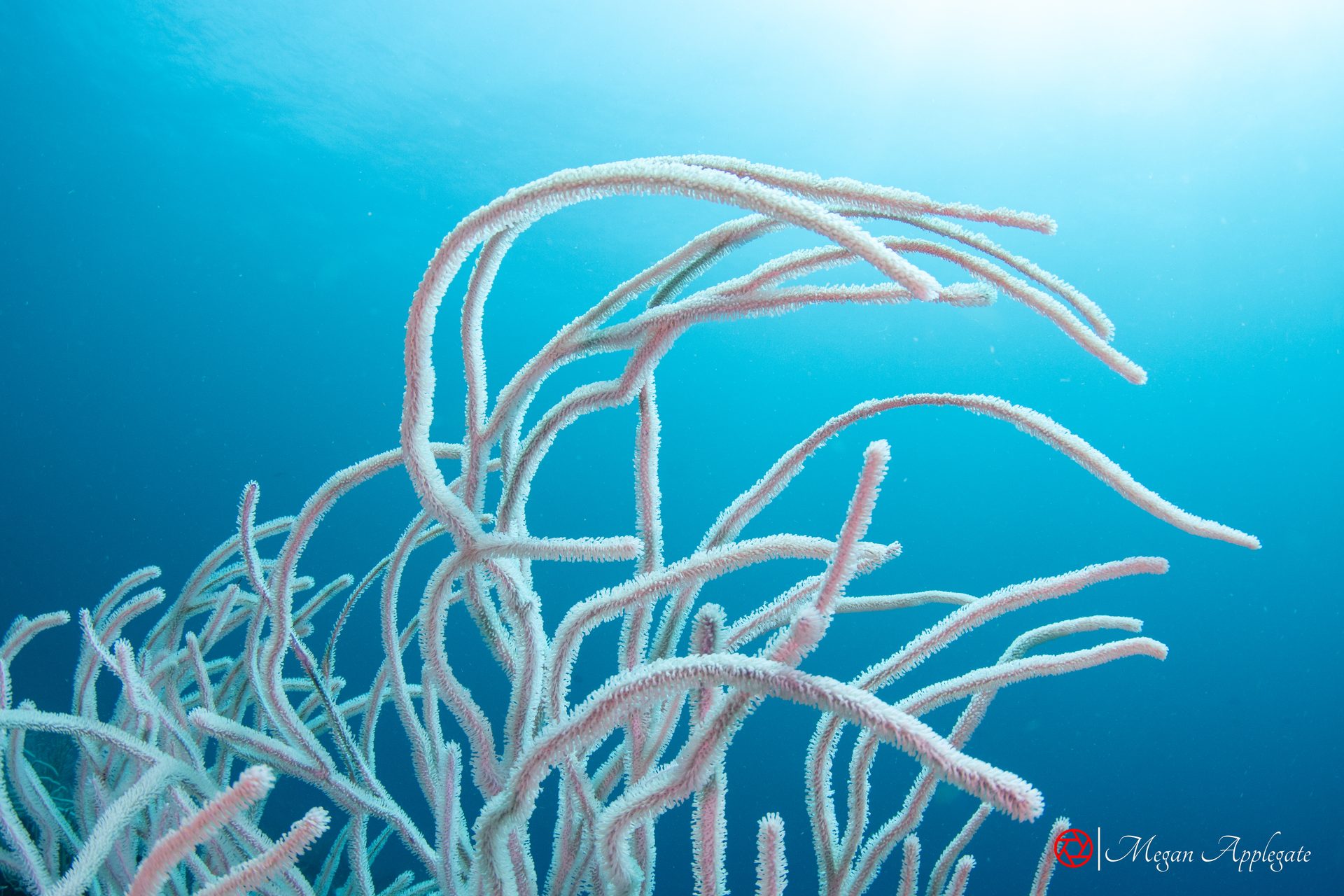
Background photo: Megan Applegate (Tobago)

Small fish

Frogfish, seahorses and jawfish

Look slowly, close to the reef

Mount Irvine Wall, on the sheltered Caribbean side, is the macro site most often named: seahorses, frogfish, arrow crabs, octopus and the shortnose batfish (DAN Alert Diver; DAN Alert Diver; Scuba Diving).

Longlure frogfish Antennarius multiocellatus

Key marks: A round body with a huge upturned mouth, hand-like pectoral fins and a lure on the snout; dark spots, some ringed in white, usually three on the tail. Up to about 20 cm, and often looks like a sponge (Naturalis Caribbean Diving).

At Tobago: Frogfish are “sometimes seen” at Mount Irvine Wall (DAN Alert Diver); the source doesn’t name the species, and the longlure is the Caribbean’s most familiar one.
Seahorses Hippocampus

Divers report “resident seahorses” on Mount Irvine Wall (Dive Worldwide), and a large orange seahorse was seen there (DAN Alert Diver). No source found names the species. For comparison, the longsnout seahorse (Hippocampus reidi), the seahorse of Bonaire’s reefs, has a snout about a third of its body length, a gripping tail and bony plates, and is yellow, orange, brown or black (bonaire.com).

Flying gurnard Dactylopterus volitans

Key marks: A bottom fish whose partly see-through pectoral fins fan out like wings, with bright blue tips; up to about 50 cm. It digs in the sediment for prey with one pectoral fin at a time (Wikipedia).

At Tobago: On the sand at Kariwak Reef, with Christmas tree worms on the coral (DIVE magazine).

Invertebrates

Snails, slugs, shrimp, crabs and cephalopods

On gorgonians, sponges and sand

Flamingo tongue Cyphoma gibbosum

Key marks: A small snail, 2–4 cm, whose cream mantle has orange, roughly square spots outlined in black; the shell underneath is plain cream. Feeds on sea fans and other gorgonians (anemoon.org).

At Tobago: “As common as sand in Tobago,” says one diver, who also found its relative the fingerprint cyphoma at Sleeper (Scuba Diving).

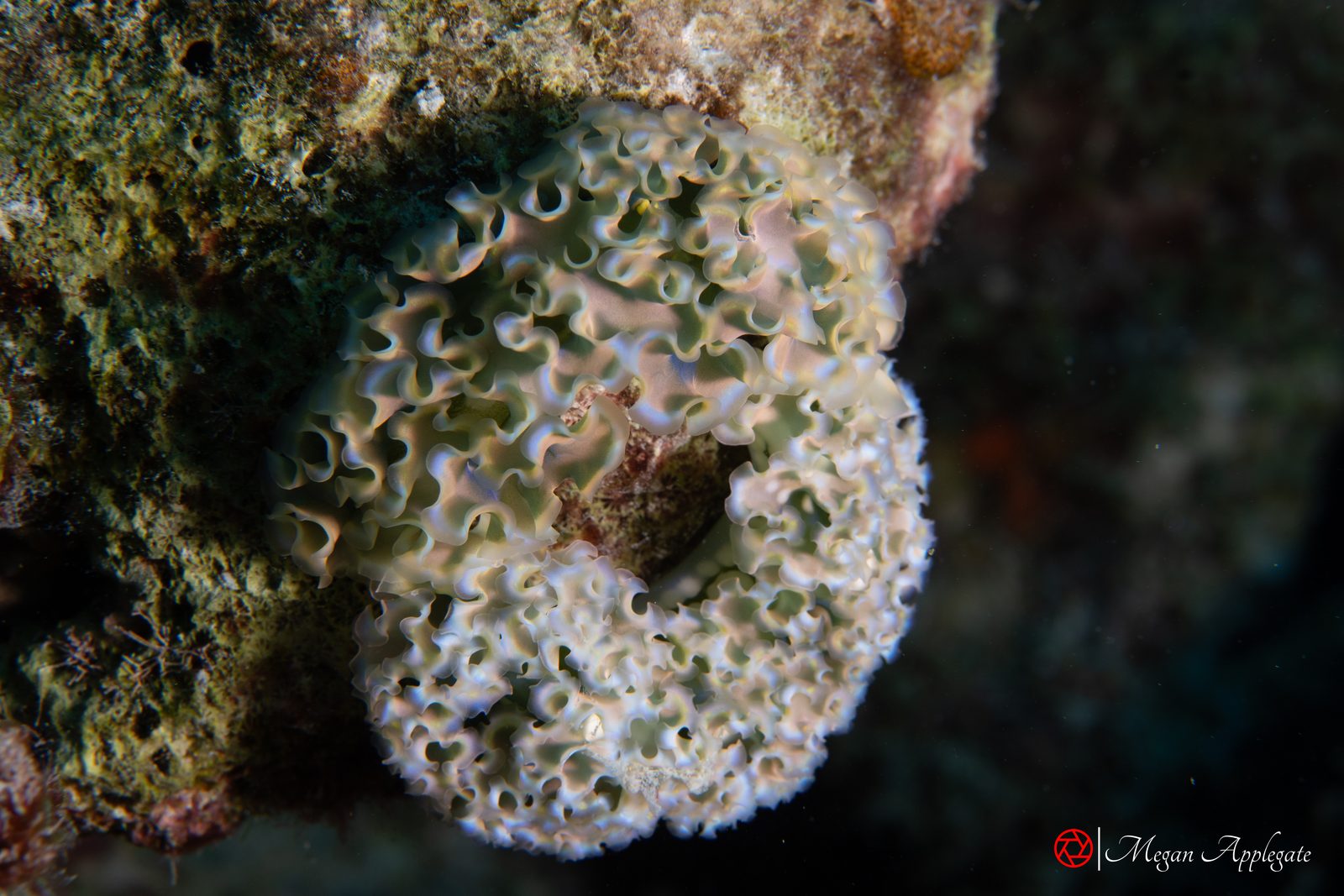
Lettuce sea slug (Elysia crispata)
Lettuce sea slug. Photo © Megan Applegate, Bonaire, December 2024 (not taken at Tobago).

Lettuce sea slug Elysia crispata

Key marks: Ruffled, folded flaps along the back, blue to green with purple or red edges (Smithsonian Ocean). It keeps chloroplasts from the algae it eats working for up to four months (Smithsonian Ocean).

At Tobago: Named on Tobago’s reefs as the “lettuce leaf nudibranch” (Scuba Diving); green Elysia slugs were seen at Arnos Vale (DAN Alert Diver).

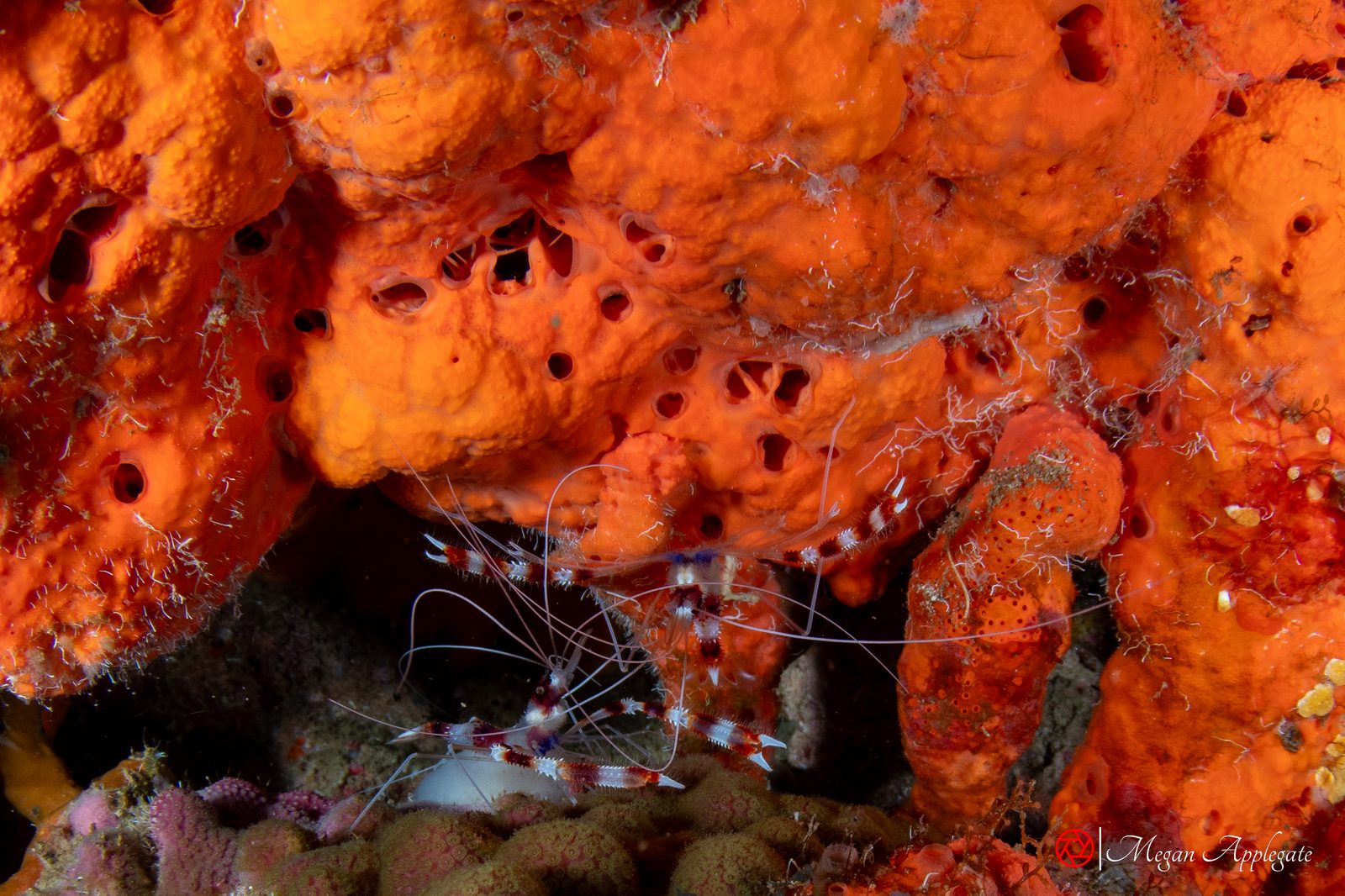
Banded coral shrimp (Stenopus hispidus)
Banded coral shrimp. Photo © Megan Applegate, Tobago, November 2024.

Banded coral shrimp Stenopus hispidus

Key marks: See-through, with red-and-white bands on the body and the big third pair of legs, white antennae and other legs; up to about 6 cm. It waves its long white antennae to call fish in, then picks parasites and damaged tissue off them (Wikipedia).

At Tobago: In the barrel sponges at Japanese Gardens (Dive O’Clock).

Yellowline arrow crab Stenorhynchus seticornis

Key marks: A triangular body drawn out into a long spiny snout, very long thin legs, fine dark lines on the shell and violet claw tips; 2.5–5 cm, at 3–40 m (anemoon.org).

At Tobago: Mount Irvine Wall, with candy cane shrimp (Scuba Diving).

Night

After dark

Night dives

Night dives bring out reef squid and slipper lobsters (Scuba Diving). Goat Island, off Speyside, is dived at night at 12–20 m (40–65 ft) (DAN Alert Diver).

Hands off

Don’t touch, move or hold marine life, including to set up a photo, and keep fins off the reef.

Credits

Macro photo credits

Where the photos were taken

The photos are Megan Applegate’s own, © Megan Applegate, all rights reserved: the banded coral shrimp and the hero background at Tobago in November 2024, the others of the same species on Bonaire in December 2024. Species without a photo link to photos online.

Photo credits.
SpeciesPhotographerLicenceSource
Lettuce sea slugMegan Applegate© Megan Applegate, all rights reservedPhotographer's own photo, taken at Bonaire, December 2024
Banded coral shrimpMegan Applegate© Megan Applegate, all rights reservedPhotographer's own photo, taken at Tobago, November 2024