Leatherbacks hauling out on the north-west beaches from March, hawksbills on the reefs and nesting into November, green turtles, and the volunteers of SOS Tobago who count them.
Five sea turtle species occur in Trinidad and Tobago’s waters (Global Voices 2021), and three nest on Tobago: leatherback, hawksbill and green (Testudo 2008). Tobago’s nesting numbers are much smaller than Trinidad’s (Caribbean Beat 2022).
Leatherback turtle Dermochelys coriacea
The largest turtle: adults typically weigh 250–700 kg and can reach 2.7 m. It eats almost nothing but jellyfish. Vulnerable on the IUCN Red List, with some subpopulations Critically Endangered (Wikipedia).
Key marks: No hard shell: the back is covered in flexible, leathery skin with seven ridges running along it (Wikipedia).
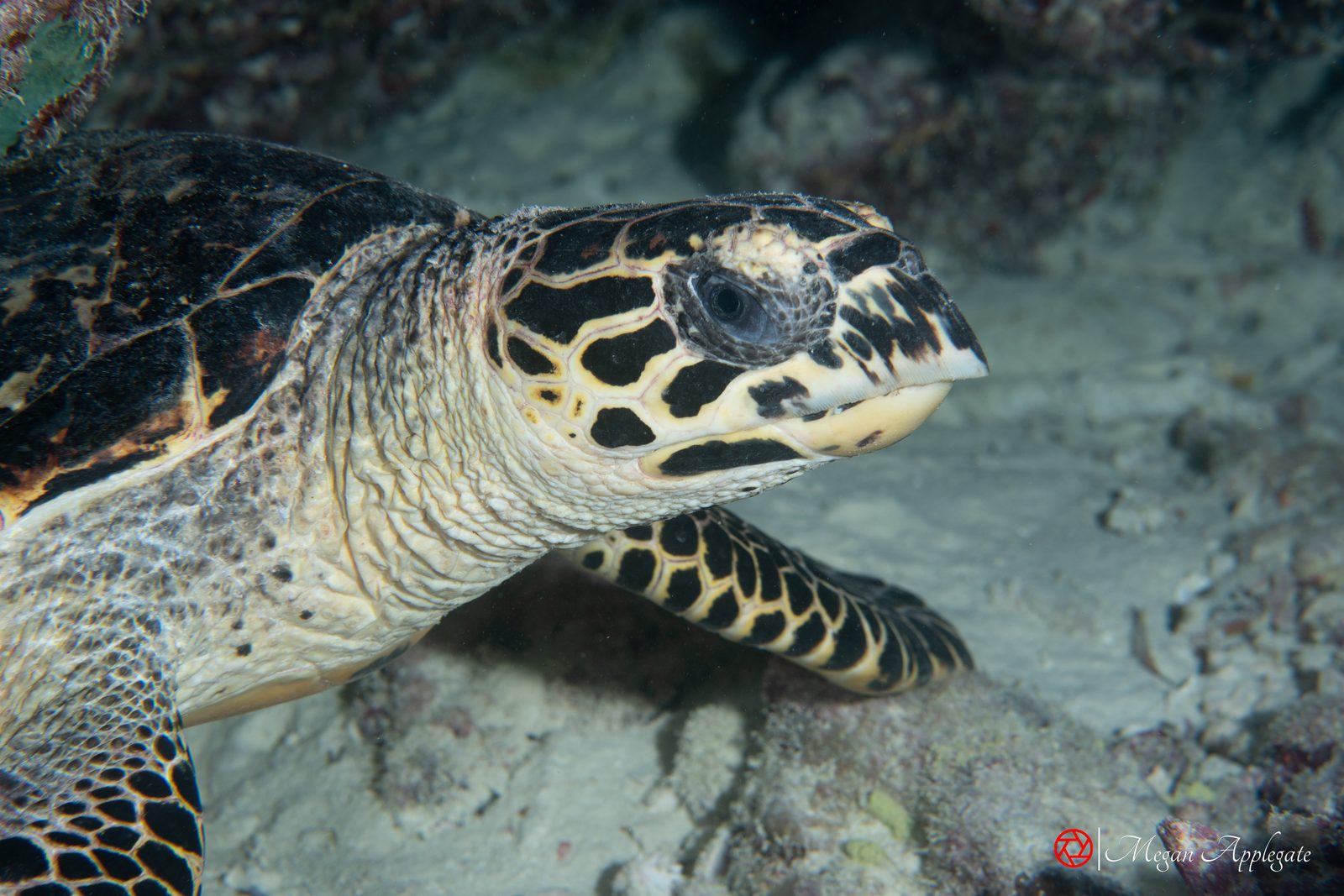
Adults are typically about 1 m long and weigh about 80 kg, and sponges make up 70–95% of their diet. Critically Endangered on the IUCN Red List (Wikipedia).
Key marks: A pointed, beak-like head and thick, overlapping shell plates that give the back edge of the shell a saw-toothed look (Wikipedia).
Adults reach about 1.5 m and eat mainly seagrass (Wikipedia). In October 2025 the IUCN moved the global population from Endangered to Least Concern, though some regional populations are still at risk (Oceanic Society 2025).
Key marks: Smooth shell edges with plates that don’t overlap, and a short, rounded head (Wikipedia).
Table — Tobago’s three nesting turtles compared, from their Wikipedia articles, with the 2025 IUCN status of the green turtle from the Oceanic Society.
Leatherback
Hawksbill
Green
Shell
No hard shell; leathery skin with seven ridges
Overlapping plates; saw-toothed back edge
Plates not overlapping; smooth edge
Head
–
Pointed, beak-like
Short and rounded
Size
Up to 2.7 m
About 1 m
About 1.5 m
Main food
Jellyfish
Sponges
Seagrass
IUCN Red List
Vulnerable
Critically Endangered
Least Concern (since 2025)
Nesting
The nesting season
Leatherbacks from March, hawksbills into November
Save Our Sea Turtles (SOS) Tobago was formed in 2000, after leatherbacks were killed around Black Rock, and began tagging turtles in 2005. Its volunteers patrol Turtle Beach (Great Courland Bay), Grafton and Mount Irvine/Back Bay. On a typical night they see two to five leatherbacks, about ten at the peak in late May and early June; hatchlings emerge from May, peak in August and can appear into September or October (Discover T&T 2013). Patrols of the northern beaches near Charlotteville began in 2007 (Testudo 2008), and SOS added Lambeau Beach, a hawksbill beach, in 2013 (SOS Tobago / WIDECAST 2018).
Table — Nests excavated by SOS Tobago after hatching, with the leatherbacks’ mean hatch success (SOS Tobago / WIDECAST 2018). These are the nests dug up and checked, not every nest laid.
Year
Leatherback nests
Hatch success
Hawksbill nests
2009
27
48%
–
2010
117
48%
–
2011
155
59%
–
2012
184
58%
–
2013
149
60%
31
2014
81
61%
63
2015
42
61%
14
2016
82
57%
63
2017
208
64%
89
SOS Tobago also built TURT, a photo-ID app for turtles, with SpeSeas (Caribbean Beat 2022).
Protection
Turtles and the law
Environmentally Sensitive Species
All five sea turtles in Trinidad and Tobago are listed as Environmentally Sensitive Species: breaking the rules can bring a TT$100,000 fine and two years in prison, and the 2025 nesting season ran from 1 March to 31 August (Ministry of Agriculture, T&T 2025). Earlier rules banned taking eggs (1975) and required turtle excluder devices in trawl nets (1994) (WIDECAST); as late as 2013 SOS Tobago described an open hunting season and nesting beaches with no protected status (Discover T&T 2013).
Watching a nesting turtle
Ask SOS Tobago about turtle watching (Discover T&T). No torches or flash photography, no fires and no driving on the beach, and don’t touch the turtles (Discover T&T).
Credits
Photo credits
Where the photos come from
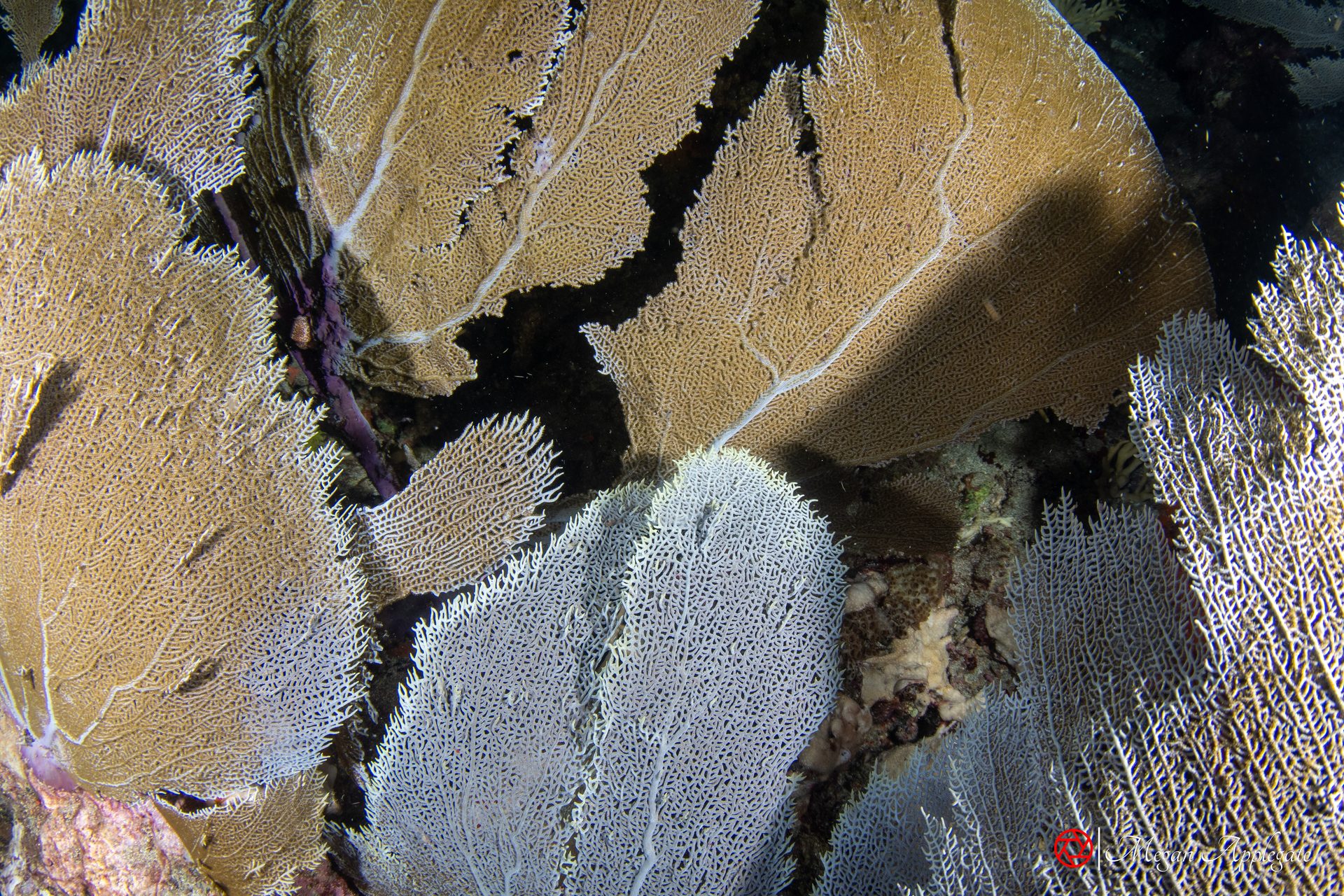
The hawksbill is Megan Applegate’s photo of the same species in Palau; the leatherback and green turtle link to photos online. The background, sea fans, was taken at Tobago in November 2024.