Wrecks

Chuuk wrecks

The Japanese fleet sunk in Truk Lagoon in February 1944: aircraft in the holds, tanks on deck, coral on every rail, and what to look for on each wreck.

Background photo: Megan Applegate (Chuuk)

The Ghost Fleet

Wrecks of Chuuk Lagoon

Thirteen wrecks · shallow to technical

On 17–18 February 1944, in Operation Hailstone, US carrier aircraft attacked the Japanese base at Truk. They sank 2 light cruisers, 4 destroyers, 3 auxiliary cruisers, 6 auxiliary ships and 32 merchant ships, almost 200,000 tons of shipping, and destroyed more than 250 aircraft (Wikipedia). Most of the wrecks lie around Dublon, Eten, Fefan and Uman (Wikipedia). There are more than 40 diveable ships, aircraft and a submarine (Wetpixel).

The shallowest structures are at 5–9 m, most dives are at 18–40 m, and the deepest parts are below 61 m (DAN Alert Diver 2026). The depths below come from dive guides and vary between sources, so check them with your guide. Photos are Megan Applegate’s, taken in Chuuk in December 2022 and January 2023; wrecks without one yet show an empty frame.

Fujikawa Maru
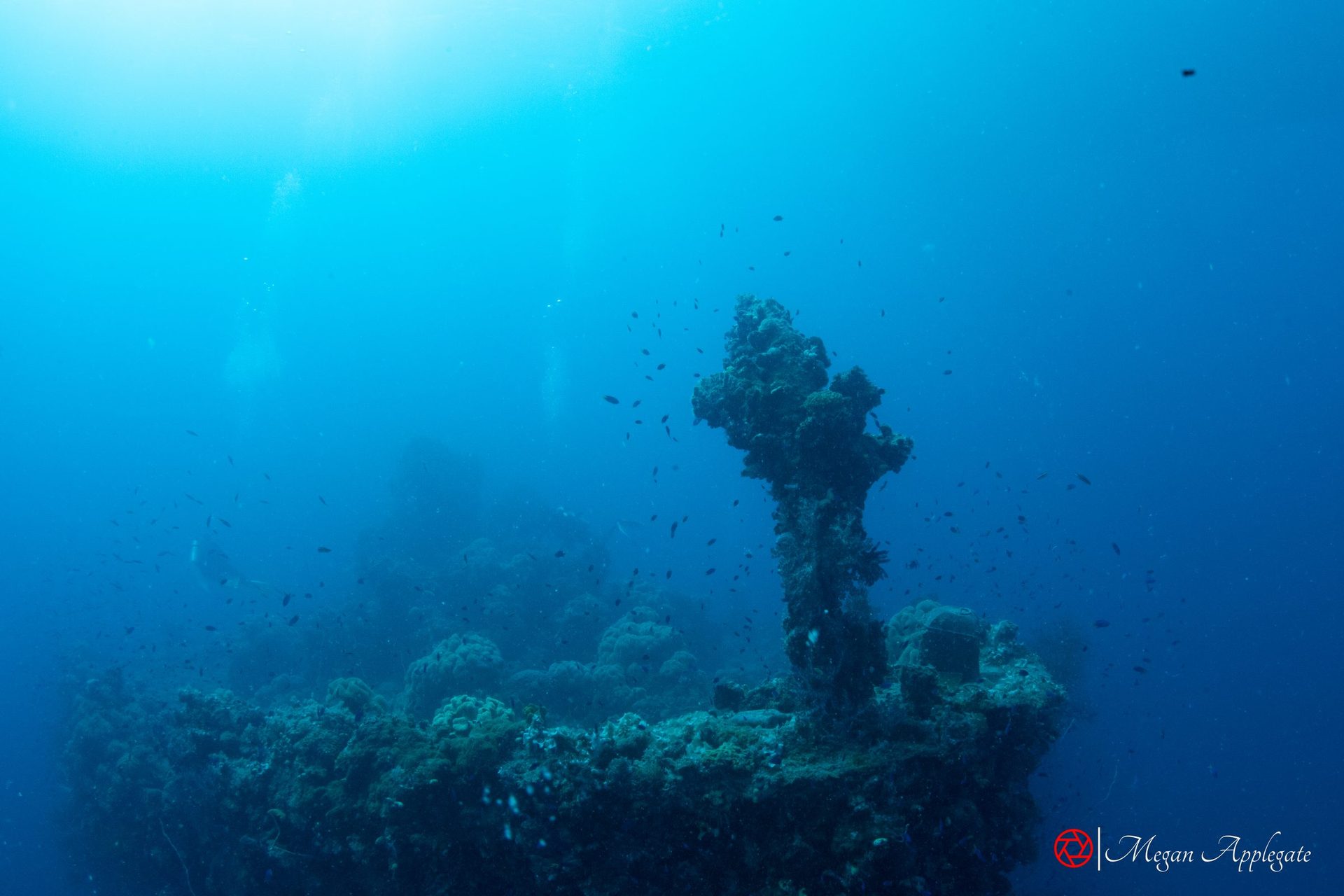
Fujikawa Maru. Photo © Megan Applegate, Chuuk, December 2022.

Fujikawa Maru Aircraft ferry

The ship: A cargo ship used by the Imperial Japanese Navy as an armed aircraft ferry: 6,938 tons and 437 ft (133 m) long (Pacific Wrecks), built in 1938 (DIVE).

Depth: Upright, from about 9 m to 37 m (Shearwater); the deck is at about 21 m (70 ft) and the keel at about 40 m (130 ft), and the mast tips almost break the surface (Pacific Wrecks). Within recreational limits (Shearwater).

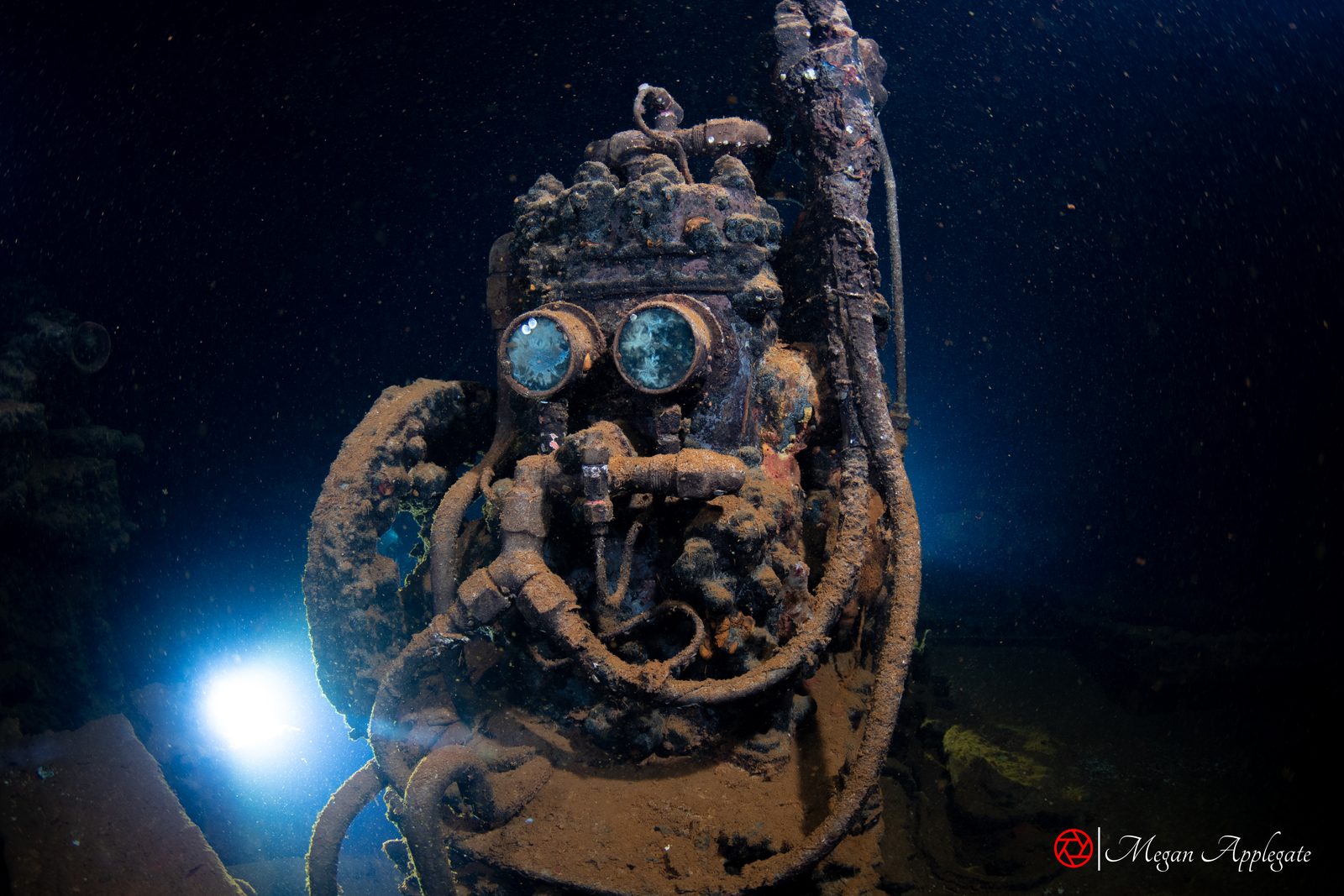
Look for: The coral-covered bow gun, with an 1899 British maker’s plate (DIVE); Zero fighter fuselages and wings in the holds, with engines, propellers and torpedoes in Hold 1 (DIVE); and the machine shop with the air compressor divers call “R2D2” (Bluewater 2026). Grey reef sharks, bigeye trevally, chevron barracuda and batfish have been reported on the wreck (Wetpixel).

Take care: The superstructure is collapsing (DIVE). A liveaboard captain has asked divers not to request the swim-through to R2D2 because it is unsafe (Wetpixel).
Shinkoku Maru

Shinkoku Maru Oil tanker

The ship: A 10,020-ton navy oil tanker; 86 men died when it sank (Pacific Wrecks).

Depth: Upright, about 9–39 m (Shearwater): the bridge at about 15 m and the seabed at about 38 m (DIVE). The masts were removed after the war so that ships would not snag them (Pacific Wrecks).

Look for: “Absolutely blanketed in soft corals and anemones” (Shearwater). Coral-covered telegraphs on the bridge, an operating room below it (DIVE; Pacific Wrecks), and a large, well-lit engine room (Shearwater). Reef sharks, barracuda and turtles were seen in 2026 (Bluewater 2026); leopard sharks, hawksbill turtles and spotted eagle rays have also been reported (Wetpixel).

Take care: The lower engine room is cramped and silty, and human remains lie there (DIVE). The shallow parts suit any diver; the aft penetration needs a plan or a guide (DIVE).

Heian Maru

Heian Maru Submarine tender

The ship: Built as a passenger liner for the Yokohama–Seattle run and used in the war as a submarine tender; 11,614 tons (Pacific Wrecks). At 163 m it is the largest wreck in the lagoon (Shearwater).

Depth: On its port side (DAN Alert Diver 2026), about 9–35 m (Shearwater).

Look for: The ship’s name in large Roman letters, with kanji above, on the bow (Pacific Wrecks); periscopes about 15 m long in the superstructure (DIVE); torpedoes in hold No. 2 and a medicine chest with glass bottles in hold No. 5 (Scuba Diving 2012); and the huge stern propeller (Bluewater 2026).

Take care: Because the ship lies on its side, the inside is hard to find your way around (Pacific Wrecks).

Nippo Maru

Nippo Maru Water carrier and cargo ship

The ship: A water carrier and cargo ship built in 1936; 3,764 tons and 353 ft (108 m) long (Pacific Wrecks).

Depth: Upright with a list of about 25° to port (Pacific Wrecks), about 21–47 m (Shearwater); the sand is at 48 m (DIVE).

Look for: A Type 97 tank on deck (Pacific Wrecks), three howitzers on the rear deck, bronze rangefinders and gas masks in the holds, and the ship’s wheel still standing on the bridge (DIVE).

Take care: Deep enough that bottom time is short; plan the dive (DIVE). Some containers on board hold caustic substances (Pacific Wrecks).

San Francisco Maru

San Francisco Maru Cargo ship · “the Million Dollar Wreck”

The ship: A passenger-cargo ship built in 1919, 117 m long (DIVE), fully loaded with munitions when it sank (Scuba Diving 2012).

Depth: Upright; the deck starts at about 50 m (165 ft) and the ship rests in about 64 m (210 ft) (Scuba Diving 2012). Another guide gives 37–62 m (Shearwater).

Look for: Three Type 95 Ha-Go light tanks on deck, one stacked on another (Bluewater 2026; DIVE); mines, shells and bombs in Hold 1, and trucks and ammunition further aft (DIVE); a 75 mm bow gun (Bluewater 2026).

Take care: A decompression dive (Bluewater 2026), high on technical divers’ lists (DIVE).

Yamagiri Maru

Yamagiri Maru Navy transport

The ship: A passenger-cargo ship launched in 1939 and taken over by the navy as a transport; 6,438 tons and 436 ft (133 m) long. It lies north of Fefan (Pacific Wrecks).

Depth: About 15–34 m (50–110 ft) (Pacific Wrecks).

Look for: Huge armour-piercing shells in hold No. 5, long described as 18-inch shells for the battleship Yamato; Pacific Wrecks says they are 14-inch shells that were misidentified (Pacific Wrecks). Also the ship’s name on the bow, a large gun, and a bronze whistle on the bridge (Pacific Wrecks).

Take care: Twelve crew died here, and human remains have been reported inside (Scuba Diving 2012).

Rio de Janeiro Maru

Rio de Janeiro Maru Cargo ship

The ship: A 9,626-ton cargo ship, 461 ft (141 m) long (Pacific Wrecks).

Depth: About 9–35 m (Shearwater); parts lie in as little as 9 m (30 ft) (DAN Alert Diver 2026).

Look for: Six-inch guns fore and aft, the ship’s name on the bow, china in the galley (Pacific Wrecks), crates of beer bottles and rifles in the holds, and a photogenic rudder with two propellers (Shearwater).

Take care: Oil leaked from this wreck in September 2025. The leak was contained, but operators avoided the area for a time (DAN Alert Diver 2026).

Kensho Maru

Kensho Maru Cargo ship

Depth: About 12–38 m (Shearwater).

Look for: An intact engine room you can swim through, with gauges and dials still in place (Shearwater), a catwalk and a skylight (Bluewater 2026); soft corals outside (Shearwater).

Hoki Maru

Hoki Maru Cargo ship

The ship: A 7,112-ton cargo ship (Pacific Wrecks).

Depth: The forecastle is the deepest part, at about 52 m (170 ft) (Pacific Wrecks); trucks lie in a narrow hold at about 40 m (130 ft) (Bluewater 2026).

Look for: Bulldozers, trucks and other machinery in the holds (Pacific Wrecks), with spare Zero engines and depth charges (Bluewater 2026).

Take care: Fuel and other caustic substances still seep up to the surface (Pacific Wrecks).

Sankisan Maru
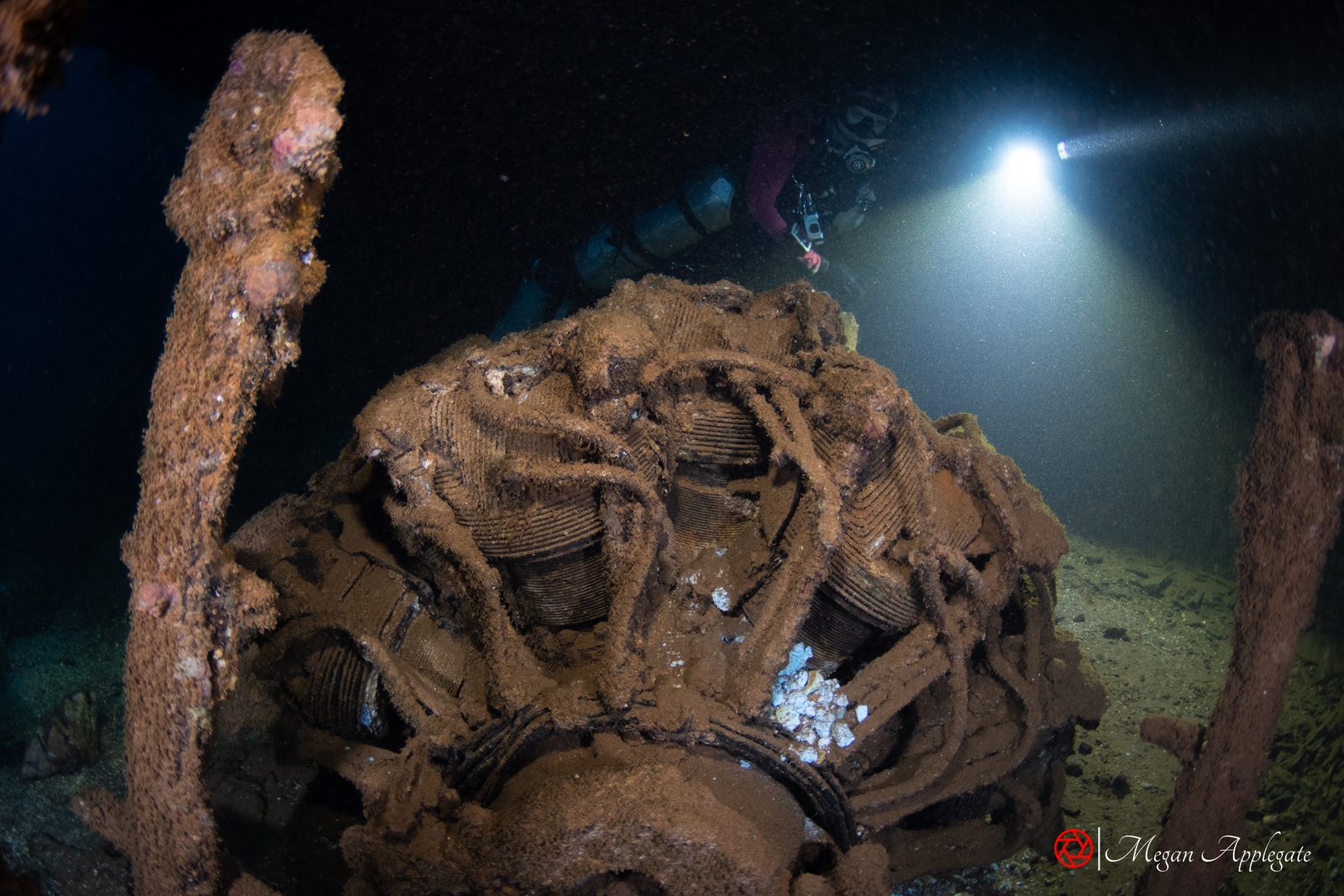
Sankisan Maru. Photo © Megan Applegate, Chuuk, January 2023.

Sankisan Maru Army cargo ship

The ship: A 4,752-ton cargo ship taken over by the Japanese Army. It lies upright southwest of Uman (Pacific Wrecks).

Depth: The wreck starts at about 3 m (Master Liveaboards); the stern was blown off and lies deeper, with its propeller and rudder at about 46 m (150 ft) (Pacific Wrecks).

Look for: Remains of three trucks on deck; truck engines, aircraft parts and radial engines in hold No. 2; boat davits covered in soft coral (Pacific Wrecks). In 1974, 284 depth charges were lifted out of hold No. 1 (Pacific Wrecks).

I-169

I-169 Submarine

The ship: A Japanese navy submarine. It sank on 4 April 1944, northwest of Dublon, when it dived during an air-raid warning with hatches and its main induction valve still open; the men trapped inside could not be saved (Wikipedia).

Depth: Upright, about 30–42 m (DAN Alert Diver 2026).

Look for: The submarine’s shape, easy to see because little grows on the hull, and wires left from the failed salvage attempt (Bluewater 2026). In May 1944 the Japanese set off depth charges around it, damaging the bow and conning tower (Wikipedia).

Take care: The crew’s remains were returned to Japan in 1973 (Wikipedia). Treat the wreck as a grave.

Betty bomber

Betty bomber Mitsubishi G4M bomber

The ship: A Mitsubishi G4M “Betty” bomber that came down short of the runway on Eten; whether it was shot down or misjudged its approach is not known (Submerged; TracesOfWar).

Depth: About 15 m (50 ft), on sand among coral heads (Submerged; TracesOfWar).

Look for: Intact wings and tail; a bent nose with the pilot’s seat lying nearby; a swim-through to the gunners’ bay; a machine gun and radio parts in the main hold; the engines lying apart on the coral (Submerged).

Oite

Oite Destroyer

The ship: A destroyer that had just picked up 523 survivors of the cruiser Agano. It was torpedoed entering Truk during the raid on 18 February 1944, broke in half and sank almost at once: 172 of its 192 crew and all 523 survivors were lost (Wikipedia).

Depth: In two sections at about 61 m; the bow is upside down and the stern upright (Wikipedia). Dived at about 40–62 m (Shearwater).

Look for: Out on the edge of the lagoon, rarely visited, usually with outstanding visibility (Shearwater).

Take care: The engine room averages 61 m and needs the right equipment and experience (Wetpixel).

More wrecks

Also dived

Not yet on this page in full

At a glance

Depths and types

Approximate depths from the sources above

The wrecks on this page. Select a name to jump to its card.
WreckTypeDepth
Fujikawa MaruAircraft ferry9–37 m
Shinkoku MaruOil tanker9–39 m
Heian MaruSubmarine tender9–35 m
Nippo MaruWater carrier and cargo ship21–47 m
San Francisco MaruCargo ship50–64 m
Yamagiri MaruNavy transport15–34 m
Rio de Janeiro MaruCargo ship9–35 m
Kensho MaruCargo ship12–38 m
Hoki MaruCargo shipto about 52 m
Sankisan MaruArmy cargo shipfrom 3 m
I-169Submarine30–42 m
Betty bomberMitsubishi G4M bomberabout 15 m
OiteDestroyer40–62 m

Respect

Diving a war grave

Rules and safety

Leave everything where it is

The wrecks and aircraft are a protected historic site, and it is illegal to disturb them or remove artefacts (DAN Alert Diver 2026). The ships are classed as a Japanese war grave (Wikipedia). Most human remains were removed decades ago, but some are sealed inside wrecks and will never be recovered (DAN Alert Diver 2026). One long-time Truk diver and writer asks divers not to share photos of remains or disturb them (Scuba Diving).

Inside the wrecks

Some interiors are unstable and considered too dangerous to enter (DAN Alert Diver 2026). Silt is easily stirred up inside, and an engine room can drop to zero visibility when another group arrives (Wetpixel).

Planning

Most dives stay within no-decompression limits, nitrox is strongly recommended, and many operators hang spare cylinders at 5 m (DAN Alert Diver 2026). Weno has a small private recompression chamber whose staff must be called in; serious cases usually go to the US Naval Base on Guam, 1,019 km away (DAN Alert Diver 2026).