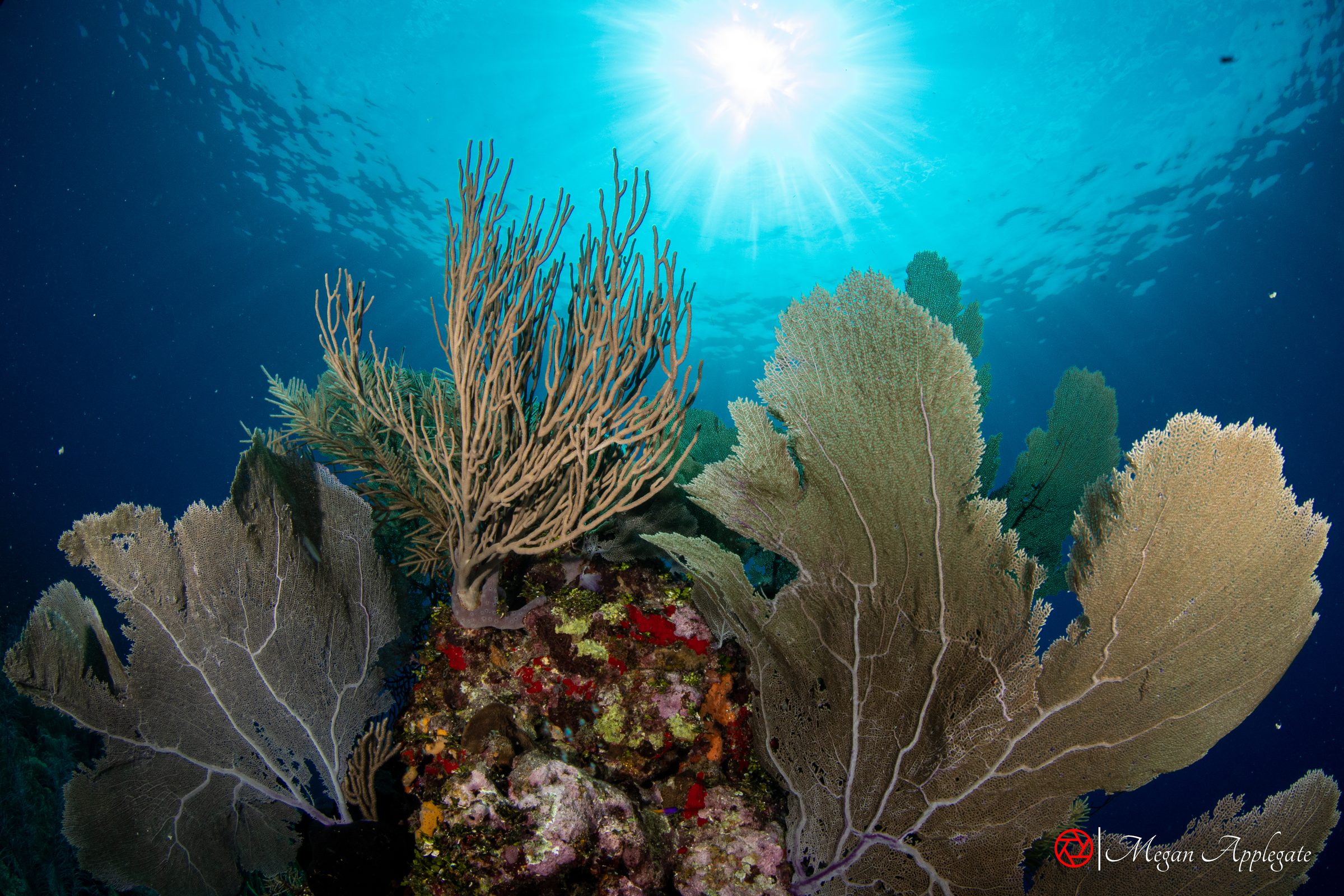
Sea fans and reef at Roatán

Bay Islands, Honduras · Mesoamerican Reef

Walls above the Cayman Trench.

A field guide to the reef fish, sharks and other big animals, small creatures, turtles, corals and birds of Roatán, with where and when to look for each and links to go deeper.

Photo Megan Applegate (Roatán)

1989Sandy Bay–West End Marine Reserve set up (Scuba Diving 2018)
2005Roatán Marine Park founded (Wikipedia)
72%live coral at Cordelia Banks, against 19% across the Mesoamerican Reef (Coral Reef Alliance 2021)
240,000 km²Honduras shark sanctuary (2011) (Pew 2011)

Why Roatán

Roatán, in Honduras’s Bay Islands, is about 59 km long, less than 8 km wide and 83 km², some 65 km off the north coast of the mainland. Coxen Hole is its main town, about 110,000 people lived on the island in 2020, and islanders speak Bay Island English as well as Spanish. Garifuna deported by the British in 1797 founded Punta Gorda on the north coast (Wikipedia).

The island lies on the southern edge of the Mesoamerican Barrier Reef System (Wikipedia) and sits on the Bonacca Ridge next to the Cayman Trench, so walls drop hundreds to thousands of feet close to shore (Scuba Diving 2018). In Scuba Diving magazine’s 2018 readers’ awards it placed second for macro and third for walls (Scuba Diving 2018). The West End, on Half Moon Bay, is the hub for dive shops, restaurants and nightlife (Scuba Diving 2018). Flights land at Juan Manuel Gálvez International Airport (Wikipedia).

Choose your dive

Six field pages, with where and when to look for each species and links to go deeper.

When to go for what

Pick a month to see what is at its peak. Roatán is dived all year. The water is about 25–29 °C (78–84 °F), and a 3 mm wetsuit is usually enough (PADI 2023); another source gives about 26 °C (80 °F) all year and visibility usually over 15 m (50 ft) (PADI 2019). Hurricane Mitch hit the island in 1998 (Wikipedia).

Peak Feb–Apr, Aug–Oct

Whale sharks

Seen in the Bay Islands mostly from February to April and from August to October, though they can turn up at any time (Scuba Diving 2018); off Roatán they are only occasional, and neighbouring Utila is the more reliable place (PADI 2023).

Peak Mar–Sep

Dry season

Roatán is dived all year, but the dry season from March to September brings the best visibility and calmer seas (PADI 2023).

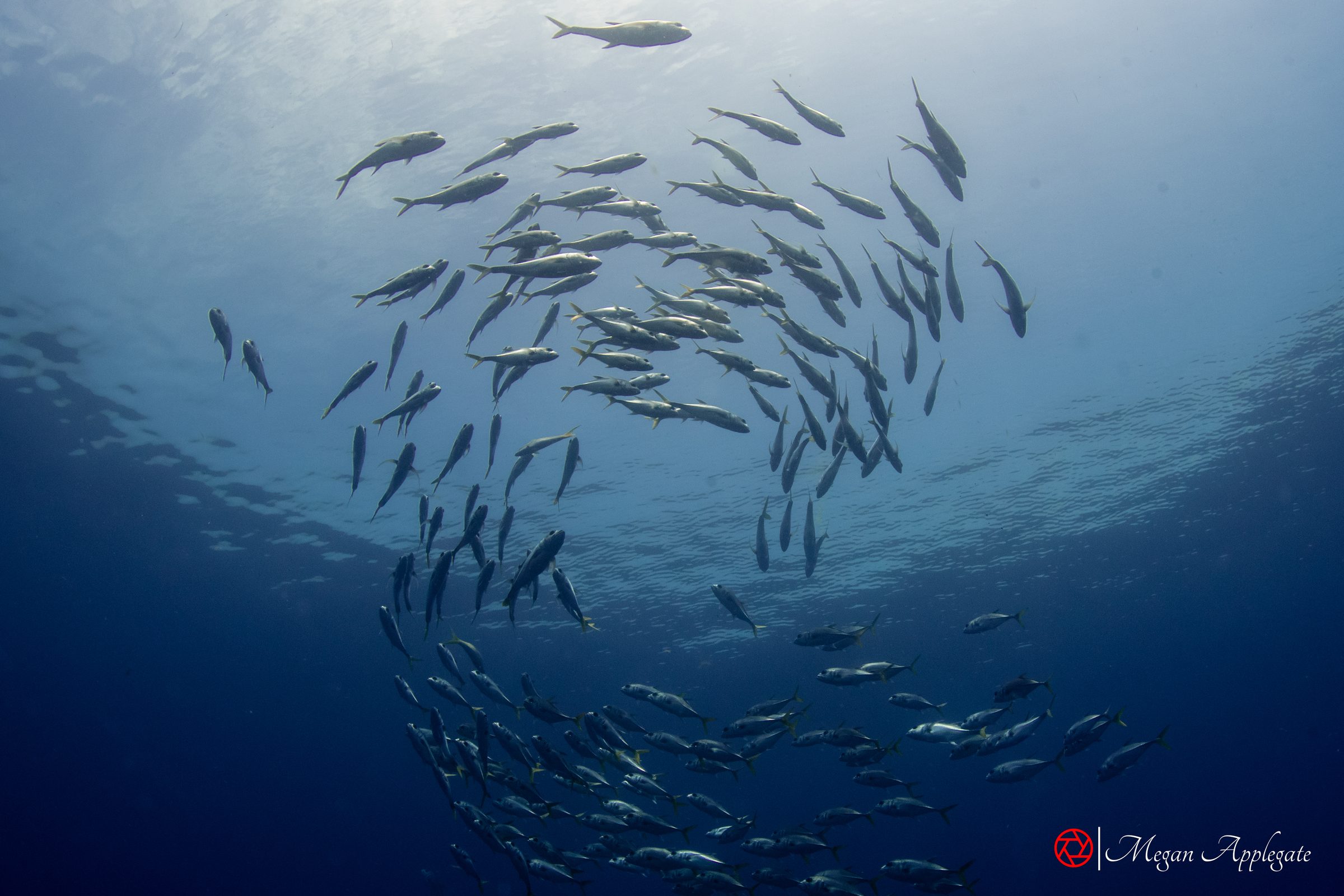
Background photo: Megan Applegate (a school of jacks, Roatán)

Six to know by sight

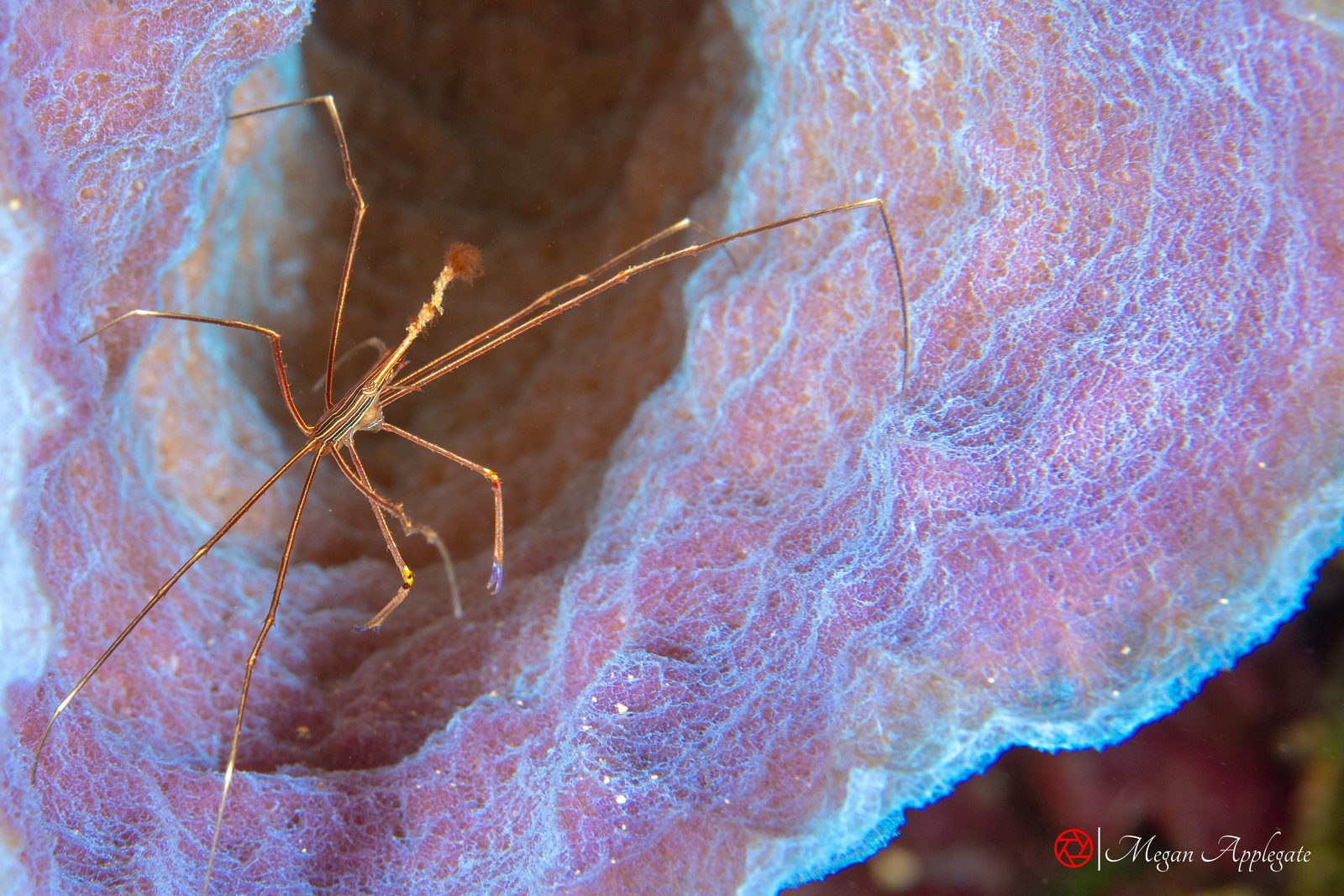
Six animals divers meet at Roatán, with the mark that gives each away. The species pages have the full notes and sources. The photos are Megan Applegate’s, taken at Roatán.

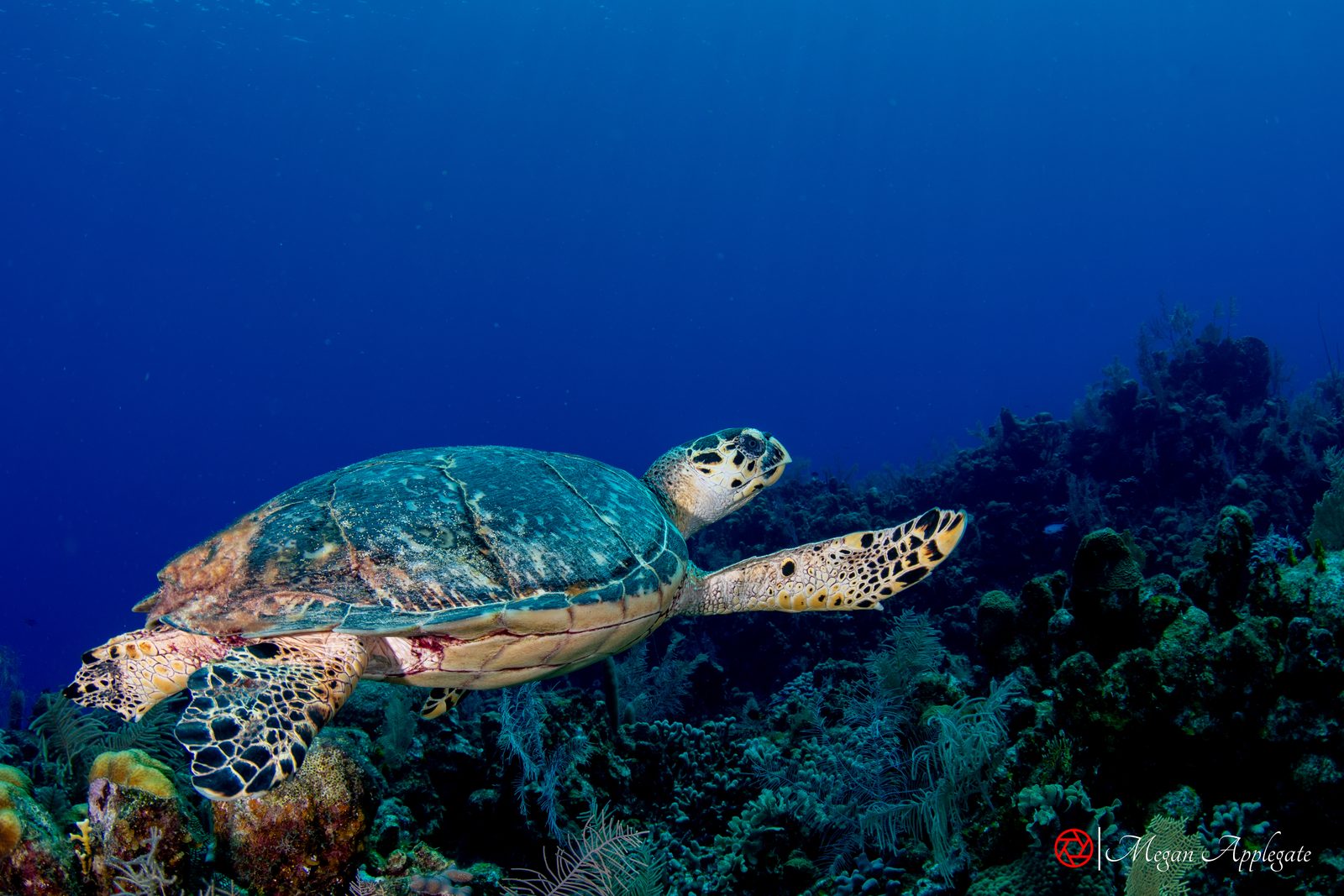
Hawksbill turtle (Eretmochelys imbricata)
Plate I

Hawksbill turtle

Eretmochelys imbricata
Look for
A pointed, beak-like head and overlapping shell plates with a saw-toothed back edge.
At Roatán
The turtle divers meet most in the marine park; give it room to feed.
Plate II

Caribbean reef shark

Carcharhinus perezi
Look for
Grey above, white below, a faint white flank band and a tall, sickle-shaped first dorsal fin.
At Roatán
Six or more at Cara a Cara, on the south side.
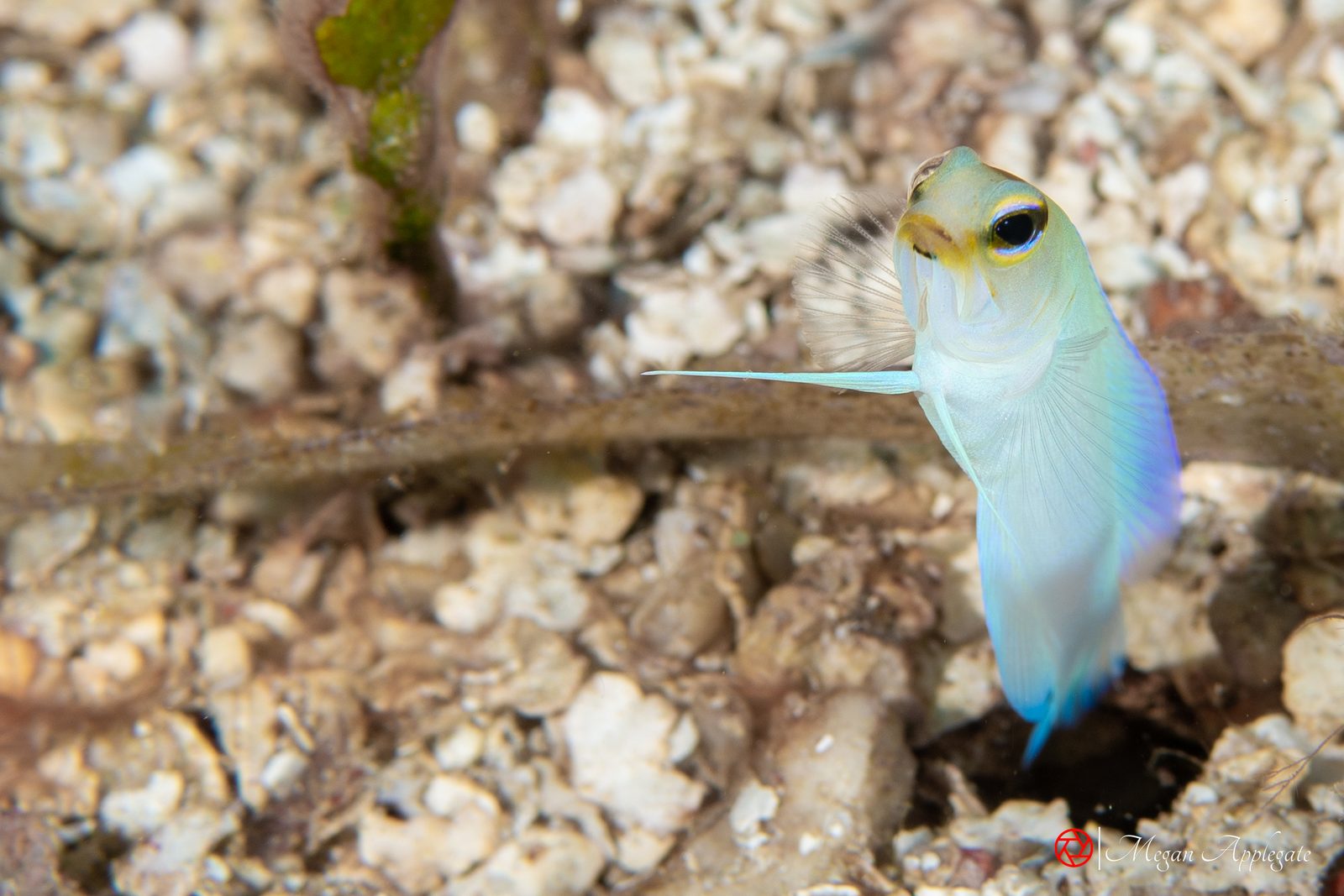
Yellowhead jawfish (Opistognathus aurifrons)
Plate III

Yellowhead jawfish

Opistognathus aurifrons
Look for
A yellow head and pale blue-grey body hovering over a burrow in the sand.
At Roatán
On the sand patches; males brood eggs in their mouths.
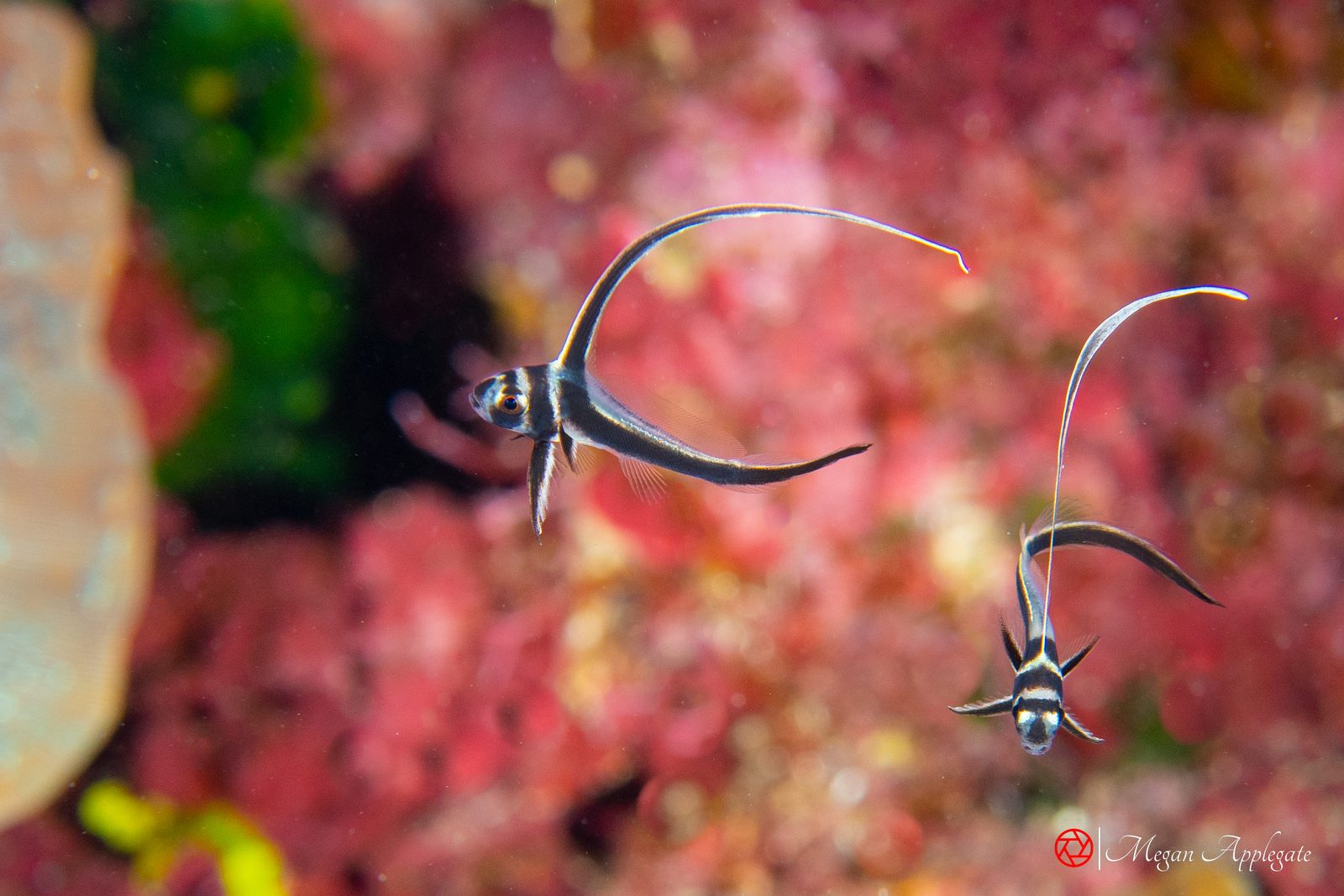
Spotted drum (Equetus punctatus)
Plate IV

Spotted drum

Equetus punctatus
Look for
White with dark bars and a very tall first dorsal fin.
At Roatán
Under ledges on the reef; photographed at Roatán in 2022.
Plate V

Whale shark

Rhincodon typus
Look for
The biggest fish: pale spots and stripes on a dark grey back and a huge mouth at the front.
At Roatán
Occasionally on the north shore; more often off Utila.
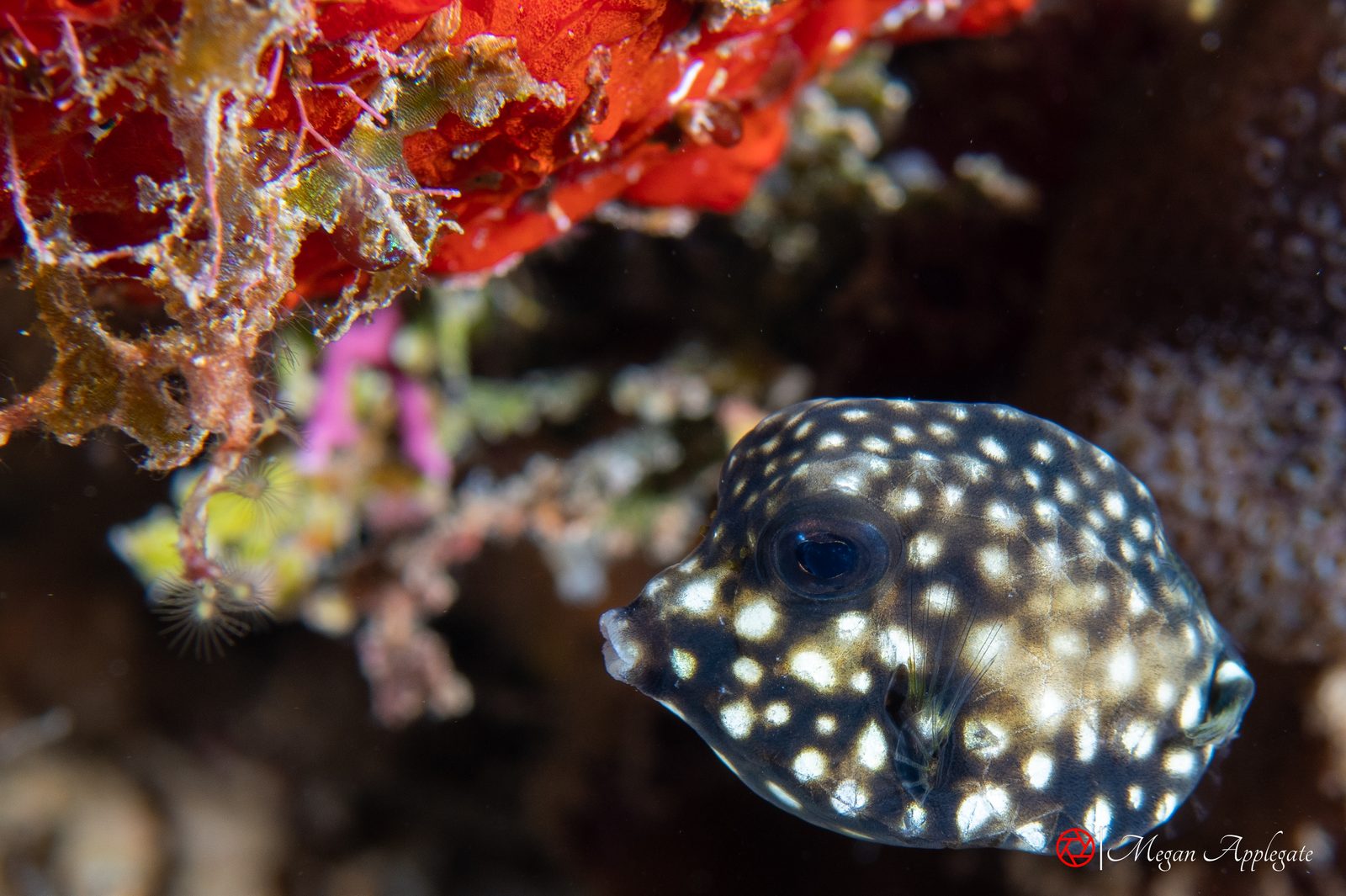
Smooth trunkfish (Lactophrys triqueter)
Plate VI

Smooth trunkfish

Lactophrys triqueter
Look for
A boxfish: dark with a white honeycomb in the middle; juveniles dark with yellow spots.
At Roatán
Blowing at the sand for prey; divers call the babies “peas”.

Open the Macro page →

What divers report, site by site

From PADI, Scuba Diving, Divernet and other accounts. Depths and details differ between sources, and individual dives vary.

El Aguila

A cargo ship about 76 m (250 ft) long, sunk as an artificial reef in 1997 and broken into three by Hurricane Mitch in 1998; it rests at about 33 m (110 ft), with groupers, barracuda, moray eels and passing eagle rays.

Source: PADI 2023; Scuba Diving 2018
The Odyssey

Roatán’s largest wreck: a freighter about 100 m long sunk for divers in 2002, sitting at about 31–33 m, with good sponge cover and large predators; for experienced divers.

Source: Divernet 2023; Divernet 2023
Mr. Bud

A 24 m cargo boat lying in about 20 m with its bridge at 15 m: shrimp on the hull’s anemones, sergeant major egg nests, silversides in the wheelhouse and jawfish on the sand around it.

Source: Divernet 2023; Scuba Diving 2018
Mary’s Place

The island’s signature site, on the south side: cracks 1–3 m (3–10 ft) wide split in the reef, with black coral, sponges, swim-throughs and sometimes thousands of silversides.

Source: Divernet 2023; Divernet 2023; Scuba Diving 2018
West End Wall

Coral- and sponge-covered walls, with sea turtles, tarpon, horse-eye jacks and creole wrasse; drift dives at the island’s tip draw in barracuda, jacks and groupers.

Source: Scuba Diving 2018; PADI 2019
Hole in the Wall

Holes and swim-throughs in the rock; the main tube drops to about 39 m (130 ft) and is for deep divers only, but the shallower canyons suit everyone.

Source: PADI 2023
Cara a Cara

The south-side shark dive, on sand at about 21 m (70 ft): usually six or more Caribbean reef sharks, sometimes a scalloped hammerhead.

Source: PADI 2023; Scuba Diving 2018
Calvin’s Crack

A swim-through that starts at about 6 m (20 ft) and drops to about 27 m (90 ft) down the wall; silversides school inside and toadfish turn up now and then.

Source: Scuba Diving 2018
Mandy’s Eel Garden

Off the north-west end: sand patches with garden eels, plus creole wrasse, scorpionfish and yellow tilefish.

Source: Scuba Diving 2018
Half Moon Bay

Reached from shore at West End: juvenile fish, lobsters, eels and sea turtles in the shallows, and a batfish at about 20 m.

Source: Scuba Diving 2018; Divernet 2023
Prince Albert

A 43 m (140 ft) tanker in the channel just past the CoCo View Resort house reef, reached from shore.

Source: Scuba Diving 2018
Cordelia Banks

Four coral banks south-west of the island, with 63,440 m² of staghorn coral; protected since 2012.

Source: Coral Reef Alliance 2021

Depth

The big wrecks lie at about 30–33 m and the tube at Hole in the Wall goes to about 39 m: PADI lists El Aguila and the tube for Advanced Open Water divers or deep divers only (PADI 2019; PADI 2023). Dive within your training and plan your gas.

Photos

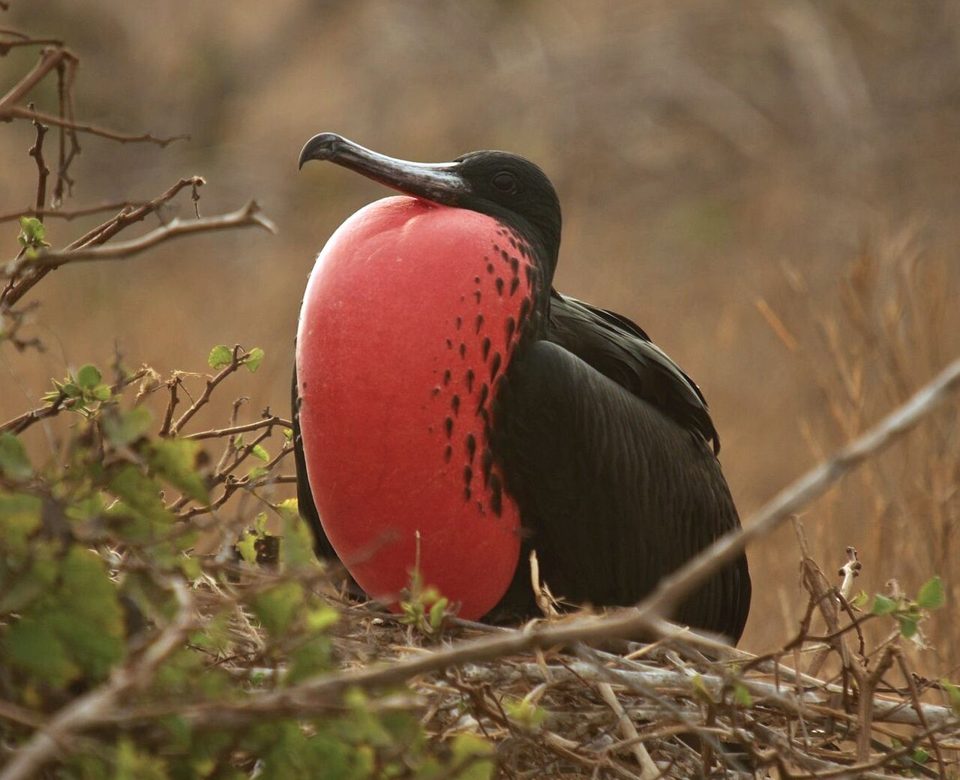
Photos marked “Megan Applegate” were taken at Roatán on her trips in 2021, 2022 and 2023, except the dolphin (Socorro), which is labelled with the place. The frigatebird is a credited reference photo, and species without a photo show “Photo to come” or link to photos online.
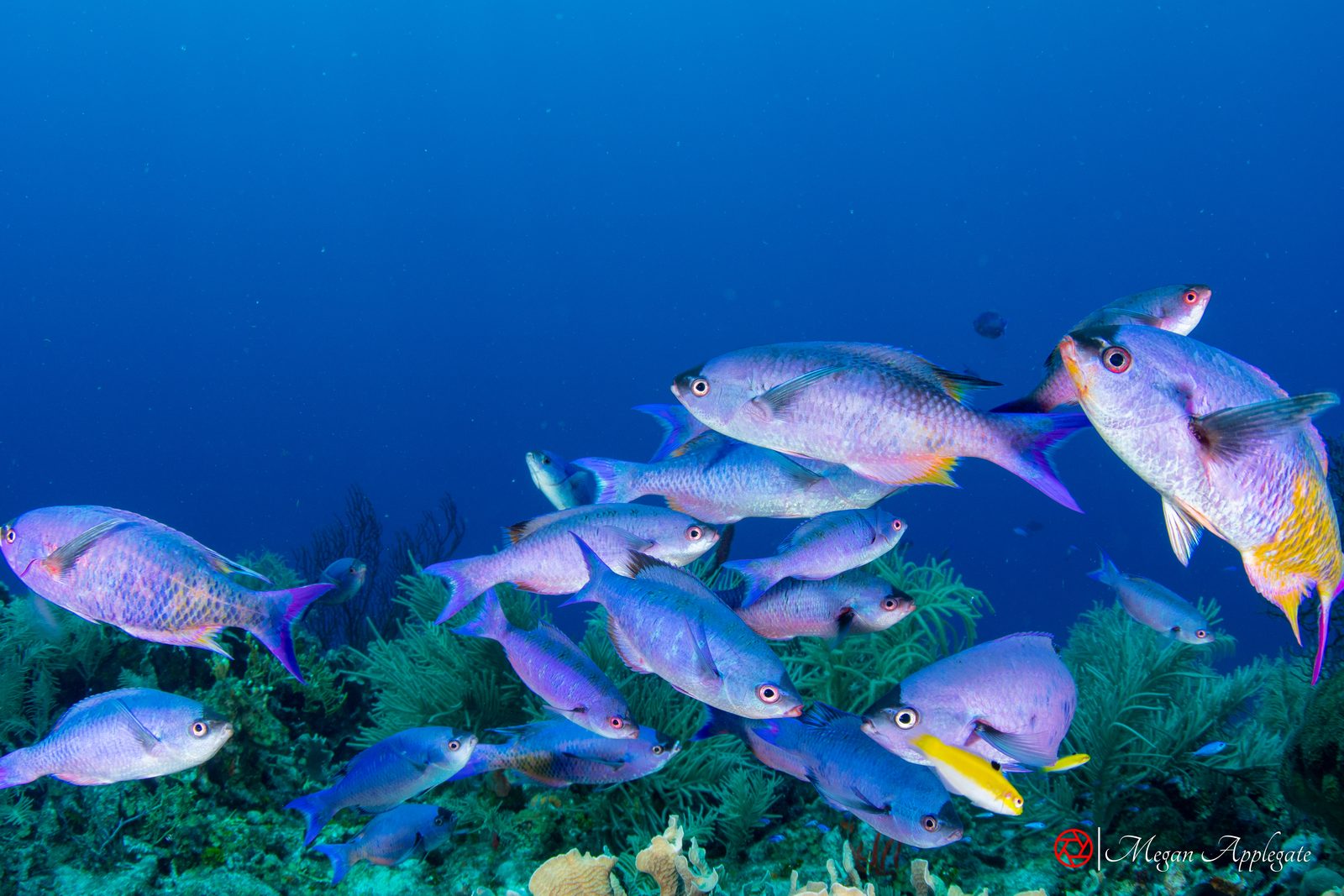
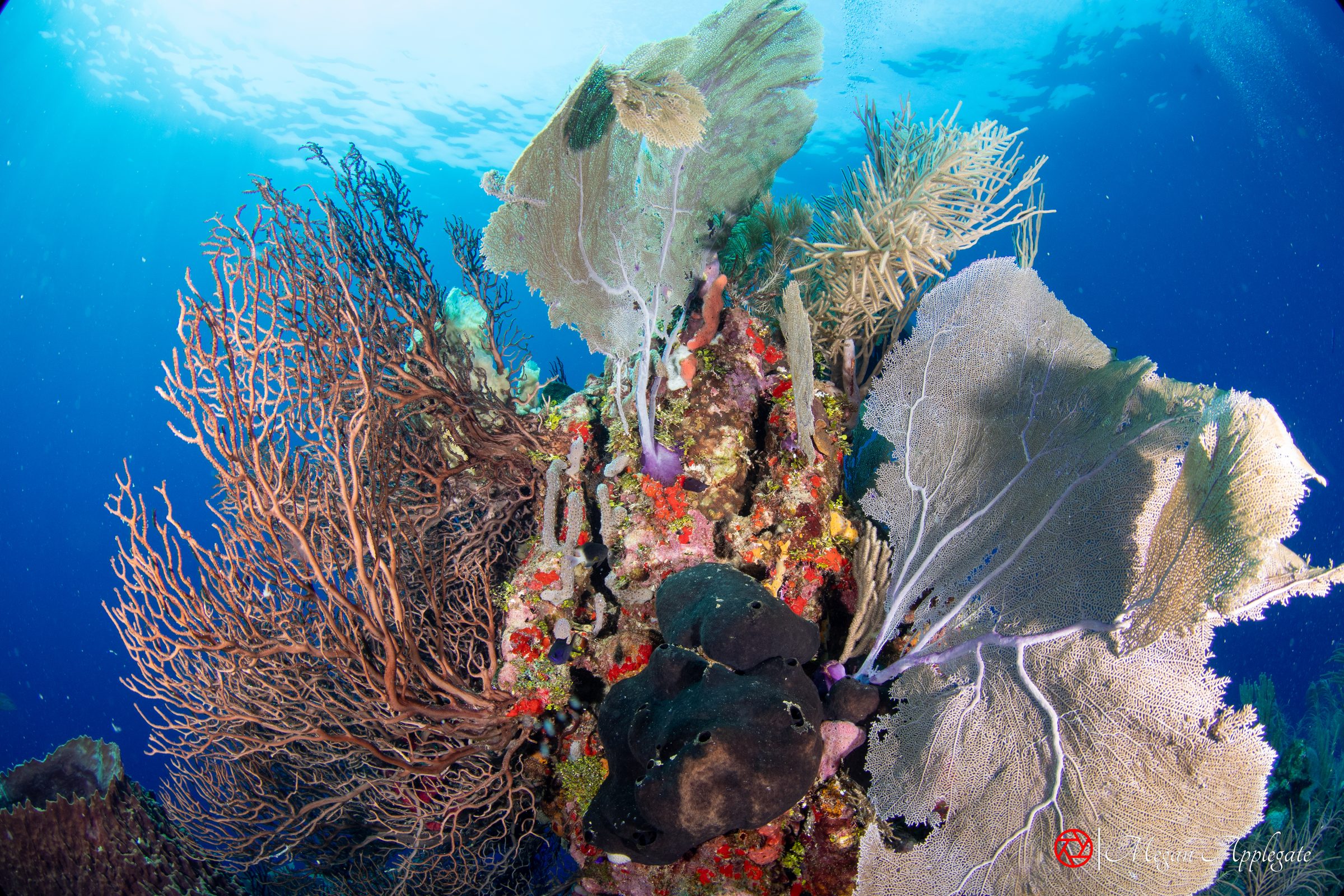
Background photo: Megan Applegate (sea fans, Roatán)

More information

Every link opens in a new tab. Each species page cites its own sources as well.