Sharks, rays & big fish

Roatán sharks & big fish

Caribbean reef sharks at Cara a Cara, whale sharks in season, eagle rays on the wrecks, tarpon on the West End Wall, and dolphins off the north shore.

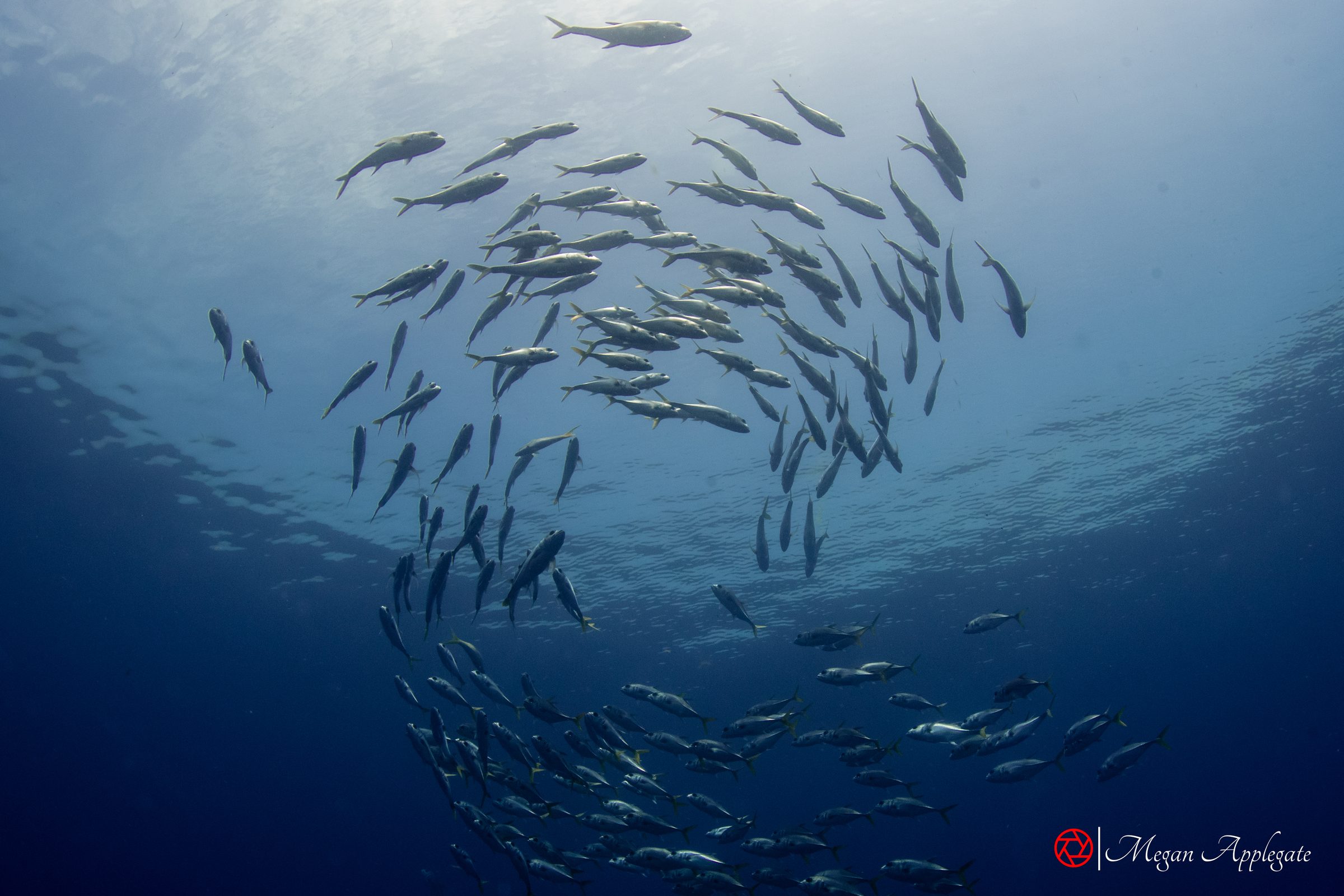
Background photo: Megan Applegate (Roatán)

Sharks

Sharks

Cara a Cara and the deep walls

Honduras declared its whole exclusive economic zone, about 240,000 km² on the Caribbean and Pacific coasts, a permanent shark sanctuary in June 2011, building on a 2010 moratorium on shark fishing (Pew 2011). Roatán sits near the Cayman Trench, whose walls drop hundreds to thousands of feet; a tourist submarine goes down to 2,000 ft (about 600 m), where sixgill sharks have been seen (Scuba Diving 2018).

Caribbean reef shark Carcharhinus perezi

Up to 3 m, most adults 2–2.5 m. Endangered on the IUCN Red List. It is sometimes found resting still on the bottom or in caves (Wikipedia).

Key marks: Dark grey or grey-brown above and white below, with a faint white band on the flank; a tall, sickle-shaped first dorsal fin with a low ridge between it and the second; dusky undersides to the paired fins, the anal fin and the lower tail lobe (Wikipedia).

At Roatán: The shark dive at Cara a Cara, on the south side of the island, usually brings six or more reef sharks (Scuba Diving 2018), on a sandy bottom at 21 m (70 ft) (PADI 2023); another account says 15 to 20 at a time (PADI 2019).
Whale shark Rhincodon typus

The largest living fish, up to 18.8 m reliably recorded; a filter feeder on plankton, krill and small fish. Endangered on the IUCN Red List (Wikipedia).

Key marks: Dark grey with a white belly and pale spots and stripes, a pattern unique to each shark; a broad, flat head with a very wide mouth at the front, and three ridges along each side (Wikipedia).

At Roatán: Seen in the Bay Islands mostly from February to April and from August to October, though they can turn up at any time (Scuba Diving 2018). Off Roatán they are only an occasional sight, on the north shore; neighbouring Utila is the more reliable place, peaking in March–May and August–October (PADI 2023).

Nurse shark Ginglymostoma cirratum

Vulnerable on the IUCN Red List (FishBase).

Key marks: Barbels between the nostrils, two broadly rounded dorsal fins set far back, yellow-brown to grey-brown (FishBase).

At Roatán: Among the sharks named for Roatán, with reef sharks and hammerheads (PADI 2023).

Scalloped hammerhead Sphyrna lewini

Key marks: The head is flattened into a hammer with a scalloped front edge: a notch in the middle and a shallow scallop either side of it. Eyes at the very tips. Tall, strongly curved first dorsal fin and a small second dorsal. Bronze-grey above, pale below. In open water you usually get the silhouette from below before any colour, so go by the shape of the head.

At Roatán: A scalloped hammerhead may join the reef sharks at Cara a Cara (Scuba Diving 2018).

On a shark dive

Follow the guide’s briefing, stay low and still on the sand, keep your hands to yourself and let the sharks come to you.

Rays and big fish

Eagle rays, tarpon and barracuda

On the wrecks and walls

Great barracuda Sphyraena barracuda

Key marks: Long and silvery, with slanting dark bars on the upper half, scattered blotches on the side and a black tail with white tips (FishBase).

At Roatán: On the El Aguila wreck (PADI 2023) and in the drift dives off the West End, where opposing currents draw in bigger fish (PADI 2019).

Mammals

Dolphins

Off the north shore

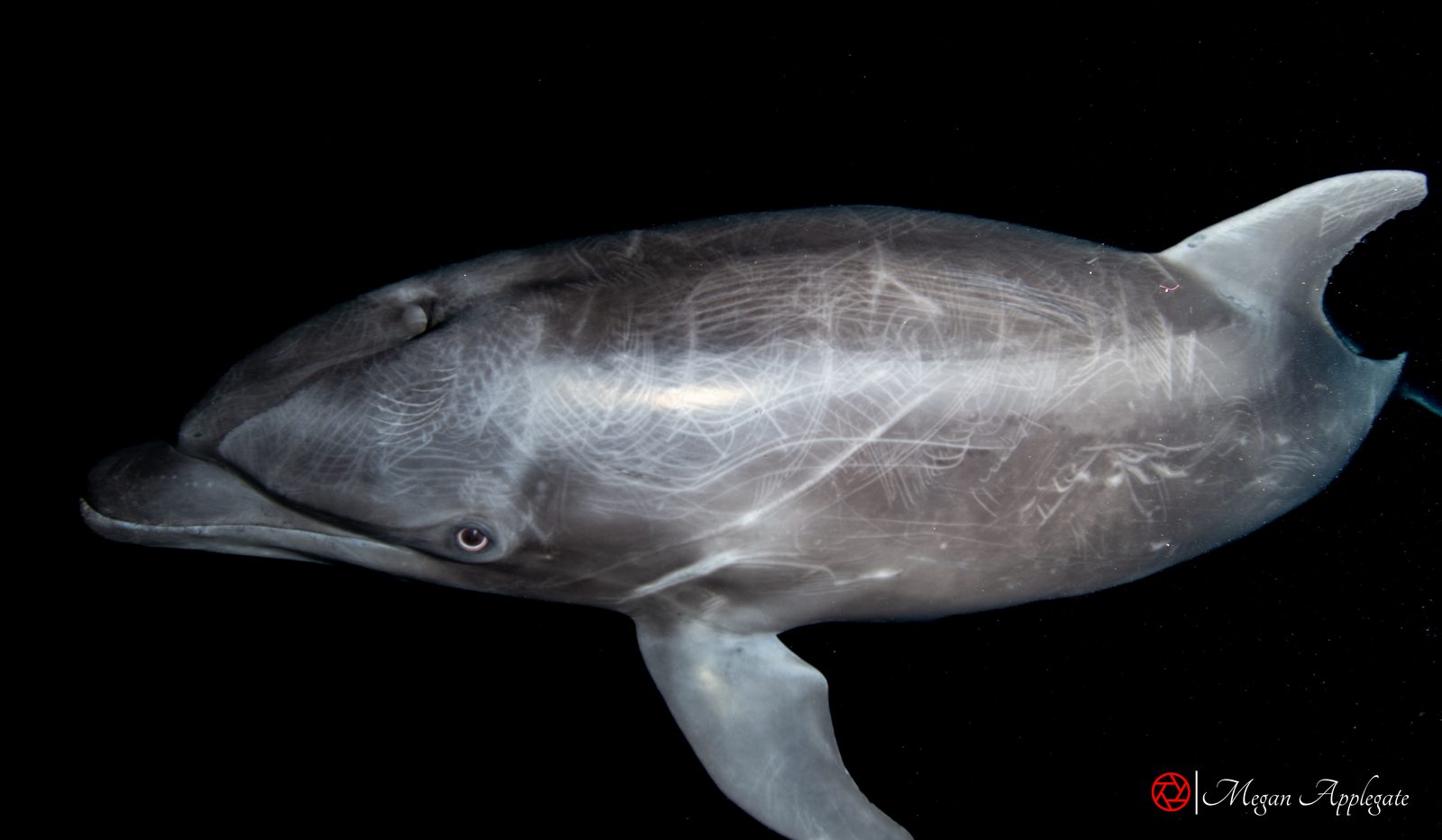
Common bottlenose dolphin (Tursiops truncatus)
Common bottlenose dolphin. Photo © Megan Applegate, Socorro, Mexico, December 2023 (not taken at Roatán).

Common bottlenose dolphin Tursiops truncatus

At Roatán: Anthony’s Key Resort keeps a resident group of Atlantic bottlenose dolphins and runs snorkel and dive encounters with them (Scuba Diving 2018). Wild dolphins occasionally pass along the north shore (PADI 2023).

Credits

Photo credits

Where the photos come from

The dolphin is Megan Applegate’s photo of the same species at Socorro, Mexico, not taken at Roatán. The background, a school of jacks, was taken by her at Roatán. The other animals link to photos online.

Photo credits.
SpeciesPhotographerLicenceSource
Common bottlenose dolphinMegan Applegate© Megan Applegate, all rights reservedPhotographer's own photo, taken at Socorro, Mexico, December 2023