Turtles

Roatán turtles

Hawksbills feeding on the sponges of the walls, green turtles in the shallows, and what a 2014 study found about divers getting too close.

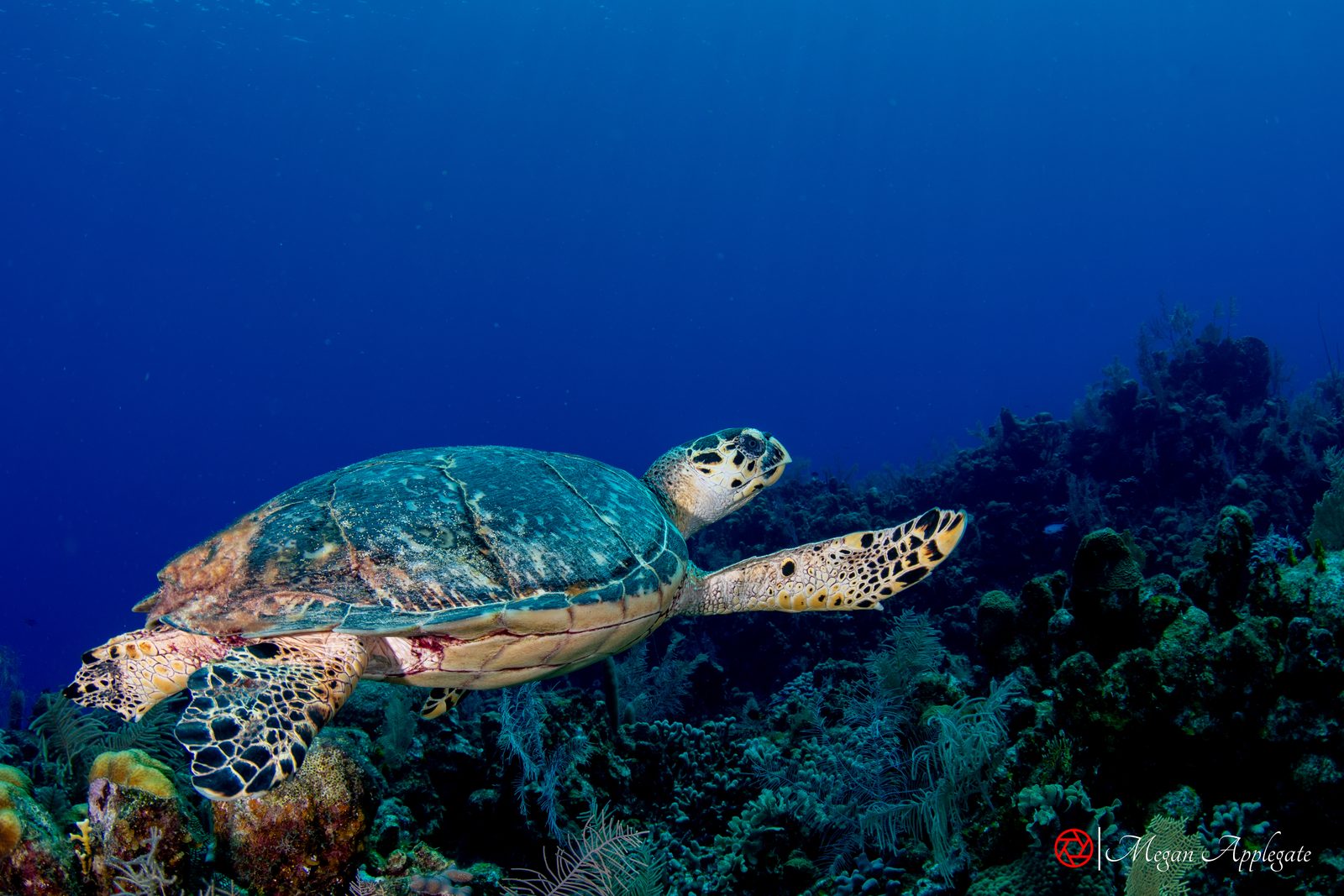
Hawksbill turtle (Eretmochelys imbricata)
Hawksbill turtle. Photo © Megan Applegate, Roatán, May–June 2023.

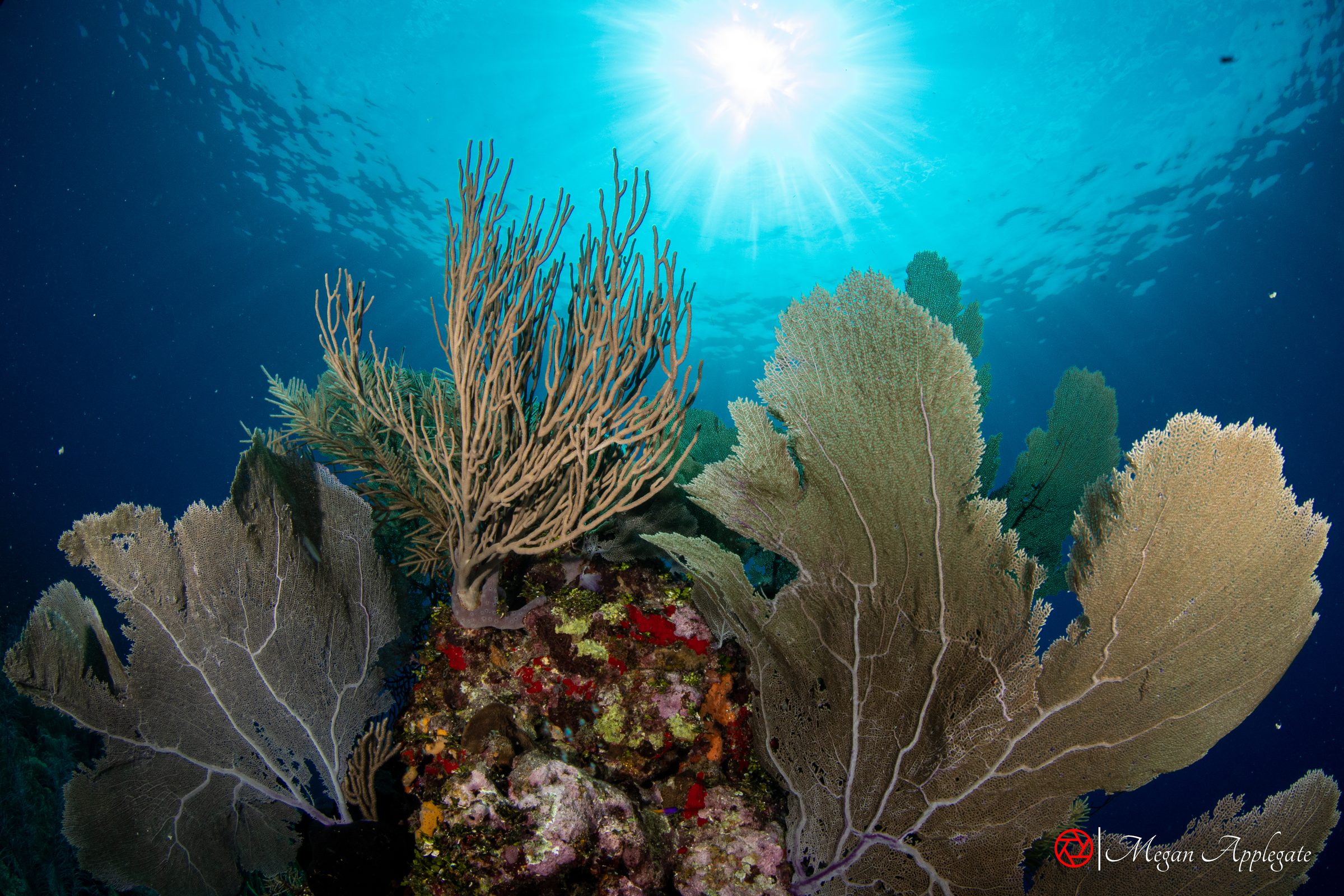
Background photo: Megan Applegate (Roatán)

The turtles

Hawksbill and green turtles

On the walls and in the shallows

Sea turtles are among the animals reported on Roatán’s reefs (PADI 2023), and snorkellers see them at Half Moon Bay (Scuba Diving 2018). The hawksbill is the one most often met on dives (Hayes et al. 2016).

Hawksbill turtle (Eretmochelys imbricata)
Hawksbill turtle. Photo © Megan Applegate, Roatán, May–June 2023.

Hawksbill turtle Eretmochelys imbricata

Adults are typically about 1 m long and weigh about 80 kg, and sponges make up 70–95% of their diet. Critically Endangered on the IUCN Red List (Wikipedia).

Key marks: A pointed, beak-like head and thick, overlapping shell plates that give the back edge of the shell a saw-toothed look (Wikipedia).

At Roatán: The turtle divers meet most in Roatán Marine Park: 14 dive operators logged 666 hawksbill sightings on 701 dives at 46 sites in June–August 2014, and researchers watched 61 juveniles in the water (Hayes et al. 2016). Sea turtles are common on the West End Wall (Scuba Diving 2018), and one seamount, Hawksbill Bank, is named after its resident hawksbill (Divernet 2023).

Telling them apart

Which turtle is it?

Look at the shell and the head

Table — Hawksbill and green turtles compared, from their Wikipedia articles, with the 2025 IUCN status of the green turtle from the Oceanic Society.
HawksbillGreen
ShellOverlapping plates; saw-toothed back edgePlates not overlapping; smooth edge
HeadPointed, beak-likeShort and rounded
SizeAbout 1 mAbout 1.5 m
Main foodSpongesSeagrass
IUCN Red ListCritically EndangeredLeast Concern (since 2025)

Divers and turtles

What divers do to a feeding hawksbill

A study in Roatán Marine Park, 2014

In 2014 researchers watched juvenile hawksbills in Roatán Marine Park, first from about 35 m away and then as divers came within about 12 m. With divers close, the turtles spent less time eating, less time investigating the reef and less time breathing at the surface; swimming did not change. How often turtles were seen did not depend on how many divers were in the water (Hayes et al. 2016).

With a turtle

Keep your distance, stay level with or below the turtle rather than above it, never block its way to the surface, and don’t touch it.

Credits

Photo credits

Where the photos come from

The hawksbill and the background were photographed by Megan Applegate at Roatán; the green turtle links to photos online.

Photo credits.
SpeciesPhotographerLicenceSource
Hawksbill turtleMegan Applegate© Megan Applegate, all rights reservedPhotographer's own photo, taken at Roatán, May–June 2023