Birds

Southern California birds

Brown pelicans back from the brink on Anacapa, cormorants and gulls on the rocks, murrelets on the water, shearwaters from New Zealand, and a jay that lives only on Santa Cruz Island.

Background photo: Megan Applegate (Socorro, Mexico, not Southern California)

Seabirds

From the dive boat

Pelicans, cormorants, gulls, murrelets and shearwaters

The Channel Islands sanctuary lists brown pelicans nesting from January, Scripps’s murrelets from March to July, western gulls from May to July, least terns from May to August, shearwaters from May to October, storm-petrels from mid-May to mid-October, and red-necked phalaropes passing in spring and autumn (NOAA Channel Islands).

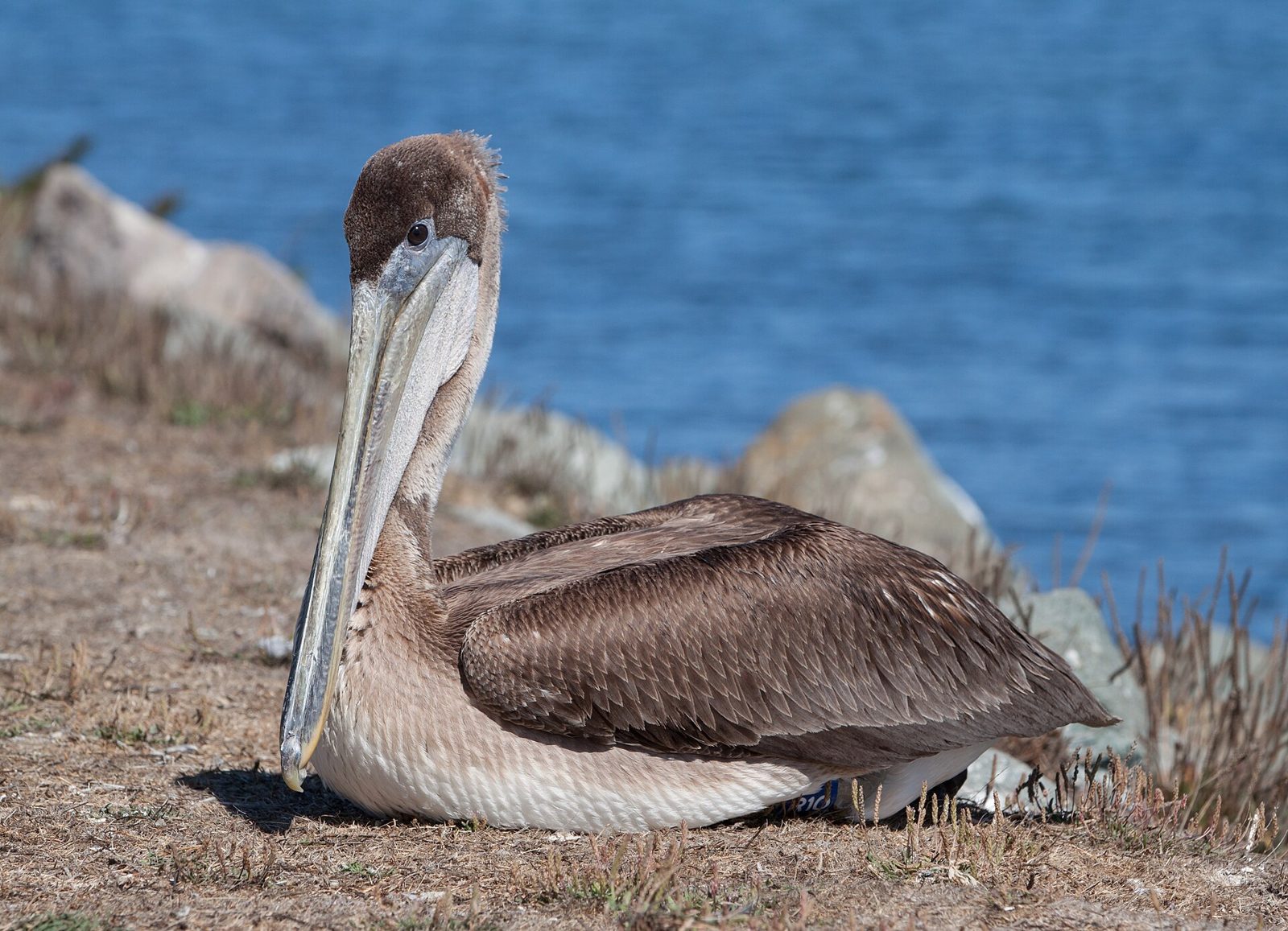
Brown pelican (Pelecanus occidentalis)
Brown pelican. Photo: Frank Schulenburg, CC BY-SA 3.0, via Wikimedia Commons.

Brown pelican Pelecanus occidentalis

Key marks: 1–1.5 m long with a 2–2.3 m wingspan. It dives bill-first from 18–21 m up, often going right under, to catch fish (Wikipedia).

In Southern California: West Anacapa and Santa Barbara Islands hold the only California brown pelican breeding colonies in the western US, about 4,600 and 1,500 nesting pairs a year. In 1970, DDT left just one chick from 552 nesting attempts on West Anacapa; the pelican was listed as endangered that year and taken off the list in 2009 (National Park Service). Nesting starts in January and February (NOAA Channel Islands).
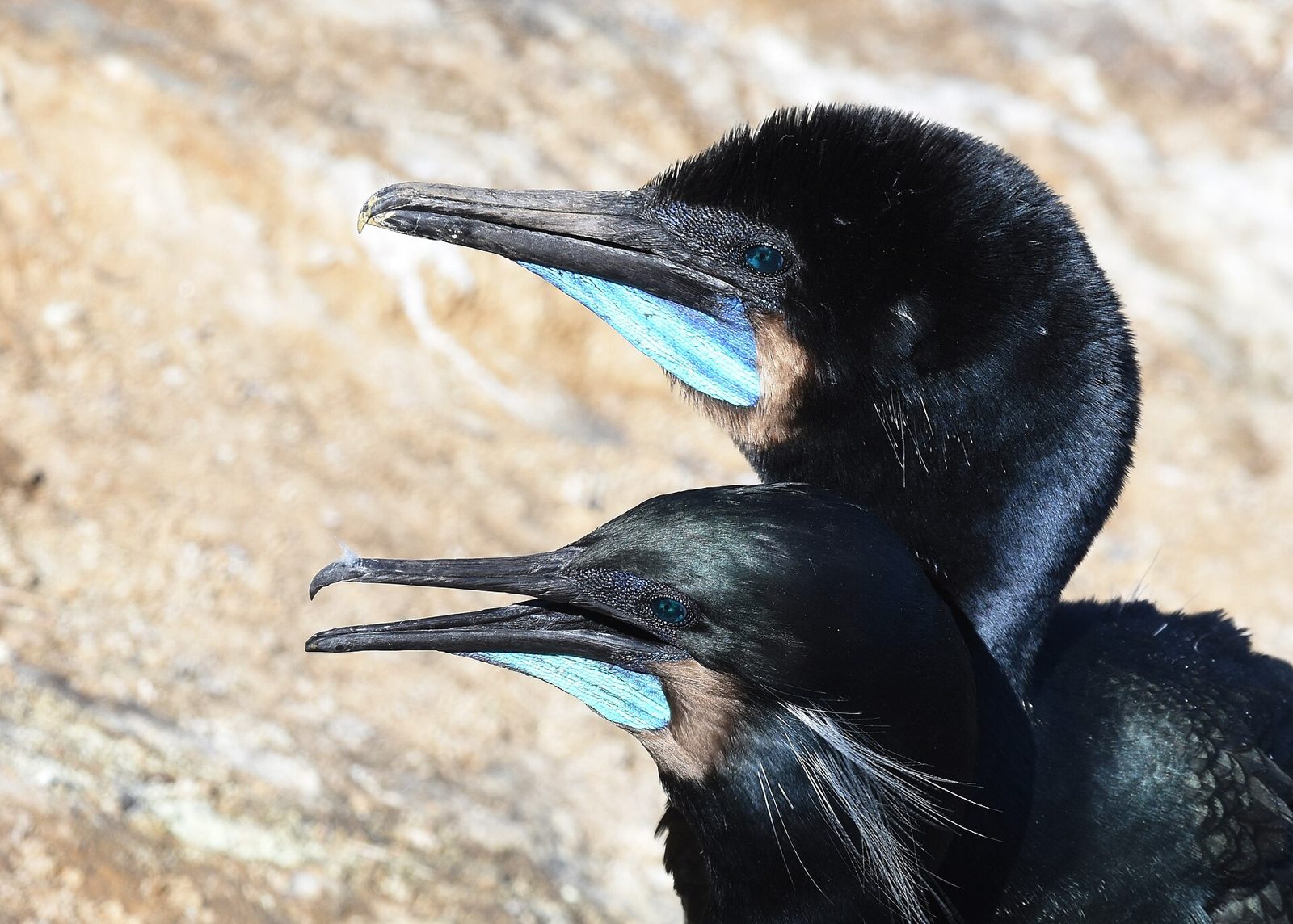
Brandt’s cormorant (Urile penicillatus)
Brandt’s cormorant. Photo: Andy Reago & Chrissy McClarren, CC BY 2.0, via Wikimedia Commons.

Brandt’s cormorant Urile penicillatus

Formerly Phalacrocorax penicillatus (Wikipedia).

Key marks: A dark cormorant about 86 cm long with a blue throat patch in the breeding season. It chases fish underwater, foraging below 36 m (Wikipedia).

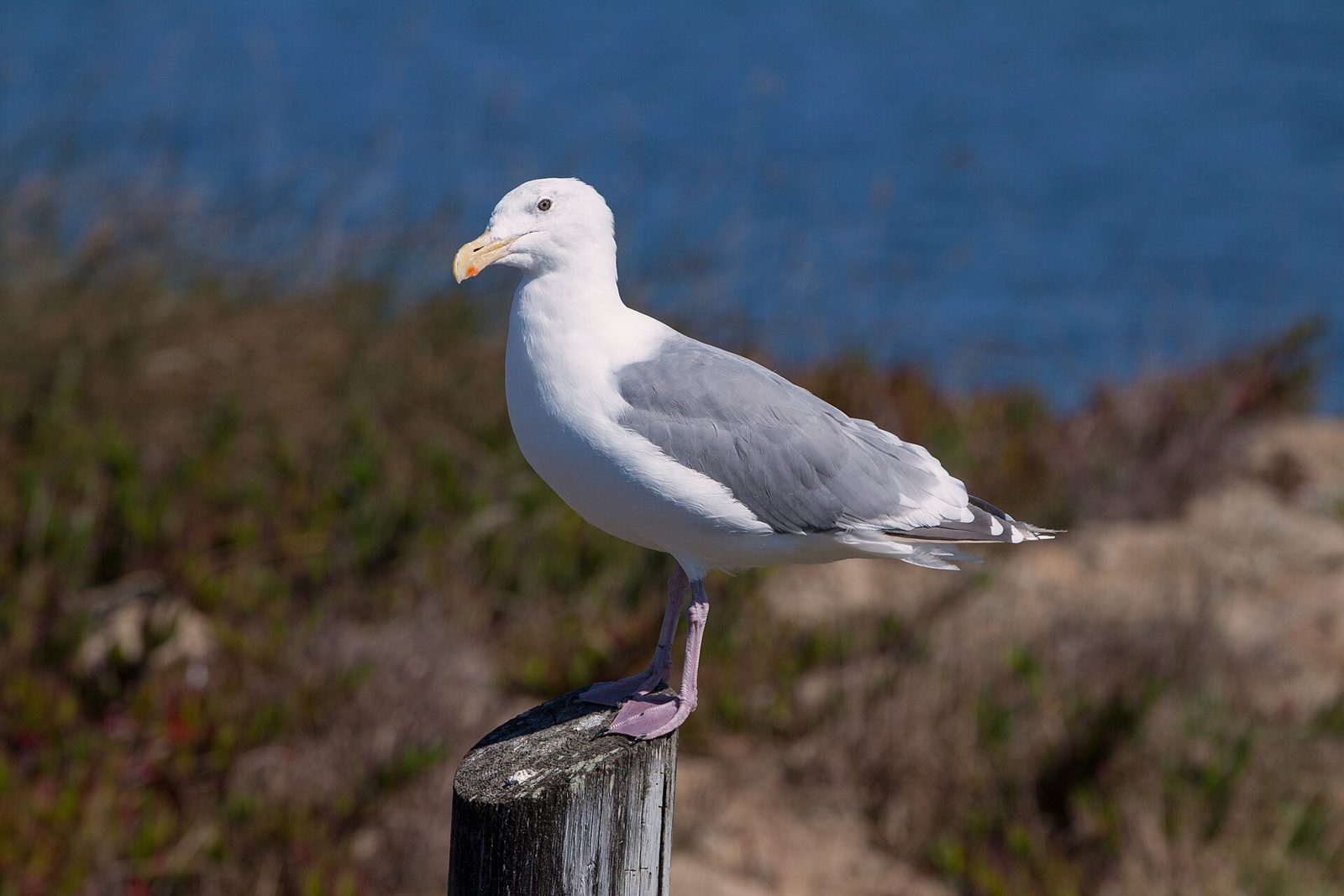
Western gull (Larus occidentalis)
Western gull. Photo: Frank Schulenburg, CC BY-SA 3.0, via Wikimedia Commons.

Western gull Larus occidentalis

Key marks: A large gull, 55–68 cm: white head and body, dark grey back, and a big yellow bill with a red spot near the tip (Wikipedia).

In Southern California: Nests on the Channel Islands from May to July (NOAA Channel Islands).

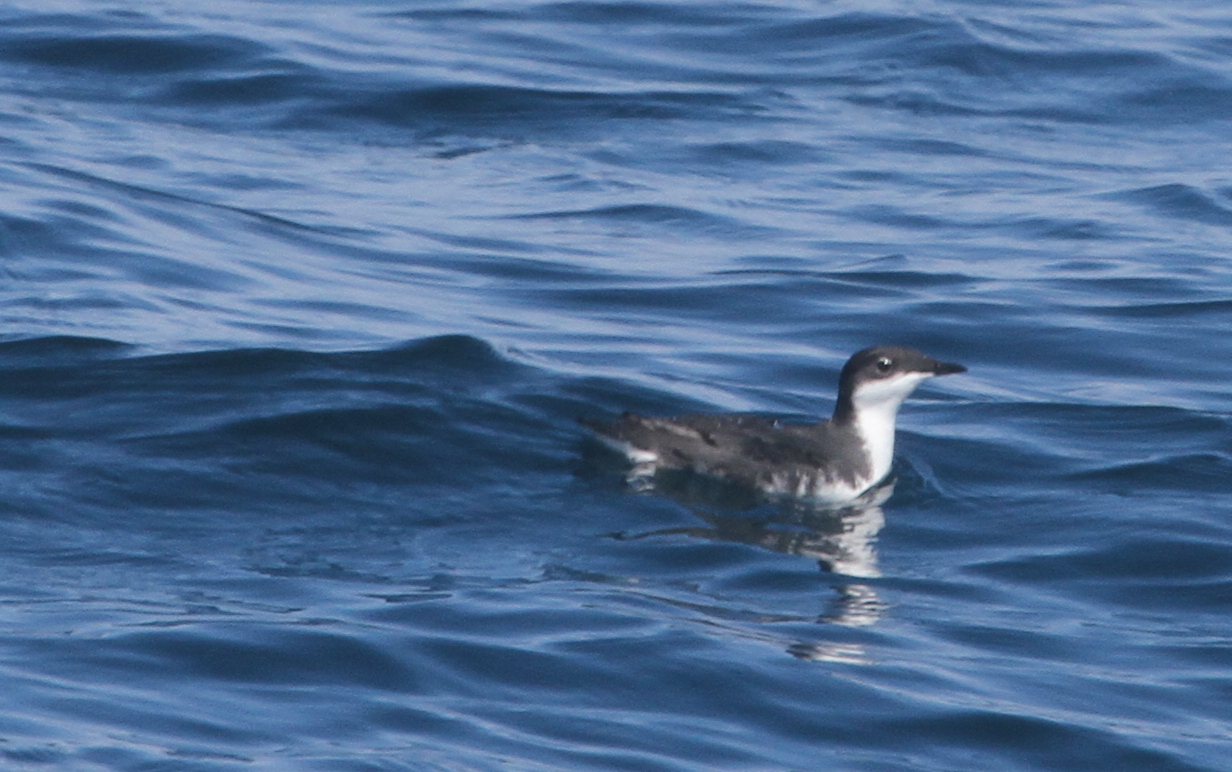
Scripps’s murrelet (Synthliboramphus scrippsi)
Scripps’s murrelet. Photo: Greg Schechter from San Francisco, USA, CC BY 2.0, via Wikimedia Commons.

Scripps’s murrelet Synthliboramphus scrippsi

Vulnerable on the IUCN Red List (Wikipedia).

Key marks: A small black-and-white seabird. The chicks leave the nest within two days of hatching (Wikipedia).

In Southern California: Santa Barbara Island holds one of the largest colonies; rats were removed from Anacapa in 2001 and 2002 to protect the birds (Wikipedia). They breed from March to July (NOAA Channel Islands).

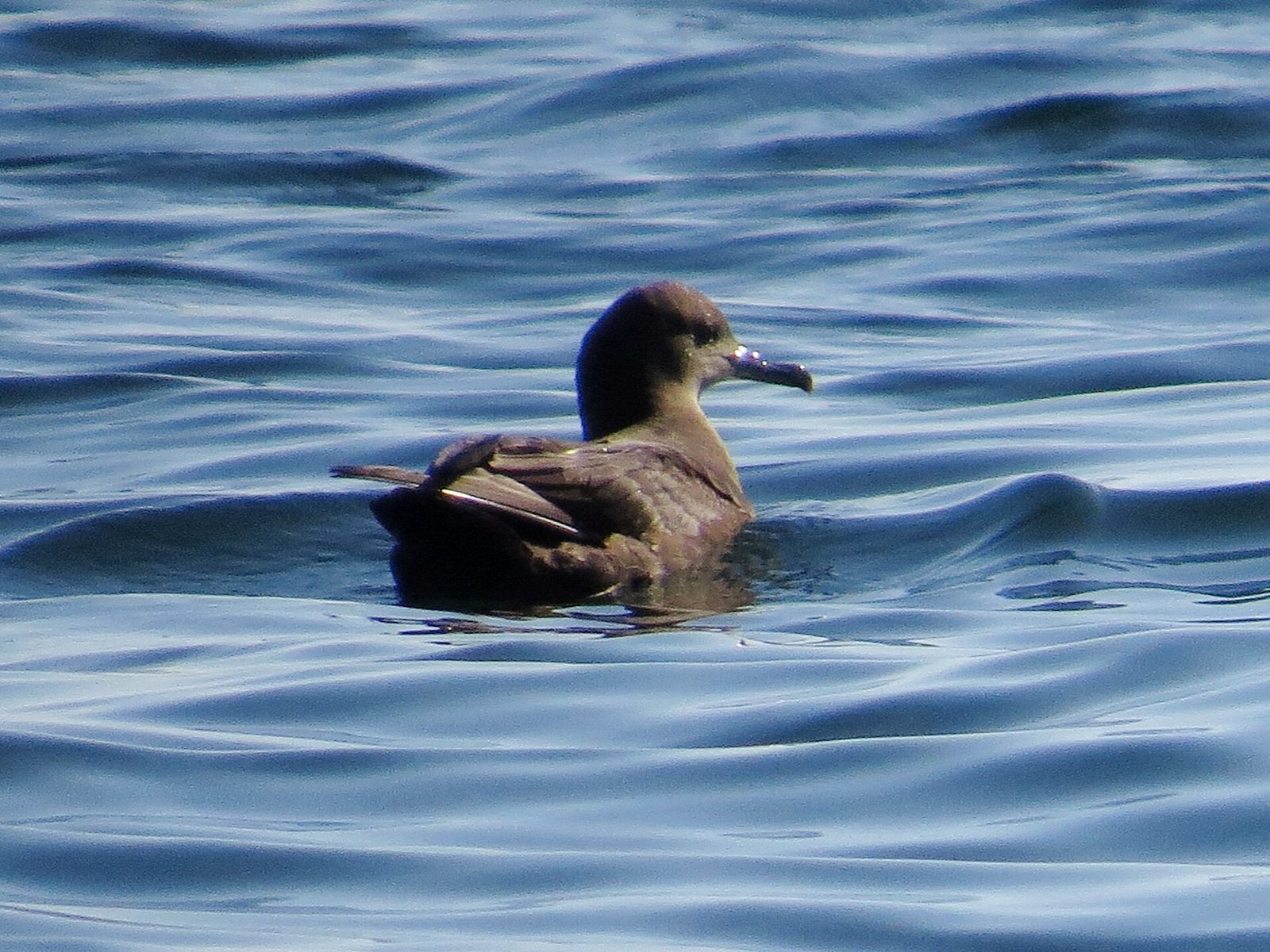
Sooty shearwater (Ardenna grisea)
Sooty shearwater. Photo: MPF, CC BY-SA 4.0, via Wikimedia Commons.

Sooty shearwater Ardenna grisea

Key marks: Dark chocolate-brown with a silvery stripe under the wing. It breeds on islands in the southern Pacific, including around New Zealand, migrates about 74,000 km a year, and dives as deep as 68 m (Wikipedia).

In Southern California: Sooty and pink-footed shearwaters are in the Channel Islands from May to October (NOAA Channel Islands).

Where to look

Watch for pelicans diving and cormorants on the rocks as the boat comes in to the islands, and for shearwaters and murrelets on the water on the way out.

Island birds

A jay found nowhere else

On Santa Cruz Island

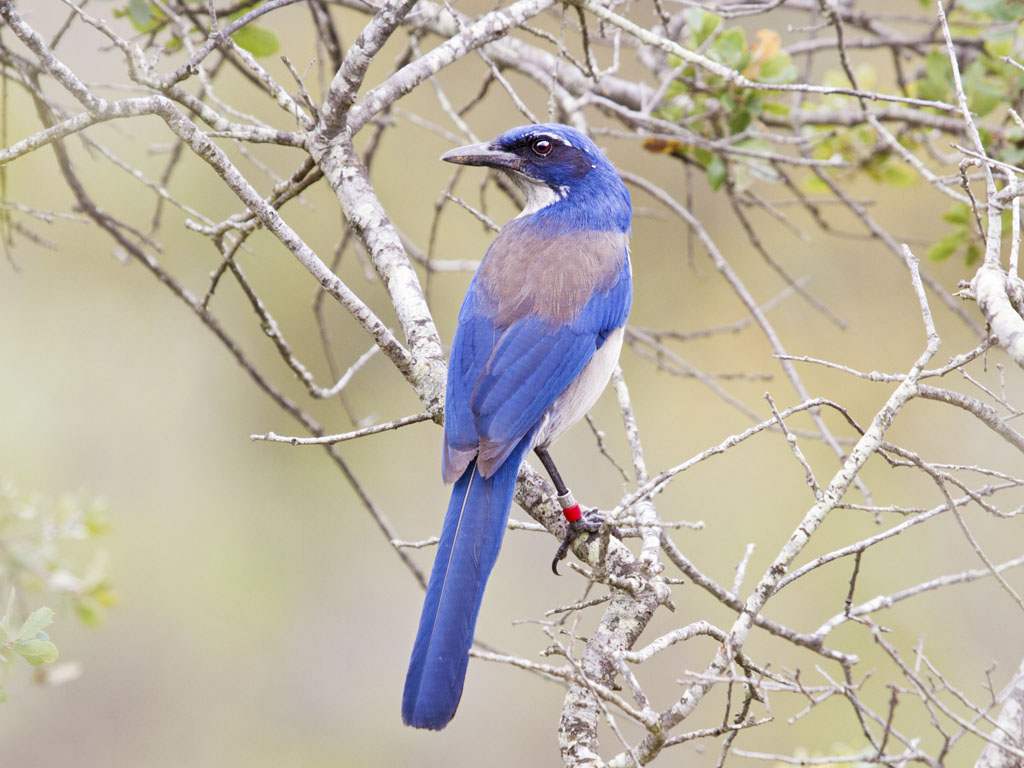
Island scrub-jay (Aphelocoma insularis)
Island scrub-jay. Photo: Bill Bouton from San Luis Obispo, CA, USA, CC BY-SA 2.0, via Wikimedia Commons.

Island scrub-jay Aphelocoma insularis

Vulnerable on the IUCN Red List (Wikipedia).

Key marks: Larger and brighter than the California scrub-jay, with a stouter bill (Wikipedia).

In Southern California: Lives only on Santa Cruz Island, the only island-endemic landbird among the more than 500 species that breed in the US and Canada; about 1,700–2,300 birds were counted in 2008 and 2009 (Wikipedia).

Credits

Photo credits

Where the photos come from

There are no photos from Southern California by Megan Applegate in this guide yet. Other photos are open-licence photos from Wikimedia Commons, credited in the table with their licence and a link to the original. Species without a photo link to photos on Wikimedia Commons.

Photo credits.
SpeciesPhotographerLicenceSource
Brown pelicanFrank SchulenburgCC BY-SA 3.0Wikimedia Commons
Brandt’s cormorantAndy Reago & Chrissy McClarrenCC BY 2.0Wikimedia Commons
Western gullFrank SchulenburgCC BY-SA 3.0Wikimedia Commons
Scripps’s murreletGreg Schechter from San Francisco, USACC BY 2.0Wikimedia Commons
Sooty shearwaterMPFCC BY-SA 4.0Wikimedia Commons
Island scrub-jayBill Bouton from San Luis Obispo, CA, USACC BY-SA 2.0Wikimedia Commons