Marine mammals

Southern California mammals

Sea lions that come to look at divers, harbor seals on the beaches, elephant seals on the outer islands, dolphins in big pods, and gray and blue whales offshore.

California sea lion (Zalophus californianus)
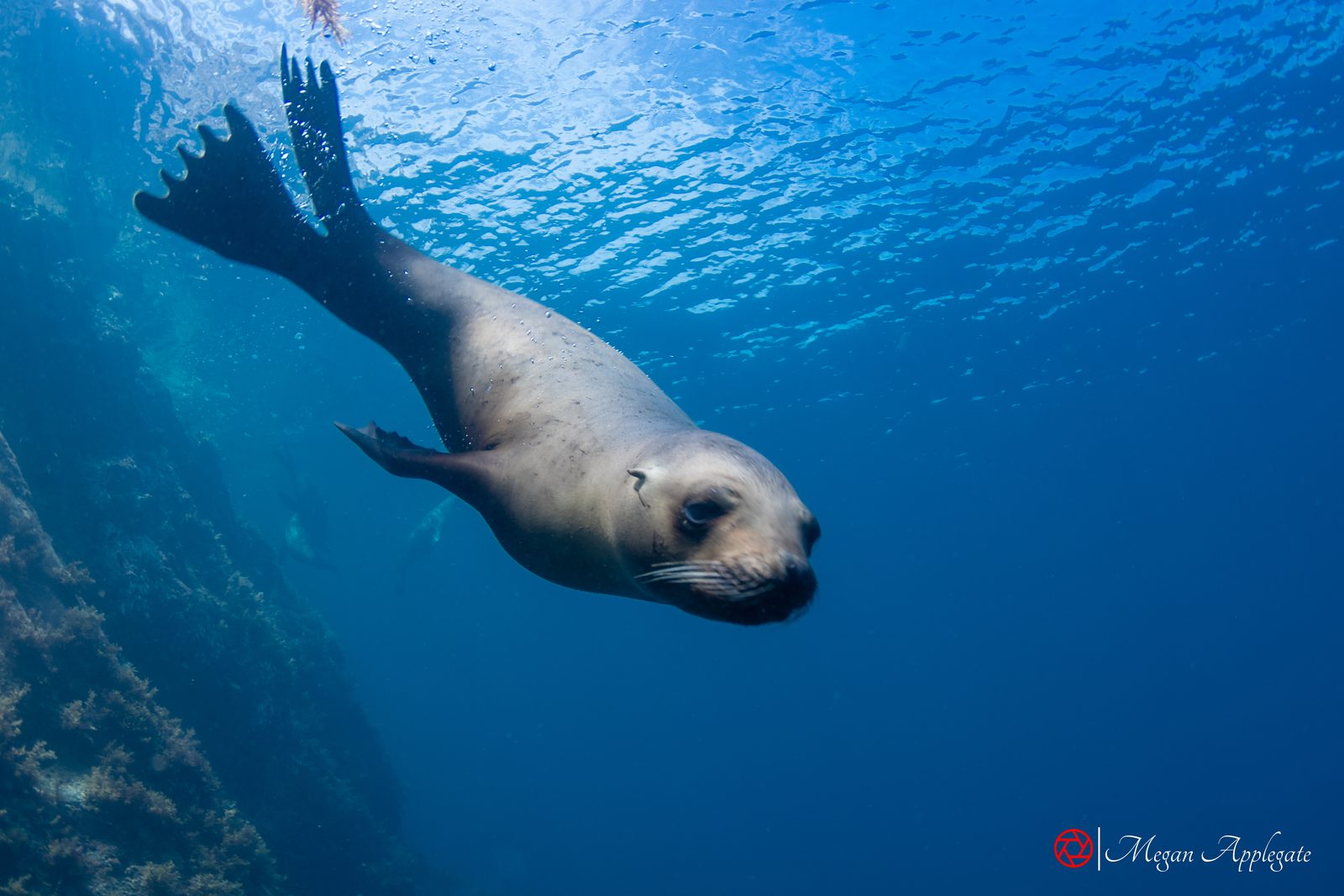
California sea lion. Photo © Megan Applegate, San Carlos, Mexico, July 2024 (not taken in Southern California).

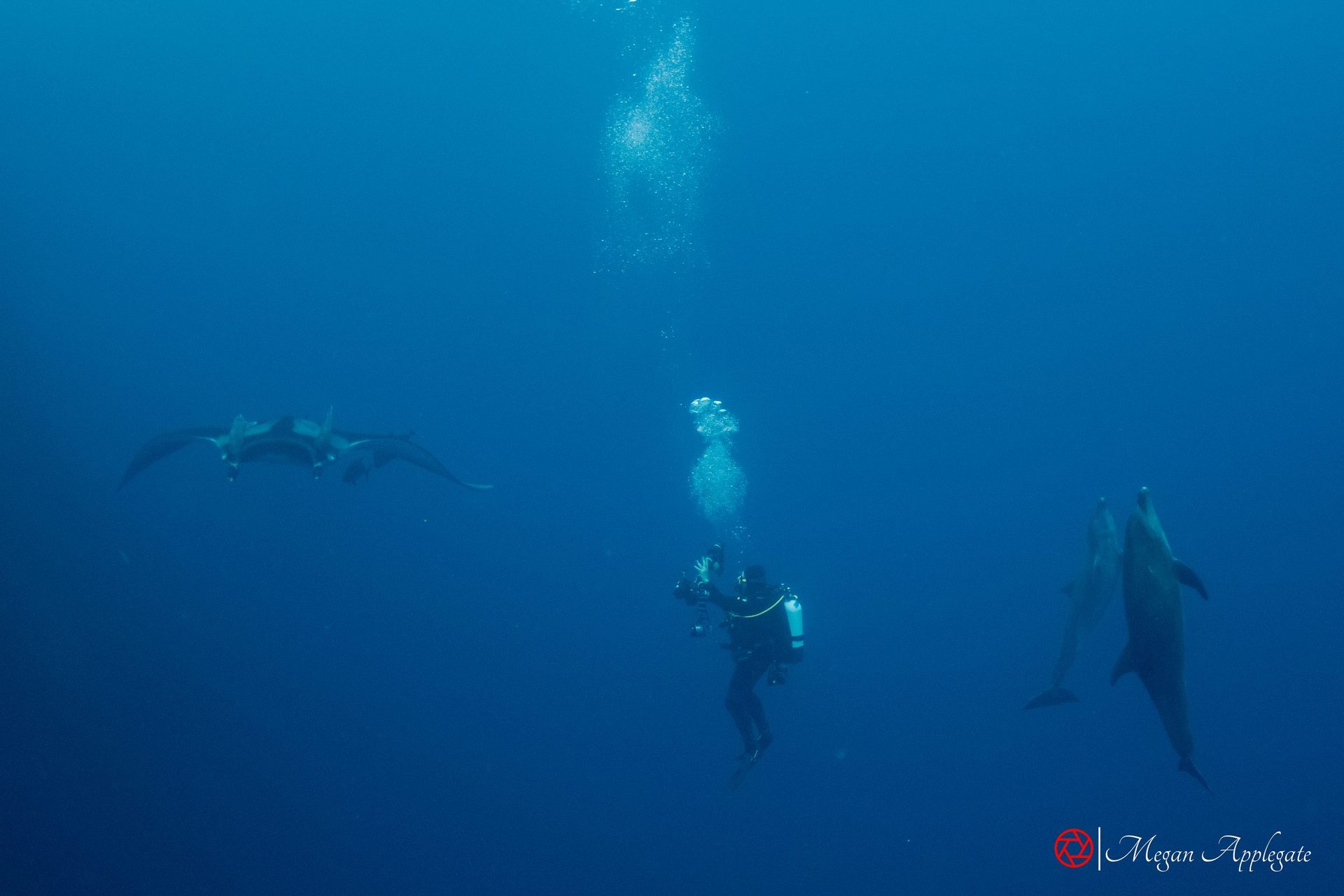
Background photo: Megan Applegate (Socorro, Mexico, not Southern California)

Sea lions and seals

Sea lions, harbor seals and elephant seals

Ear flaps or not

California sea lion (Zalophus californianus)
California sea lion. Photo © Megan Applegate, San Carlos, Mexico, July 2024 (not taken in Southern California).

California sea lion Zalophus californianus

Least Concern on the IUCN Red List, with a large and growing population: about 238,000–241,000 in the US stock (Wikipedia).

Key marks: External ear flaps, and on land it walks on all four flippers. Males reach about 2.4–2.7 m and 350 kg and have a raised crest on the head with a tuft of white hair; females are about 2.1 m and 100 kg (Wikipedia).

In Southern California: The US population breeds mainly on the Channel Islands (Wikipedia), pupping from May to July (NOAA Channel Islands). Santa Barbara Island’s Rookery is a shallow dive with hundreds of sea lions (Scuba Diving), and on the mainland, juveniles haul out at Seal Rock off Laguna Beach (Scuba Diving).
Harbor seal (Phoca vitulina)
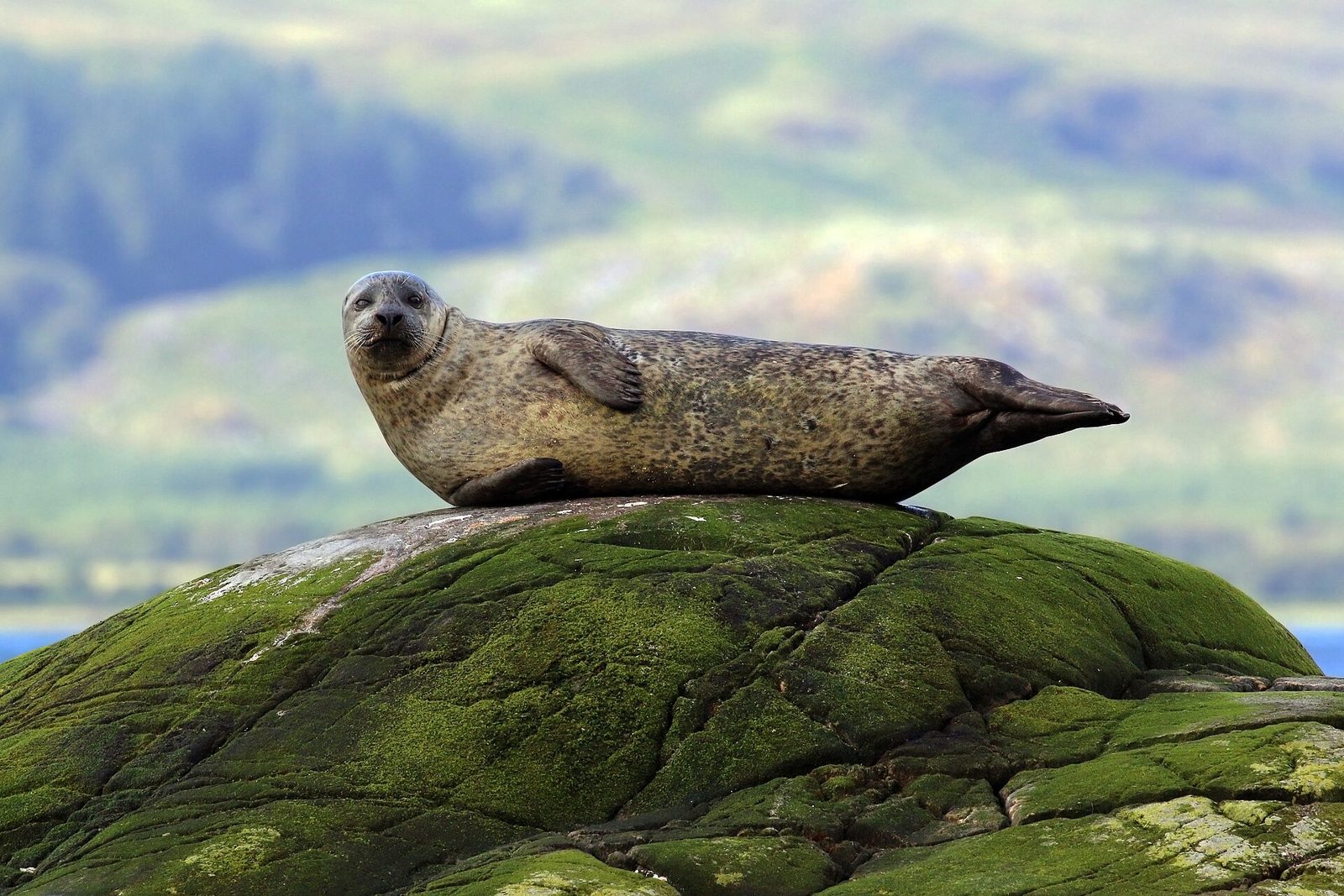
Harbor seal. Photo: Charles J. Sharp, CC BY-SA 4.0, via Wikimedia Commons.

Harbor seal Phoca vitulina

The California subspecies is P. v. richardii (Wikipedia).

Key marks: No ear flaps, and a spotted coat, dark on light or light on dark, that is different on every seal; adults up to about 1.85 m (Wikipedia).

In Southern California: Rests on beaches near La Jolla and in San Diego Bay (Wikipedia); harbor seals pup on San Miguel Island from February to May (NOAA Channel Islands).

Northern elephant seal (Mirounga angustirostris)
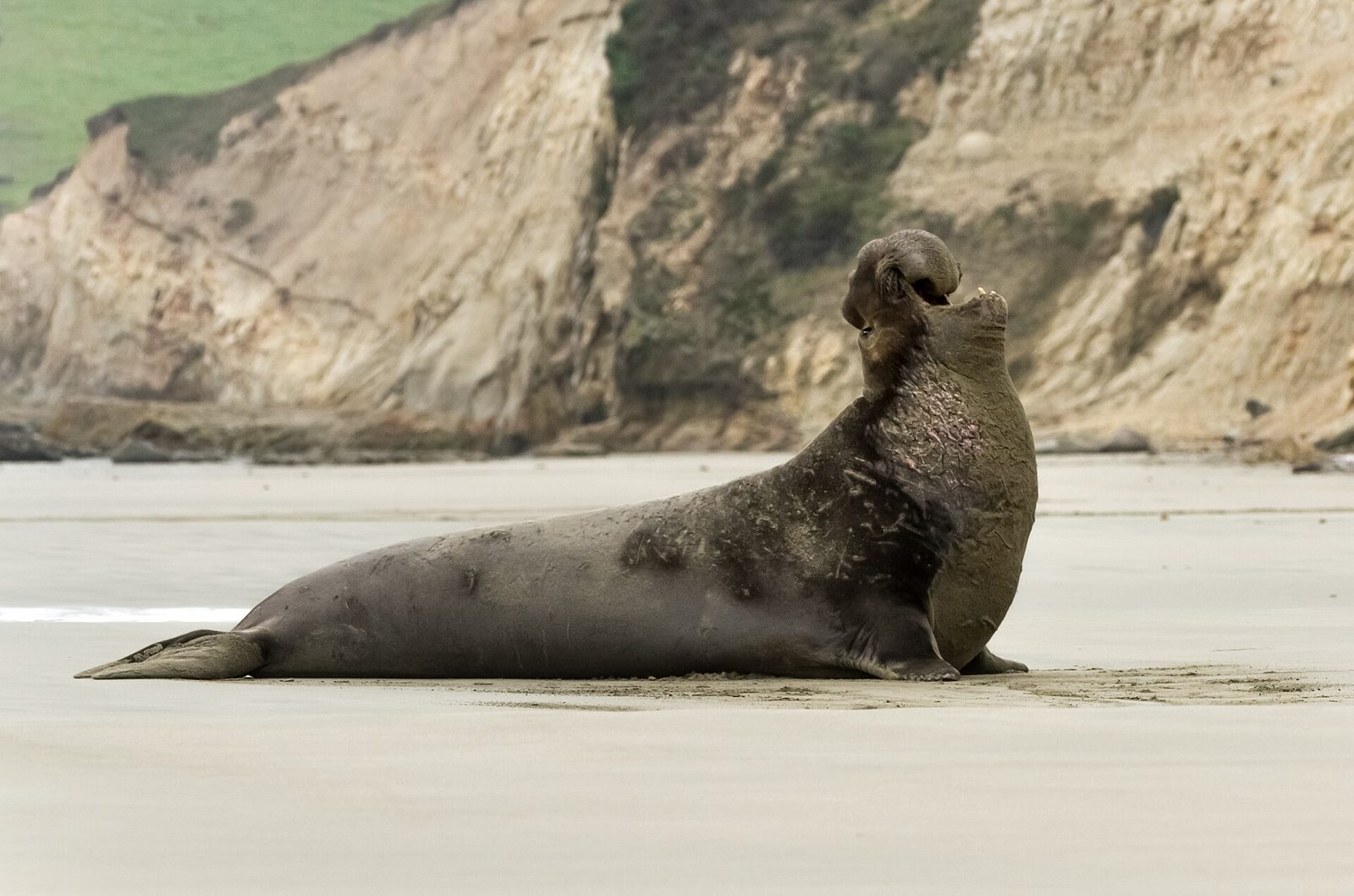
Northern elephant seal. Photo: Frank Schulenburg, CC BY-SA 3.0, via Wikimedia Commons.

Northern elephant seal Mirounga angustirostris

Key marks: Males are huge, 4–5 m and 1,500–2,300 kg, with a big proboscis; females are 2.5–3.6 m. Females can dive to 1,735 m (Wikipedia).

In Southern California: Hunted to perhaps 20–40 animals by the late 1800s, it now numbers more than 200,000 (Wikipedia). Elephant seals pup and breed on San Miguel Island in January and February (NOAA Channel Islands).

Diving with sea lions

Let young sea lions come to you, keep your hands to yourself, and give big males and the haul-out rocks plenty of room.

Dolphins and whales

Dolphins, gray whales and blue whales

Mostly from the boat

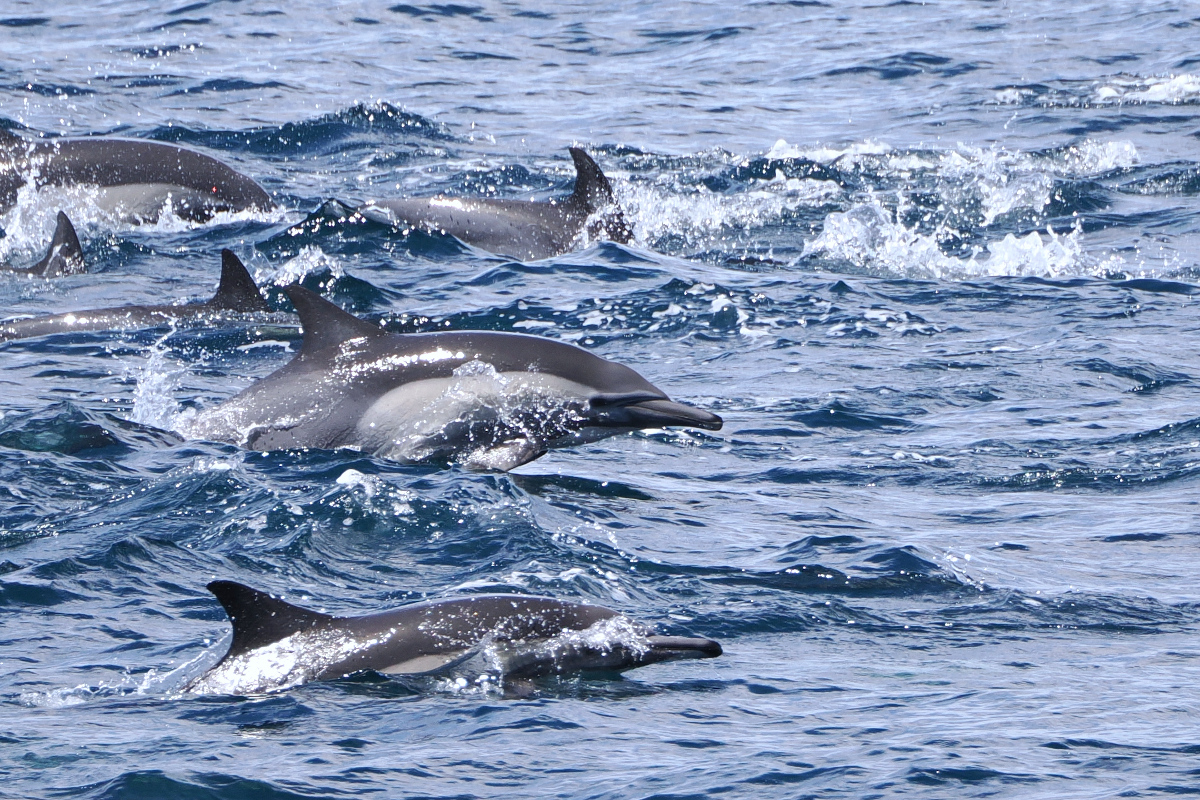
Common dolphin (Delphinus delphis)
Common dolphin. Photo: steve b, CC0, via Wikimedia Commons.

Common dolphin Delphinus delphis

Key marks: Dark back, white belly and an hourglass pattern on each side, light grey to yellow in front and grey behind; about 1.9–2.5 m. Groups of hundreds or thousands (Wikipedia).

In Southern California: The long-beaked and short-beaked forms are now treated as one species (Wikipedia). Common dolphins are regular visitors to the Channel Islands sanctuary (NOAA Channel Islands), and a pod of about 100 swam by divers at the Long Beach oil platforms (DAN Alert Diver).

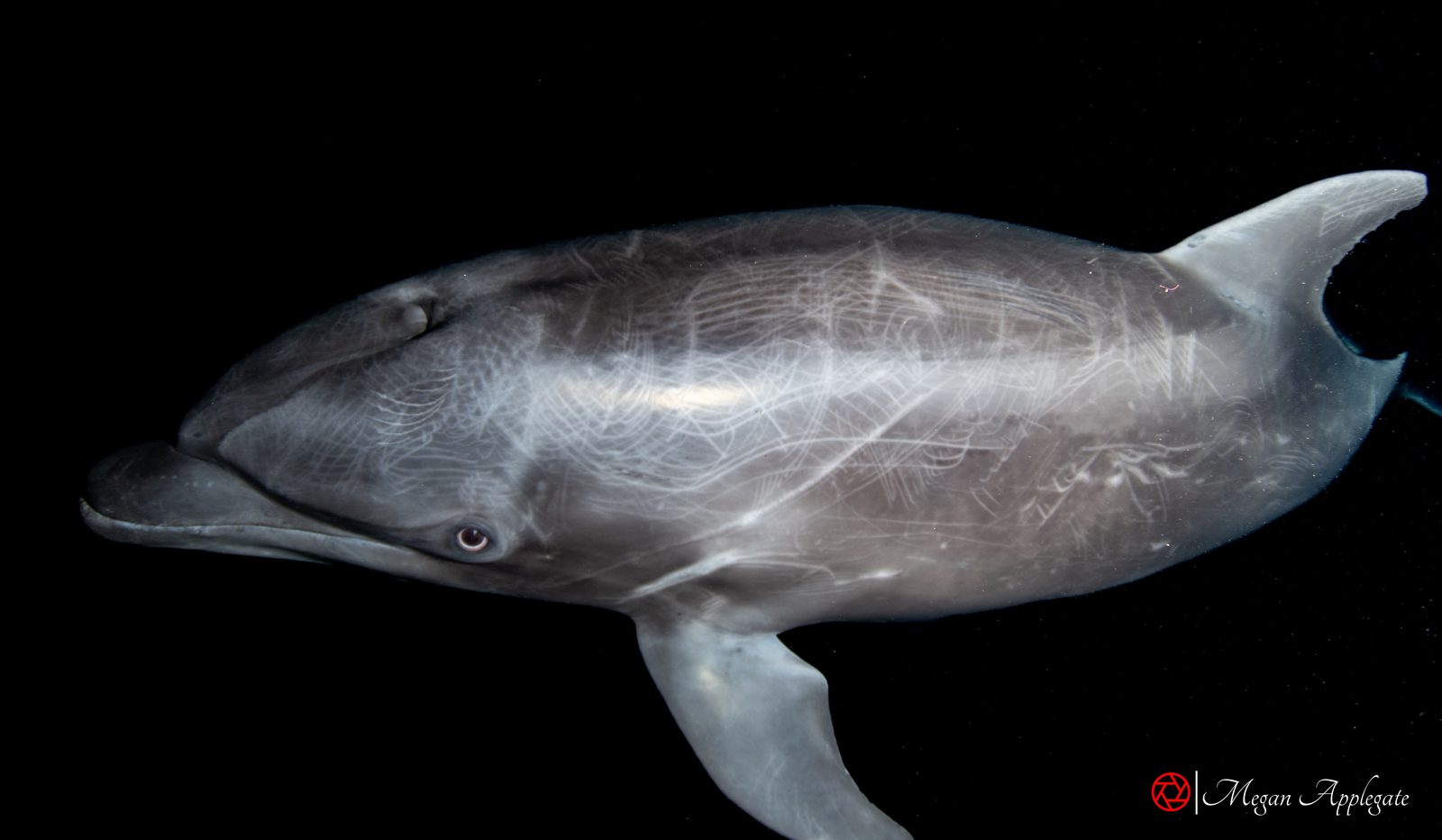
Bottlenose dolphin (Tursiops truncatus)
Bottlenose dolphin. Photo © Megan Applegate, Socorro, Mexico, December 2023 (not taken in Southern California).

Bottlenose dolphin Tursiops truncatus

In Southern California: California has separate coastal and offshore populations; the offshore dolphins live throughout the Southern California Bight, more than a few kilometres from the mainland (NOAA Fisheries 2022). A dolphin was seen near the surface on a dive off Corona del Mar (Scuba Diving).

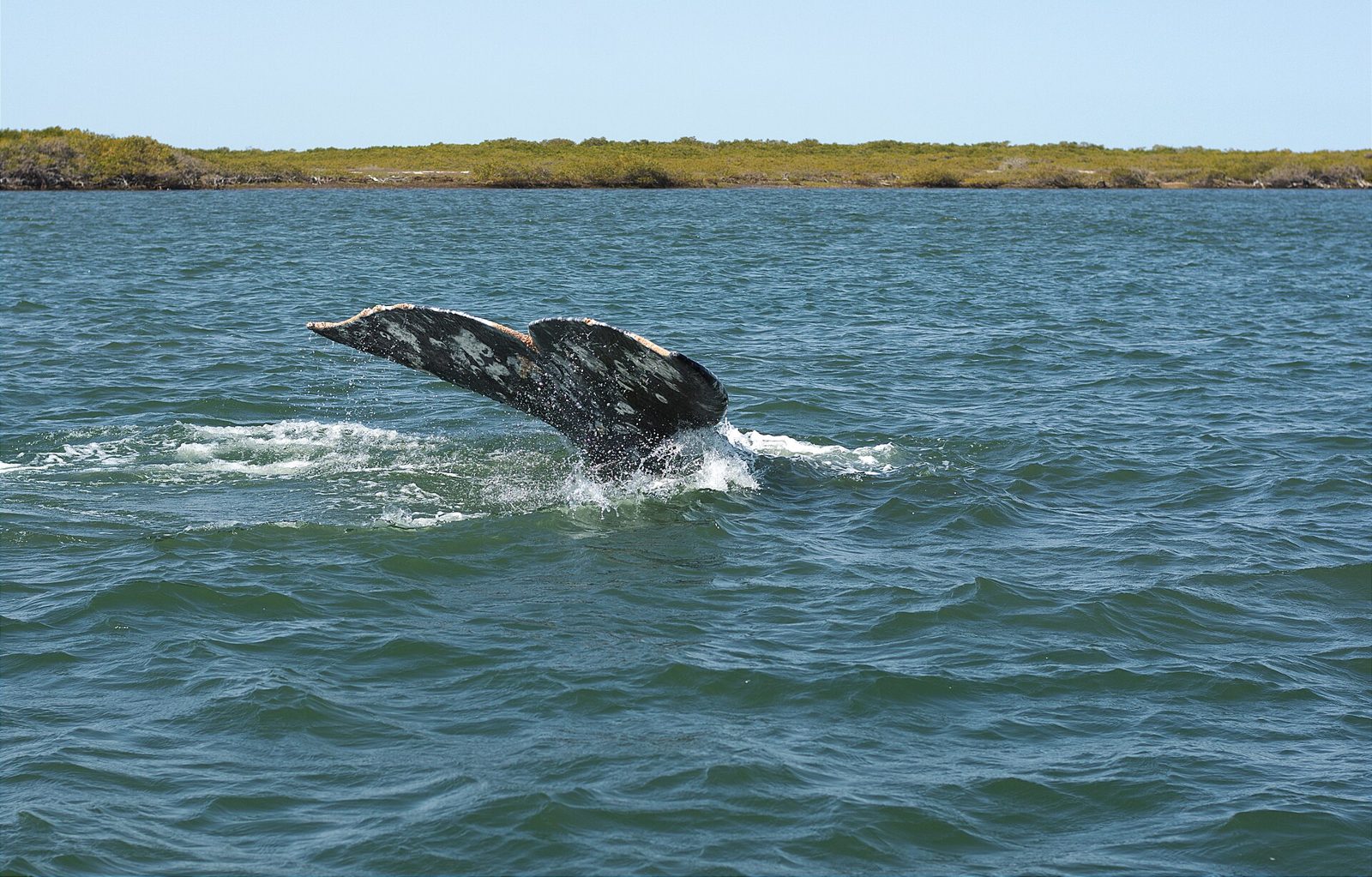
Gray whale (Eschrichtius robustus)
Gray whale. Photo: Carlos Valenzuela, CC BY-SA 4.0, via Wikimedia Commons.

Gray whale Eschrichtius robustus

Key marks: Dark slate grey mottled with grey-white, 11–15 m long, with no dorsal fin but a row of 6–12 “knuckles” along the back (Wikipedia).

In Southern California: Each year gray whales swim 8,000–11,000 km from the Arctic to the lagoons of Baja California; by mid-December to early January most are between Monterey and San Diego (Wikipedia). They pass the Channel Islands from December to May (NOAA Channel Islands). The eastern population fell from about 27,000 in 2016 to about 13,000 by 2025 (Wikipedia).

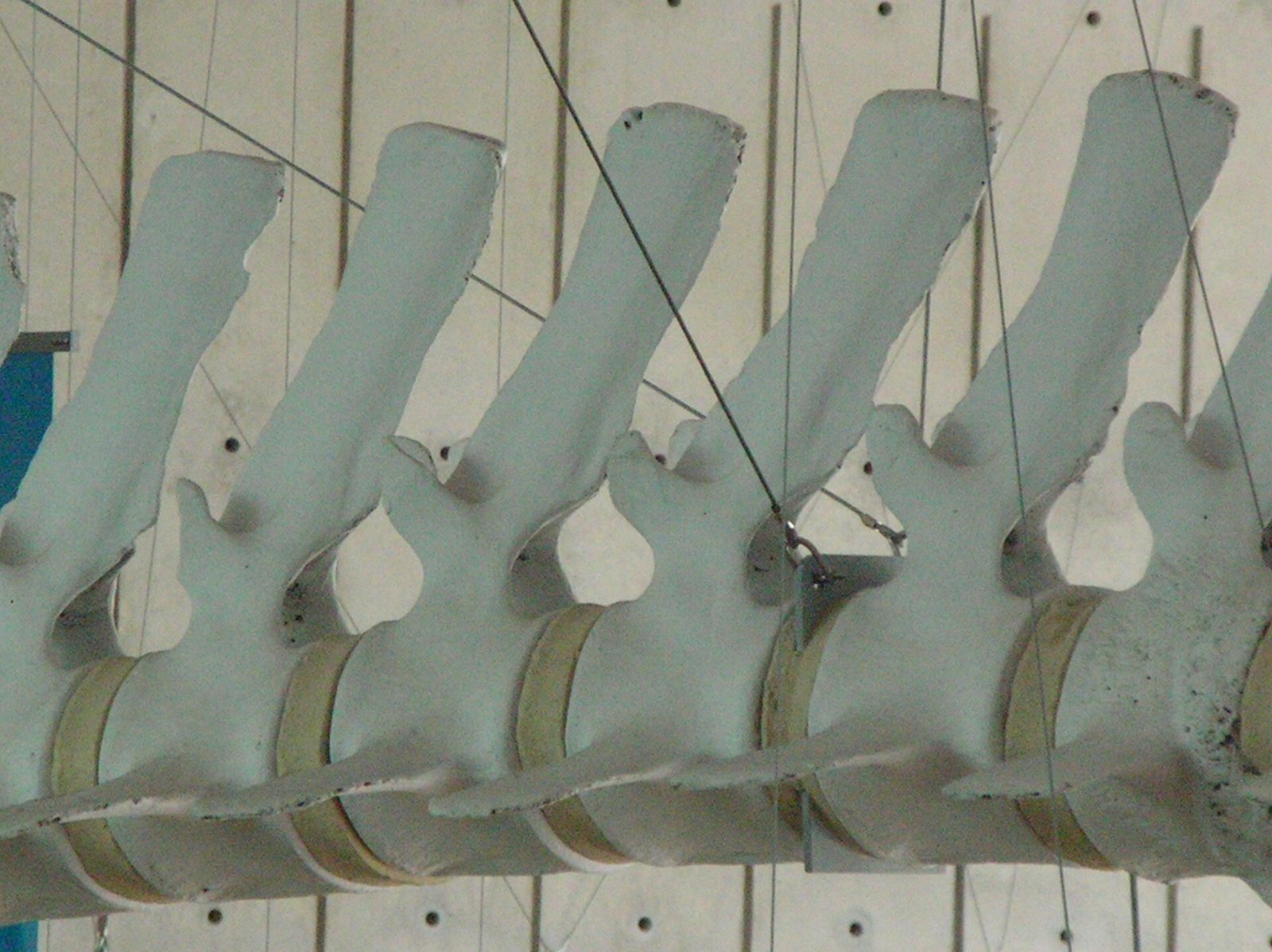
Blue whale (Balaenoptera musculus)
Blue whale. Photo: BrokenSphere, CC BY-SA 3.0, via Wikimedia Commons.

Blue whale Balaenoptera musculus

Key marks: The largest animal on Earth; eastern North Pacific females average about 22 m (Wikipedia).

In Southern California: Blue whales feed on krill in the Channel Islands from late May through September, and humpbacks in the upwelled water from May to August (NOAA Channel Islands). Ships killed or probably killed 17 blue whales off the US West Coast between 1998 and 2019 (Wikipedia).

Otters

Where are the sea otters?

Gone from the islands since about 1900

Sea otters were hunted out of the Channel Islands by about 1900 and have not returned to the national park (National Park Service). A colony started on San Nicolas Island with otters moved there in 1987–1990 numbered only about 50 in 2011 (US Fish and Wildlife Service 2011). See the Kelp Forest page for what their absence means for the kelp.

Credits

Photo credits

Where the photos come from

There are no photos from Southern California by Megan Applegate in this guide yet. Photos marked © Megan Applegate are her own, all rights reserved, of the same species elsewhere (places in the table). Other photos are open-licence photos from Wikimedia Commons, credited in the table with their licence and a link to the original. Species without a photo link to photos on Wikimedia Commons.

Photo credits.
SpeciesPhotographerLicenceSource
California sea lionMegan Applegate© Megan Applegate, all rights reservedPhotographer's own photo, taken at San Carlos, Mexico, July 2024
Harbor sealCharles J. SharpCC BY-SA 4.0Wikimedia Commons
Northern elephant sealFrank SchulenburgCC BY-SA 3.0Wikimedia Commons
Common dolphinsteve bCC0Wikimedia Commons
Bottlenose dolphinMegan Applegate© Megan Applegate, all rights reservedPhotographer's own photo, taken at Socorro, Mexico, December 2023
Gray whaleCarlos ValenzuelaCC BY-SA 4.0Wikimedia Commons
Blue whaleBrokenSphereCC BY-SA 3.0Wikimedia Commons