Macro

Southern California macro

Spanish shawls and sea hares, lobsters and two-spot octopus after dark, squid runs over the canyons, and walls of strawberry anemones and purple hydrocoral.

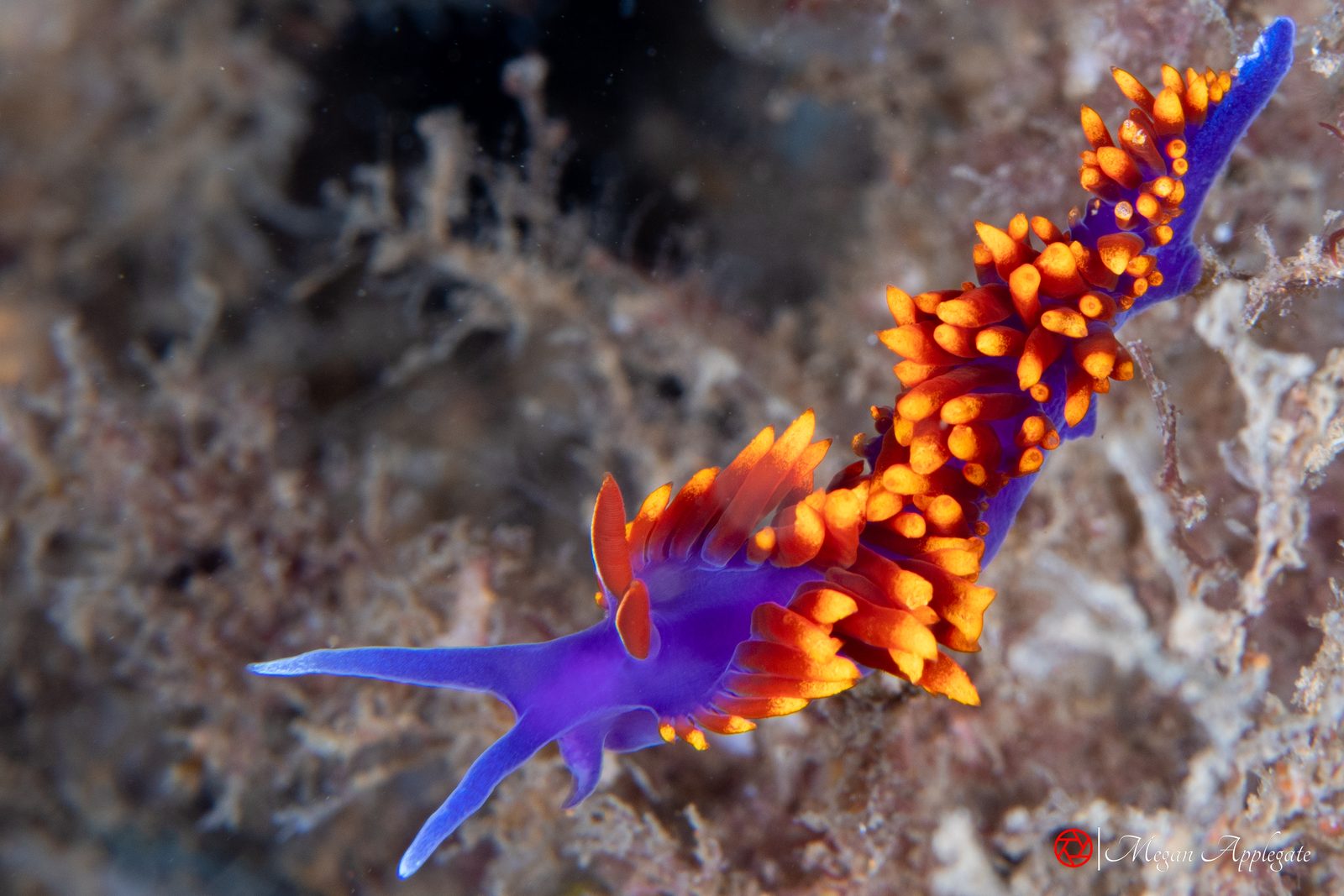
Spanish shawl (Flabellinopsis iodinea)
Spanish shawl. Photo © Megan Applegate, San Carlos, Mexico, July 2024 (not taken in Southern California).

Background photo: Megan Applegate (Malpelo, Colombia, not Southern California)

Sea slugs

Nudibranchs and sea hares

Look on hydroids, algae and rock

Santa Rosa Island’s night dives are known for nudibranch diversity (DAN Alert Diver), Little Farnsworth off Catalina is covered in them (California Diving News), and Palos Verdes and Veterans Park in Redondo Beach are good shore dives for them (Scuba Diving).

Spanish shawl (Flabellinopsis iodinea)
Spanish shawl. Photo © Megan Applegate, San Carlos, Mexico, July 2024 (not taken in Southern California).

Spanish shawl Flabellinopsis iodinea

Also listed as Flabellina iodinea.

Key marks: Only a few centimetres long: a purple body, orange cerata on the back and two bright red rhinophores. It swims off the bottom by flexing side to side to escape predators such as the navanax (California Diving News).

In Southern California: Ranges from Vancouver Island to Baja California and the Galápagos, from the intertidal to about 37 m, and lives at the Channel Islands (California Diving News); the sanctuary names it among its notable species (Wikipedia).
California sea hare (Aplysia californica)
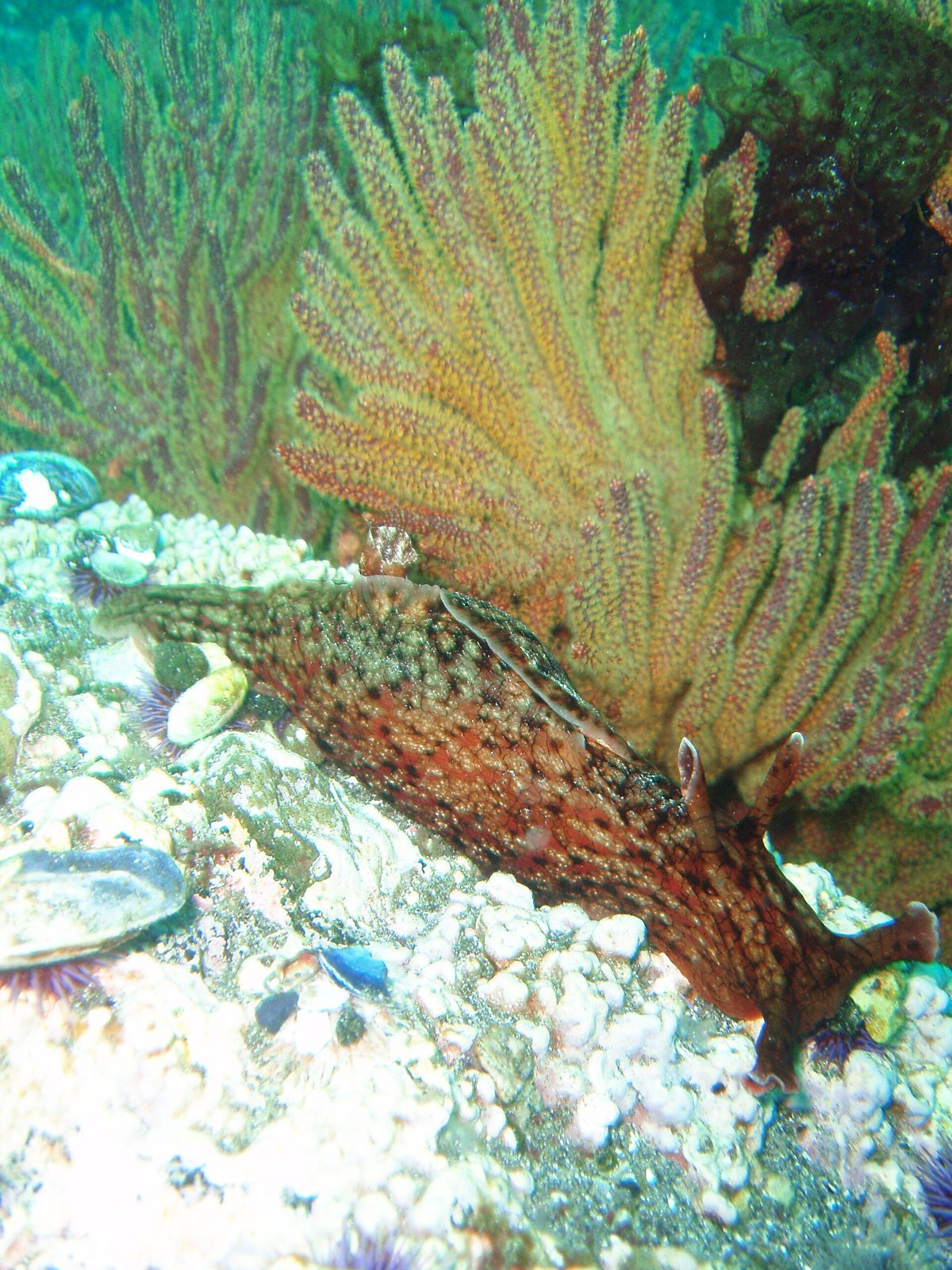
California sea hare. Photo: Claire Fackler, CINMS, NOAA., Public domain, via Wikimedia Commons.

California sea hare Aplysia californica

Key marks: A big sea slug, up to 75 cm stretched out and 7 kg: reddish- to greenish-brown, often pinkish from the red algae it eats. It squirts reddish-purple ink to put off predators (Wikipedia).

In Southern California: Grazes algae in shallow water, usually no deeper than 18–20 m (Wikipedia); seen at Shaw’s Cove in Laguna Beach (Scuba Diving).

Lobsters, octopus and squid

Night critters

Out of the cracks after dark

California spiny lobster (Panulirus interruptus)
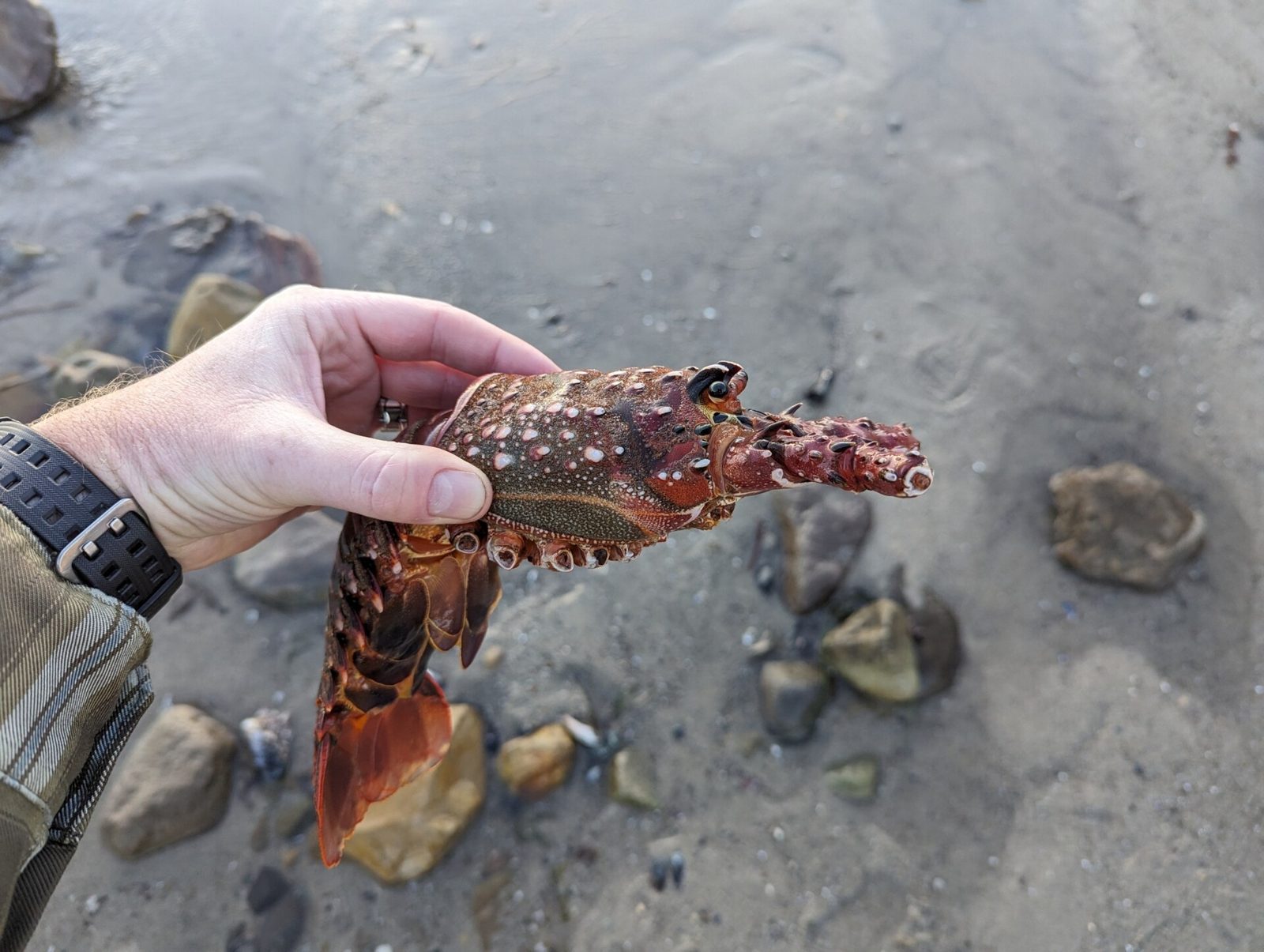
California spiny lobster. Photo: Zack Abbey, CC BY 4.0, via Wikimedia Commons.

California spiny lobster Panulirus interruptus

Key marks: Reddish brown with long spiny antennae and no big claws; typically about 30 cm. Hides in crevices by day and comes out at night to eat sea urchins, clams, mussels and worms (Wikipedia).

In Southern California: Called langosta colorada or langosta roja in Mexico (Wikipedia). A predator of urchins in the kelp forest (National Park Service). Recreational lobster season runs from early October to mid-March (2021–22: 2 October to 16 March), and divers need a lobster report card and a fishing licence (CDFW 2021).

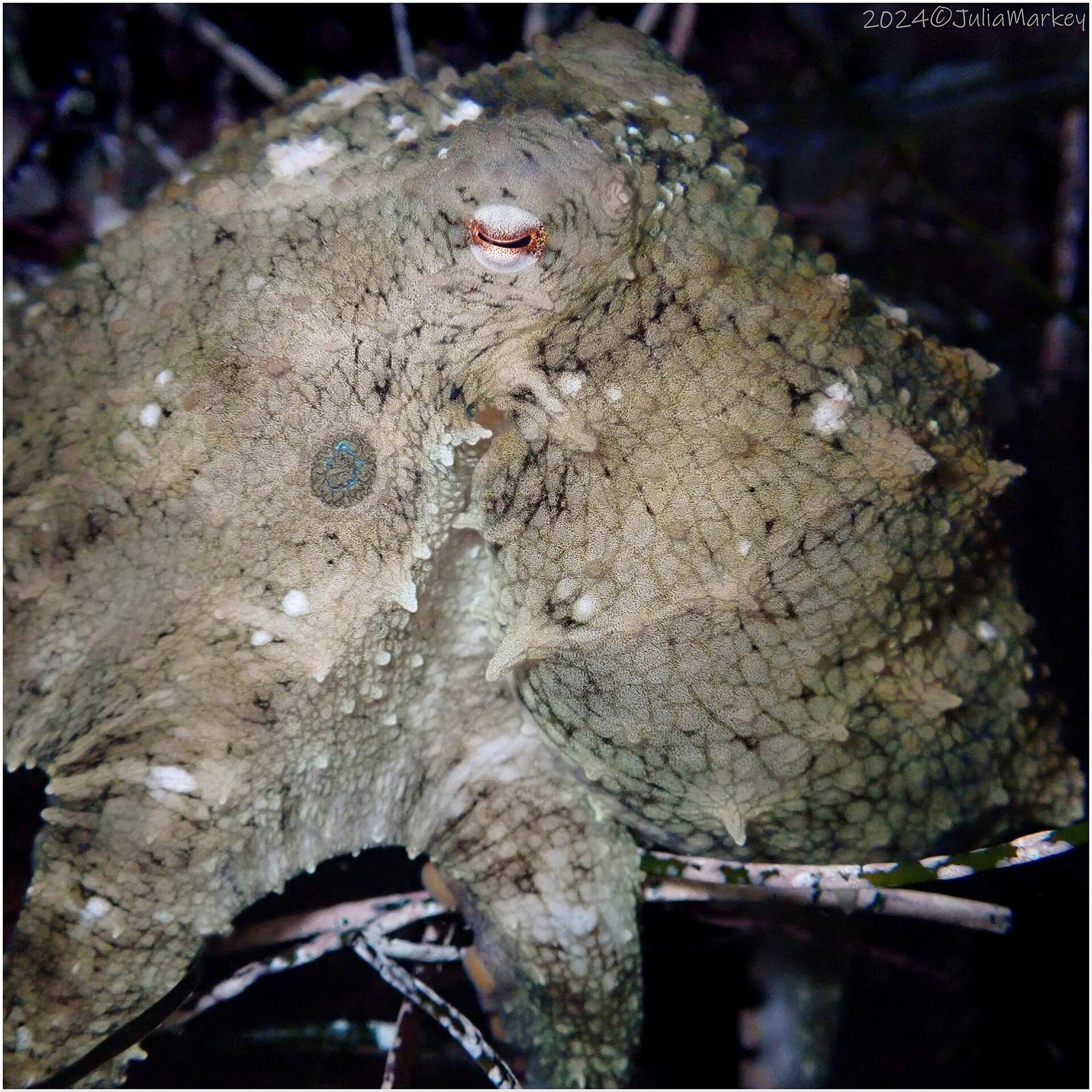
California two-spot octopus (Octopus bimaculoides)
California two-spot octopus. Photo: Julia Markey, CC BY-SA 4.0, via Wikimedia Commons.

California two-spot octopus Octopus bimaculoides

Key marks: An iridescent blue ring set in a black circle beside each eye; arms up to 58 cm. Lives one to two years, from the intertidal to at least 20 m (Wikipedia).

In Southern California: Seen at Shaw’s Cove (Scuba Diving).

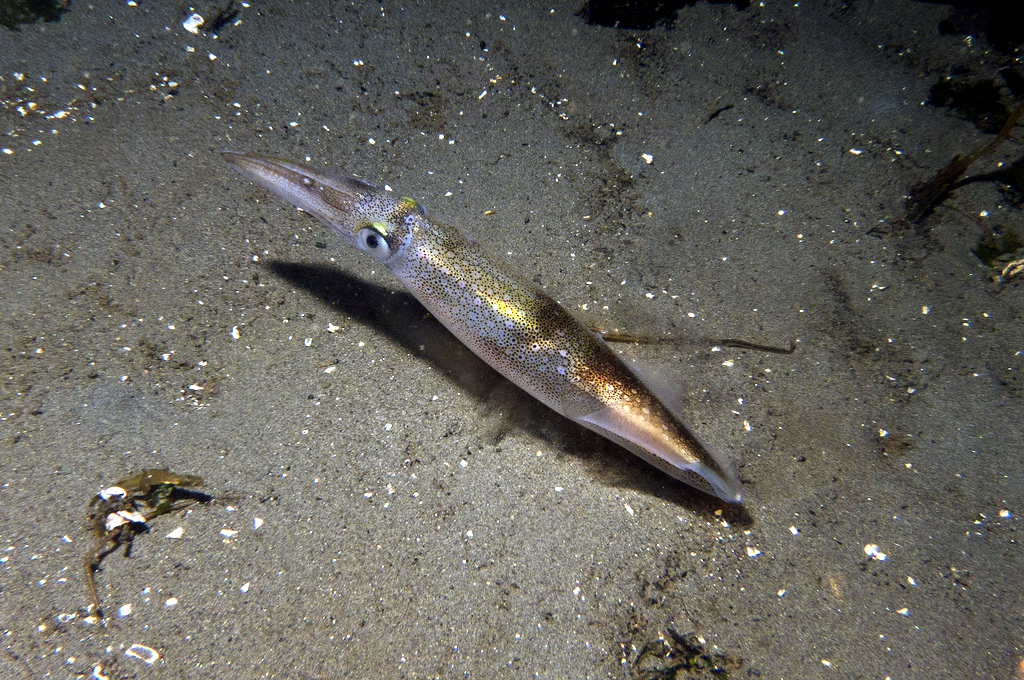
Market squid (Doryteuthis opalescens)
Market squid. Photo: Joshua Sera, CC BY-SA 3.0, via Wikimedia Commons.

Market squid Doryteuthis opalescens

Key marks: Lives about 12–14 months and dies after spawning. Each female lays egg capsules 15–20 cm long, each holding 200–300 eggs; together they can carpet acres of sea floor (California Diver).

In Southern California: Squid runs happen mostly in the colder months, at night over sand or mud above submarine canyons, off La Jolla Shores and elsewhere. Tens of thousands of squid swarm to dive lights while sea lions, harbor seals, leopard sharks and bat rays feed on them; by day angel sharks, sheep crabs and lobsters scavenge the egg beds (California Diver). Squid runs also bring squid and egg baskets to Veterans Park in Redondo Beach (Scuba Diving).

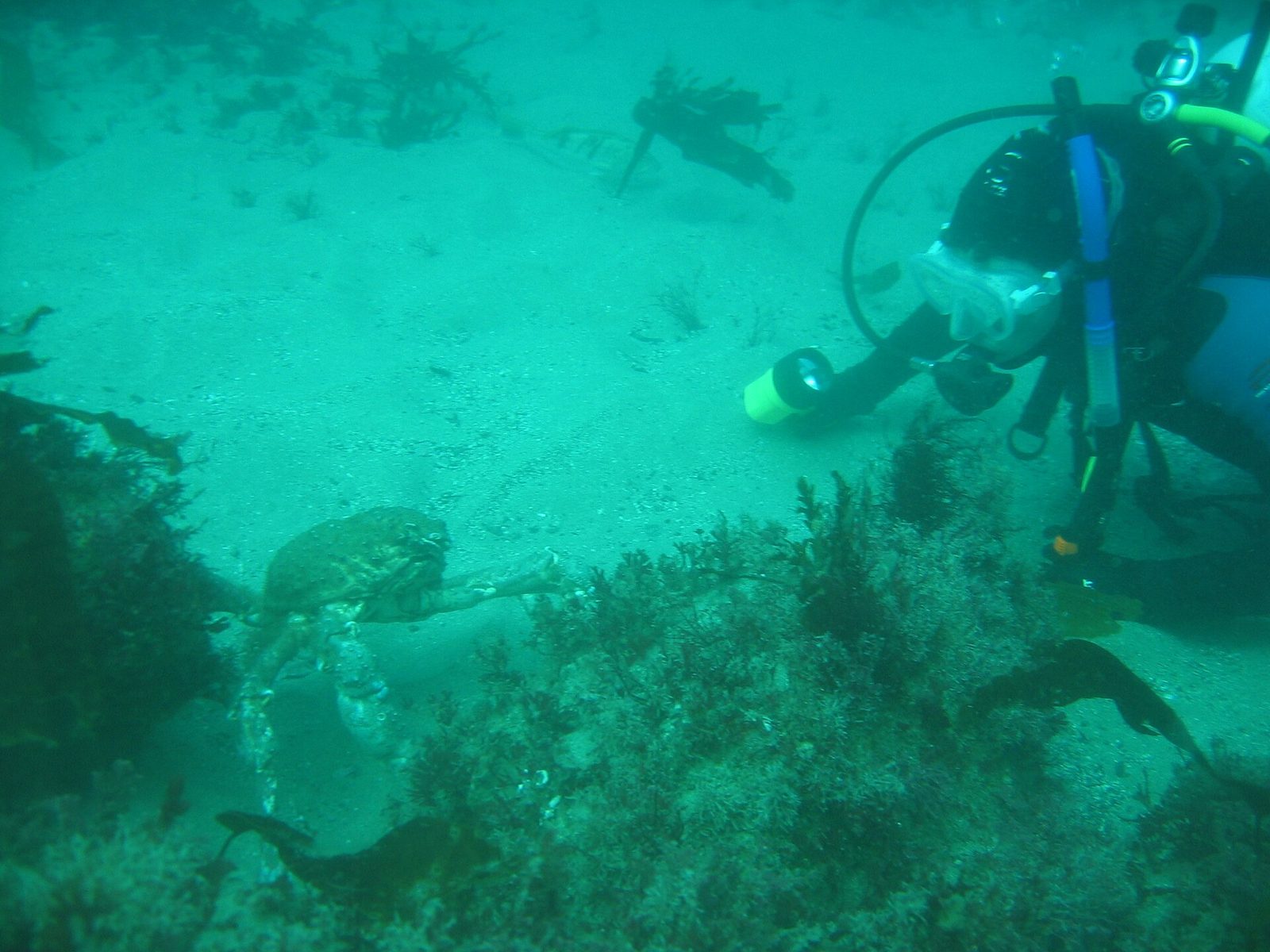
Sheep crab (Loxorhynchus grandis)
Sheep crab. Photo: No machine-readable author provided. DrKjaergaard assumed (based on copyright claims)., CC BY-SA 2.5, via Wikimedia Commons.

Sheep crab Loxorhynchus grandis

Key marks: One of the biggest crabs on the California coast: males’ shells pass 24 cm. Juveniles decorate themselves with algae and sponges, and adults often look green from algae growing on the shell (Wikipedia).

Lobster rules

Rules change every season: check the California Department of Fish and Wildlife before taking lobster (CDFW 2021), and remember that nothing may be taken in a state marine reserve such as La Jolla’s Matlahuayl reserve (Wikipedia).

On the reef

Anemones, hydrocoral, limpets and stars

The colour on the rock

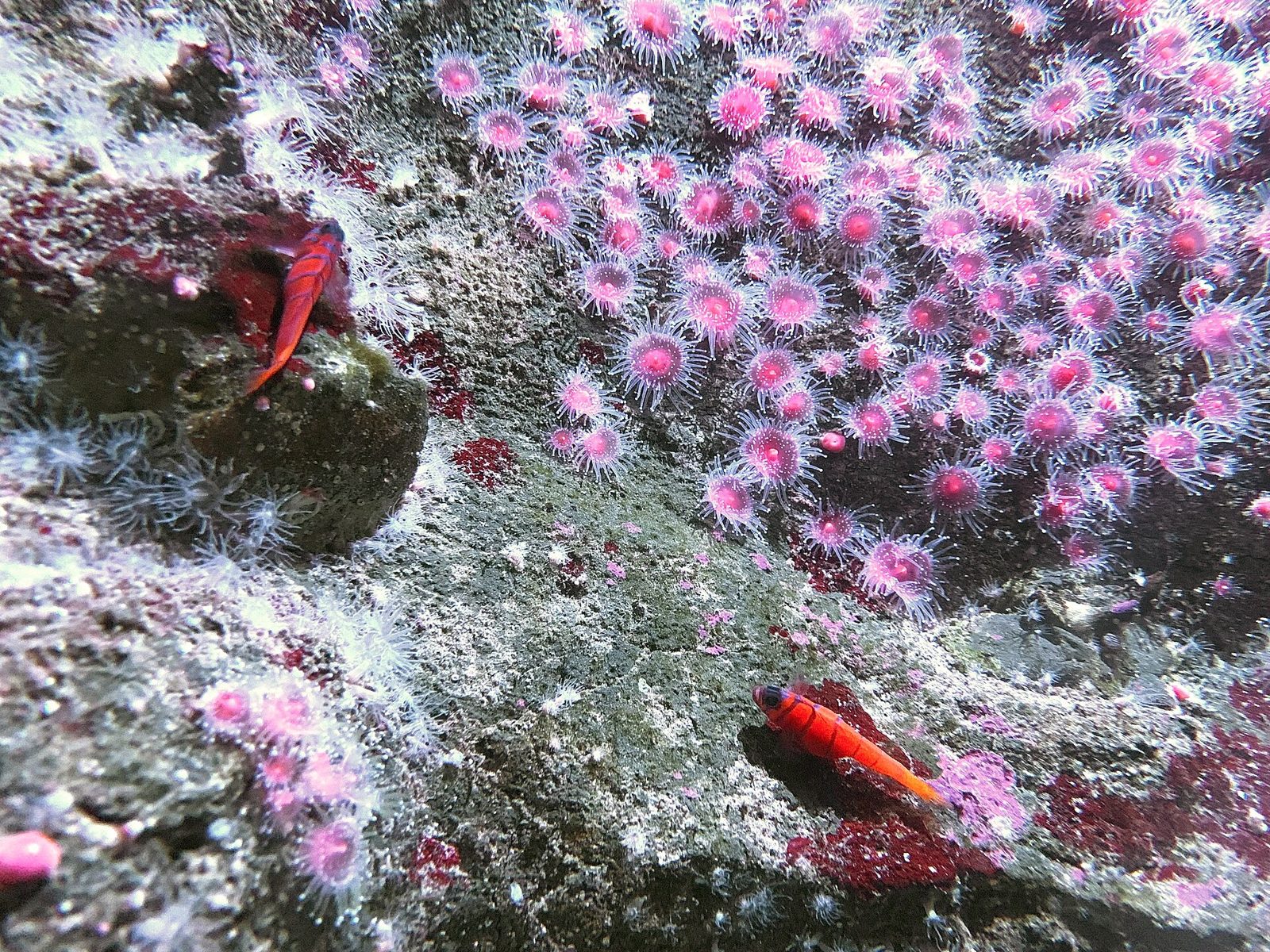
Strawberry anemone (Corynactis californica)
Strawberry anemone. Photo: Coughdrop12, CC BY-SA 4.0, via Wikimedia Commons.

Strawberry anemone Corynactis californica

Key marks: Not a true anemone but a corallimorph, no more than about 2.5 cm, in red, pink, purple, brown, yellow or white. It clones itself into carpets on vertical rock walls and kelp-forest floors (Wikipedia).

In Southern California: Carpets the Yukon (Oceanlight (Phillip Colla)) and the NOSC Tower (Wikipedia) in Wreck Alley and the legs of the oil platforms off Long Beach (DAN Alert Diver).

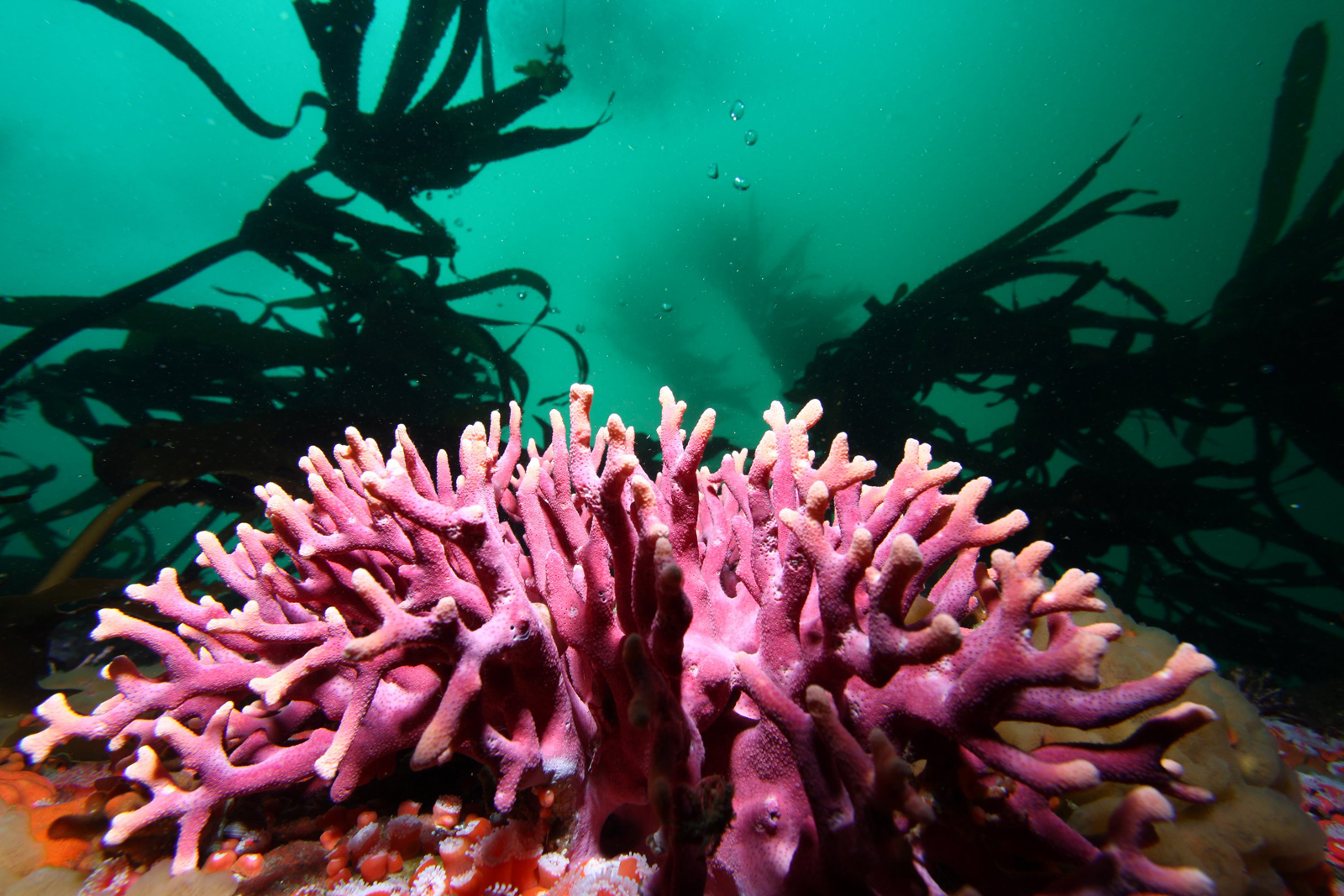
Purple hydrocoral (Stylaster californicus)
Purple hydrocoral. Photo: Chad King / NOAA MBNMS, Public domain, via Wikimedia Commons.

Purple hydrocoral Stylaster californicus

Key marks: A hydroid, not a true coral, related to tropical fire coral. Colonies grow up to 30 cm tall on bases up to 60 cm across, at less than 6 mm a year, and broken branches stop growing for about six months. Found from 4.6 to 112 m (California Diving News).

In Southern California: Fills the gullies of Farnsworth Bank off Catalina (California Diving News), where taking it is prohibited (California Diving News), and grows at Santa Barbara Island (Scuba Diving).

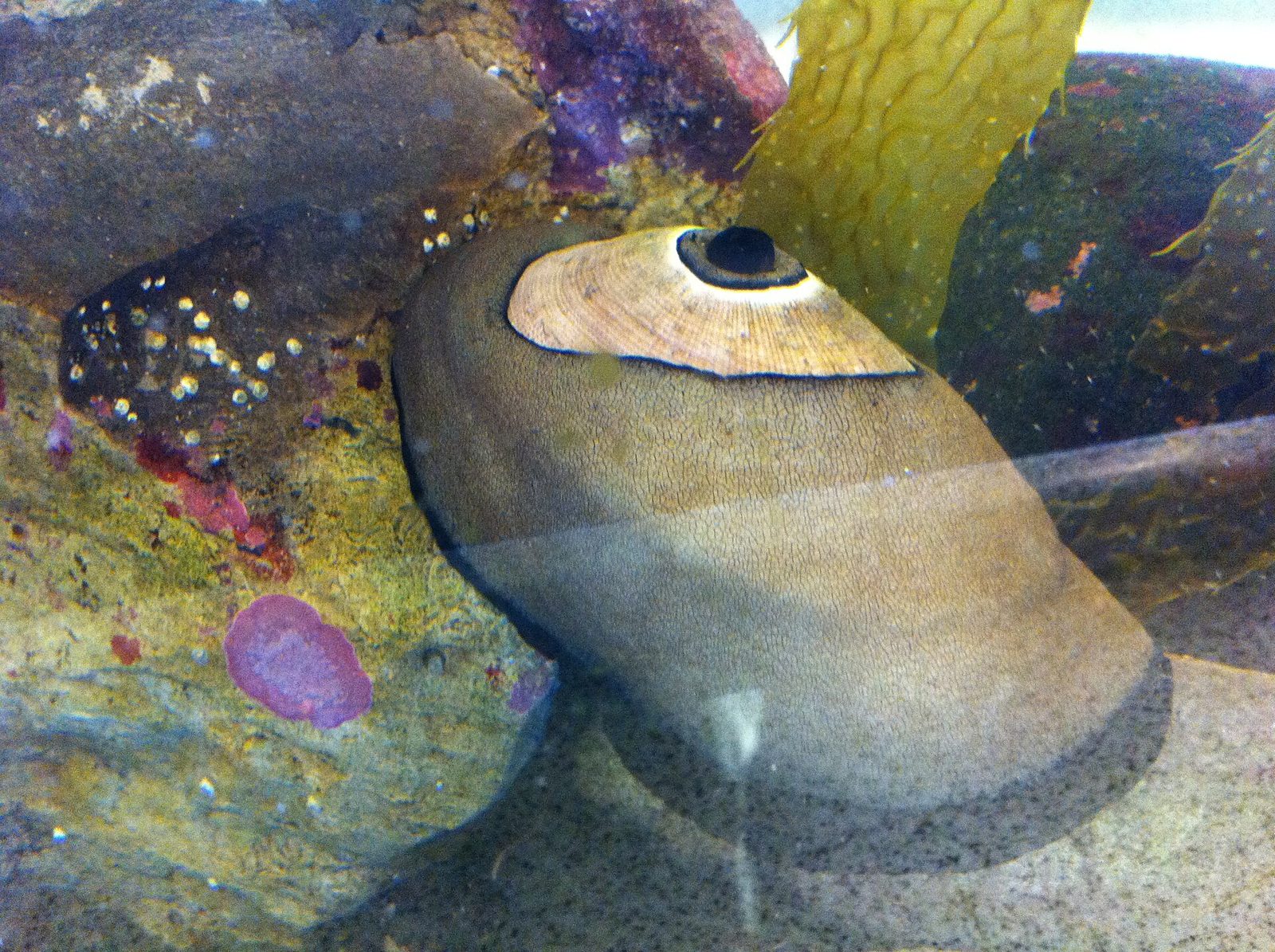
Giant keyhole limpet (Megathura crenulata)
Giant keyhole limpet. Photo: Sharktopus, CC BY-SA 3.0, via Wikimedia Commons.

Giant keyhole limpet Megathura crenulata

Key marks: A large limpet with a hole at the top of its shell, on rocky coast from Southern California to Baja California, from the intertidal to 33 m (Wikipedia).

In Southern California: On the Corona del Mar jetty (Scuba Diving).

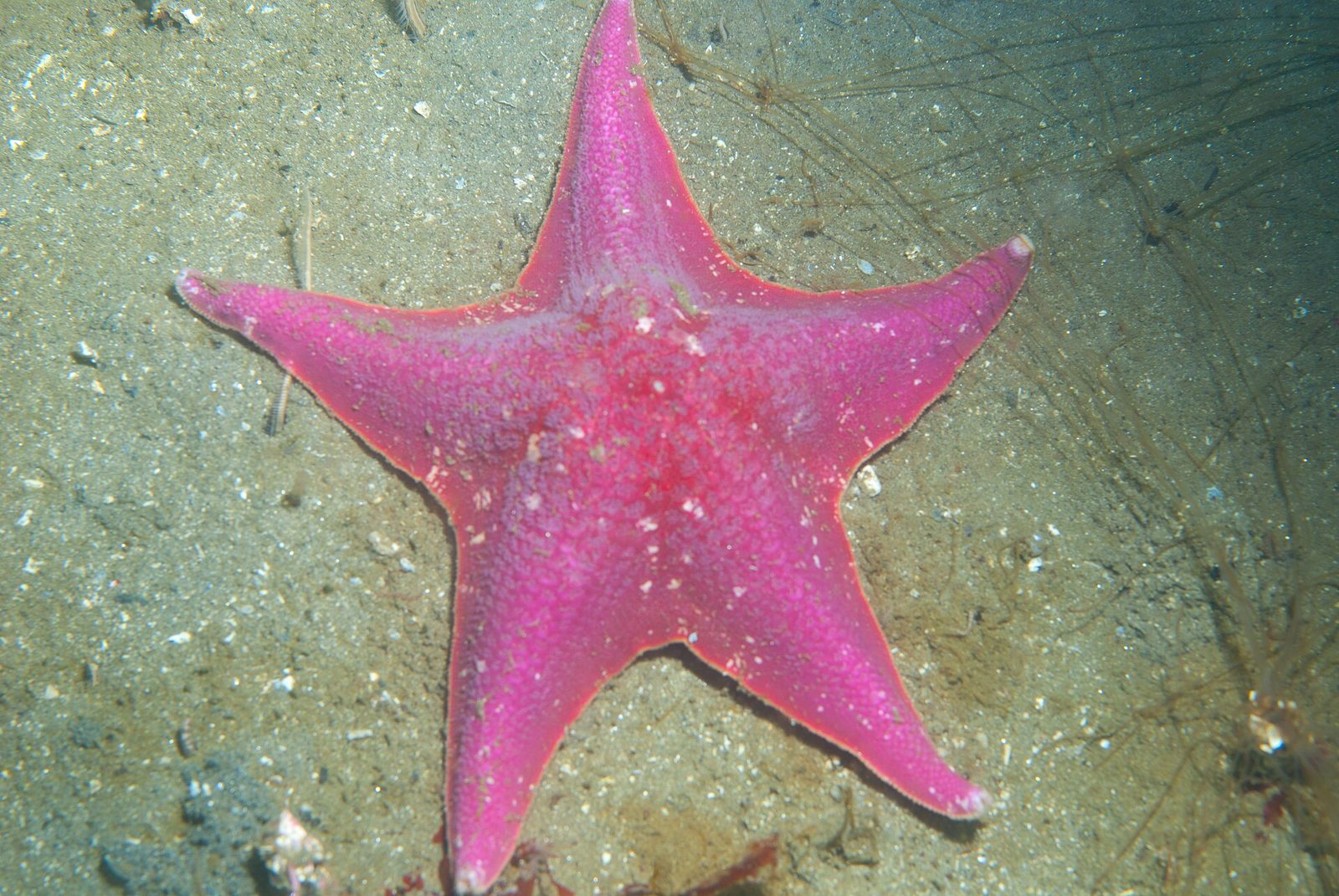
Bat star (Patiria miniata)
Bat star. Photo: Ed Bierman from CA, usa, CC BY 2.0, via Wikimedia Commons.

Bat star Patiria miniata

Key marks: Usually five short arms joined by webbing, up to about 20 cm across, in green, purple, red, orange, yellow or brown. Sea star wasting disease is deadly to it (Wikipedia).

In Southern California: Seen at Shaw’s Cove (Scuba Diving).

Hands off

Don’t touch, move or hold animals, including to set up a photo, and keep fins off the hydrocoral: its branches are brittle and slow to regrow.

Credits

Photo credits

Where the photos come from

There are no photos from Southern California by Megan Applegate in this guide yet. Photos marked © Megan Applegate are her own, all rights reserved, of the same species elsewhere (places in the table). Other photos are open-licence photos from Wikimedia Commons, credited in the table with their licence and a link to the original. Species without a photo link to photos on Wikimedia Commons.

Photo credits.
SpeciesPhotographerLicenceSource
Spanish shawlMegan Applegate© Megan Applegate, all rights reservedPhotographer's own photo, taken at San Carlos, Mexico, July 2024
California sea hareClaire Fackler, CINMS, NOAA.Public domainWikimedia Commons
California spiny lobsterZack AbbeyCC BY 4.0Wikimedia Commons
California two-spot octopusJulia MarkeyCC BY-SA 4.0Wikimedia Commons
Market squidJoshua SeraCC BY-SA 3.0Wikimedia Commons
Sheep crabNo machine-readable author provided. DrKjaergaard assumed (based on copyright claims).CC BY-SA 2.5Wikimedia Commons
Strawberry anemoneCoughdrop12CC BY-SA 4.0Wikimedia Commons
Purple hydrocoralChad King / NOAA MBNMSPublic domainWikimedia Commons
Giant keyhole limpetSharktopusCC BY-SA 3.0Wikimedia Commons
Bat starEd Bierman from CA, usaCC BY 2.0Wikimedia Commons