Sharks and rays

Southern California sharks and rays

Leopard sharks in the shallows at La Jolla, horn and angel sharks on the reef at night, bat rays and round stingrays on the sand.

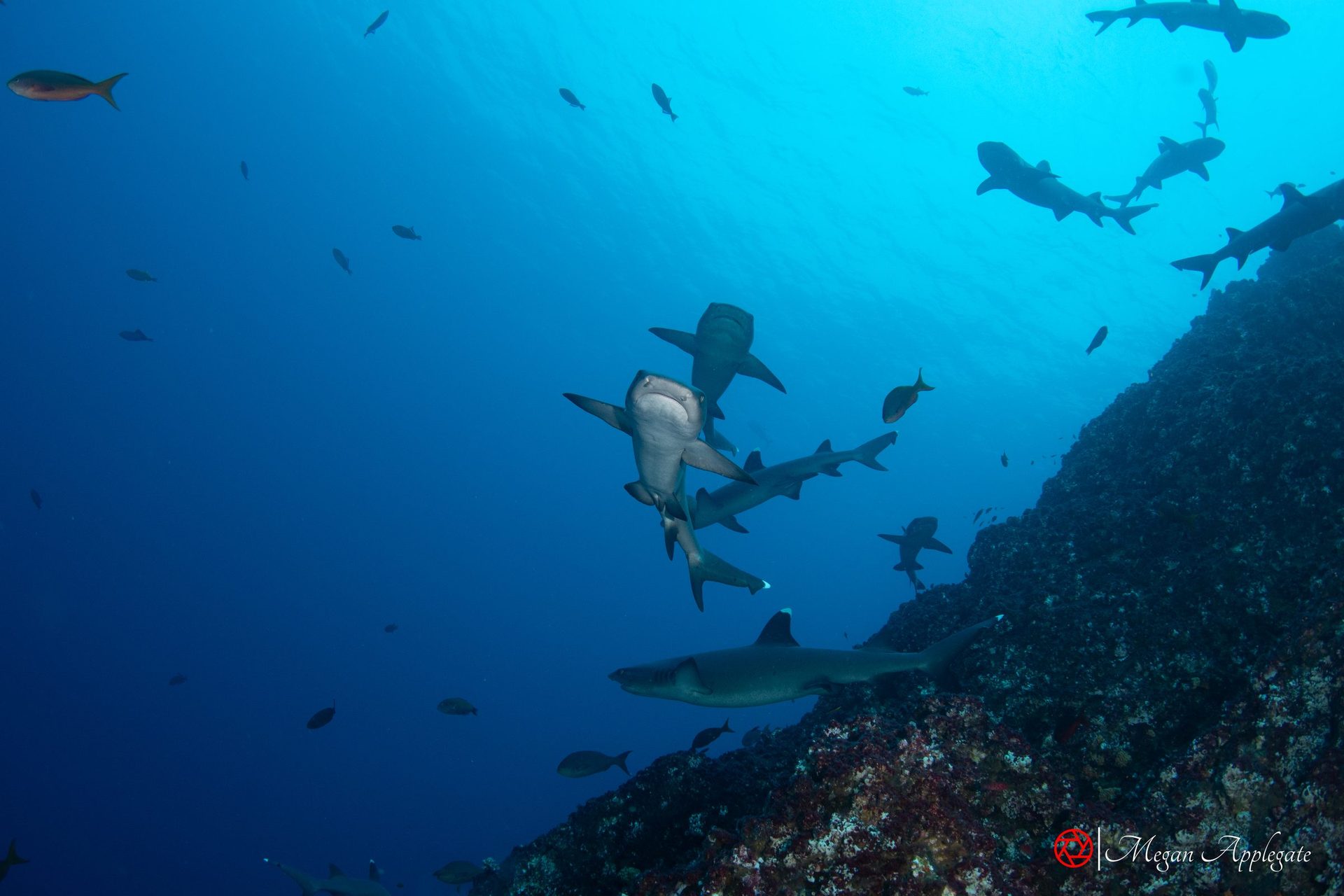
Background photo: Megan Applegate (Socorro, Mexico, not Southern California)

Sharks

Leopard, horn, swell and angel sharks

Mostly small, mostly at night

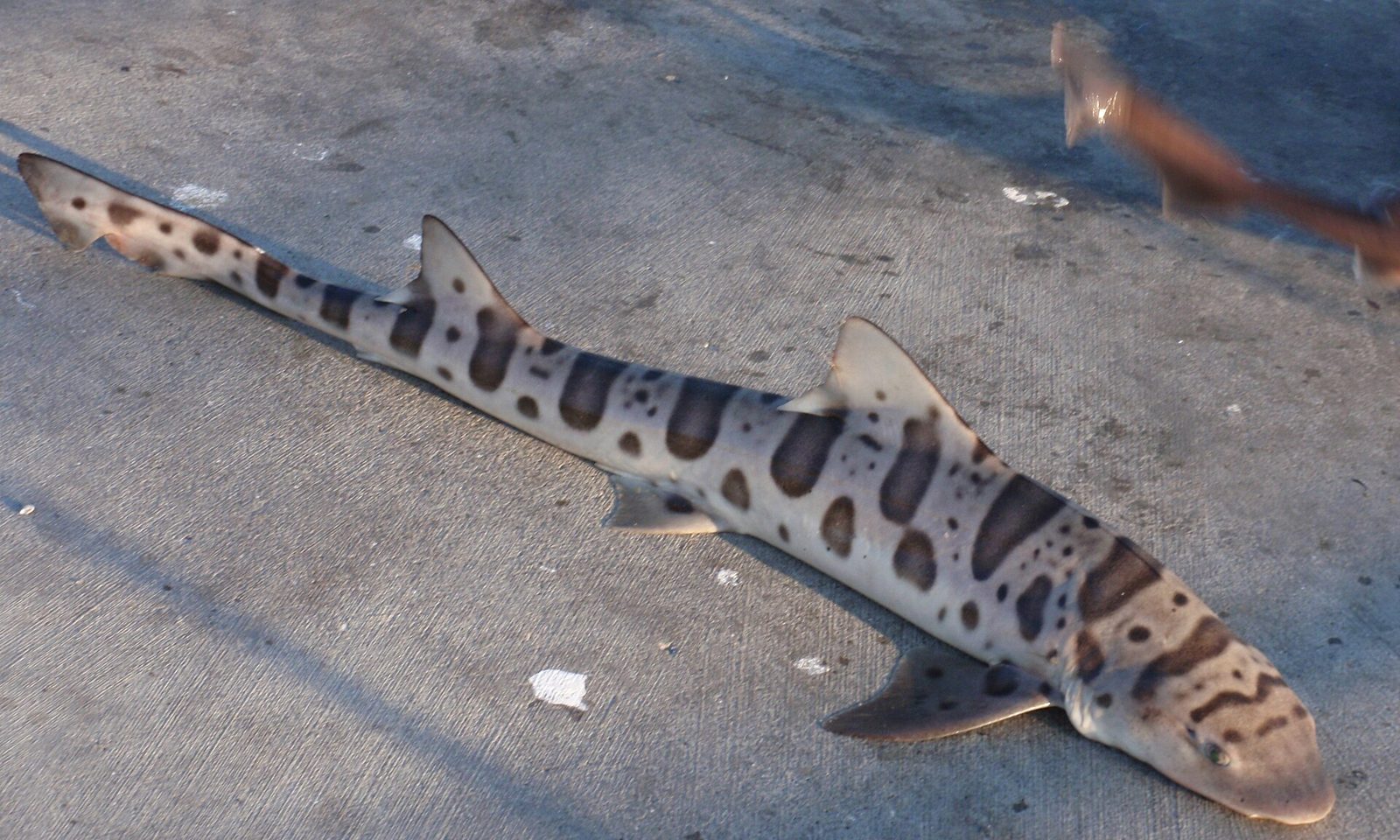
Leopard shark (Triakis semifasciata)
Leopard shark. Photo: tomhilton, CC BY 2.0, via Wikimedia Commons.

Leopard shark Triakis semifasciata

Wary, quick to flee and almost no danger to people. Least Concern on the IUCN Red List (Wikipedia).

Key marks: Silvery to bronze-grey with bold black saddles and large black spots along the back; usually 1.2–1.5 m (Wikipedia).

In Southern California: Thousands gather each year, roughly June to December, in the warm, calm water at the south end of La Jolla Shores, in front of the Marine Room; a 2013 Scripps study found 97% of them are pregnant females. They feed overnight in La Jolla Canyon and come into the shallows at sunrise (KPBS 2017).
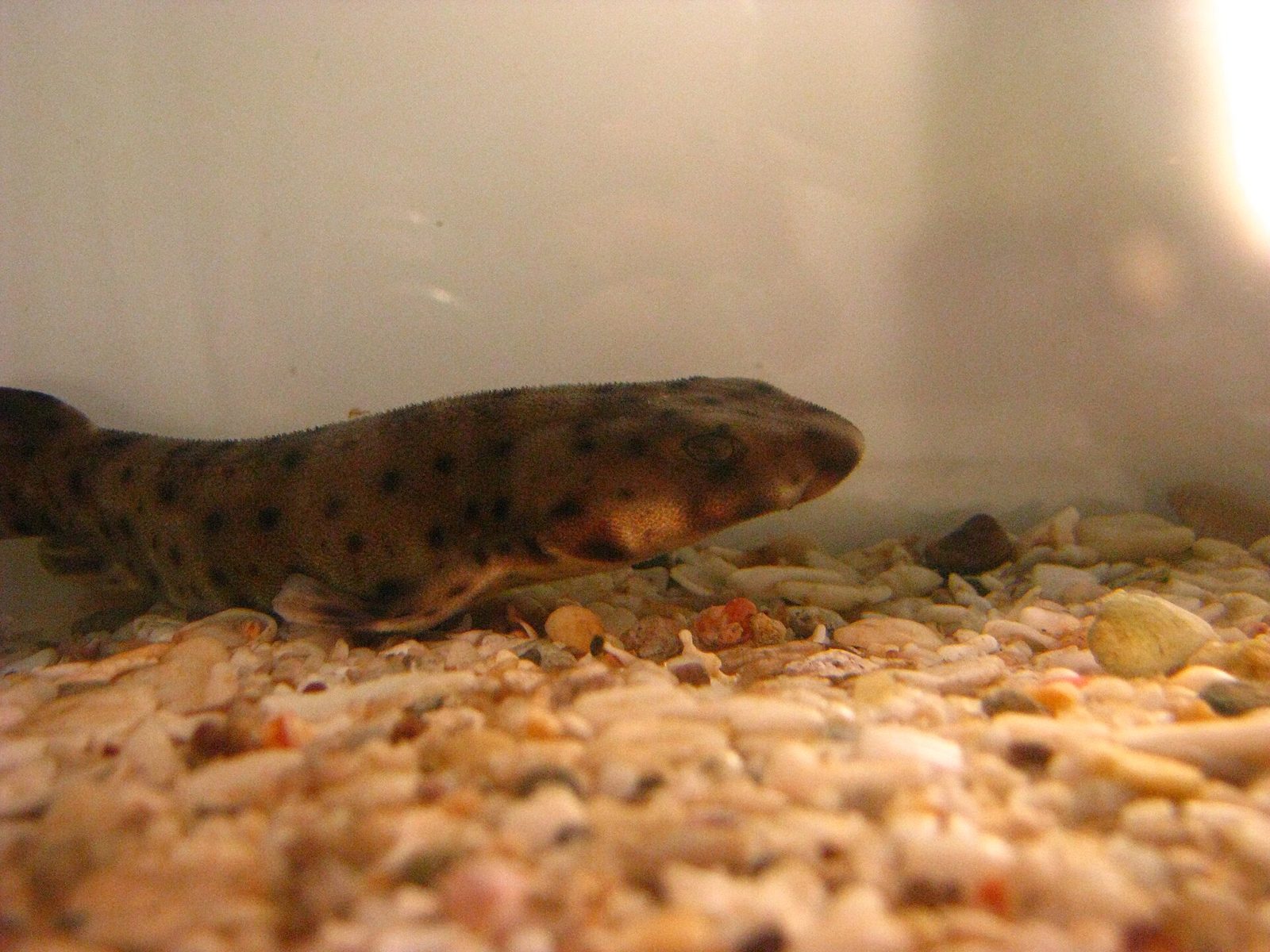
Horn shark (Heterodontus francisci)
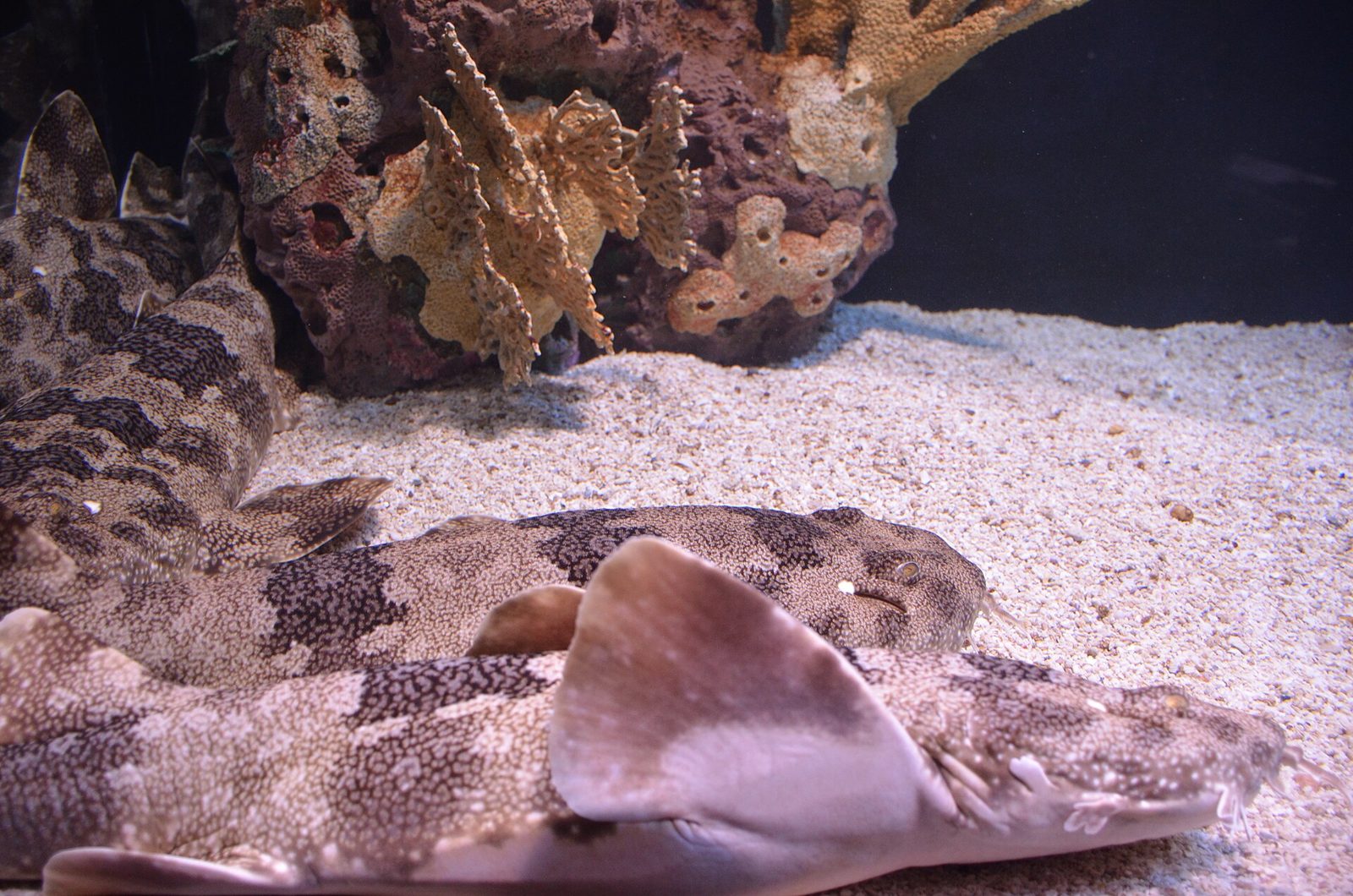
Horn shark. Photo: shankar s. from Dubai, united arab emirates, CC BY 2.0, via Wikimedia Commons.

Horn shark Heterodontus francisci

Key marks: Usually about 1 m: grey or brown with many small dark spots, raised ridges over the eyes and a stout spine at the front of each of its two tall dorsal fins. Females wedge corkscrew-shaped egg cases into crevices (Wikipedia).

In Southern California: Rests in a shelter by day and hunts at night, mostly at 2–11 m, moving deeper than 30 m in winter (Wikipedia). Large horn sharks live in the rocks at Ship Rock, off Catalina (California Diving News).

Swell shark (Cephaloscyllium ventriosum)
Swell shark. Photo: Jean, CC BY 2.0, via Wikimedia Commons.

Swell shark Cephaloscyllium ventriosum

Key marks: Yellow-brown with brown and white spots, usually about 90 cm. When threatened it bends into a U, holds its tail in its mouth and swallows water to puff up. Its green or amber egg cases hang from kelp or reef by tendrils (Wikipedia).

In Southern California: Hides in rock crevices by day and hunts at night, most often at 5–37 m (Wikipedia).

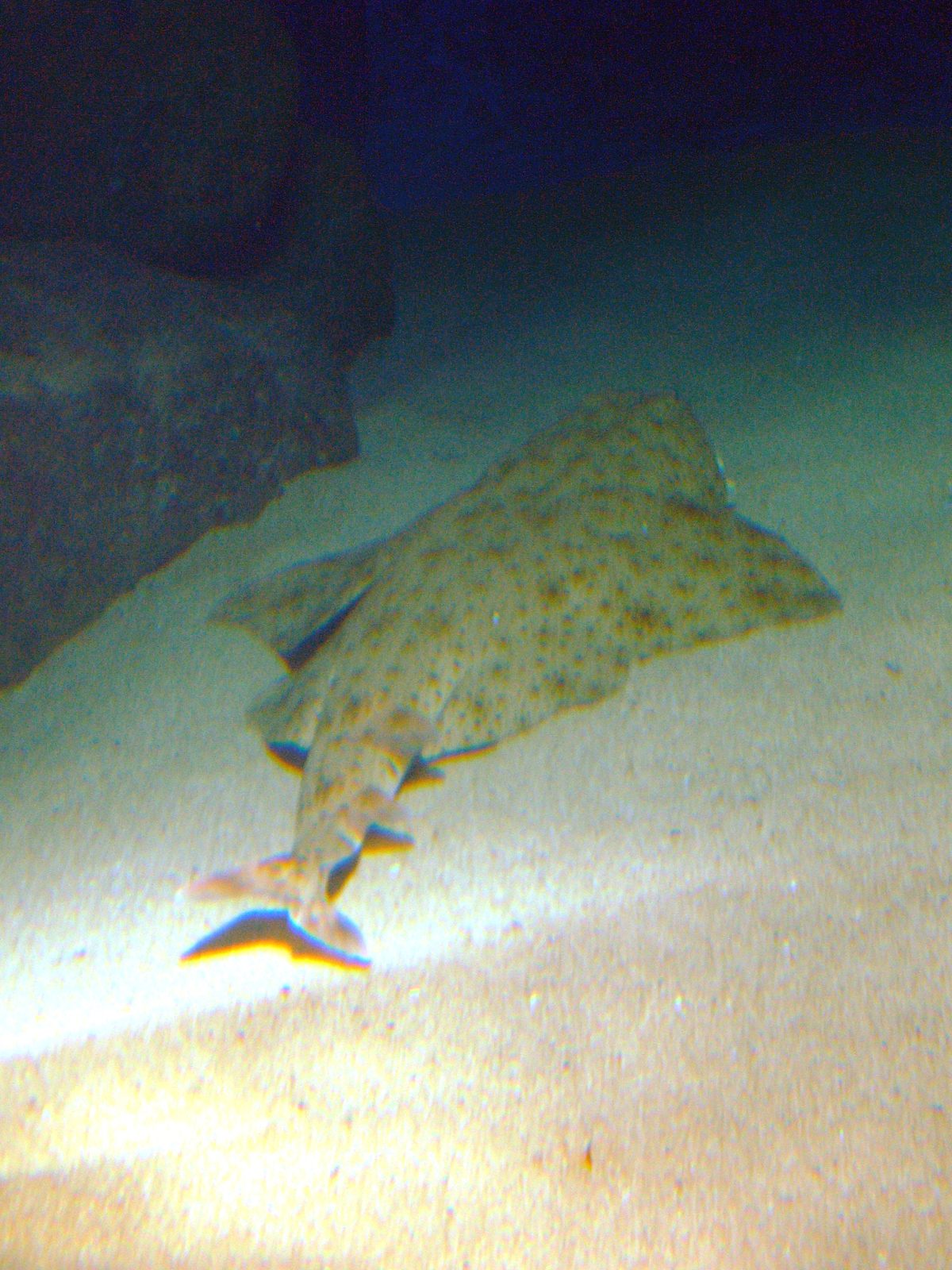
Pacific angel shark (Squatina californica)
Pacific angel shark. Photo: Fernando Losada Rodríguez, CC BY-SA 4.0, via Wikimedia Commons.

Pacific angel shark Squatina californica

Key marks: Flat and wide, grey to reddish-brown with dark blotches, up to about 1.5 m. It lies buried under a thin layer of sediment and strikes upward at passing prey (Wikipedia).

In Southern California: Most common off central and southern California, at 3–45 m, and more active at night (Wikipedia). Angel sharks lie on the sand near Ship Rock (California Diving News) and turn up at Santa Barbara Island (Scuba Diving).

Snorkelling with leopard sharks

At La Jolla Shores the sharks gather close to the beach, most in summer and early autumn (KPBS 2017). They are harmless: their mouths are small (KPBS 2017). Swim slowly and let them come past; don’t chase or touch them.

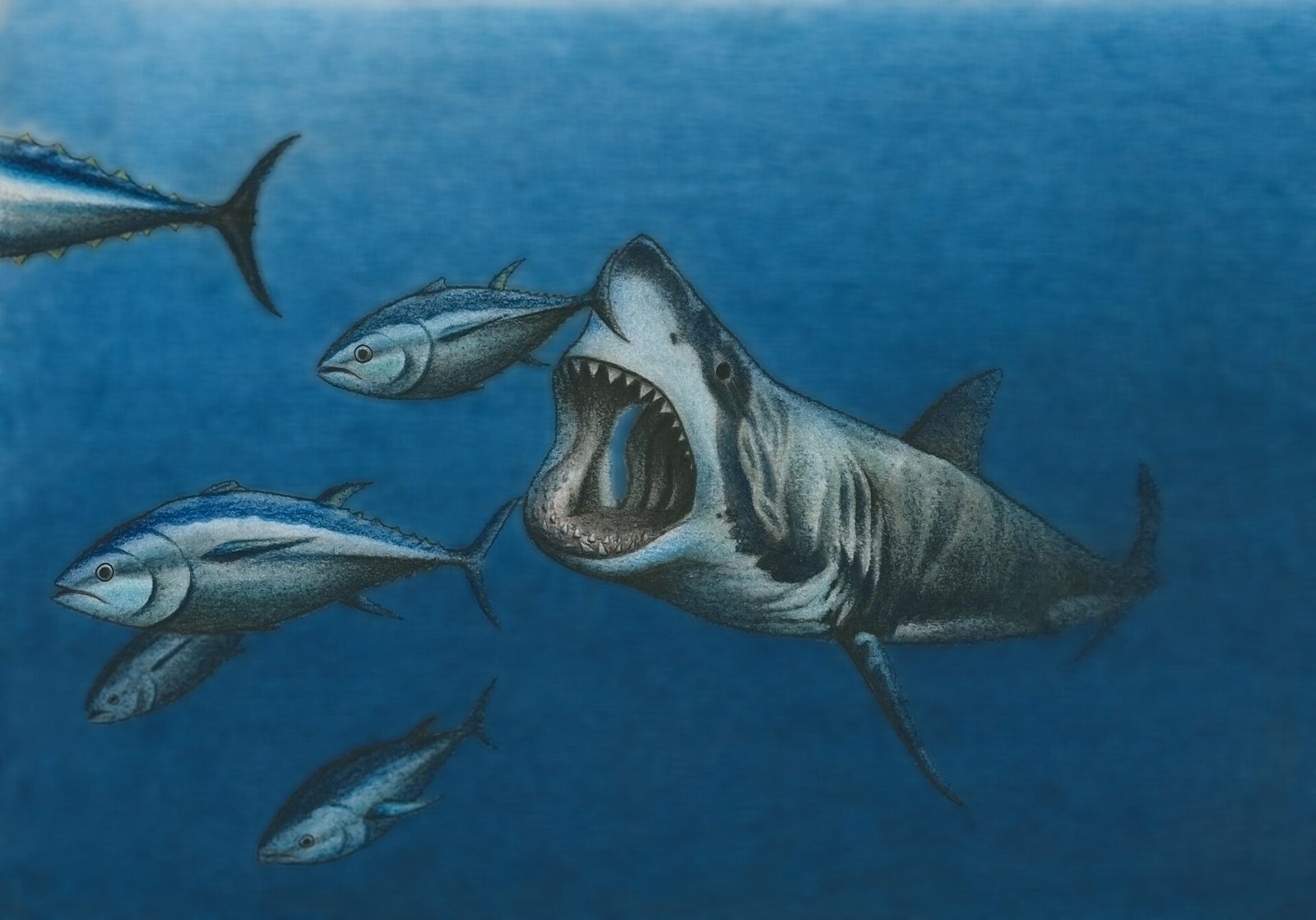
White shark (Carcharodon carcharias)
White shark. Photo: Juliette Vallin (illustration), Tanguy Carpaye-Taïlamée (digital improvements), CC BY-SA 4.0, via Wikimedia Commons.

White shark Carcharodon carcharias

Vulnerable on the IUCN Red List; protected in California since 1994 (Wikipedia).

Young white sharks: Pups are born at 1–1.6 m. Juveniles stay in shallow coastal water of 14–24 °C and eat smaller prey; a newborn about 1.5 m long was filmed just off Carpinteria in July 2023 (Wikipedia).

Risk: White sharks do not normally prey on people; most bites come from curiosity or mistaken identity (Wikipedia).

Rays

Bat rays, round stingrays and guitarfish

On the sand next to the reef

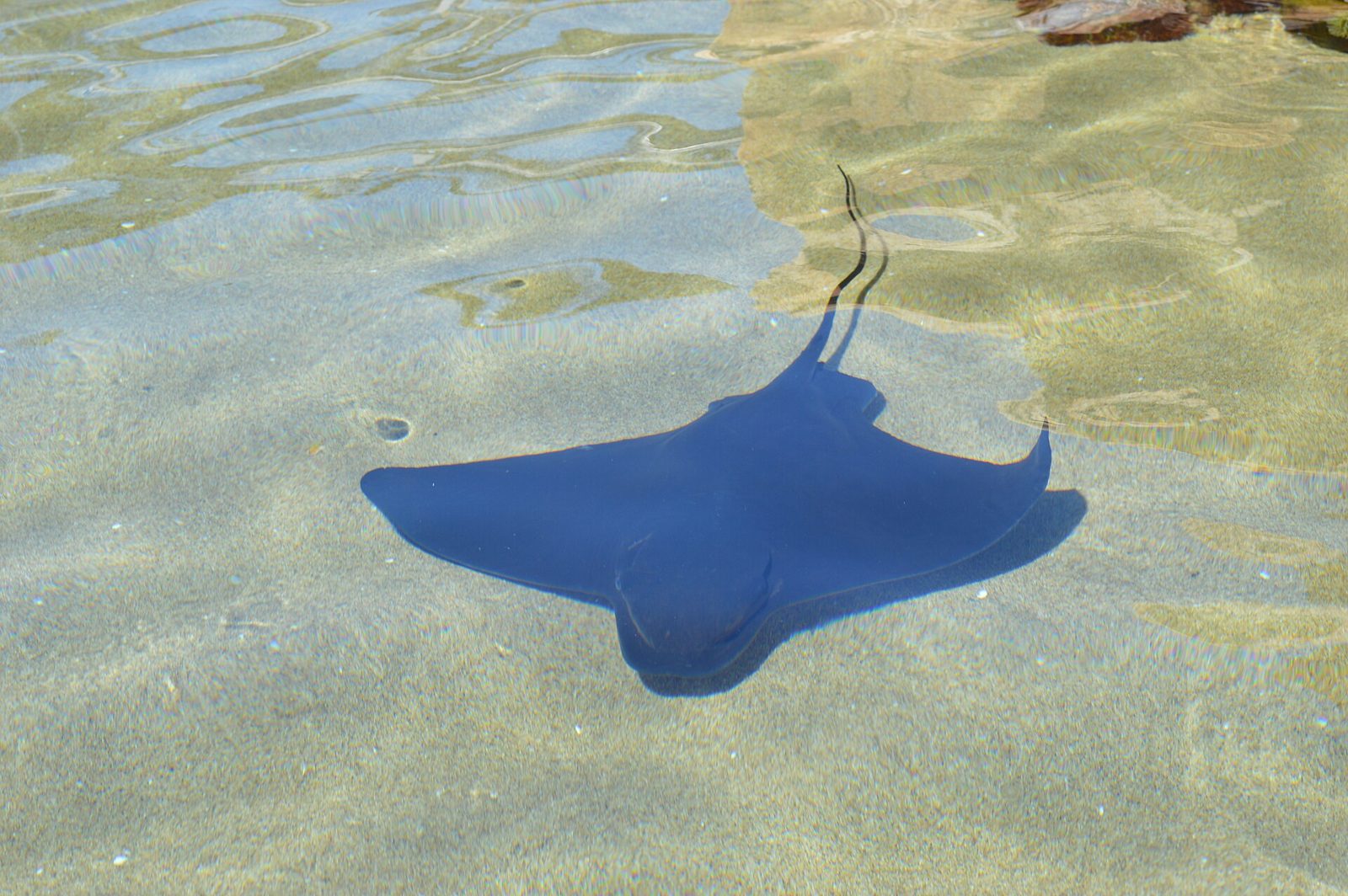
Bat ray (Myliobatis californica)
Bat ray. Photo: Nandaro, CC BY-SA 3.0, via Wikimedia Commons.

Bat ray Myliobatis californica

Key marks: Black or dark brown above and white below, with wings up to about 1.8 m across. It flaps its wings to blow sand off prey and digs pits up to 4 m long to reach buried clams. It has a venomous spine near the base of the tail but is not considered dangerous (Wikipedia).

In Southern California: Mostly at 2.5–30 m (Wikipedia). Bat rays feed on the squid egg beds during a squid run (California Diver).

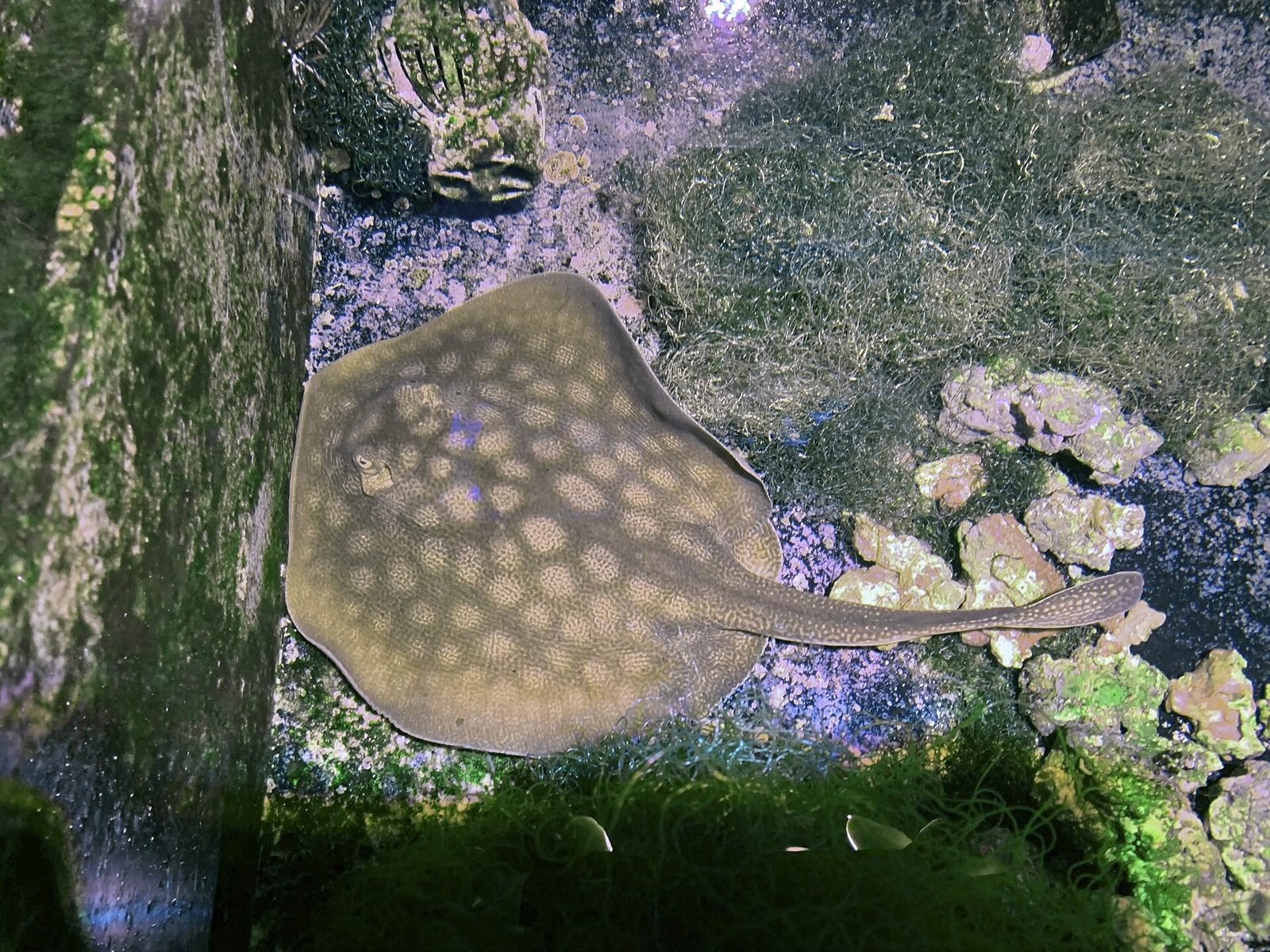
Round stingray (Urobatis halleri)
Round stingray. Photo: Coughdrop12, CC BY-SA 4.0, via Wikimedia Commons.

Round stingray Urobatis halleri

Key marks: Small, up to about 31 cm across: brown with pale yellow spots or a network of lines, and a short, stout tail with one long serrated spine (Wikipedia).

In Southern California: Most common around Southern California and Baja, on sand or mud in water usually under 15 m. Hundreds of beachgoers are stung along the Southern California coast each year; the sting is very painful but not fatal (Wikipedia).

Shovelnose guitarfish (Pseudobatos productus)
Shovelnose guitarfish. Photo: Coughdrop12, CC BY-SA 4.0, via Wikimedia Commons.

Shovelnose guitarfish Pseudobatos productus

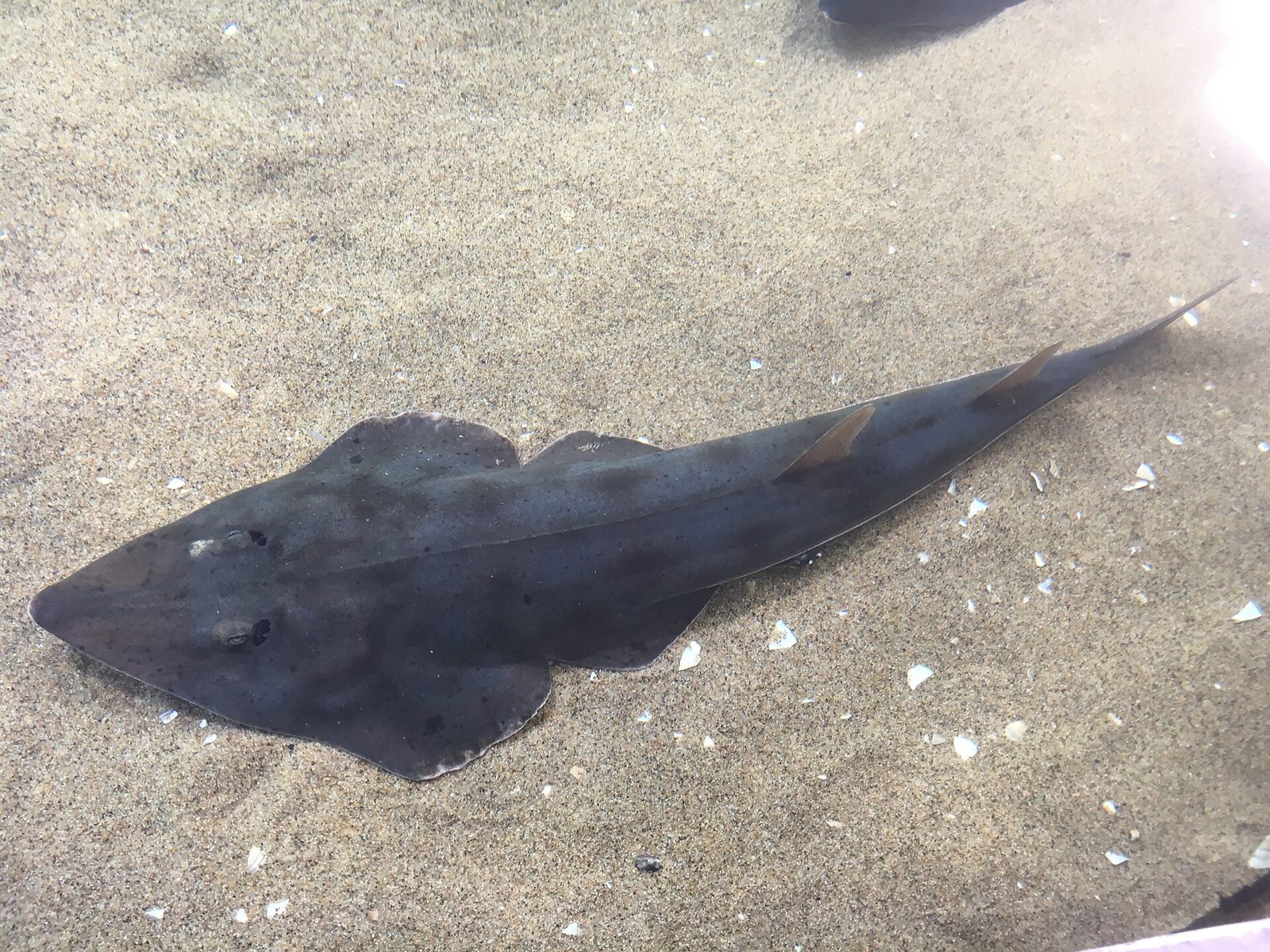
Key marks: Olive to sandy brown with a pointed, shovel-shaped snout and a long, guitar-shaped body; females reach about 137 cm. Near Threatened on the IUCN Red List (Wikipedia).

In Southern California: In shallow bays and seagrass, usually shallower than about 12 m (Wikipedia); seen with leopard sharks and rays in the La Jolla reserve (Wikipedia).

Shore entries

Round stingrays lie buried in shallow sand. Shuffle your feet when you wade in or out so they swim off before you step on one.

Credits

Photo credits

Where the photos come from

There are no photos from Southern California by Megan Applegate in this guide yet. Other photos are open-licence photos from Wikimedia Commons, credited in the table with their licence and a link to the original. Species without a photo link to photos on Wikimedia Commons.

Photo credits.
SpeciesPhotographerLicenceSource
Leopard sharktomhiltonCC BY 2.0Wikimedia Commons
Horn sharkshankar s. from Dubai, united arab emiratesCC BY 2.0Wikimedia Commons
Swell sharkJeanCC BY 2.0Wikimedia Commons
Pacific angel sharkFernando Losada RodríguezCC BY-SA 4.0Wikimedia Commons
White sharkJuliette Vallin (illustration), Tanguy Carpaye-Taïlamée (digital improvements)CC BY-SA 4.0Wikimedia Commons
Bat rayNandaroCC BY-SA 3.0Wikimedia Commons
Round stingrayCoughdrop12CC BY-SA 4.0Wikimedia Commons
Shovelnose guitarfishCoughdrop12CC BY-SA 4.0Wikimedia Commons