Wrecks

Southern California wrecks

A Canadian destroyer and a Prohibition-era cutter in San Diego’s Wreck Alley, a burned yacht off Avalon, a gold-rush steamer at Anacapa, and oil platforms off Long Beach.

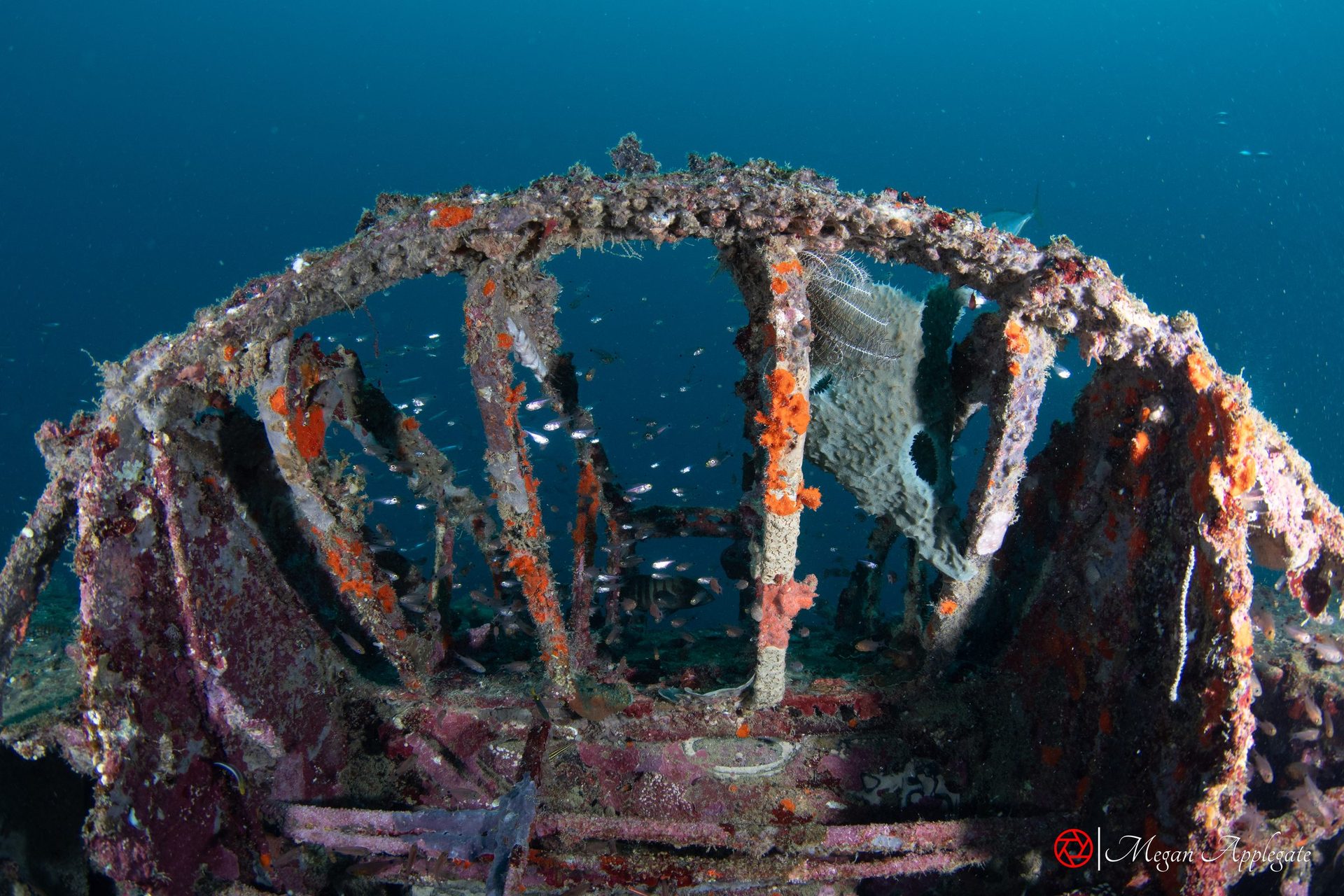
Background photo: Megan Applegate (Solomon Islands, not Southern California)

Wreck Alley

San Diego’s artificial reef

A few miles off Mission Beach

Wreck Alley, a few miles off Mission Beach, is an artificial reef of ships and structures sunk for divers, plus one that fell in on its own (Wikipedia).

HMCS Yukon

Wreck Alley, San Diego · Depth ~18–32 m

The ship: A Canadian Mackenzie-class destroyer, 366 ft (111.6 m) long, launched in 1961 and used mainly as a West Coast training ship. The San Diego Oceans Foundation bought her and towed her south in 2000 to be sunk as a reef, but she flooded in rough weather and sank on 14 July 2000, a day early, landing on her port side (Wikipedia).

Depth: About 68–105 ft (21–32 m) (Wikipedia); the masthead is about 60 ft (18 m) down (Wikipedia).

What you see: The newest and most intact wreck in Wreck Alley, with cut openings for access (Wikipedia), its structure carpeted in strawberry anemones (Oceanlight (Phillip Colla)).

Take care: An advanced dive, and silt is a hazard (Wikipedia). By December 2012 five divers had died on the wreck (Wikipedia).

Ruby E

Wreck Alley, San Diego · Depth ~26–27 m

The ship: A 165 ft (50 m) Coast Guard cutter built in 1934 as the Cyane, used against Prohibition rum-runners and on Second World War patrols, then as a fish processor and salvage vessel; sunk as a reef in 1989 (Wikipedia).

Depth: About 85–90 ft (26–27 m) (Wikipedia).

What you see: Sits upright and in good condition. The wheelhouse is the easiest way in, and the engine room holds two big diesels (Wikipedia).

El Rey, NOSC Tower and the Ingraham Street Bridge

Wreck Alley, San Diego · Depth ~18 m

The ship: El Rey harvested kelp for 35 years, about 3,600 trips, and was sunk by a US Navy demolition team on 2 April 1987. The NOSC Tower, a Navy research platform built in 1959, collapsed in a storm, the only one of these that wasn’t sunk on purpose. The old Ingraham Street Bridge was dumped here in 1985 when it was replaced (Wikipedia).

Depth: The tower and bridge are at about 60 ft (18 m) (Wikipedia).

What you see: El Rey rests upright and has broken down but holds many fish. The tower looks like an oil rig and is covered in strawberry anemones. The bridge is a jumble of pilings and roadway with kelp, fans and fish, best at night (Wikipedia).

Catalina and the islands

A yacht, a gold-rush steamer and a repair ship

Catalina, Anacapa and Redondo Beach

More than 150 historic ships and aircraft are known to have wrecked in the Channel Islands sanctuary and national park between 1853 and 1980, among them the steamer Cuba off San Miguel Island in 1923 and the Chickasaw on Santa Rosa Island in 1962 (NOAA Channel Islands).

Valiant

Descanso Bay, Catalina · Depth ~18–34 m

The ship: A luxury yacht that burned and sank outside Avalon Harbor in December 1930; an insurance claim listed $67,000 in diamonds aboard, never found (California Diving News; DAN Alert Diver). Sources disagree on her size: 162 ft (DAN Alert Diver) or 75 ft (PADI).

Depth: Upright, about 100 yards west of Casino Point; the stern peaks at 60 ft (18 m) and the bow is in 100+ ft (30+ m) (California Diving News). Other sources give 70–110 ft (DAN Alert Diver) or 90–100 ft (PADI).

What you see: Bow and stern intact, the hull heavily corroded, and the vertical faces covered in gorgonians (California Diving News).

Take care: You need the Avalon harbormaster’s permission to dive it, usually given only in winter (California Diving News; DAN Alert Diver); watch for boat traffic, and leave every artifact where it is: the wreck is more than 50 years old (DAN Alert Diver).

SS Winfield Scott

Middle Anacapa Island · Depth ~8–9 m

The ship: A 225 ft (69 m) paddle steamer that ran at full speed into Middle Anacapa Island in fog on the night of 1 December 1853, with more than 300 passengers and crew and gold bullion aboard. The passengers camped on the island for up to a week before the steamer California took them off (National Park Service; Wikipedia). It is the oldest recorded shipwreck in the area (NOAA Channel Islands).

Depth: In 25–30 ft (7.6–9.1 m) of water (Wikipedia).

What you see: A small scatter of wreckage for a ship that size, with the bow and stern gone; the most prominent piece, standing above the bottom, is thought to be the port paddle wheel. Some machinery is still fairly intact (National Park Service; Wikipedia).

Take care: Listed on the National Register of Historic Places in 1988 (Wikipedia). Federal law bars disturbing the site, and nothing may be removed (National Park Service).

USS Palawan

Redondo Beach · Depth —

The ship: A Second World War engine-repair ship, 441 ft (134.6 m) long, commissioned in May 1945, sold to California’s ship reef programme in 1976 and sunk off Redondo Beach in 1977 (Wikipedia).

Depth: No depth is given in the source we used.

Rigs

Oil platforms off Long Beach

Not wrecks, but dived like them

More than 20 man-made structures stand between Santa Barbara and Oceanside. Platforms Ellen and Elly sit about eight miles from Long Beach harbor, and Eureka stands in 700 ft (213 m) of water. Their legs are covered in strawberry and plumose anemones, scallops, mussels and gorgonians, with sea lions, schools of blacksmith and jack mackerel, sheephead and kelp bass around them (DAN Alert Diver).

Permission, current and depth

Diving the rigs needs special permission, so go with a group on a permitted charter boat. Surge is common, currents change and can be strong, visibility can swing from 10 to 80 ft from one day to the next, and the structure keeps going far below recreational limits (DAN Alert Diver). The best season is June to December (DAN Alert Diver).

Wreck etiquette

Look, don’t take

History stays where it lies

Inside wrecks

Enter a wreck only with the training and gear for overhead environments; silt can wipe out visibility in seconds.

There are no wreck photos in this guide yet.