Macro

Solomon Islands macro

The small things: sap-sucking slugs, nudibranchs, a ghost pipefish in a feather star, and gobies on wire coral and sponges, with where to look for them.

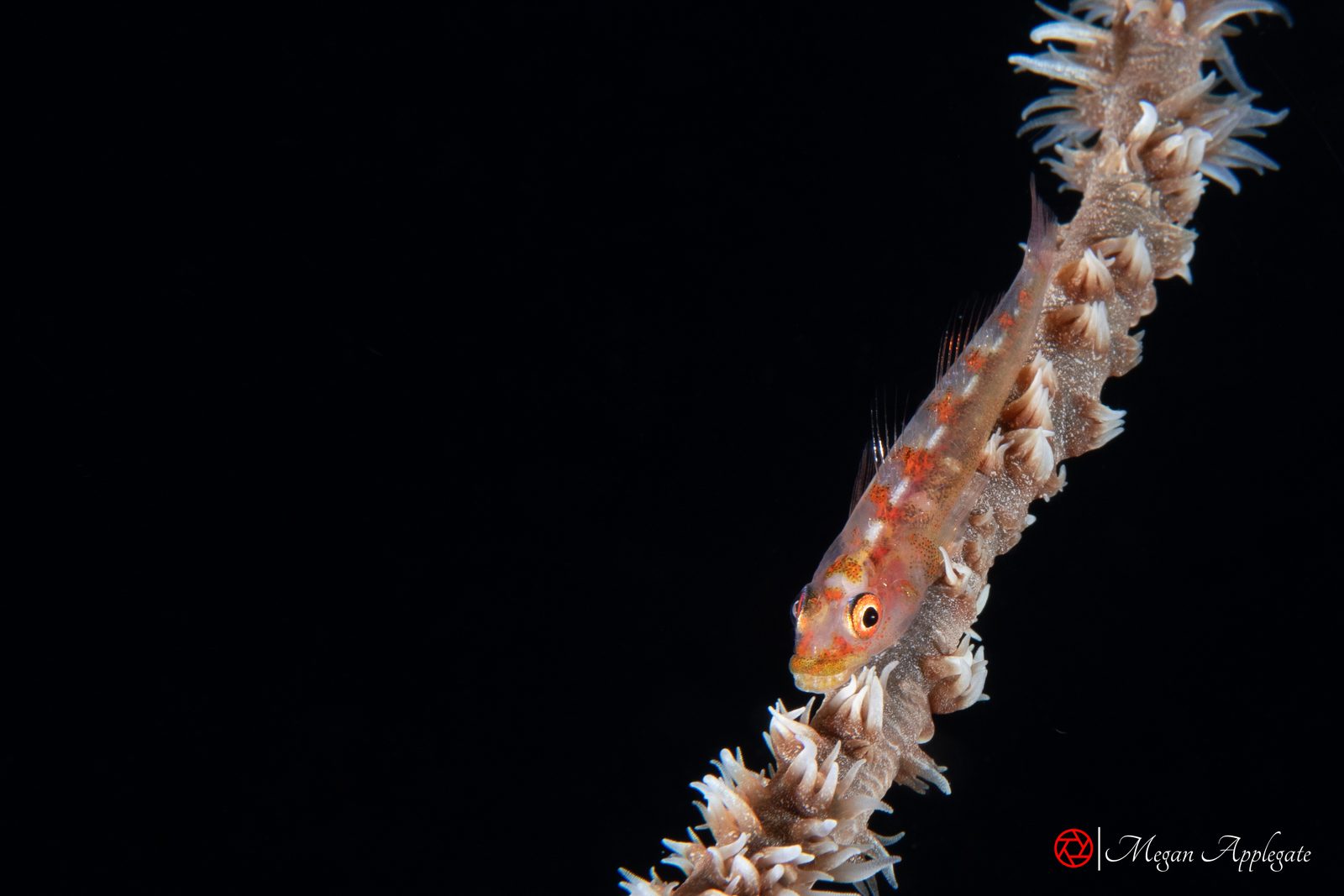
Whip coral goby (Bryaninops yongei)
Whip coral goby. Photo © Megan Applegate, Solomon Islands, September 2025.

Background photo: Megan Applegate (Solomon Islands)

Sea slugs

Sea slugs and nudibranchs

4 photographed in the Solomons

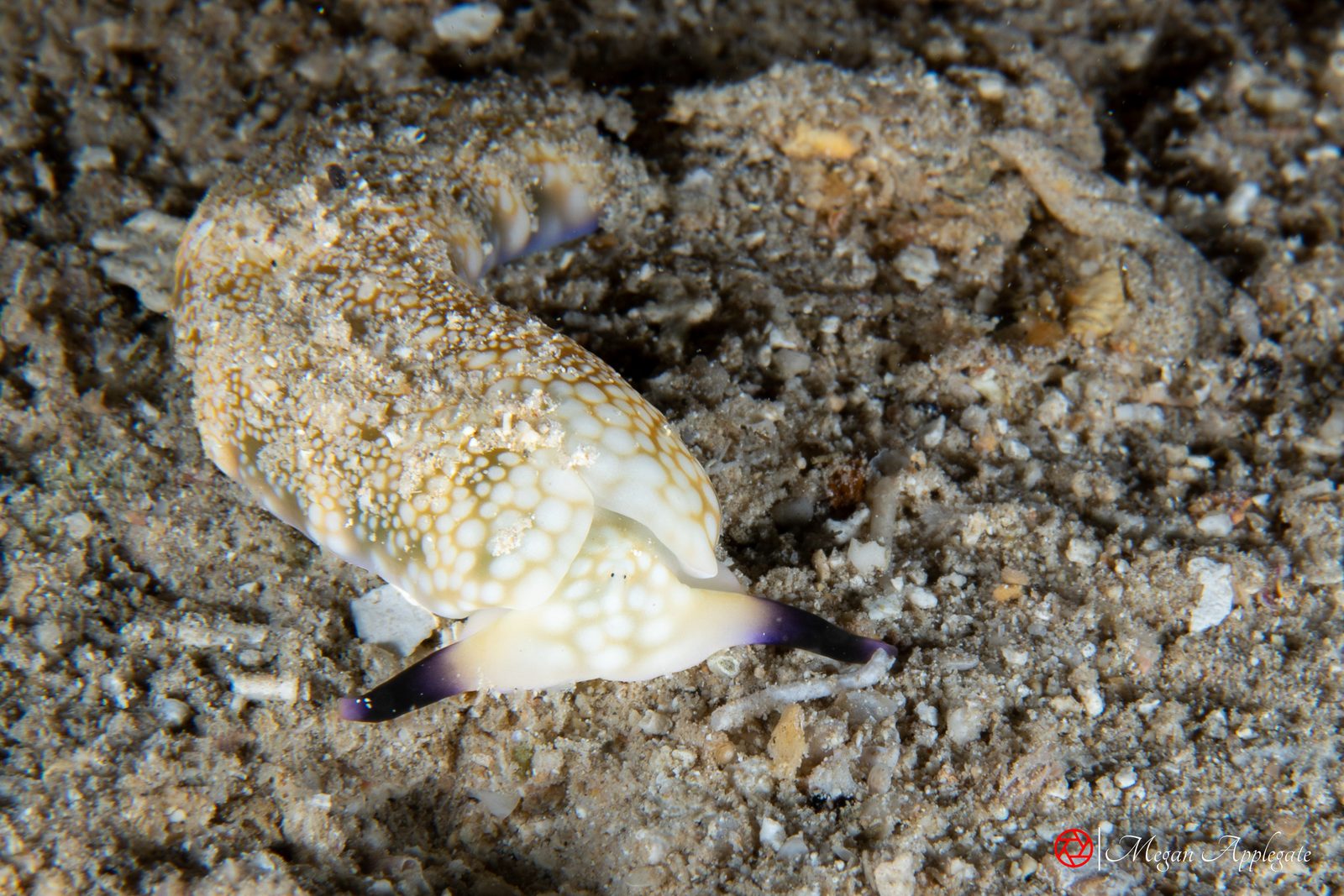
Papuan plakobranchus (Plakobranchus papua)
Papuan plakobranchus. Photo © Megan Applegate, Solomon Islands, September 2025.

Papuan plakobranchus Plakobranchus papua

A sap-sucking sea slug 15–41 mm long, separated from Plakobranchus ocellatus in 2016 using DNA and body shape. It lives on seagrass beds and reef sand at 1–10 m (Sea Slug World).

Key marks: Ochre, with white spots thinly ringed in yellow that shrink toward the tail; black rhinophores with purplish tips, a white sole and a black tail. Its wide side flaps fold over the back; opened, the digestive gland shows bright green through the skin (Sea Slug World).

In the Solomons: Photographed in the Solomon Islands in September 2025.
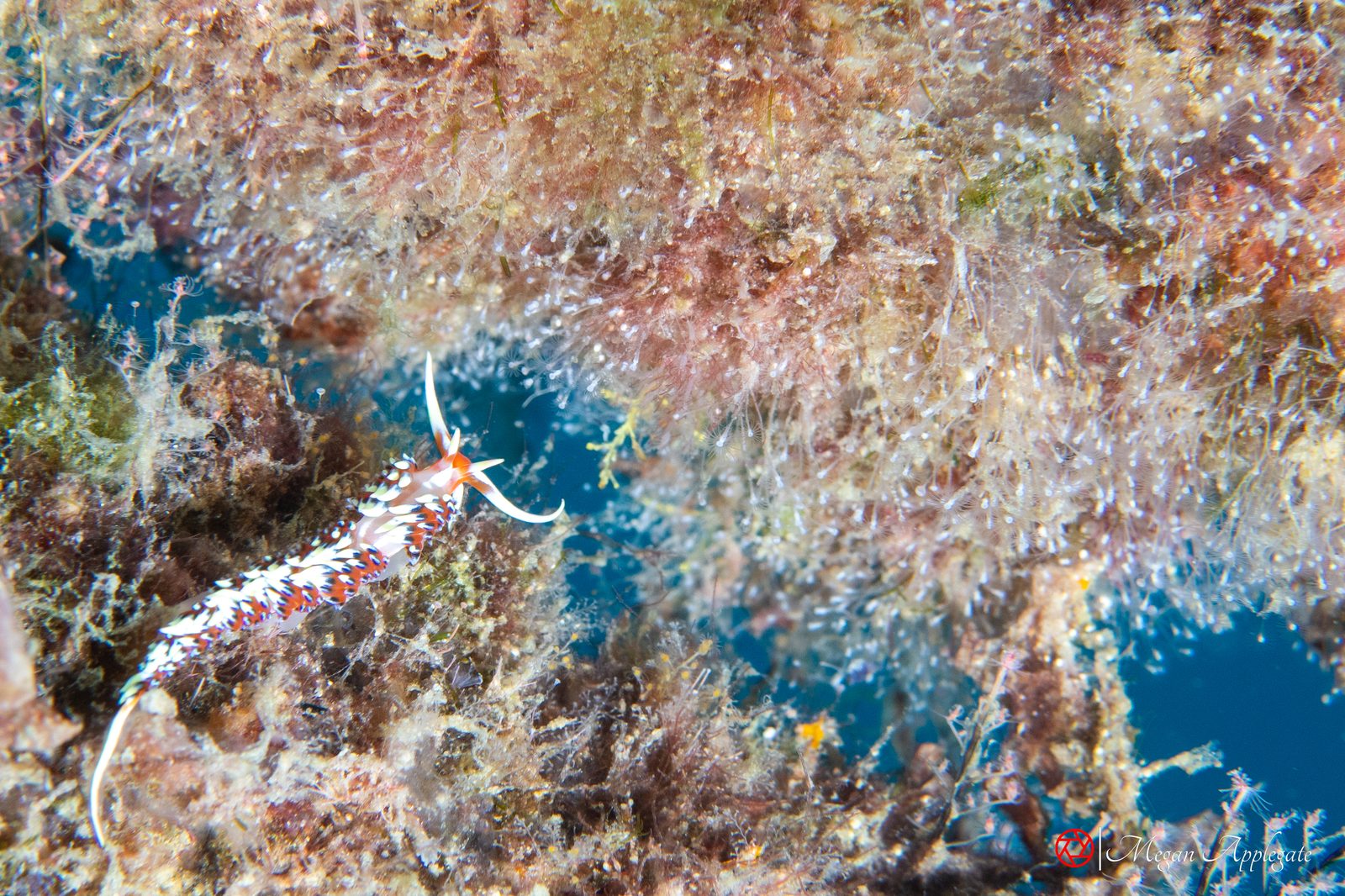
Indian caloria (Caloria indica)
Indian caloria. Photo © Megan Applegate, Solomon Islands, September 2025.

Indian caloria Caloria indica

An aeolid nudibranch 25–50 mm long. Its back is covered in cerata, which it can shed to distract or harm a predator (Wikipedia).

In the Solomons: Found from East Africa to Hawaii (Wikipedia). Photographed in the Solomon Islands in September 2025.
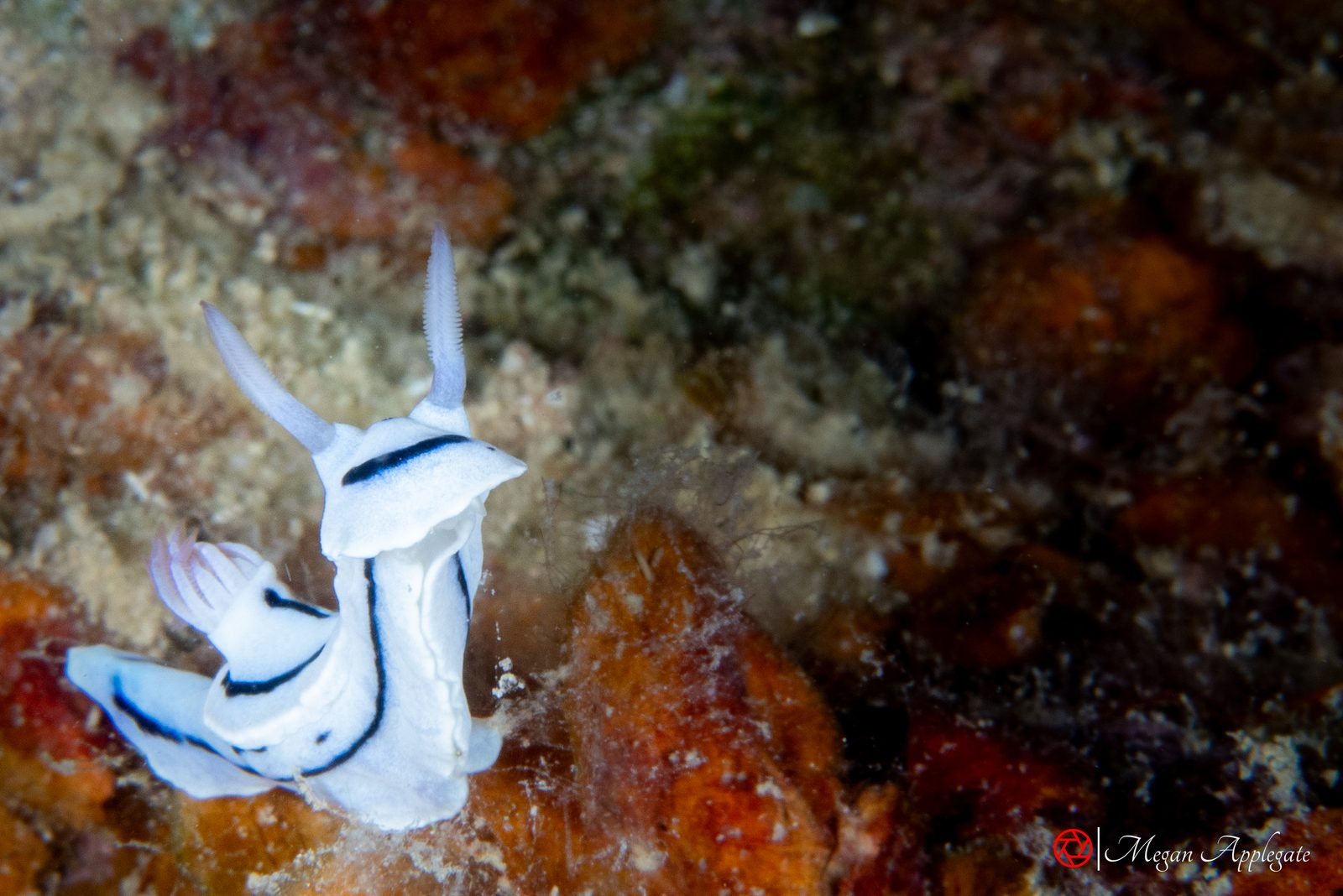
Willan’s chromodoris (Chromodoris willani)
Willan’s chromodoris. Photo © Megan Applegate, Solomon Islands, September 2025.

Willan’s chromodoris Chromodoris willani

A chromodorid of the western Pacific, from Indonesia and the Philippines to Vanuatu (Wikipedia).

Key marks: Dark blue to translucent white with black stripes, the central one usually broken, and very prominent white specks on the gills and rhinophores. Similar to C. lochi, C. boucheti and C. dianae (Wikipedia).

In the Solomons: Photographed in the Solomon Islands in September 2025.
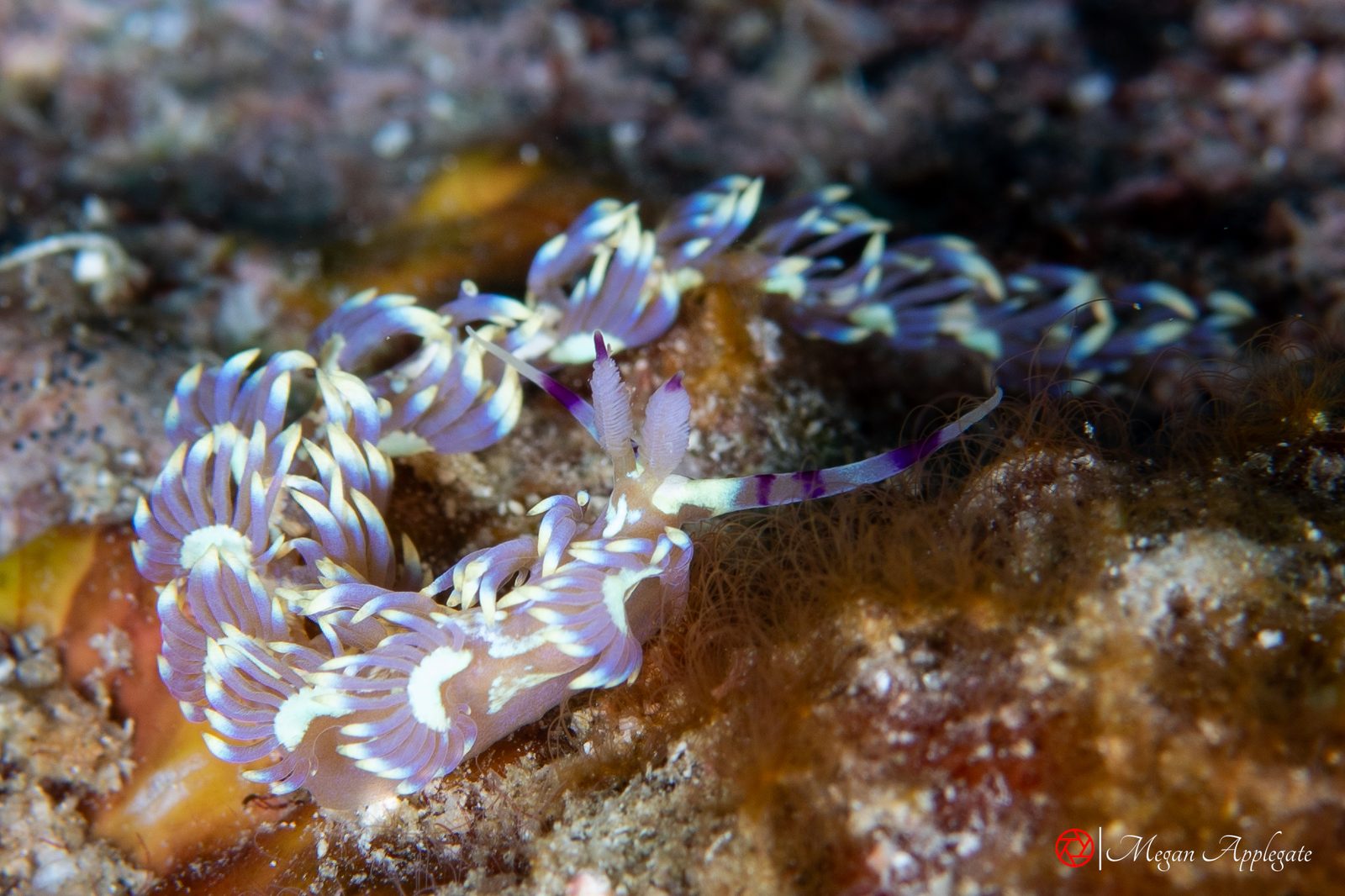
Blue dragon nudibranch (Pteraeolidia semperi)
Blue dragon nudibranch. Photo © Megan Applegate, Solomon Islands, September 2025.

Blue dragon nudibranch Pteraeolidia semperi

An aeolid that takes single-celled algae from the hydroids it eats and keeps them photosynthesising in its gut, which gives it its purple, brown or green colour. The cerata tips hold stinging cells that can hurt a diver (Wikipedia).

Key marks: Long and slim, with bunches of lavender cerata and banded rhinophores and tentacles. Its relative P. ianthina is now thought to live only off eastern Australia; elsewhere these slugs are P. semperi, which is itself more than one species (Wikipedia).

In the Solomons: Photographed in the Solomon Islands in September 2025.
Small fish

Gobies and a ghost pipefish

Look on the wire coral, the sponges and the sand

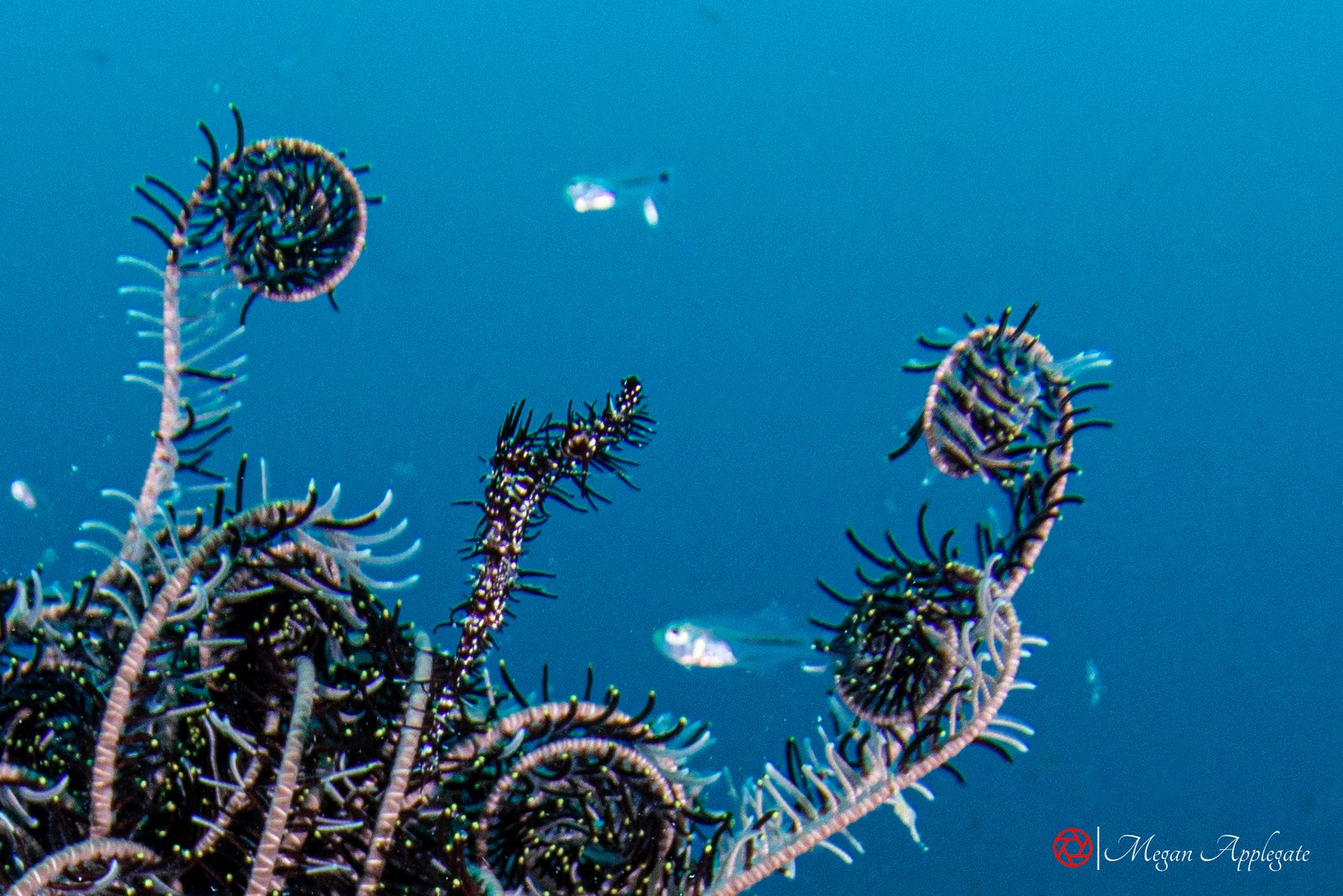
Ornate ghost pipefish (Solenostomus paradoxus)
Ornate ghost pipefish. Photo © Megan Applegate, Solomon Islands, September 2025.

Ornate ghost pipefish Solenostomus paradoxus

A slender relative of seahorses, females about 13 cm and males smaller, with a long downturned snout and a prehensile tail. It usually hangs head down and sucks in small shrimp (Wikipedia).

Key marks: Colours vary and match its host: it hides among gorgonians, black coral, crinoids and hydroids and looks like drifting weed. Females carry eggs in a pouch made from their pelvic fins (Wikipedia).

In the Solomons: Ghost pipefish are reported at Karumolun Point in the Russells (Dive The World). This one was among the arms of a black feather star. Photographed in the Solomon Islands in September 2025.
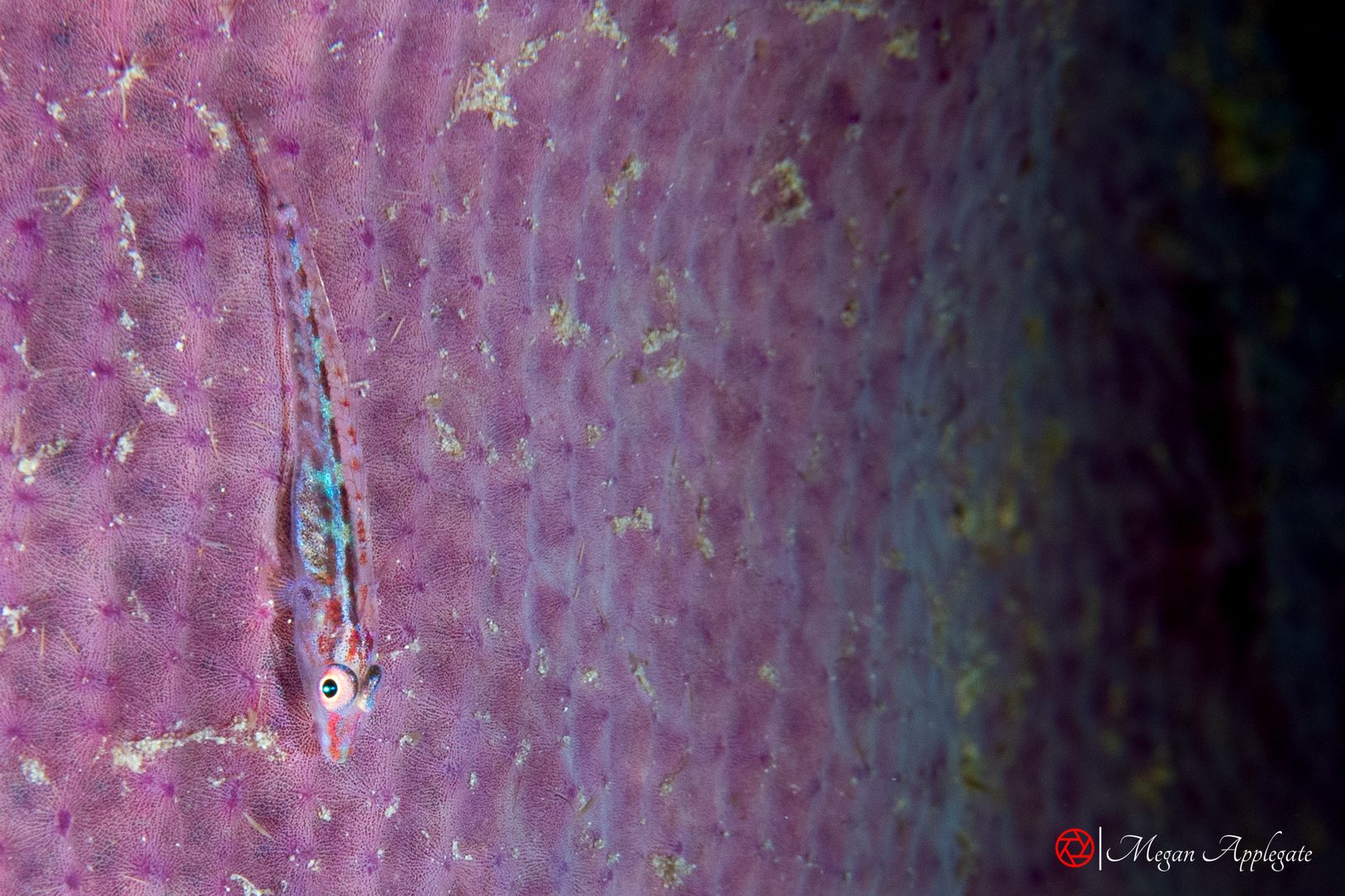
Whip coral goby (Bryaninops yongei)
Whip coral goby. Photo © Megan Applegate, Solomon Islands, September 2025.

Whip coral goby Bryaninops yongei

A goby about 3–3.5 cm long that lives on wire coral at 3–45 m, usually in male–female pairs (Wikipedia).

Key marks: See-through body with a line of white along the spine, a reddish to violet head and pink to red eyes; its colour matches its coral (Wikipedia). Look along the whole length of a wire coral: it shuffles around the stem away from you.

In the Solomons: Photographed in the Solomon Islands in September 2025.
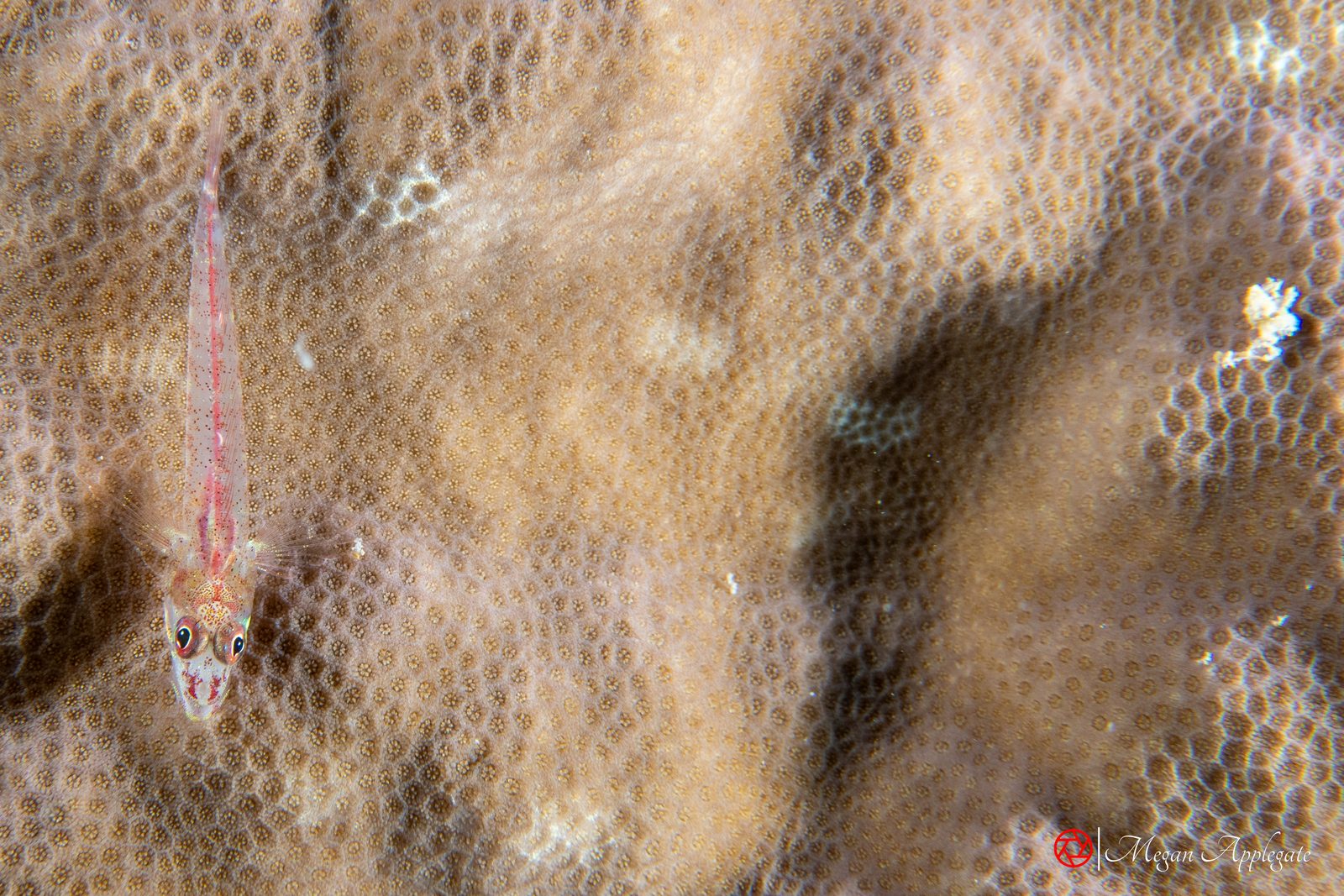
Elongate ghostgoby (Pleurosicya elongata)
Elongate ghostgoby. Photo © Megan Applegate, Solomon Islands, September 2025.

Elongate ghostgoby Pleurosicya elongata

In the Solomons: Photographed on a sponge and on a hard coral in the Solomon Islands in September 2025.
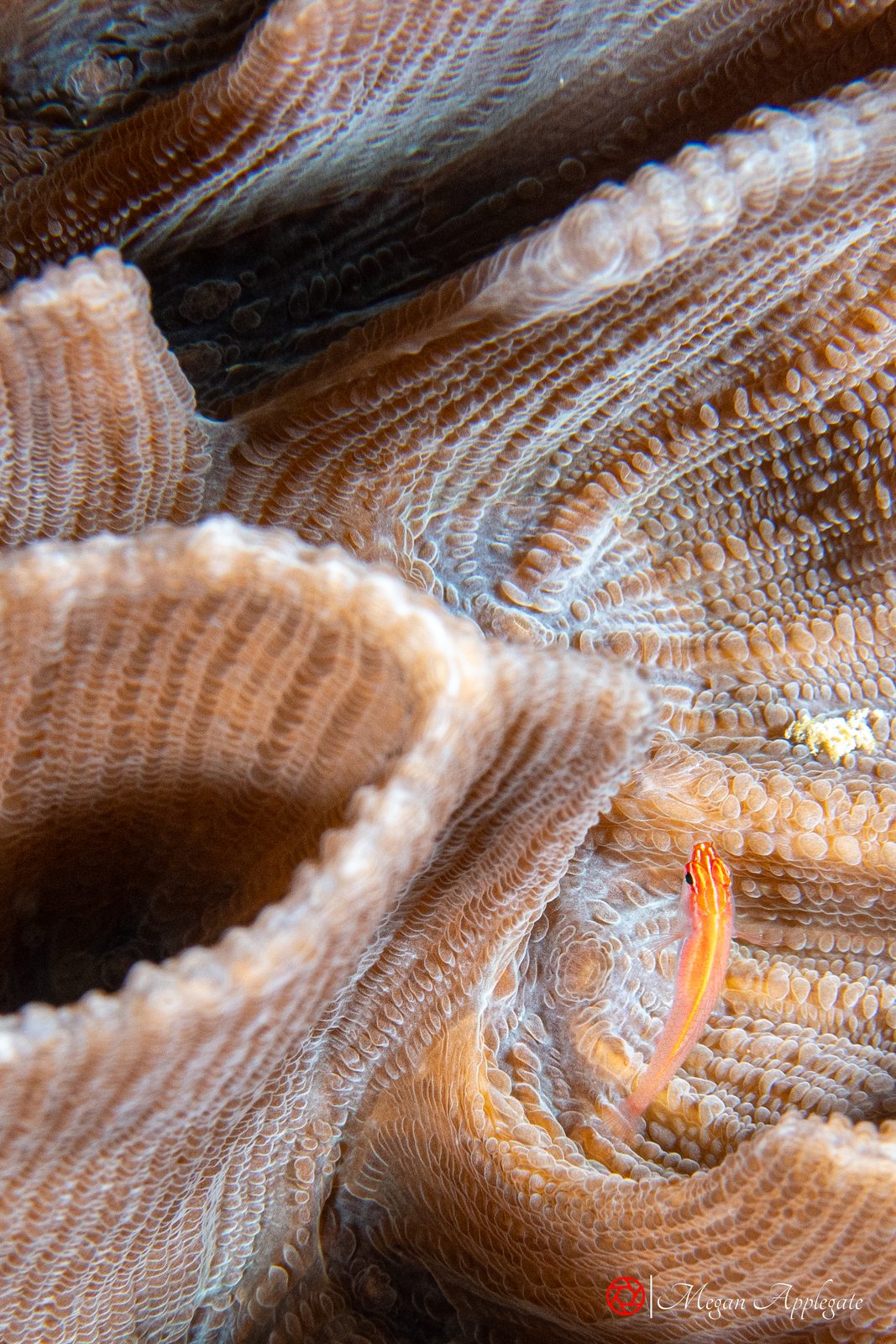
Elongate ghostgoby (Pleurosicya elongata)
Elongate ghostgoby. Photo © Megan Applegate, Solomon Islands, September 2025.
Neon dwarfgoby (Eviota atriventris)
Neon dwarfgoby. Photo © Megan Applegate, Solomon Islands, September 2025.

Neon dwarfgoby Eviota atriventris

In the Solomons: Photographed in a brain coral. Photographed in the Solomon Islands in September 2025.
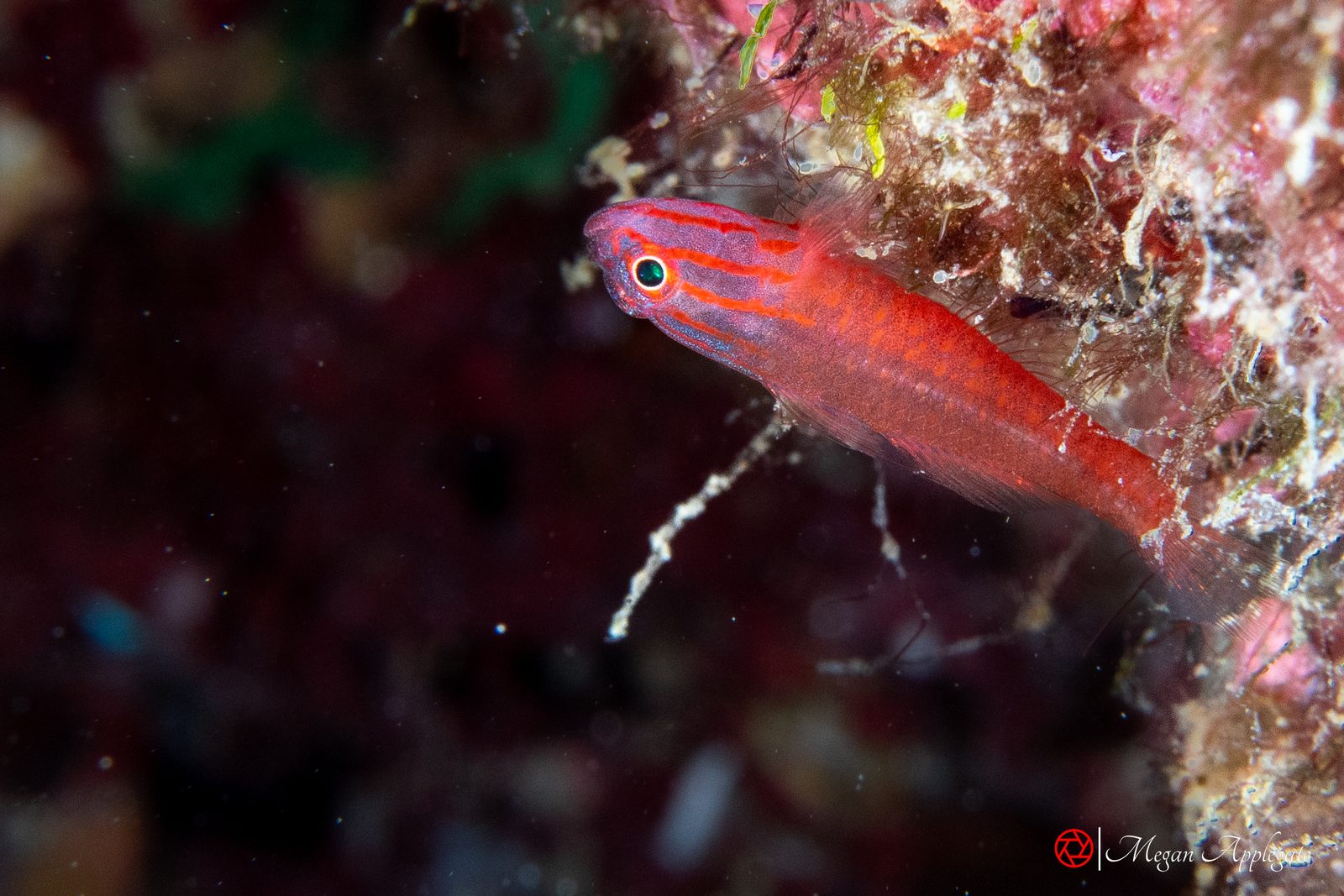
Stripehead pygmygoby (Trimma striatum)
Stripehead pygmygoby. Photo © Megan Applegate, Solomon Islands, September 2025.

Stripehead pygmygoby Trimma striatum

In the Solomons: Photographed in the Solomon Islands in September 2025.
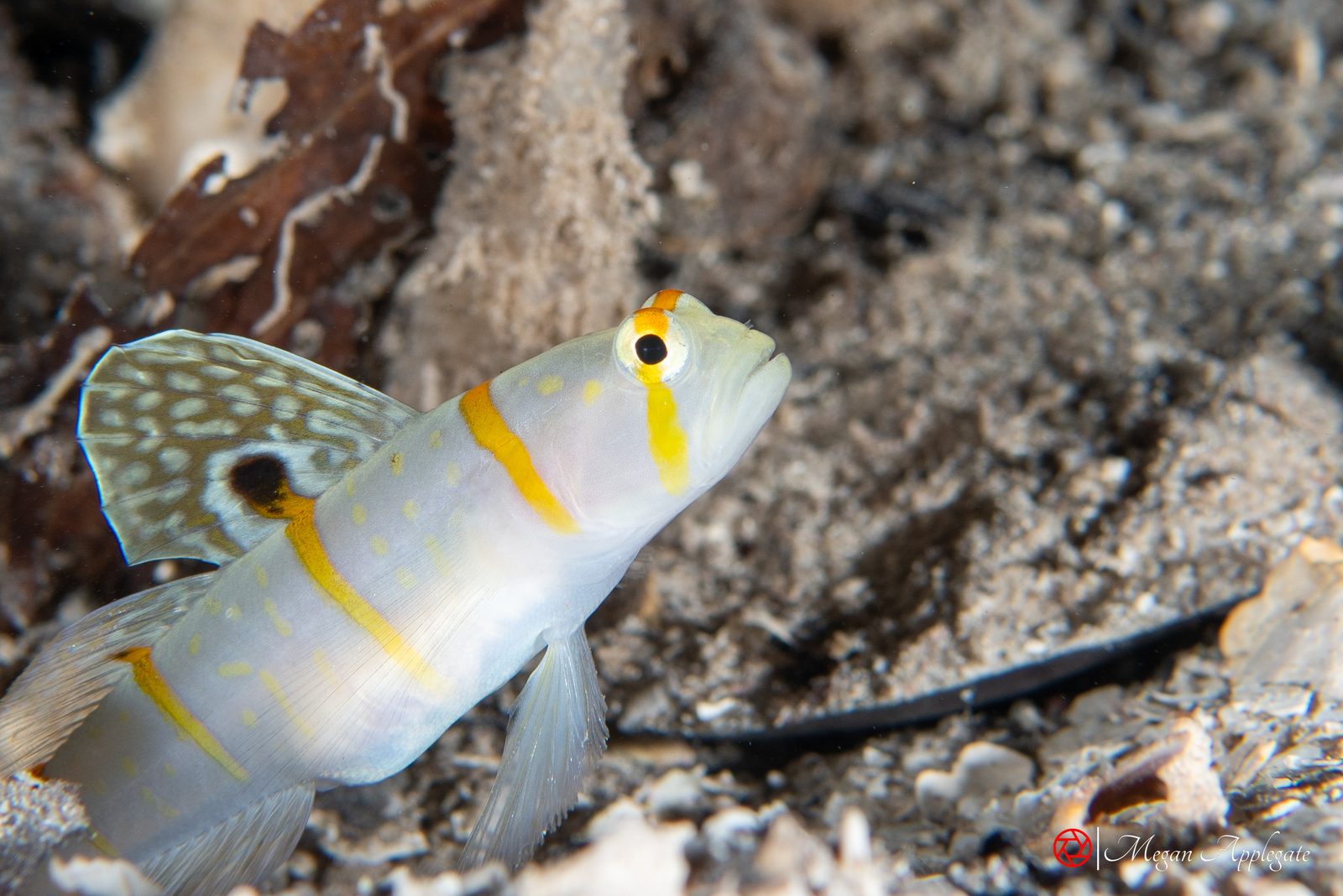
Randall’s shrimpgoby (Amblyeleotris randalli)
Randall’s shrimpgoby. Photo © Megan Applegate, Solomon Islands, September 2025.

Randall’s shrimpgoby Amblyeleotris randalli

Key marks: White with fine orange-yellow stripes, the first running through the eye, and a black-and-white eyespot on the front dorsal fin when it is raised (Wikipedia).

In the Solomons: Lives at about 25–50 m on coarse sand, recorded with the shrimp Alpheus ochrostriatus (Wikipedia). Photographed in the Solomon Islands in September 2025.
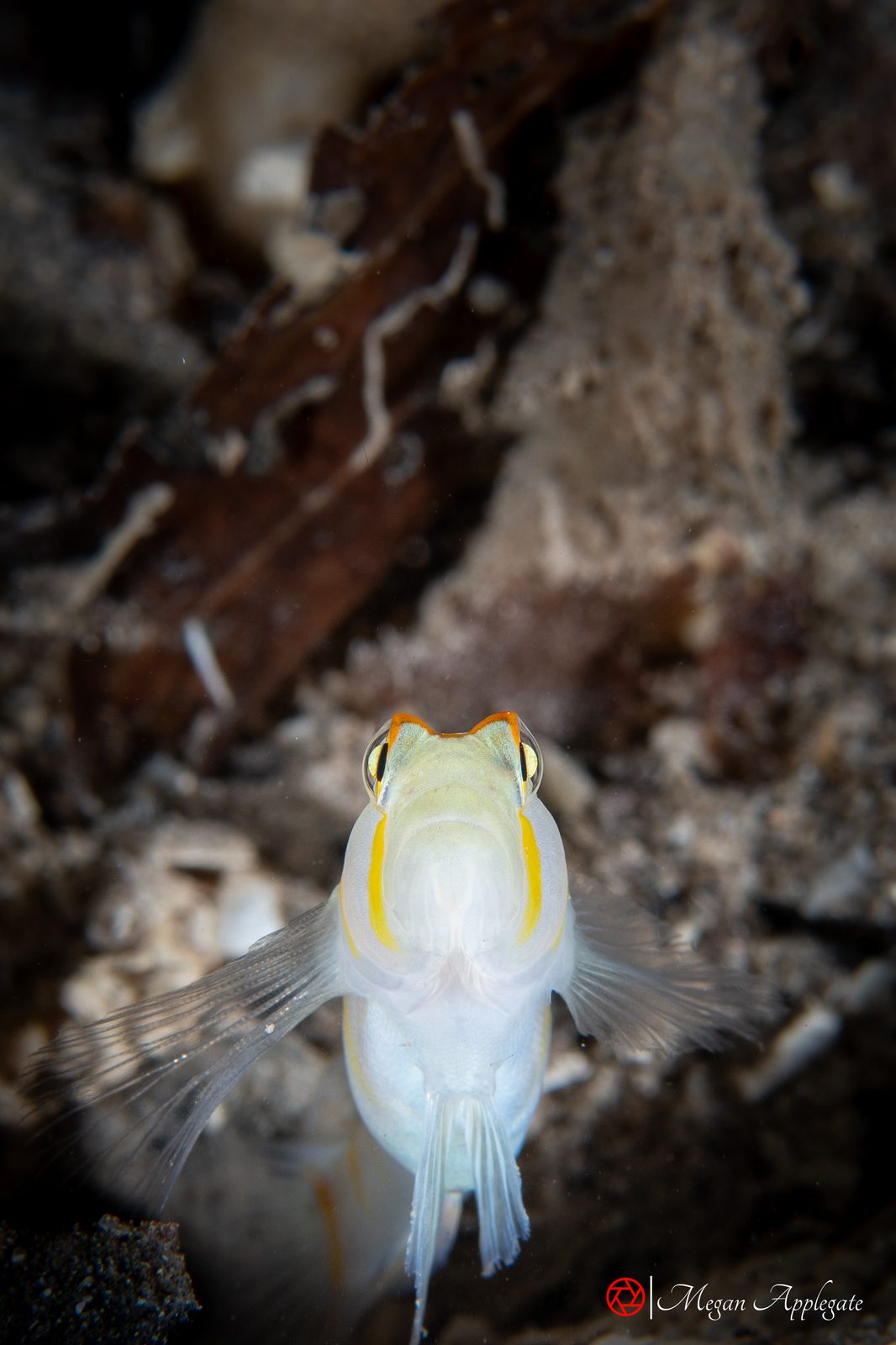
Randall’s shrimpgoby (Amblyeleotris randalli)
Randall’s shrimpgoby. Photo © Megan Applegate, Solomon Islands, September 2025.

More small fish

Dartfish, more shrimpgobies, hawkfish and the juvenile pinnate batfish are on the Fish page.

Crustaceans

Crabs in the anemones

Look under the anemonefish

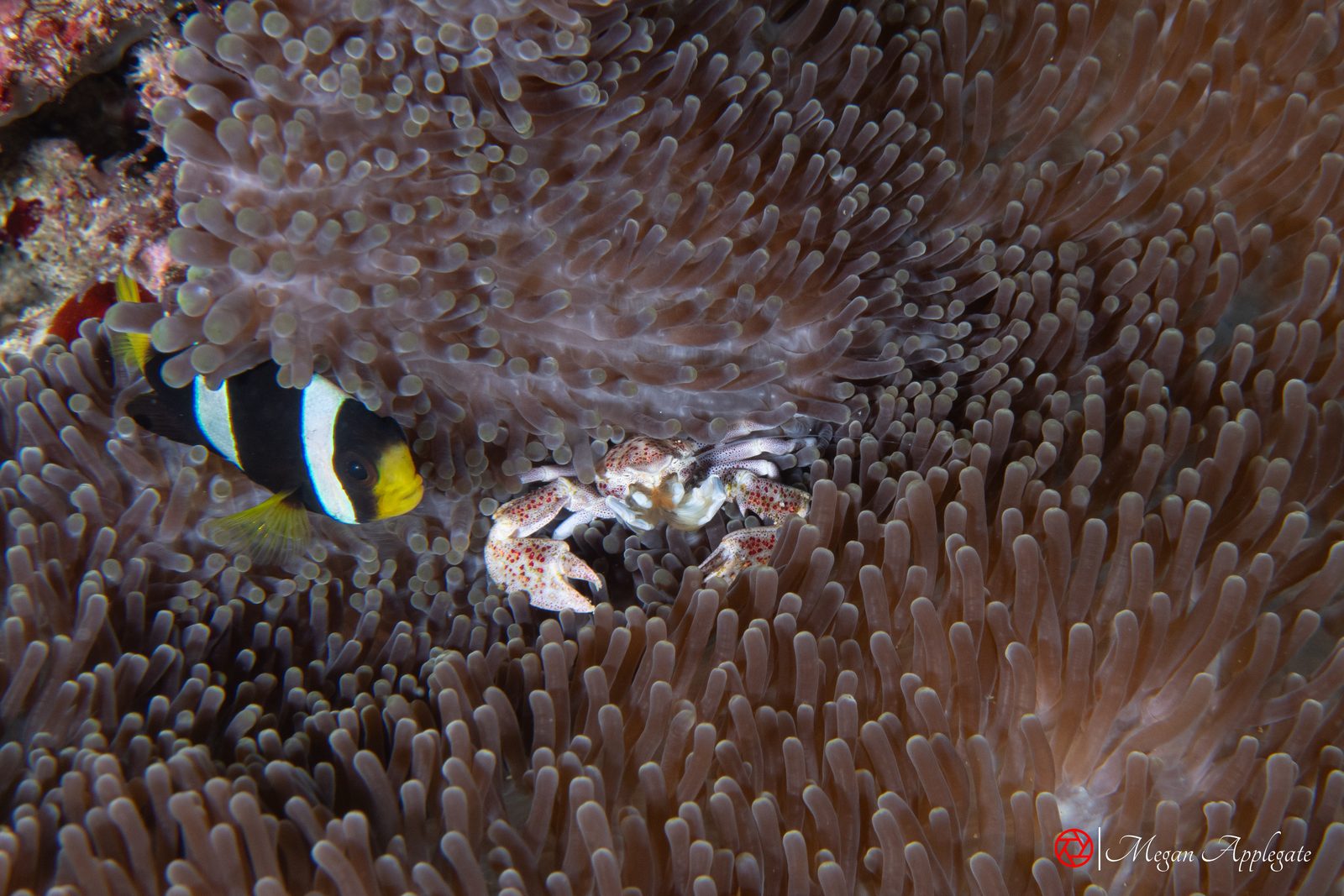
Spotted porcelain crab (Neopetrolisthes maculatus)
Spotted porcelain crab. Photo © Megan Applegate, Solomon Islands, September 2025.

Spotted porcelain crab Neopetrolisthes maculatus

A small crab with a smooth, porcelain-like shell covered in red spots. It lives among the tentacles of large anemones, usually one pair per anemone, and defends its anemone (Wikipedia).

Key marks: Big claws it uses for defence, not feeding: it filters plankton from the water with brush-like bristles on its mouthparts (Wikipedia).

In the Solomons: Photographed in an anemone shared with a Clark’s anemonefish. Photographed in the Solomon Islands in September 2025.
Where

Where to look

Sites dive reports mention for small animals

White Beach (Russells)

WWII equipment beside the mangroves, with mandarinfish and harlequin shrimp (Dive The World).

Karumolun Point (Russells)

Ghost pipefish among the jacks, barracuda and reef sharks (Dive The World).

Leru Cut (Russells)

A canyon with a sandy floor at 12 m, nudibranchs and a soft-coral wall (Dive The World).

Maravagi Bay (Florida Islands)

A shallow macro site with giant clams, pipefish and seahorses (Dive The World).

Ghavutu Wharf (Florida Islands)

A muck site near the Mavis flying boats (Dive The World).

Charapoana Point (Marovo)

Described as a versatile site for both wide-angle and macro photography (Divernet (Uepi)).

Photos

All photos on this page are © Megan Applegate, taken in the Solomon Islands in September 2025.