Wrecks

Solomon Islands wrecks

Iron Bottom Sound and the Florida Islands: Japanese transports you can walk to from the beach, a Flying Fortress, a submarine, flying boats off Tulagi and destroyers for technical divers, with what to look for on each.

Background photo: Megan Applegate (Solomon Islands)

Iron Bottom Sound and beyond

Wrecks of the Solomons

13 wrecks · shore dives to technical

Iron Bottom Sound, the water between Guadalcanal, the Florida Islands and Savo, was named by Allied sailors for the many ships and planes that sank there; before the war it was Savo Sound (Wikipedia). From August 1942 to early 1943 it saw the battles of Savo Island, Cape Esperance, Guadalcanal and Tassafaronga, and 53 ships were sunk there in the Guadalcanal campaign (Pacific Wrecks).

Most of the big warships lie far below diving depth. The wrecks divers visit are the transports beached along Guadalcanal’s north coast, aircraft and ships around Tulagi in the Florida Islands, and the dumped equipment at White Beach in the Russells (Dive The World; Indo Pacific Images). Depths come from Pacific Wrecks and dive guides and vary between sources, so check them with your guide.

Bonegi I (Hirokawa Maru)

Bonegi I (Hirokawa Maru) Japanese transport · shore dive · Guadalcanal

The ship: A cargo ship completed in 1940, 6,872 tons, taken by the Japanese army as an anti-aircraft transport with six 75 mm and four 20 mm guns (Pacific Wrecks). On 15 November 1942 it was beached off Bonegi while trying to land reinforcements, then hit by aircraft and artillery and shelled for an hour by USS Meade (Pacific Wrecks; Pacific Wrecks).

Depth: The bow is at about 15 ft (4.5 m) and the stern deeper than 180 ft (55 m) (DAN Alert Diver; Pacific Wrecks). You walk in from the beach, within a 30-minute drive of Honiara (PADI).

Look for: A mangled bow in the shallows, a fairly intact midsection, and a stern covered in gun cartridges with a deck gun still recognisable, all under heavy coral growth (Pacific Wrecks).

Take care: Pacific Wrecks advises against going inside: the wreckage is unstable (Pacific Wrecks).
Bonegi II (Kinugawa Maru)

Bonegi II (Kinugawa Maru) Japanese transport · shore dive · Guadalcanal

The ship: Beached and sunk off Bonegi on the same day as the Hirokawa Maru, 15 November 1942, in the same attempt to reinforce Guadalcanal (Pacific Wrecks).

Depth: Scattered across the shallows close to the beach, dropping to about 27 m (Divernet; Pacific Wrecks; DAN Alert Diver); the top is only a few metres down (PADI).

Look for: An easy, photogenic wreck with prolific marine life (Divernet). Torpedo holes, turtles, stingrays and garden eels are reported at the Bonegi wrecks (Dive The World).

B-17 “Bessie the Jap Basher”

B-17 “Bessie the Jap Basher” US bomber · Guadalcanal

The ship: A B-17E Flying Fortress that ditched on 24 September 1942, damaged by Zero fighters after a raid on shipping off southern Bougainville. None of its nine crew came home: two swam ashore and died there, and seven are still missing (Pacific Wrecks).

Depth: Between 10 and 20 m on sand (Emperor Divers), about 100 m offshore with a maximum depth of 18 m (Dive The World).

Look for: Wings, engines, the cockpit framework and the top turret under coral and sponges, with Goodyear lettering still legible on the tyres (Emperor Divers). Navy Seabees salvaged the rear fuselage and tail in January 1944 (Pacific Wrecks). Lionfish, scorpionfish and schools of reef fish live inside (Emperor Divers).

Take care: Fine silt: fin carefully. Visibility drops after heavy rain (Emperor Divers).

Submarine I-1

Submarine I-1 Japanese submarine · Guadalcanal

The ship: A 2,135-ton cruiser submarine launched in 1924, 319 ft (97 m) long. On the night of 29 January 1943 the New Zealand minesweepers Kiwi and Moa forced it to the surface off Kamimbo Bay; Kiwi rammed it three times and it ran aground on the reef and sank. 27 crew were killed or missing (Pacific Wrecks).

Depth: The bow is at about 5 m and the stern at 30 m (Pacific Wrecks); another guide gives 10–25 m, about 40 km from Honiara (Dive The World).

Look for: The front third was blown up in the early 1970s and is basically destroyed. Further back: a battery compartment with hundreds of cells on the sand at about 15 m, air cylinders, electric motors, and at about 18 m a passage to the stern with the dive planes, rudder and propeller shafts (Pacific Wrecks).

Kyūsyū Maru (Ruaniu wreck)

Kyūsyū Maru (Ruaniu wreck) Japanese army transport · Guadalcanal

The ship: A passenger-cargo ship of 8,666 tons, 466 ft (142 m) long, that carried about 4,500 troops toward Guadalcanal. Bombed while unloading near Ruinin Creek on 15 October 1942, it was beached after its troops, tanks and guns were ashore (Pacific Wrecks).

Depth: About 20 m offshore, from about 5 m at the bow to 46 m at the stern (Pacific Wrecks; Pacific Wrecks).

Look for: Heavily damaged by bombing and 1960s scrapping. Divers report artillery shells still in their packing and carbonised biscuits with readable writing; rice bowls and remains of uniforms in the deeper, better-preserved sections (Pacific Wrecks). Snappers, fusiliers, trevally, lionfish, nudibranchs and anemonefish are reported (Divernet).

USS John Penn

USS John Penn US attack transport · technical · Guadalcanal · Lunga Point

The ship: A former ocean liner of 9,360 tons, 474 ft (144 m) long, that carried troops and supplies to Guadalcanal. An aerial torpedo hit it at Lunga Point on 13 August 1943, and it sank stern first (Pacific Wrecks).

Depth: On its starboard side in two parts, with the stern about 365 m from the rest, in roughly 58–61 m; the bridge dive is about 37 m and the bow dive about 46 m (Pacific Wrecks). Dive guides give 35–60 m (Dive The World) and 36–56 m (Divernet).

Look for: The bridge with 20 mm guns, the radio room, the officers’ mess, the forward holds with derricks and winches, and the forward 3-inch guns with ammunition still in the lockers (Pacific Wrecks).

Take care: Decompression dives (Pacific Wrecks); currents can be strong, and technical certification is required below 40 m (Divernet).

Mavis flying boat (Kawanishi H6K)

Mavis flying boat (Kawanishi H6K) Japanese flying boat · Florida Islands · Tanambogo

The ship: At about 6 am on 7 August 1942, the morning of the Allied landings, US Wildcat fighters strafed the flying boats moored at the Tulagi seaplane base and set them on fire (Pacific Wrecks). Seven Mavis and eight Rufe floatplanes were destroyed; four of the Mavis are still recognisable, and the two most intact are known as Mavis 5 and Mavis 6 (Indo Pacific Images).

Depth: Mavis 5 sits upright at 27–34 m on silty sand west of Tanambogo (Pacific Wrecks); dive guides give around 30 m (Dive The World) and about 100 ft (DAN Alert Diver). One guide lists a Mavis in about 10 m (Divernet).

Look for: Called “likely the best underwater H6K Mavis in the world”: a cockpit with controls and instruments intact, a well-preserved left wing, the nose bent upward and the mooring cable still on the nose ring (Pacific Wrecks). Macro life on and around it (Dive The World).

Take care: Silt reduces visibility; the machine guns were removed by someone after the wreck was found (Pacific Wrecks).

PBY Catalina, Tulagi
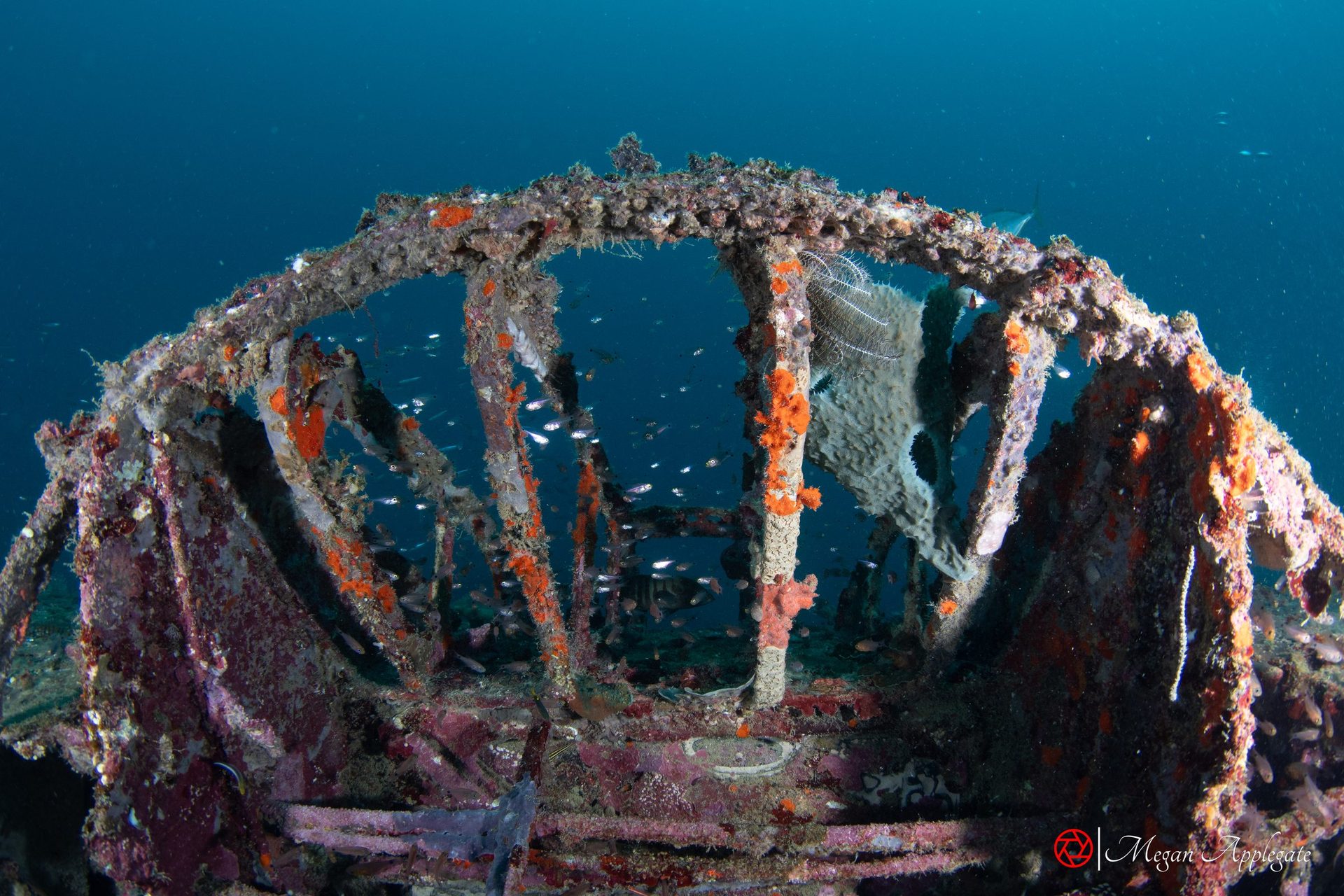
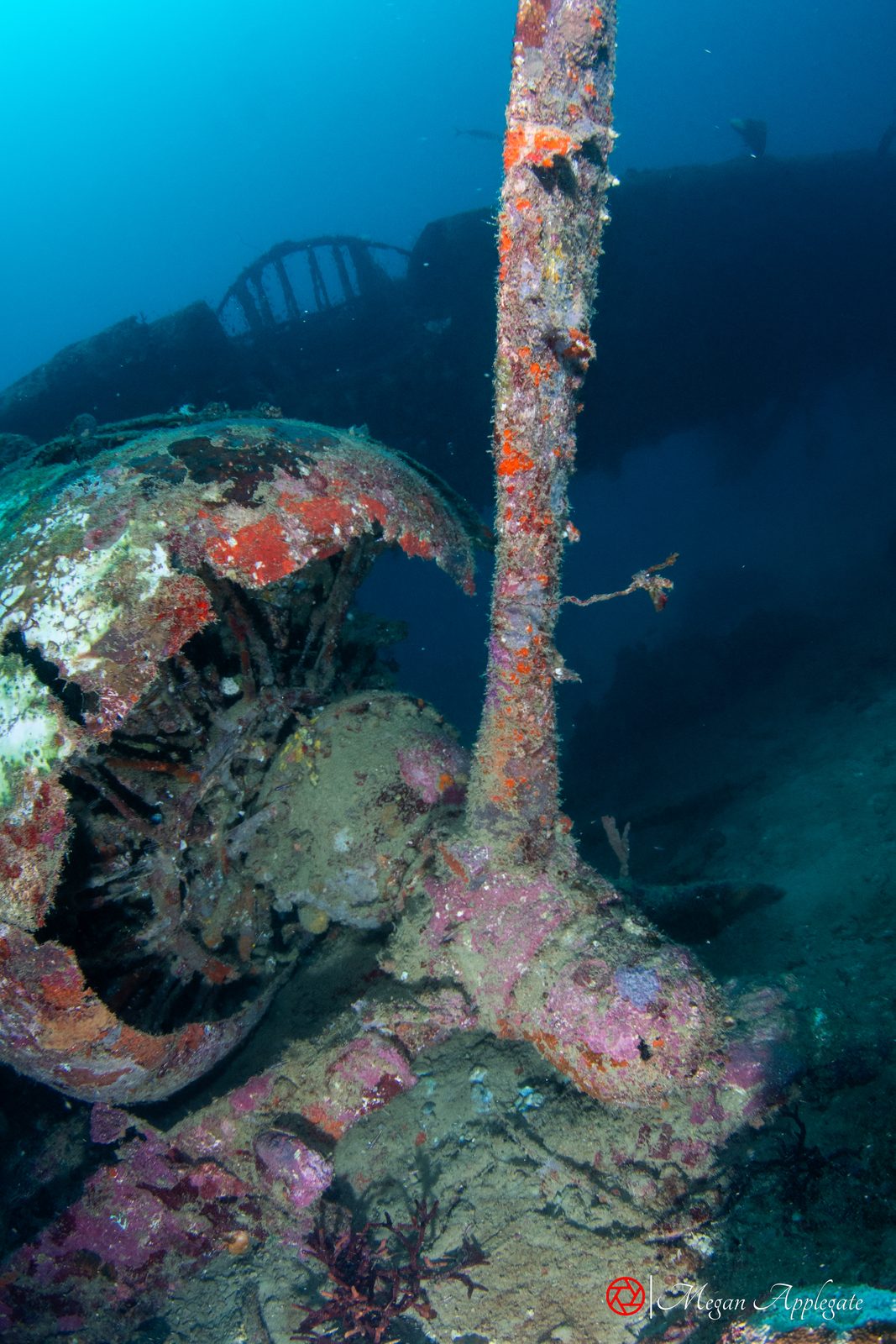
PBY Catalina, Tulagi. Photo © Megan Applegate, Solomon Islands, September 2025.

PBY Catalina, Tulagi US flying boat · Florida Islands · Tulagi

The ship: Probably lost in November 1943, when it hit a small boat landing at night after a rescue mission; it flipped, then righted itself as it sank (Indo Pacific Images).

Depth: Upright off the southeast tip of Tulagi, with the nose at 26 m and the tail at 34 m (Indo Pacific Images; Dive The World).

Look for: Found after the main salvage years, so much of the plane is intact, including three machine guns and boxes of ammunition (Indo Pacific Images).

HMNZS Moa

HMNZS Moa New Zealand minesweeper · Florida Islands · Tulagi Harbour

The ship: A Bird-class minesweeper of 607 tons, 168 ft (51 m) long, that helped sink the submarine I-1 in January 1943 (Pacific Wrecks; Pacific Wrecks). On 7 April 1943, while refuelling in Tulagi Harbour, it was hit by a bomb and sank in about four minutes; five men were killed (Pacific Wrecks).

Depth: About 40 m (Dive The World; Indo Pacific Images), with the bow partly buried in silt (Indo Pacific Images).

Look for: The 4-inch gun near the bow, the propeller and rudder, and twin depth-charge racks still in place (Indo Pacific Images). A fishing boat’s anchor dragged across the deck in a 1975 typhoon and destroyed the superstructure (Pacific Wrecks).

Take care: Siltier than most, so it is dived less often (Pacific Wrecks).

USS Kanawha

USS Kanawha US fleet oiler · technical · Florida Islands · Tulagi

The ship: The US Navy’s first purpose-built fleet oiler, commissioned in 1915, 475 ft (145 m) long. Dive bombers hit it while it was refuelling ships off Tulagi on 7 April 1943; it was towed toward the harbour and sank at 4 am the next morning. 19 crew were lost, 16 of them still missing (Pacific Wrecks).

Depth: Upright at about 61 m on a gently sloping seafloor (Pacific Wrecks); one guide gives 40–60 m (Dive The World).

Look for: Debris and guns (Dive The World).

Take care: Technical divers only (Pacific Wrecks).

USS Aaron Ward

USS Aaron Ward US destroyer · technical · Florida Islands · Nggela Pile

The ship: A Gleaves-class destroyer that survived eight hits from the battleship Kirishima in November 1942. On 7 April 1943 dive bombers damaged it below the waterline; it was being towed toward a shoal off Tinete Point when it sank stern first, about 600 yards short. 20 men were killed and 7 are missing (Pacific Wrecks).

Depth: Upright on sand in about 70–73 m: the bow and forward 5-inch guns at about 200 ft (61 m), the bridge at about 165 ft (50 m), and the depth-charge racks, rudder and a propeller at about 215 ft (66 m) (Pacific Wrecks). Found in 1994 (Pacific Wrecks).

Look for: The 5-inch guns (Pacific Wrecks; Divernet). The stern is badly damaged, and the wreck was heavily stripped for souvenirs (Pacific Wrecks).

Take care: Needs extended-range, decompression training (Pacific Wrecks); usually not dived recreationally (Dive The World).

White Beach

White Beach WWII dump site · shore and boat dive · Russell Islands · Mbanika

The ship: The name was the code name of a US base, and there is no white beach there (PADI). When the war ended, equipment that could not fly or sail away was pushed off the main jetty, and the barges that formed the jetty were scuttled (Indo Pacific Images; PADI).

Depth: About 5–30 m just offshore (Indo Pacific Images), beside mangroves (Dive The World).

Look for: Trucks, jeeps, bulldozers, tractors, ammunition and even Coca-Cola bottles, alive with coral and fish (Indo Pacific Images). Mandarinfish and harlequin shrimp for macro photographers (Dive The World).

Taiyo

Taiyo Fishing boat · Marovo Lagoon

The ship: A fishing boat sitting upright, sometimes called the Upright Wreck (Dive The World).

Depth: The bow is less than 2 m from the surface and the stern at about 40 m (Dive The World).

Look for: Nudibranchs and anemonefish (Dive The World).

More wrecks

Also dived

Not yet on this page in full

At a glance

Depths and types

Approximate depths from the sources above

The wrecks on this page. Select a name to jump to its card.
WreckAreaTypeDepth
Bonegi I (Hirokawa Maru)GuadalcanalJapanese transport~4–55 m
Bonegi II (Kinugawa Maru)GuadalcanalJapanese transportto ~27 m
B-17 “Bessie the Jap Basher”GuadalcanalUS bomber10–20 m
Submarine I-1GuadalcanalJapanese submarine5–30 m
Kyūsyū Maru (Ruaniu wreck)GuadalcanalJapanese army transport5–46 m
USS John PennGuadalcanal · Lunga PointUS attack transport~37–61 m
Mavis flying boat (Kawanishi H6K)Florida Islands · TanambogoJapanese flying boat27–34 m
PBY Catalina, TulagiFlorida Islands · TulagiUS flying boat26–34 m
HMNZS MoaFlorida Islands · Tulagi HarbourNew Zealand minesweeper~40 m
USS KanawhaFlorida Islands · TulagiUS fleet oiler~40–61 m
USS Aaron WardFlorida Islands · Nggela PileUS destroyer~50–73 m
White BeachRussell Islands · MbanikaWWII dump site5–30 m
TaiyoMarovo LagoonFishing boat2–40 m

Respect

Diving war graves

Safety and respect

Leave everything where it is

Men are still missing on several of these wrecks: seven from the B-17, 16 from the Kanawha and 7 from the Aaron Ward (Pacific Wrecks; Pacific Wrecks; Pacific Wrecks). The Aaron Ward has already been stripped of souvenirs (Pacific Wrecks), and the Mavis lost its machine guns after it was found (Pacific Wrecks). Look, photograph and leave things in place.

Depth and silt

Technical certification is required below 40 m (Divernet). Silt is easily stirred up on the Mavis, the Moa and the B-17 (Pacific Wrecks; Pacific Wrecks; Emperor Divers), and Pacific Wrecks advises against going inside the unstable Hirokawa Maru (Pacific Wrecks).

Photos

The Catalina photos and the background (also the Catalina) are Megan Applegate’s, from September 2025. The other cards have a frame waiting for a photo.